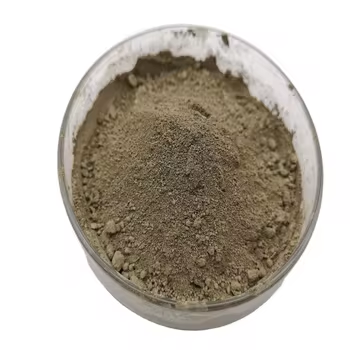
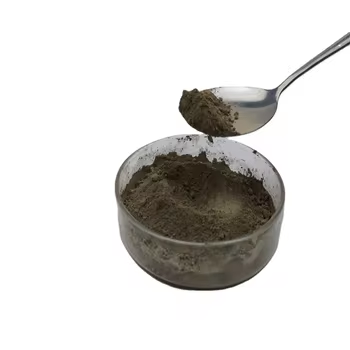
Nano Silicon Powder: The Microscopic Marvel Revolutionizing the Future
Views : 191
Author : Vincy
Update time : 2026-01-06 15:44:06
Introduction: Unveiling the Mysterious Material of the Nanoworld
In today's era of rapid technological advancement, nanomaterials are transforming our world in unprecedented ways. Among them,Nano Silicon Powder, as a highly regarded nanomaterial, is setting off revolutionary waves across multiple fields, including energy, electronics, healthcare, and materials science. This silicon-based material with particle sizes ranging from 1 to 100 nanometers is gradually becoming one of the core materials in high-tech industries due to its unique physical and chemical properties.
Nano Silicon Powder
Compared with traditional micron silicon powder, Nano Silicon Powder has a higher specific surface area, stronger quantum confinement effect and better optoelectronic characteristics. When the size of silicon materials is reduced to the nanometer level, their properties will undergo fundamental changes, exhibiting completely different characteristics from bulk silicon materials. This transformation not only provides a new direction for scientific research but also opens up broad prospects for industrial applications.
Fundamental Characteristics of Nano Silicon Powder
Nanoscale Transformation of Physical Properties When silicon materials shrink from micron to nanometer scale, one of the most significant changes is the sharp increase in specific surface area. The specific surface area of Nano Silicon Powder can reach tens or even hundreds of times that of ordinary silicon powder. This means that a unit mass of nano-silicon powder can provide more surface atoms to participate in chemical reactions, making it perform well in applications such as catalysis, adsorption and energy storage. Another important property is the quantum confinement effect. When the size of silicon particles is reduced to the nanometer level, their energy band structure changes, resulting in significant changes in optical and electrical properties. Nano Silicon Powder can display adjustable photoluminescence properties, which give it great potential in fields such as photosensors, light-emitting diodes and biomarkers. Furthermore,Nano Silicon Powder demonstrates excellent mechanical properties. Nanoscale silicon particles possess higher strength and hardness while maintaining good toughness. These characteristics make them ideal additives for enhancing the performance of composite materials. Significant Enhancement of Chemical Activity Due to the substantial increase in the proportion of surface atoms,Nano Silicon Powder exhibits higher chemical reactivity than traditional silicon materials. This enhanced activity makes it outstanding in the following aspects: Firstly, as an anode material in lithium-ion batteries,Nano Silicon Powder can engage in more effective alloying reactions with lithium ions, significantly increasing the battery's energy density. The theoretical specific capacity of traditional graphite anodes is about 372 mAh/g, while silicon's theoretical specific capacity is as high as 4200 mAh/g, more than 10 times that of graphite. However, silicon suffers from a huge volume expansion problem (approximately 300%) during charge/discharge cycles.Nano Silicon Powder, due to its nanoscale size effect, can better buffer volume changes and improve cycling stability. Secondly, in the field of catalysis,Nano Silicon Powder can serve as an efficient catalyst or catalyst support. Its high specific surface area and abundant surface active sites enable it to accelerate various chemical reactions, including processes in organic synthesis, exhaust gas treatment, and energy conversion. Finally, in polymer composite materials,Nano Silicon Powder can form stronger interfacial bonds with the matrix material, thereby enhancing the composite's mechanical properties, thermal stability, and flame retardancy.
Preparation Methods for Nano Silicon Powder
Physical Preparation Techniques Physical methods for preparingNano Silicon Powder mainly include mechanical milling, laser ablation, and vapor evaporation.
Mechanical Milling:This method involves using high-energy ball milling to crush micron-sized silicon powder into nanoscale particles. It features simple equipment and low cost, but is prone to introducing impurities and has difficulty precisely controlling particle size distribution. Typically, by optimizing milling time, ball-to-powder ratio, and milling media,Nano Silicon Powder with particle sizes in the range of 50-200 nm can be obtained.
Laser Ablation:This technique uses high-energy laser pulses to irradiate a silicon target, causing the silicon material to evaporate and condense into nanoparticles. This method can produce high-purityNano Silicon Powder with a narrow particle size distribution. By adjusting laser parameters and the ambient atmosphere, the size and morphology of the nanoparticles can be controlled. However, this method has high equipment costs and low yield, making it more suitable for laboratory research and small-scale applications.
Vapor Evaporation:This method involves evaporating silicon raw material at high temperatures and then condensing it in an inert gas to form nanoparticles. It allows for continuous production and is suitable for industrial-scale preparation, but it has high energy consumption and requires precise control of process parameters to obtain uniform nanoparticles.
Chemical Preparation Techniques Chemical methods for preparingNano Silicon Powder mainly include sol-gel, chemical vapor deposition (CVD), and reduction methods.
Sol-Gel Method:This process involves the hydrolysis and condensation polymerization of silane precursors to form a sol, which is then dried and heat-treated to obtainNano Silicon Powder. This method allows precise control over material composition and structure, producing high-purity, uniform nanoparticles. By adjusting pH, temperature, and reactant concentration,Nano Silicon Powder with different particle sizes and morphologies can be obtained. However, this method typically requires organic solvents and has a complex post-processing stage.
Chemical Vapor Deposition (CVD):This method decomposes a silicon source gas (e.g., silane) at high temperatures to deposit nano-silicon particles or films on a substrate. It can produce high-purity, well-crystallizedNano Silicon Powder and easily control particle size and morphology. By adjusting reaction temperature, gas flow rate, and pressure, precise regulation of nano-silicon particles can be achieved. The drawbacks of CVD are high equipment costs and the fact that some precursor gases are toxic and flammable, requiring strict safety measures.
Reduction Methods:These typically involve reducing silicon compounds (e.g., silicon tetrachloride) to prepareNano Silicon Powder. For example, the magnesiothermic reduction method mixes silicon dioxide with magnesium powder and heats it to obtain nano-silicon particles through a reduction reaction. This method has low raw material costs and is suitable for large-scale production, but the product may contain impurities requiring subsequent purification.
Comparison of Nano Silicon Powder with Related Materials
Comparison with Traditional Silicon Materials Compared to bulk silicon and micron silicon powder,Nano Silicon Powder shows significant advantages in several aspects.
Electrochemical Performance:When used as an anode material in lithium-ion batteries, the cycling stability and rate capability ofNano Silicon Powder are significantly better than those of micron silicon powder. This is because the nanoscale size can effectively mitigate the volume expansion of silicon during lithiation, reducing particle fracture and electrode structure damage. Simultaneously, nanoparticles shorten the lithium-ion diffusion path, improving the electrode's kinetic performance. In contrast, micron silicon particles are prone to fracture during cycling due to volume changes, leading to rapid capacity decay.
Optical Properties:Bulk silicon is an indirect bandgap semiconductor with very low luminescence efficiency, making it unsuitable for optoelectronic applications. Due to the quantum confinement effect,Nano Silicon Powder can transition into a direct or quasi-direct bandgap material, exhibiting photoluminescence in the visible light range. This property gives it application potential in photodetectors, solar cells, and light-emitting devices.
Chemical Reactivity:The high specific surface area ofNano Silicon Powder greatly increases the proportion of surface atoms, thereby enhancing chemical activity. For example, in catalytic reactions, the catalytic activity of nano-silicon is often several orders of magnitude higher than that of micron silicon. Similarly, in composites with other materials,Nano Silicon Powder more readily forms chemical bonds with the matrix material, resulting in stronger interfacial adhesion.
Comparison with Other Nanomaterials Compared to nanomaterials like carbon nanotubes, graphene, and metal oxides,Nano Silicon Powder has unique advantages in certain specific applications.
In Lithium-ion Batteries:While carbon nanotubes and graphene possess excellent conductivity and mechanical strength, their theoretical specific capacities are relatively low (graphene ~740 mAh/g, CNTs ~500 mAh/g). The theoretical specific capacity ofNano Silicon Powder is as high as 4200 mAh/g, several times that of carbon-based materials. Of course, the volume expansion issue faced by silicon materials needs to be addressed through nano-sizing, compositing, and structural design. Currently, compoundingNano Silicon Powder with carbon materials to form silicon-carbon composites is an effective strategy to balance high capacity with good cycling performance.
In Biomedicine:Compared to metal oxide nanoparticles (e.g., titanium dioxide, iron oxide),Nano Silicon Powder offers better biocompatibility and biodegradability. Silicon is a trace element in the human body. Nanoporous silicon can gradually degrade into silicic acid in the body and be excreted through the kidneys, avoiding long-term accumulation. This characteristic gives it unique advantages in drug delivery, bioimaging, and tissue engineering. Furthermore, through surface modification,Nano Silicon Powder can carry various functional groups, enabling targeted delivery and controlled release.
In Composite Material Reinforcement:Compared to reinforcing phases like nanoclays and nano-calcium carbonate,Nano Silicon Powder offers better interfacial bonding capability and more uniform dispersibility. The abundant silanol groups on the silicon particle surface can form hydrogen bonds or covalent bonds with the polymer matrix, enhancing interfacial strength. Additionally, the spherical or near-spherical morphology of nano-silicon particles aids in uniform dispersion within the matrix, reducing stress concentration and thereby improving the overall performance of the composite.
Main Application Fields of Nano Silicon Powder
Revolutionary Applications in Energy Storage In the field of lithium-ion batteries, research and application ofNano Silicon Powder as an anode material have made significant progress. With the rapid development of electric vehicles and portable electronic devices, the demand for high-energy-density batteries is growing. Traditional graphite anodes are nearing their theoretical limits, while silicon-based anodes are considered key materials for the next generation of high-energy-density batteries. Nano Silicon Powder, through nanoscale design, can effectively alleviate the volume expansion problem of silicon during charge/discharge cycles. When the silicon particle size is reduced below 150 nm, particle fracture and pulverization can be avoided, significantly improving cycling stability. Furthermore, the nanoscale size shortens the lithium-ion diffusion path, enhancing the electrode's rate capability. To improve the electrochemical performance ofNano Silicon Powder, researchers have developed multiple strategies: First, preparing porous or hollow-structured nano-silicon to provide internal space for volume expansion. Second, compounding nano-silicon with carbon materials, utilizing the flexibility and conductivity of the carbon matrix to improve electrode performance. Third, designing core-shell structures with an elastic shell encapsulating the silicon core to buffer volume changes. These strategies have already increased the cycle life of silicon-based anodes from the initial few dozen cycles to hundreds or even thousands. Beyond lithium-ion batteries,Nano Silicon Powder also shows application potential in new battery systems like sodium-ion and magnesium-ion batteries. These systems use more abundant metal elements, potentially reducing battery costs, but require the development of high-performance electrode materials to match them. Nano-silicon, due to its high theoretical capacity and relatively low cost, has become a hotspot in this research. Efficiency-Boosting Tool for the Photovoltaic Industry In the solar cell field,Nano Silicon Powder primarily enhances cell performance in two ways: first, as an anti-reflection and light-trapping layer for traditional silicon-based solar cells; second, as the active layer in new nanostructured solar cells. In traditional crystalline silicon solar cells, surface reflection loss is one of the important factors limiting efficiency. By preparing nano-silicon layers or multi-layer nanostructures on the surface of the battery, surface reflectivity can be effectively reduced, and light absorption can be improved. Nano Silicon Powder can also be combined with transparent conductive oxides to form a composite electrode that improves conductivity while enhancing light trapping capabilities. In novel solar cells, nano-silicon quantum dot solar cells are an important research direction. By adjusting the size of nano-silicon, its bandgap width can be tuned to better match the solar spectrum. Additionally, the multiple exciton generation effect in nano-silicon quantum dots holds the promise of breaking the traditional Shockley-Queisser limit for solar cells, potentially increasing theoretical efficiency from about 33% to over 40%. Combining Nano Silicon Powder with organic semiconductors or perovskite materials to form solar cells is also a current research hotspot. This structure can combine the advantages of good stability of inorganic materials and low manufacturing cost of organic materials, while using the quantum effect of nano-silicon to improve light absorption and charge separation efficiency. Innovative Applications in Biomedicine The applications ofNano Silicon Powder in biomedicine are primarily based on its good biocompatibility, biodegradability, and ease of functionalization.
In Drug Delivery Systems,PorousNano Silicon Powder can serve as a drug carrier, enabling targeted delivery and controlled release of drugs. Its high specific surface area and tunable pore structure allow for loading large amounts of drug molecules, while the abundant surface silanol groups facilitate the attachment of targeting molecules (e.g., antibodies, peptides) for specific recognition of diseased tissues like tumors. Within the body, the nano-silicon carrier can respond to specific stimuli (e.g., pH, enzymes, or light) to release drugs, improving therapeutic efficacy and reducing side effects.
In Bioimaging,FluorescentNano Silicon Powder can serve as a biological marker for cell tracking and tissue imaging. Compared to traditional organic dyes and quantum dots, nano-silicon fluorescent markers offer advantages such as good photostability, low toxicity, and resistance to photobleaching. By adjusting the size and surface chemistry of nano-silicon, it can be made to emit fluorescence of different colors, enabling multi-color labeling and multiplexed detection.
In Tissue Engineering:Nano Silicon Powder can be used to prepare bioactive scaffolds to promote bone tissue regeneration. Silicon is an important trace element in bone tissue, involved in bone formation and mineralization processes. Nano-silicon particles can promote the proliferation and differentiation of osteoblasts, accelerating the repair of bone defects. Compounding nano-silicon with biopolymers (e.g., chitosan, collagen) allows for the fabrication of bone tissue engineering scaffolds with suitable mechanical properties and bioactivity.
Reinforcing Agent for Functional Composites As a reinforcing phase,Nano Silicon Powder can significantly improve the properties of polymer composites.
Mechanical Properties:Adding a small amount ofNano Silicon Powder can noticeably increase the strength, hardness, and wear resistance of composites. Strong interfacial interactions can form between nano-silicon particles and the polymer matrix, effectively transferring stress and preventing crack propagation. Compared to traditional micron-sized fillers, nanofillers achieve better reinforcing effects at lower loading levels without significantly reducing material toughness.
Thermal Properties:Nano Silicon Powder can improve the thermal conductivity of composites, aiding in heat dissipation for electronic devices. Simultaneously, nano-silicon can enhance the material's thermal stability and flame retardancy. At high temperatures, a dense silicon-oxygen layer can form on the surface of nano-silicon particles, hindering the transfer of heat and oxygen and delaying polymer thermal decomposition.
Among functional composites, Nano Silicon Powder can also give materials special functions. For example, in conductive composites, nano-silicon can be used as an auxiliary filler to adjust the conductivity and dielectric properties of the material. In optical composites, nano-silicon can adjust the refractive index and light transmittance of the material and be used to prepare optical films and waveguide devices.
Challenges and Future Outlook
Current Main Challenges AlthoughNano Silicon Powder shows immense potential across various fields, its large-scale application still faces several challenges:
Preparation Cost:Currently, the preparation cost for high-purity, monodisperseNano Silicon Powder remains relatively high, limiting its application in certain areas. Developing large-scale, low-cost preparation processes is key to promoting the commercial application of nano-silicon.
Dispersion Stability:Due to high specific surface area and surface energy,Nano Silicon Powder is prone to agglomeration, affecting its uniform dispersion in matrix materials and the final performance. Effective surface modification techniques and dispersion processes need to be developed to improve the dispersion stability of nano-silicon in different media.
In Lithium-ion Battery Applications:Although nano-sizing alleviates the volume expansion problem of silicon, it is not completely solved. After long-term cycling, electrode structure degradation still occurs, leading to capacity fade. Further optimization of electrode structure design and development of more effective buffering mechanisms and stable solid electrolyte interphase (SEI) films are needed.
In Biomedical Applications:More in-depth research is required on the long-term biological effects and metabolic pathways ofNano Silicon Powder to ensure its safety for clinical use. Simultaneously, more precise surface functionalization methods need to be developed to achieve efficient drug loading and intelligent release.
Nano Silicon Powder
Future Development Trends
Looking ahead, research and application ofNano Silicon Powder will develop in the following directions:
Multifunctionality and Intelligence:By accurately controlling the size, morphology, structure and surface chemistry of nano-silicon, it is endowed with multiple functions, such as magnetism, fluorescence, catalytic activity, etc. Intelligently responsive nano-silicon materials can respond to external stimuli (such as light, magnetism, pH, and temperature) and have broad prospects in fields such as drug delivery, environmental remediation, and sensors.
Green Preparation and Sustainable Development:Developing environmentally friendly preparation methods to reduce energy consumption and waste generation is an important trend in the field of nanomaterials. Nano Silicon Powder with unique structure and properties can be prepared by using green preparation technologies such as the biological template method and the biomimetic synthesis method.
In the Energy Sector,Nano Silicon Powder will continue to drive the development of high-energy-density batteries. With advancements in material design and electrode engineering, silicon-based anodes are expected to achieve large-scale commercial application within the next 5-10 years. Simultaneously, the application of nano-silicon in energy conversion and storage devices like solar cells, supercapacitors, and fuel cells will continue to expand.
In Biomedicine:Nano Silicon Powder will move towards theranostics (integration of diagnosis and therapy). Combining diagnostic imaging and therapeutic functions on a single nano-platform can enable early disease diagnosis and precise treatment. Furthermore, applications of nano-silicon in emerging fields like neuroscience, immunotherapy, and regenerative medicine will be gradually explored.
Finally, Nano Silicon Powder will be integrated with other nanomaterials and technologies to create new application directions. For example, composites with two-dimensional materials, metal-organic frameworks, hydrogels and other materials can create multifunctional materials with better properties. Combined with 3D printing, microfluidic, artificial intelligence and other technologies, the precise manufacturing and intelligent application of nano-silicon materials will be realized.
Conclusion: Microscopic Material, Macro Impact
Nano Silicon Powder, as a typical nanomaterial, perfectly exemplifies the nano-technology concept of "small size, big impact." From the energy revolution to medical innovation, from environmental remediation to material reinforcement, this microscopic particle is exerting a macro impact across various fields. With advancements in preparation technology and in-depth application research, the cost ofNano Silicon Powder will gradually decrease, its performance will continuously improve, and its application scope will keep expanding. We have reason to believe that this seemingly ordinary material will play an increasingly important role in future technological development, making significant contributions to sustainable development and human well-being. In the world of nanotechnology, every reduction in size means a leap in performance. The story of Nano Silicon Powder is the best example of this concept. From curious discoveries in the laboratory to widespread application in industrialization, this path is full of challenges, but it is also full of hope. With the joint efforts of scientific researchers around the world, Nano Silicon Powder will surely shine even more brightly on the future technological stage.
Supplier
TRUNNANOis a globally recognized Nano Silicon Powder Emulsion manufacturer and supplier of compounds with more than 12 years of expertise in the highest quality nanomaterials and other chemicals. The company develops a variety of powder materials and chemicals. Provide OEM service. If you need high quality Nano Silicon Powder Emulsion, please feel free to contact us. You can click on the product to contact us. Tags:NanoSilicon Powder, Silicon Powder, Silicon