Molybdenum disulfide (MoS₂) powder has enjoyed over half a century of application history as a classic solid lubricant, establishing a firm position within the global industrial system. However, with revolutionary advances in materials science, nanotechnology, and characterization techniques, academia and industry are redefining the value boundaries of this layered material. This discovery has not only propelled progress in fundamental science but also triggered a profound shift in industrial perception: MoS₂ is systematically transforming from a relatively single-function auxiliary lubricant additive into a platform-based foundational material that plays a critical role in strategic emerging industries such as the energy revolution, electronic information upgrades, environmental remediation, and even biomedicine.
I. Physicochemical Foundation of the Transformation
Understanding the functional transformation of MoS₂ requires starting with its unique crystal structure and size effects. Bulk MoS₂ possesses a typical hexagonal layered crystal structure. Each layer consists of a sulfur-molybdenum-sulfur "sandwich" unit held together by strong covalent bonds, while the layers themselves are stacked via weak van der Waals forces. This structure is the intrinsic source of its exceptional solid lubrication properties—the layers readily undergo shear slippage.

Molybdenum Disulfide Powder
1. Direct Bandgap Transition and Tunability: Bulk MoS₂ is an indirect bandgap semiconductor (~1.2 eV), whereas single-layer MoS₂ transitions to a direct bandgap semiconductor (~1.8 eV). This shift increases its photoluminescence efficiency by several orders of magnitude, making it an ideal material for optoelectronics. Furthermore, its bandgap width and type can be precisely tuned through layer control, strain engineering, or chemical doping to meet the needs of different electronic devices.
2. Exponential Exposure of Catalytically Active Sites: In catalytic reactions, activity primarily resides at material edges or sites with unsaturated coordination. In bulk MoS₂, most active sites are buried internally. When exfoliated into nanosheets, the ratio of edge length to total area increases dramatically, exposing a vast number of highly reactive molybdenum and sulfur edge sites. Both theoretical calculations and experiments confirm that these edge sites possess intrinsic activity for the hydrogen evolution reaction (HER) that approaches that of precious metal platinum.
3. Dramatic Increase in Specific Surface Area and Surface Energy: Nanosizing increases the material's specific surface area from less than 10 m²/g to over 100 m²/g, or even higher. The enormous surface area provides a rich platform for adsorption, loading, compositing, and interfacial reactions. For instance, in environmental remediation, this directly translates to ultra-high adsorption capacity for heavy metal ions; in batteries, it provides more interfaces for ion intercalation.
4. Enhancement of Mechanical and Thermal Properties: Single-layer MoS₂ exhibits extremely high intrinsic strength (~130 GPa) and excellent flexibility. Its thermal stability also displays behaviors distinct from the bulk due to the extremely high proportion of surface atoms.
II. In-Depth Analysis of Core High-End Application Areas
1. High-Capacity Lithium/Sodium-Ion Battery anodes
The interlayer spacing between the layers of MoS2 (~0.65 millimeters) is considerably larger than graphite (0.335 nm) and provides wide, rapid diffusion channels that can accommodate Li+/Na+ Ions. Its theoretically superior specific capacity of 670 mAh/g is 1.8 times greater than conventional graphite. The current R&D is focused on overcoming its disadvantages: low conductivity and massive volume expansion (>100 percent) in charge/discharge cycles, which can lead to particle pulverization as well as rapid capacity loss. The most common method of technology is developing sophisticated nanocomposite designs by constructing three-dimensional composites from MoS2 nanosheets containing a high-conductivity carbon network (e.g., carbon nanotubes or graphene, as well as porous carbon). The carbon network functions as a "highway" to enhance electron transport, and also to act as an "elastic scaffold" to buffer fluctuations in volume and prevent the accumulation of active materials. For instance, a composite in which MoS2 nanoflowers created by hydrothermal techniques are developed in situ on graphene oxide surfaces can sustain a capacity reversible to 500 mAh/g at the current density of one A/g. They also have significantly lower performance loss than pure-phase MoS2. The technology is advancing from the lab to the pilot scale, and could be a formidable potential candidate for future high-energy density batteries for power and storage.
Cathode Catalyst and Separator Modifier for Lithium-Sulfur Batteries: Li-S batteries offer extremely high theoretical energy density but suffer from the polysulfide "shuttle effect." The polar surface of MoS₂ can strongly chemisorb and anchor polysulfides, while its catalytic activity accelerates the conversion kinetics of polysulfides to final products. Applying an ultrathin coating of MoS₂ nanosheets to commercial separators, or incorporating them as additives into the sulfur cathode, has been proven to extend battery cycle life severalfold. This application has entered the evaluation and validation phase in some battery companies.
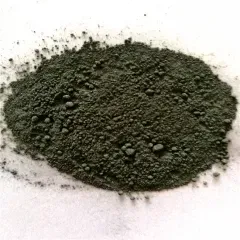
Sulfide Powder
2. High-Efficiency Catalyst in the Green Hydrogen Industry Chain
Hydrogen energy is considered the ultimate clean energy source, but the high cost of electrolytic water splitting for hydrogen production remains a bottleneck, with reliance on precious metal platinum for electrocatalysts (especially for HER) being a core issue. MoS₂, as the most promising non-precious metal alternative, is accelerating its industrial application along two technical pathways:
MOS2 is an active phase engineering route. It occurs in a semiconducting, stable 2H phase as well as an amorphous 1T phase. 1T-MoS2 is more conductive and has greater catalytic activity intrinsically. High-1T-phase-content MoS2 nanosheet powders or inks can be produced on a large scale via lithium-ion intercalation chemistry, electrochemical induction, or hydrothermal methods. Today, companies are offering catalytic inks that have more than 80percent 1T-phase content, for coating cathodes on electrolyzers that use proton exchange. In industrial current densities (>1000 mA/cm2), the performance decay rates are akin to the Pt/C catalysts with estimated savings of 60-70percent.
Defect and Interface Engineering Route: Even for the 2H phase, creating sulfur vacancies, doping with transition metal atoms (e.g., Co, Ni, Fe), or constructing heterostructures (e.g., with NiP, WC) can significantly enhance the intrinsic activity of its edge sites. These engineered powder materials are more suitable for scenarios with higher catalyst stability requirements, such as alkaline or anion exchange membrane electrolyzers. Related patent portfolios have become a focal point of competition among major chemical and energy companies.
3. Semiconductor Material for Post-Moore's Law Electronics and High-Sensitivity Sensing
As silicon-based semiconductors approach physical limits, two-dimensional semiconductors are seen as a crucial path to extend Moore's Law. Single-layer MoS₂, with its suitable bandgap, relatively high carrier mobility, and stable surface free of dangling bonds, has become a flagship material in the field of 2D electronics.
Ultrathin Logic and Memory Devices: Wafer-scale single-layer MoS₂ produced via chemical vapor deposition can be used to fabricate field-effect transistors with channel thicknesses of only 0.65 nm. Such devices offer extremely low static power consumption and excellent gate control, holding unique advantages for future low-power computing, flexible display drivers, and 3D stacked chips. International technology roadmaps for semiconductors have listed it as a key "beyond silicon" candidate material.
High-Specificity and Integrated Sensors: The electrical conductivity of MoS₂ nanosheets is highly sensitive to adsorbed gas molecules on their surface, with different response mechanisms and sensitivities for different gases. This property enables the fabrication of miniaturized gas sensor arrays for environmental monitoring (detecting NO₂, SO₂), industrial safety (detecting combustible gases), and even medical diagnostics (disease screening via detection of volatile organic compounds). Compared to traditional metal oxide sensors, MoS₂-based sensors offer advantages like lower operating temperature (can operate at room temperature), lower power consumption, and easier integration. Research teams have already developed smart sensing tag prototypes based on MoS₂ that can be read via smartphone Bluetooth, showcasing immense potential for Internet of Things applications.
4. Novel Adsorbent and Catalytic Material for Environmental Remediation
Developing efficient, low-cost treatment materials is key to addressing increasingly severe water and soil pollution.
Targeted Heavy Metal Adsorbent: The sulfur atoms on the surface of MoS₂ nanosheets are typical "soft bases" with strong Lewis acid-base affinity for "soft acid" heavy metal ions (e.g., Pb²⁺, Hg²⁺, Cd²⁺), offering far higher adsorption selectivity than ordinary activated carbon. The layered structure also provides interlayer adsorption sites for ions. Lab data shows that specific MoS₂ nanosheet structures can achieve saturation adsorption capacities for Pb²⁺ exceeding 1200 mg/g, maintaining efficiency across a wide pH range and in complex multi-ion water matrices. The current challenge lies in engineering the nanopowder into macroscopic forms suitable for practical water treatment processes (e.g., fixed beds, flow columns), such as porous sponges, composite membranes, or magnetic microspheres, and addressing regeneration and recovery costs.
Catalyst for Advanced Oxidation Processes: Advanced oxidation technologies based on sulfate radicals are effective for degrading refractory organic pollutants. MoS₂ can act as an efficient heterogeneous catalyst to activate persulfate or peroxymonosulfate, generating highly oxidizing sulfate radicals. Its variable-valence molybdenum ions (Mo⁴⁺/Mo⁵⁺/Mo⁶⁺) play a central role in this electron transfer process. Compared to homogeneous iron ion catalysis, MoS₂ catalysts produce no sludge, have a wider applicable pH range, and are reusable. For the advanced treatment of specialty wastewater containing antibiotics or dyes, this technology has entered the small-scale engineering demonstration stage.

Molybdenum disulfide grease is used in the wind energy industry
Ⅲ. Conclusion and Strategic Outlook
The strategic transformation of MoS₂ powder is, in essence, a deep re-evaluation and re-creation of the value of a traditional industrial material, led by breakthroughs in fundamental science. Its development trajectory clearly indicates that it is no longer merely an auxiliary component "reducing friction" in machinery but is becoming a primary or critical auxiliary material enabling core modern industrial functions such as "creating and optimizing energy," "sensing and processing information," and "purifying and protecting the environment."
supplier
Luoyang Tongrun Nano Technology Co., Ltd. (TRUNNANO), Luoyang City, Henan Province, China, is a reliable and high-quality global chemical material supplier and manufacturer. It has more than 12 years of experience providing ultra-high quality chemicals and nanotechnology materials, including Hexagonal boron nitride, nitride powder, Hexagonal boron nitride powder, sulfide powder, and 3D printing powder. If you are looking for high-quality and cost-effective Hexagonal boron nitride powder, you are welcome to contact us or inquire at any time.