Hollow Silica: The Wisdom of Microscopic Hollow Structures—From Structural Secrets to Industrial Innovation
Views : 296
Author : Vincy
Update time : 2025-12-18 16:19:00
I. The Secret of Microscopic Hollows: Why Hollow Silica is Unique
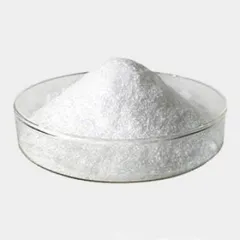
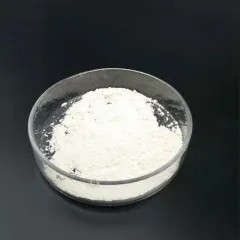
In the microscopic world of materials, there exists a particle imbued with a "lightweighting magic"—its shell is as hard as ceramic, yet its interior is empty. This is Hollow Silica. Unlike the familiar solid silica (the main component of sand), Hollow Silica consists of "microscopic hollow spheres" with diameters ranging from tens of nanometers to hundreds of micrometers: an outer shell of silica only a few nanometers to a few micrometers thick, encapsulating air or inert gas inside, resulting in an overall density as low as 0.1 to 0.5 grams per cubic centimeter, less than a quarter of solid silica and even lighter than a feather. This "rigid outside and empty inside" structure allows Hollow Silica to show its advantages in comparison. Solid silica has high density (about 2.2 grams per cubic centimeter) and crisp texture, like a heavy stone; although porous silica has pores, its structure is loose and easy to collapse, just like a sponge becomes soft after absorbing water; Hollow Silica's silica shell gives it compressive strength (up to tens of megapascals) and chemical inertness (acid and alkali resistance, non-combustible), while the hollow structure makes it like a "breathing container", maintaining stability while being lightweight. For example, if solid silica is a "solid brick" and porous silica is a "sponge block, then Hollow Silica is an "inflatable balloon"-it is light, tough, and not easy to break. This unique balance stems from the clever combination of the chemical stability of silica and the hollow geometry, making it a "all-rounder" in the materials world.
Hollow Silica
II. From Sand to Hollow Spheres: The Manufacturing Journey of Hollow Silica
Transforming ordinary silica raw materials into "hollow spheres" is a "shaping project" in the microscopic world. Current mainstream manufacturing processes reround a core objective: how to make silica naturally form a "shell-encapsulated hollow" structure during its growth. The template method is the most "accurate" route. Imagine making a "mold" with tiny polystyrene balls (a few microns in diameter), dispersing these balls in water, and adding a silicon source (such as tetraethoxysilicate) and a catalyst. The silicon source forms silicon dioxide under hydrolysis, which slowly wraps the polystyrene balls, just like putting a "glass coat" on each ball. Finally, the inner polystyrene template is removed by high-temperature burning or solvent dissolution, leaving perfect hollow silica balls. This method can accurately control the particle size (with an error of less than 10%) and shell thickness (from a few nanometers to a few microns) and is suitable for preparing electronic-grade high-end products, but the cost of the template and removal steps makes it expensive. The sol-gel method resembles "the art of natural growth." A silicon source (such as sodium silicate) is dissolved in water, and a surfactant (such as sodium dodecyl sulfate) is added. The surfactant molecules spontaneously aggregate in water to form tiny "micelles" or "emulsion droplets"—these droplets become the future "hollow cavities." The silicon source undergoes hydrolysis and condensation on the droplet surface, gradually forming a silica shell. After the solvent inside the droplet evaporates, a hollow cavity remains. This method requires no template, has a simple process, and is suitable for large-scale production of industrial-grade Hollow Silica. However, its particle size uniformity is slightly inferior to the template method, and the shell layer may also be uneven. Spray drying takes the route of "efficient mass production". The silicon source solution is atomized into micron droplets and sprayed into a hot air stove for rapid drying. When the water in the droplet evaporates, the solute (silica precursor) shrinks into a ball due to surface tension, and the internal gas is wrapped to form a hollow space. This method can produce hundreds of kilograms of products per hour and is low in cost. It is often used in low-end fields such as building insulation materials. However, it has a low hollow degree (some particles may be semi-solid) and is suitable for scenes with low performance requirements. In recent years, microfluidic technology has brought new breakthroughs to Hollow Silica manufacturing. By precisely controlling droplet size and generation rate through microchannels, it is possible to mass-produce hollow spheres with excellent monodispersity (particle size deviation < 5%), akin to using a "micro-printer" to produce standard hollow spheres on an assembly line. Regardless of the process, the core principle is to mimic nature's "self-assembly"—making silica molecules "actively" form hollow structures at the microscopic scale, as orderly as bees building hives.
III. Cross-Border Empowerment: How Hollow Silica is Changing Lives
Thanks to its "light, strong, and stable" properties, Hollow Silica has long moved out of the laboratory, playing the role of an "invisible optimizer" in multiple fields. In the lightweight battlefield, it is a "weight loss master". In aerospace, 5% to 10% Hollow Silica is mixed into aircraft wings and satellite brackets, which can reduce the weight by 30% without reducing the strength, which is equivalent to "unloading unnecessary luggage" from the aircraft. The battery pack shell of new energy vehicles is made of Hollow Silica composite material, which not only reduces the weight of the vehicle and improves battery life but also buffers the impact of a collision. The battery pack tested by a car company last year reduced the deformation by 40% during the extrusion test, making it significantly safer. Improvement. Compared with traditional metal weight reduction solutions, Hollow Silica composites do not sacrifice rigidity and can be called "having both fish and bear's paw." Incorporating Hollow Silica into cement mortar or exterior wall coatings allows its hollow structure to trap large amounts of static air (air thermal conductivity is only 0.026 W/m·K), reducing the material's thermal conductivity by 70% compared to solid concrete. After retrofitting exterior walls with Hollow Silica insulation mortar in a residential complex in northern China, winter heating energy consumption dropped by 28%, and indoor temperature fluctuations were reduced by half. Even better, the silica shell is non-flammable and does not release toxic gases when exposed to fire, making it much safer than foam plastic insulation boards. In lightweight partition boards, Hollow Silica also reduces the board's weight, allowing workers to lift a 2-square-meter partition board with one hand. In the field of biomedicine, Hollow Silica is transformed into a "micro courier". Its hollow cavity can hold drug molecules, and the nanopore on the shell is like a "smart gate"-when encountering the acidic environment or specific enzymes of tumor tissue, the hole will automatically open to release the drug, while the "gate" is closed in normal tissue. Reduce damage to healthy cells. A research team used Hollow Silica to treat liver cancer. In animal experiments, the tumor inhibition rate was 50% higher than that of traditional chemotherapy, but the side effects were greatly reduced. In addition, Hollow Silica's high X-ray blocking property can also be used as a carrier for medical contrast agents, making CT scans clearer. On the battlefield of environmental protection, Hollow Silica is the "pollutant scavenger. Its porous surface (specific surface area can reach 500 square meters per gram) can adsorb heavy metal ions (such as lead and cadmium) or organic pollutants (such as oil pollution) in water like a magnet, and the chemical properties of silicon dioxide are stable and will not be secondary pollution. A printing and dyeing factory uses Hollow Silica to treat wastewater, with a heavy metal removal rate of 98%, and the cost is 40% lower than that of activated carbon. Even in air purification, the Hollow Silica filter element can capture PM2.5 and formaldehyde, making indoor air fresher.
IV. Challenges and the Future: The Evolutionary Path of Hollow Silica
Despite its wide-ranging applications, Hollow Silica still faces "growing pains." The biggest challenge is "balancing performance and cost": high-end electronic-grade products (e.g., chip thermal interface materials) rely on the template method, with costs as high as over 100,000 yuan per ton. In contrast, civilian applications (e.g., building materials) require low-cost products, often resorting to semi-solid particles produced by spray drying. How to make this "noble material" accessible to the general public is an urgent issue for the industry to address. Another challenge is "functional singularity." Currently, Hollow Silica is mainly used as a structural filler or carrier, and exploration of its surface modification remains in the early stages. For example, modifying the surface with silane coupling agents can enhance bonding with polymers (for 3D printing materials). Loading magnetic nanoparticles can produce magnetically responsive microspheres for targeted drug delivery. However, these attempts at "multi-functionalization" have not yet been scaled up, limiting their penetration into high-end fields.
Hollow Silica
In the future, the evolution of Hollow Silica will reround three directions. First, "green manufacturing": developing low-energy processes such as low-temperature sol-gel methods and solar-driven spray drying to reduce carbon emissions. Second, "intelligent responsiveness": designing Hollow Silica that can automatically change its hollow structure in response to heat, light, or magnetic fields, for use in adaptive seals or intelligent drug release systems. Third, "cross-border integration": combining with carbon nanotubes or graphene to create new "rigid-yet-flexible" materials for flexible electronic screens or wearable devices. In the new energy sector, the potential of Hollow Silica is emerging. As a coating for lithium-ion battery separators, its hollow structure can block oxygen and heat, preventing thermal runaway (raising the thermal decomposition temperature from 130°C to 300°C). As a filler in solid-state electrolytes, its spherical structure can reduce ion transport resistance, increasing charging speed by 30%. There are even research attempts to use Hollow Silica for hydrogen adsorption, offering a new solution for hydrogen energy storage—its hollow cavities can "lock in" hydrogen molecules like "microscopic gas tanks," with volumetric hydrogen storage density potentially exceeding that of traditional high-pressure gas cylinders.
Conclusion
From microscopic hollow spheres to industrial innovators, Hollow Silica's story confirms a simple truth: the value of materials is often hidden in the most basic structure. It has no gorgeous appearance, but it rewrites the performance boundaries in areas such as lightweight, heat insulation, and drug loading with the wisdom of "rigid outside and hollow inside". When we feel smooth flying on the plane, enjoy warm winter and cool summer in buildings, and benefit from precise treatment in medical care, we may not have imagined that behind this is a group of "micro hollow balls" silently working hard. With the advancement of manufacturing technology and the deepening of functional exploration, Hollow Silica's story has just begun-in the next decade, it may be integrated into every corner of our lives in more unexpected ways and continue to write "micro hollow" The legend of changing the world.
Supplier
TRUNNANOis a globally recognized Hollow Silica manufacturer and supplier of compounds with more than 12 years of expertise in the highest quality nanomaterials and other chemicals. The company develops a variety of powder materials and chemicals. Provide OEM service. If you need high quality Hollow Silica, please feel free to contact us. You can click on the product to contact us. Tags: Hollow Silica, Silica, silicon dioxide