Nano-alumina (Al₂O₃) has become a total game-changer in modern industry—it’s everywhere, from the advanced electronics we use daily to high-performance coatings and even the batteries powering our devices. What makes it so special? Its nanoscale size gives it superpowers that regular bulk alumina just can’t match: think high hardness, top-tier thermal stability, great insulation, and impressive surface activity. Today, two types of nano-alumina rule the market: fumed alumina (also called pyrogenic or gas-phase alumina) and conventional nano-alumina, which is mostly made through liquid-phase methods like precipitation, sol-gel, or hydrothermal synthesis. Even though they’re both “nano-alumina,” the way they’re made creates big differences in how their particles look, their surface chemistry, how well they mix with other materials, and ultimately, how they perform in real-world use. This article breaks down these two materials in a straightforward way—covering how they’re made, their key properties, pros and cons, and common uses—so material developers, engineers, and industry folks can pick the right one for their needs.
Nano-TiO2 Nanometer Titania Particle
1. Preparation Methods: The Fundamental Distinction
The main reason fumed alumina and conventional nano-alumina are so different boils down to how they’re manufactured. Each method gives the final product unique traits, from the shape of its particles to how pure it is and how active its surface is.
1.1 Fumed Alumina: High-Temperature Flame Hydrolysis
Fumed alumina is made using a gas-phase process called flame hydrolysis, which basically involves zapping volatile aluminum materials in a super-hot flame. Here’s how it works in simple terms: first, we take a volatile aluminum compound—most often aluminum chloride (AlCl₃) or aluminum alkoxides like aluminum isopropoxide—vaporize it, and mix it with a flammable gas (like hydrogen) and oxygen. Next, this mixture gets fed into a flame reactor where temperatures hit 1000–1500℃. In those extreme conditions, the aluminum compound quickly breaks down (hydrolyzes and oxidizes) to form tiny Al₂O₃ “nuclei”—think of them as tiny building blocks. Finally, as these nuclei cool down, they bump into each other and stick together, forming chain-like clumps (aggregates) before being collected and purified.
This gas-phase method has some built-in perks: the high temperature makes sure the reaction is complete with almost no impurities, and the quick cooling stops the particles from growing too big. The end result? A super-pure, amorphous or γ-phase alumina with ultra-tiny primary particles and a unique chain-like structure—things that make it stand out from conventional nano-alumina.
1.2 Conventional Nano-Alumina: Liquid-Phase Synthesis
On the flip side, conventional nano-alumina is mostly made using liquid-phase methods—these are more mature, cheaper, and easy to scale up for large-scale production. The most common ways to make it are precipitation, sol-gel, and hydrothermal synthesis, each with its own little quirks:
• Precipitation: This is the most widely used method. We take aluminum salts (like aluminum chloride, AlCl₃, or aluminum sulfate, Al₂(SO₄)₃) and mix them with a base (such as ammonia or sodium hydroxide) to form aluminum hydroxide (Al(OH)₃) solids (precipitates). These solids are then washed, dried, and heated (calcined) at 500–1200℃ to turn them into γ-phase or α-phase nano-alumina.
• Sol-Gel: Aluminum alkoxides are mixed with an organic solvent, where they break down (hydrolyze) to form a thick, gel-like substance (a “sol” that turns into a “gel” as the solvent dries). The gel is then dried and calcined to make nano-alumina with fairly uniform particle sizes—though this method is a bit more expensive than precipitation.
• Hydrothermal Synthesis: Aluminum hydroxide is treated with high temperature and pressure in water, which helps the crystals grow and change phase. The product is then calcined to get nano-alumina with controlled crystal phases.
While these liquid-phase methods are cheap and easy to scale, they have their downsides. The water and solvents used during synthesis often make the particles clump together tightly (hard agglomerates)—this happens because of high surface energy and water sticking the particles together during drying and heating. Plus, leftover impurities (like sodium, chloride, or sulfate ions) from the reactants are common, and these can mess with the material’s performance in high-end applications.
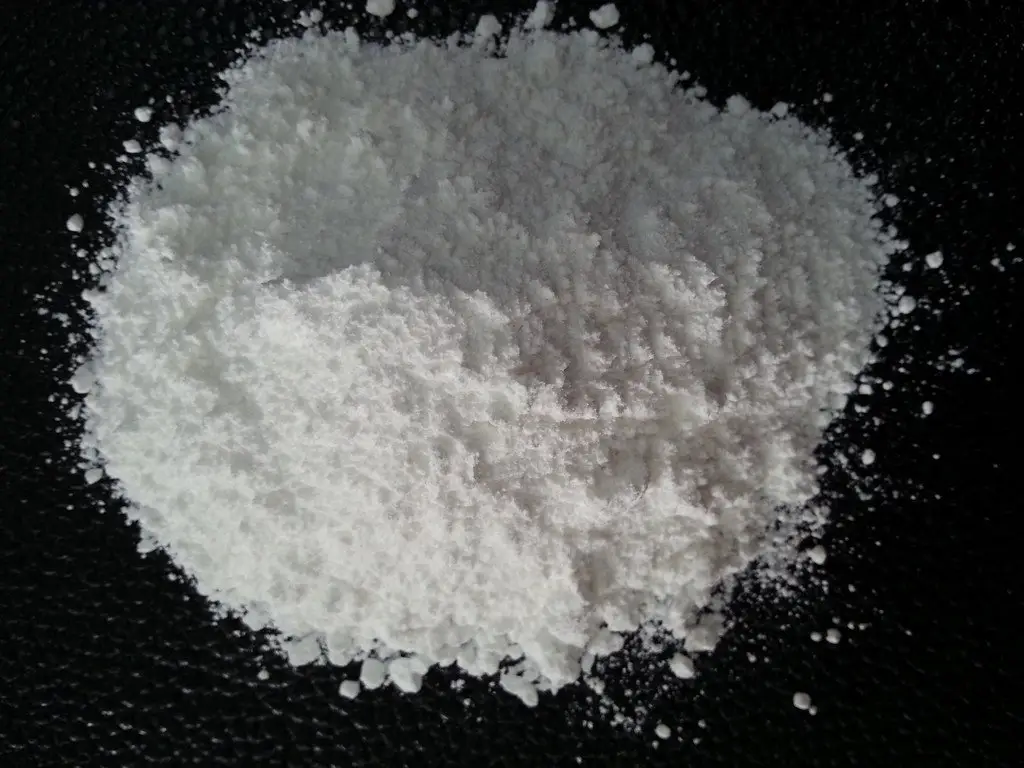
Fumed Alumina
2. Key Property Comparison: A Side-by-Side Analysis
The differences in how these two materials are made directly affect their physical and chemical properties—and these properties are what decide which one is best for a specific job. Below is a simple side-by-side comparison of their core traits, so you can see their strengths and weaknesses at a glance:
|
Property Parameter |
Fumed Alumina |
Conventional Nano-Alumina |
|
Primary Particle Size |
5–20 nm, with an extremely uniform size distribution |
20–100 nm, with a wide distribution (often ranging from 50–200 nm) |
|
Particle Morphology |
Chain-like, branched aggregates with an open, porous structure |
Spherical or irregular shapes, forming dense, hard agglomerates with a closed structure |
|
Specific Surface Area (BET) |
100–200 m²/g, high and stable even after processing |
50–150 m²/g, lower overall, and prone to decline due to agglomeration |
|
Crystal Phase |
Primarily amorphous or γ-Al₂O₃ (no high-temperature calcination required) |
Mixed phases (γ, α, θ) depending on calcination temperature; α-phase can be obtained with high-temperature calcination |
|
Purity |
≥99.8–99.99%, ultra-low impurity content (Na, Fe, Si < 200 ppm) |
99.0–99.8%, with common residual ions (Na⁺, Cl⁻, SO₄²⁻) from liquid-phase reactions |
|
Surface Hydroxyl (–OH) Density |
High and controllable (2–8 OH/nm²), ensuring strong surface activity |
Moderate and unevenly distributed, with more bound water on the surface |
|
Dispersion in Organic/Polymer Matrices |
Excellent; easily disperses into primary aggregates and forms a thixotropic network |
Poor; hard agglomerates are difficult to break, requiring strong shear forces or surface modification |
|
Bulk Density |
Low (50–100 g/L), appearing as a fluffy powder |
High (200–500 g/L), appearing as a compact powder |
|
Rheology Effect |
Strong thixotropy; provides anti-settling and thickening effects at low dosages |
Weak rheology control; requires higher loading to achieve similar effects |
3. Advantages and Limitations: Balancing Performance and Cost
Neither fumed alumina nor conventional nano-alumina is “better” overall—each has its own pros and cons, which makes them perfect for different uses. Understanding these trade-offs is key to picking the right material for the job.
3.1 Fumed Alumina: High Performance, Premium Cost
Fumed alumina is the high-end option, loved for its exceptional purity, how well it mixes with other materials, and its surface activity. Here are its main advantages:
• Ultra-High Purity and Low Impurities: Unlike conventional nano-alumina, fumed alumina has almost no leftover ions from the manufacturing process. This makes it perfect for applications where purity is non-negotiable—like electronics, lithium-ion batteries, and high-purity catalysis. Impurities like sodium or chloride can cause short circuits in batteries, break down electrolytes, or ruin catalysts, so fumed alumina’s ultra-pure nature is a total win in these fields.
• Superior Dispersion and Rheology Control: Its open, chain-like clumps (aggregates) are easy to break apart with a little stirring (moderate shear forces), so it mixes evenly into organic materials like polymers, silicones, and epoxies. What’s more, these clumps form a reversible 3D network in liquids—meaning it thickens when it’s sitting still and thins out when you stir it (thixotropy). This gives it great anti-settling and anti-sagging properties, even when you use just 0.1–1% of it. That’s why it’s perfect for high-end coatings, adhesives, and thermal interface materials (TIMs), where even mixing and controlled thickness are key.
• Controllable Surface Activity: Fumed alumina has a lot of hydroxyl groups (–OH) on its surface, and these can be easily modified with things like silane coupling agents. This makes it more compatible with organic materials, so it integrates smoothly into all kinds of polymer composites, making them stronger and more heat-resistant.
• Excellent Thermal and Chemical Stability: Fumed alumina’s amorphous or γ-phase structure can handle high temperatures—up to 1000℃—without breaking down. It’s also resistant to acids and alkalis, so it works well in high-temperature coatings, electronic packaging, and harsh chemical environments.
Of course, fumed alumina isn’t perfect. Its main downsides are: it’s expensive to make (the high-temperature process uses a lot of energy and specialized equipment), it’s a fluffy powder with low bulk density (which makes it tricky to transport, measure, and handle—you need special feeding systems for industrial use), and its chain-like clumps are fragile. If you stir it too hard, you can break the 3D network, which reduces its ability to thicken or prevent settling.
Fumed Aluminum Oxide
3.2 Conventional Nano-Alumina: Cost-Effective, General-Purpose
Conventional nano-alumina is the workhorse of the industry—it’s cheap and easy to make in large quantities. Here are its main advantages:
• Low Cost and Mass Production: Liquid-phase methods use cheap raw materials and simple equipment, so conventional nano-alumina is way more affordable than fumed alumina. This makes it the go-to for low-to-medium-end applications where top-tier performance isn’t necessary.
• Adjustable Crystal Phase: By changing the temperature when we heat (calcine) it, manufacturers can control what crystal phase the alumina is in—from γ-phase (which is more reactive) to α-phase (which is super hard, ranking 9 on the Mohs scale). This flexibility makes it great for things like abrasives and polishing slurries, where hardness is key.
• High Bulk Density: Its compact, tight clumps (agglomerates) make it denser, so it’s easier to store, transport, and mix with other materials. This simplifies handling in large-scale production and cuts down on logistical headaches.
The main issues with conventional nano-alumina come from how it’s made (liquid-phase synthesis). Hard agglomeration is a big problem—during drying and heating, the particles clump together tightly, and these clumps are hard to break apart, even with strong stirring. This creates weak spots in composites, makes them less strong, and leads to uneven performance. Plus, leftover impurities can reduce insulation, corrosion resistance, and electrochemical stability, so it’s not good for high-end electronics or batteries. Finally, its surface hydroxyl groups are spread out unevenly, which makes it harder to modify and less compatible with organic materials.
4. Industrial Applications: Matching Material to Need
The different traits of fumed and conventional nano-alumina make them suited for different industries. Below are their most common uses, so you can see how their strengths are put to work in real life.
4.1 Fumed Alumina: High-Tech, High-Purity Scenarios
Fumed alumina’s top-tier properties make it the go-to for high-tech, high-performance applications:
• Lithium-Ion Batteries: Coating fumed alumina on battery separators makes them more heat-resistant—raising the temperature at which they shrink to over 200℃ and preventing short circuits when the battery gets too hot (thermal runaway). It’s also used as a coating on cathodes to make batteries last longer and be safer, since its ultra-pure nature doesn’t contaminate the electrolyte.
• High-End Coatings and Inks: As a rheology modifier (something that controls thickness), fumed alumina prevents settling, sagging, and thinning in automotive clearcoats, aerospace sealants, and optical coatings. It makes these coatings more scratch-resistant and durable without messing up their transparency—perfect for high-gloss, long-lasting finishes.
• Thermal Interface Materials (TIMs): In electronics cooling, fumed alumina helps transfer heat better in silicone or epoxy TIMs, while keeping the material at the right thickness and preventing larger fillers from settling. This makes sure heat moves efficiently from electronic components to heat sinks, making devices work better and last longer.
• Catalysis and Adsorption: Its high surface area and purity make it a great “carrier” for catalysts—used in things like petrochemical cracking, cleaning the environment, and making fine chemicals. It provides a stable, large surface area for the catalyst to work on, making reactions more efficient.
• Special Ceramics and Electronics: Fumed alumina is used as a high-purity filler in epoxy molding compounds (EMC), ceramic insulators, and high-temperature sealing materials. Its great insulation and heat resistance make sure electronic devices and high-temperature equipment work reliably.

TiO2 Nanoparticles
4.2 Conventional Nano-Alumina: Mass, Cost-Sensitive Applications
Conventional nano-alumina’s low cost makes it perfect for mass-produced, budget-friendly applications:
• General Plastics and Rubber: As a filler in materials like polypropylene (PP), polyethylene (PE), polyvinyl chloride (PVC), and rubber, conventional nano-alumina makes them harder, more wear-resistant, more dimensionally stable, and more heat-resistant. It’s used in car parts, wires, cables, and flooring—places where cost is a big concern.
• Abrasives and Polishing: α-phase conventional nano-alumina is used in chemical mechanical planarization (CMP) slurries, grinding pastes, and sandpaper. Its high hardness lets it remove material quickly while leaving a smooth surface—great for polishing metals, semiconductors, and glass.
• Ceramics and Refractories: It’s a key ingredient in high-alumina ceramics, refractory bricks, and dental materials. Its adjustable crystal phase and low cost balance performance and affordability in these products.
• Ordinary Coatings and Adhesives: Conventional nano-alumina is a cheap reinforcement filler in industrial coatings, water-based paints, and construction adhesives. When used in moderate amounts, it makes these materials stronger and more durable without adding too much cost.
5. Selection Guidance: Making the Right Choice
Picking between fumed alumina and conventional nano-alumina comes down to three key things:
1. Purity and Impurity Tolerance: If your application needs ultra-high purity (like electronics, batteries, or high-purity catalysis), fumed alumina is the only way to go—its low impurity content keeps performance from dropping. For general uses like plastics or abrasives, where impurities don’t matter much, conventional nano-alumina is cheaper and works just fine.
2. Dispersion and Rheology Requirements: If you need a material that mixes well, thickens when stationary, or prevents settling (like coatings, sealants, or TIMs), fumed alumina’s chain-like structure and high surface activity make it better. For systems that get stirred a lot and don’t need strict thickness control (like plastics or rubbers), conventional nano-alumina works well if you modify it properly.
3. Cost Budget: If you’re making high-performance, small-batch products (like aerospace coatings or high-end electronics), fumed alumina’s higher cost is worth it. For mass-produced, budget-friendly goods (like consumer plastics or ordinary coatings), conventional nano-alumina is the better choice.
Supplier
Luoyang Tongrun Nano Technology Co. Ltd. (TRUNNANO) Luoyang City, Henan Province, China, is a reliable and high-quality global alumina powder supplier and manufacturer. It has more than 12 years of experience providing ultra-high quality chemicals and nanotechnology materials, including Hexagonal boron nitride, nitride powder, Hexagonal boron nitride powder, sulfide powder, and 3D printing powder. If you are looking for high-quality and cost-effective Nano-alumina, you are welcome to contact us or inquire any time.