Overview of the Soldering Iron Heater
The soldering iron heater is the core component of a soldering iron, mainly through the conversion of electrical energy into heat to work. Its common types are internal and external heat: internal heating is fast, high efficiency, the heating core is located inside the iron head; external heat structure is simple, durable, the iron head is set in the heating body outside. The material of the soldering iron heater is mostly made of nickel-chromium alloy wire wound with high resistivity and high temperature resistance, and wrapped with insulating and high temperature resistant material outside. Soldering iron heater is widely used in electronic repair, circuit board welding and other fields. The use of temperature control should be attention to avoid overheating damage to the components is an indispensable tool for electronic production.

Soldering Iron Heater
Features of the Soldering Iron Heater
In terms of heating efficiency and temperature control, internal heaters utilize an internal heating core to directly transfer heat to the iron tip, achieving a rapid heating speed. They typically reach an operational temperature of 200 - 450 ℃ within 1 - 3 minutes, which makes them a great fit for situations where high efficiency is required. External heaters, designed with the heating element wrapped around the exterior of the iron tip, might take a bit longer to heat up, usually around 5 - 8 minutes.
In terms of structural design, internal heaters are compact and lightweight with minimal heat loss. However, the heating core is prone to damage from frequent use or high-temperature oxidation, resulting in a relatively shorter lifespan. External heaters feature a structure where ceramic or mica insulation wraps around the nickel-chromium alloy wire heater, with the soldering iron tip separated from the heating body. This design enhances durability, with a lifespan of up to hundreds of hours. Often, the exterior is wrapped in high-temperature silicone, ceramics, and other insulating materials, providing both anti-scalding protection and insulation safety.
Regarding energy consumption and applicability, internal heaters typically have a power rating of 20 - 60W, while external heaters range from 60 - 150W. When combined with temperature control technology, energy consumption can be effectively reduced. Different types cater to various scenarios. Internal heaters or thermostatic soldering stations are suitable for precision electronic repair, while external heaters or high-power models are better suited for industrial production. Anti-static types can prevent static damage to sensitive components.
In terms of maintenance and cost-effectiveness, both the iron tip and heating core of soldering iron heaters support individual replacement, thereby reducing usage costs. Internal heaters are more affordable and suitable for beginners. Although external heaters and thermostatic soldering stations have higher initial costs, they are more economical in the long run, especially for professional applications.
Specifications table of Soldering iron heater
|
Applications of the Soldering Iron Heater
The soldering iron heater plays a pivotal role in electronics, industry, scientific research, and handicrafts, serving as a core tool for achieving precision connections.
In electronic manufacturing and maintenance, soldering iron heater is the “soul” of the circuit board welding - endothermic heater by virtue of the rapid warming characteristics, commonly used in cell phone motherboards, laptops and other micro-components of the soldering and disassembly, with the suction of the tin can be accurately replaced chips, Capacitors and other devices; external heat or high-power models are suitable for industrial circuit boards to deal with large-area solder joints, such as power supply modules, connectors welding, in the automotive electronics harness, home appliance line maintenance, but also can reliably connect wires and terminals.
Scientific research and laboratory scenarios, soldering iron heater is a powerful assistant for prototype development, researchers can use it to manually weld sensor modules, small circuit systems, for microelectronics research in the MEMS device or chip packaging, high-precision heaters can achieve micron-level wires and chip pins micro-welding to help explore the welding process of new materials. In the industrial field, it is more widely used: jewelry processing, small heaters with fine tip can be welded with tiny parts of gold and silver jewelry; hardware maintenance, high-power external heaters can be competent in stainless steel mesh, metal pipe welding; aerospace field requires anti-static, thermostatic heater, in order to meet the demanding requirements of spacecraft circuit boards of high-reliability welding.
In handicraft and educational scenarios, the soldering iron heater is the “companion” of DIY enthusiasts, used for soldering components of electronic projects such as smart cars and Arduino expansion boards. It also serves as a fundamental teaching tool in school electronic technology courses, helping students grasp the principles of soldering and safe operation practices.
From micron chips to large metal components, the soldering iron heater, with temperature control at its core, continues to demonstrate irreplaceable value in precision manufacturing, repair, and innovative practices. As technology progresses, new heaters that are intelligent and energy-efficient will find further applications in cutting-edge fields such as semiconductors and new energy.
Company Profile
Luoyang Tongrun Nano Technology Co. Ltd. (TRUNNANO) is a trusted global chemical material supplier & manufacturer with over 12-year-experience in providing super high-quality chemicals and nanomaterials, including boride powder, nitride powder, graphite powder, ceramic products, 3D printing powder, etc.
The company has a professional technical department and Quality Supervision Department, a well-equipped laboratory, and equipped with advanced testing equipment and after-sales customer service center.
If you are looking for high-quality Ceramic Products please feel free to contact us or click on the needed products to send an inquiry.

Applications of Ceramic Products
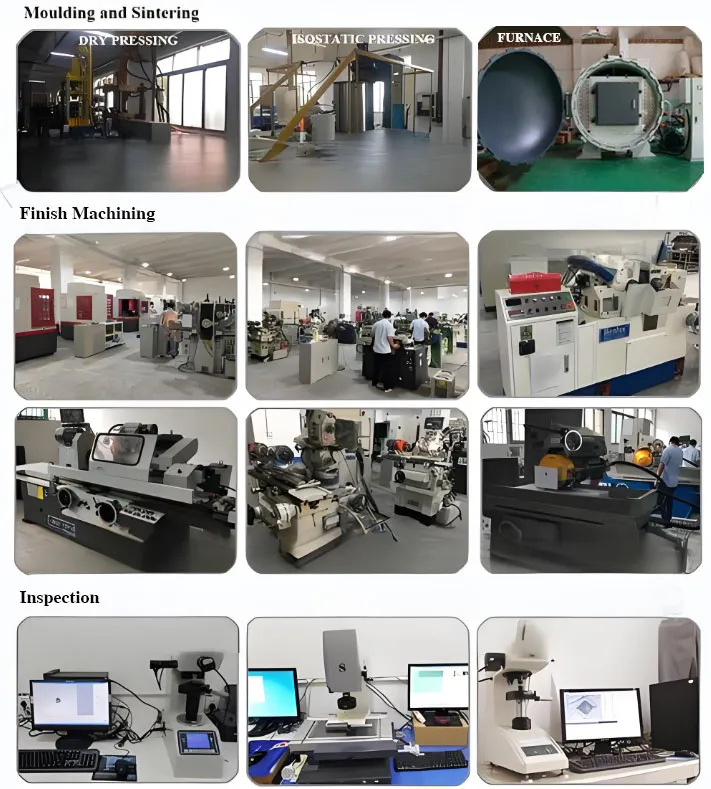
Process of Ceramic Products
Payment Term
T/T, Western Union, Paypal, Credit Card etc.
Shipment Term
By air, by sea, by express, as customers request.
5 FAQs of Soldering Iron Heater
Q1: What distinguishes internal heating from external heating soldering irons?
Internal heating soldering irons heat quickly (1-3 minutes) and are compact, making them suitable for precision soldering tasks such as cellphone motherboards. However, their heating cores are prone to oxidation and have a shorter lifespan. External heating soldering irons take longer to heat (5-8 minutes) but offer good temperature stability and higher power (up to 300W), making them ideal for industrial-grade soldering joints or metal soldering. Thermostatic soldering stations (e.g., the 936 series) combine the advantages of both, featuring precise temperature control and anti-static protection, and are suitable for professional applications.
Q2: How do I select the appropriate power rating for my soldering iron?
For small components like resistors and capacitors, it is recommended to use a 20 - 60W internal heating soldering iron. Industrial soldering joints or metal soldering requires more than 60W of external heating. Precision repairs are better handled with a thermostatic soldering station (e.g., 60 - 150W). Insufficient power may result in the solder not melting, while excessive power can easily damage the components.
Q3: What are the benefits of thermostatic soldering stations compared to regular soldering irons?
Thermostatic soldering stations can accurately control temperature (± 5 ℃), quickly return to the set temperature, save energy, and extend the life of the iron tip. They also support anti-static functions to prevent damage to sensitive chips. Some models feature sleep mode, password protection, and other intelligent functions, making them suitable for high-demand scenarios.
Q4: What safety precautions should I take when using a soldering iron?
Grounding Protection: Use a three-wire plug to ensure the casing is grounded. Scald Prevention: Place the soldering iron on a stand when not in use and avoid touching the hot parts. Ventilation and Fume Extraction: Maintain good air circulation during soldering and use fume extraction equipment to minimize inhalation of fumes. Regular Inspection: Use a multimeter to test the insulation of the power cord to prevent leakage risks.
Q5: How do I solder chip resistors and other precision components?
Use a pointed soldering iron tip (e.g., 0.5mm), set the temperature between 260 - 350°C, and limit the soldering time to 1 - 2 seconds.