Introduction of Alumina ceramic rod
Alumina ceramic rod is a high - quality ceramic component crafted from refined aluminum oxide. It is widely used in various industries due to its remarkable combination of physical, chemical, and mechanical properties. Its unique characteristics enable it to outperform many traditional materials in demanding applications, providing reliable performance and long - term durability.
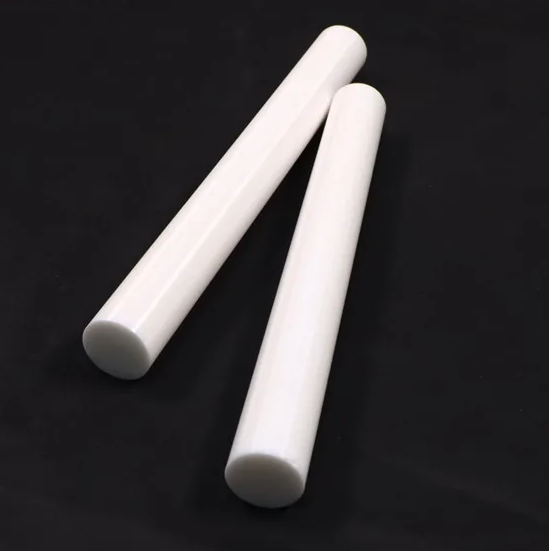
Alumina ceramic rods
Features of Alumina ceramic rod
- Exceptional Hardness: Alumina ceramic rods have a high Mohs hardness, typically between 8 and 9. This makes them extremely resistant to wear, abrasion, and indentation. In applications such as cutting tools and mechanical seals, they can maintain their sharp edges and smooth surfaces over extended periods, reducing the need for frequent replacements.
- High Temperature Resistance: These rods can withstand extremely high temperatures, often up to 1600°C (2912°F). This property makes them suitable for use in high - temperature environments such as furnaces, kilns, and thermal processing equipment. They can maintain their structural integrity and mechanical properties even under prolonged exposure to high heat, ensuring consistent performance in demanding thermal applications.
- Chemical Inertness: Alumina ceramic rods are highly resistant to most chemicals, including acids, bases, and solvents. This chemical stability allows them to be used in corrosive environments, such as chemical processing plants and laboratories. They will not react with or be damaged by common chemical substances, making them ideal for components that come into contact with corrosive materials.
- Excellent Electrical Insulation: They are excellent electrical insulators, with high resistivity. This property is crucial in electrical and electronic applications, where preventing electrical conduction is essential. They can be used as insulators in high - voltage equipment, electronic devices, and electrical connectors, providing reliable electrical isolation and safety.
- Low Thermal Expansion: Alumina ceramic rods have a low coefficient of thermal expansion. This means that they do not expand or contract significantly with changes in temperature. In applications where dimensional stability is critical, such as in precision instruments and high - temperature aerospace components, this property ensures that the rods maintain their original shape and size, reducing the risk of mechanical failure due to thermal stress.
- Good Biocompatibility: Some grades of alumina ceramic rods are biocompatible, which means they can be used in medical and dental applications without causing adverse reactions in the human body. They are used in joint replacements, dental implants, and surgical instruments due to their non - toxic and non - allergenic properties, providing a safe and reliable option for patients.
Specifications of Alumina ceramic rod
| Specification |
Details |
| Material |
High - purity aluminum oxide (Al₂O₃) |
| Diameter Tolerance |
±0.05 mm to ±0.1 mm (depending on diameter) |
| Length Tolerance |
±1 mm |
| Surface Finish |
Ra 0.1 - 0.4 µm (depending on requirements) |
| Density |
3.9 - 4.0 g/cm³ |
| Hardness (Mohs) |
8 - 9 |
| Maximum Working Temperature |
Up to 1600°C |
| Electrical Resistivity |
> 10¹⁴ Ω·cm |
Applications of Alumina ceramic rod
- Mechanical Industry: In the mechanical field, alumina ceramic rods are used as wear - resistant parts, such as bearings, shafts, and pistons. Their high hardness and wear resistance allow them to operate in high - speed and high - load environments, reducing friction and extending the service life of mechanical equipment. They are also used in cutting tools, such as drills and end mills, providing sharp cutting edges and long - lasting performance.
- Electrical and Electronic Industry: Due to their excellent electrical insulation properties, alumina ceramic rods are widely used in electrical and electronic applications. They are used as insulators in high - voltage equipment, such as transformers, circuit breakers, and switchgear. They are also used in electronic devices, such as substrates for integrated circuits, connectors, and capacitors, providing reliable electrical isolation and heat dissipation.
- Chemical Industry: In the chemical industry, alumina ceramic rods are used in chemical reactors, pipelines, and valves. Their high chemical resistance and thermal stability allow them to withstand corrosive chemicals and high - temperature conditions. They are also used in heat exchangers, where they can transfer heat efficiently without being corroded by the chemicals being processed.
- Medical and Dental Industry: Some grades of alumina ceramic rods are used in medical and dental applications. In joint replacement surgeries, they are used as femoral heads and acetabular cups due to their biocompatibility, hardness, and wear resistance. In dental restorations, they are used as crowns, bridges, and implants, providing a strong and durable solution for dental problems.
- Aerospace Industry: Alumina ceramic rods are used in aerospace applications, such as thermal protection systems, rocket nozzles, and heat shields. Their high - temperature resistance and low thermal expansion make them ideal for protecting spacecraft and aircraft from the extreme heat generated during flight. They can also be used in structural components, providing high strength and stiffness while maintaining dimensional stability under high - stress conditions.
Packing and Storage
The product is in powder form and should be stored in a cool, ventilated place. Avoid inhalation when using it and keep away from open flames, heat sources, etc.

Company Profile
Luoyang Tongrun Nano Technology Co. Ltd. (TRUNNANO) is a trusted global chemical material supplier & manufacturer with over 12-year-experience in providing super high-quality chemicals and nanomaterials, including boride powder, nitride powder, graphite powder, sulfide powder, 3D printing powder, etc.
The company has a professional technical department and Quality Supervision Department, a well-equipped laboratory, and equipped with advanced testing equipment and after-sales customer service center.
If you are looking for high-quality Alumina ceramic rod please feel free to contact usor click on the needed productstosend an inquiry.

Payment Term
T/T, Western Union, Paypal, Credit Card etc.
Shipment Term
By air, by sea, by express, as customers request.
FAQs of Alumina ceramic rod
Q1: What makes alumina ceramic rods superior to metal alternatives?
Re: Alumina ceramic rods outperform metals in extreme environments due to their non-conductivity, corrosion resistance, and high-temperature stability. Unlike metals, they do not oxidize, warp, or conduct electricity, reducing failure risks in electronics, chemical plants, or aerospace. Additionally, their low friction minimizes energy loss in machinery, while biocompatibility ensures safe medical use. Metals may degrade under harsh conditions, requiring frequent replacement.
Q2: What is the maximum operating temperature for alumina ceramic rods?
Re: Alumina ceramic rods can withstand continuous temperatures up to 1,600°C without structural failure. Their thermal stability allows use in furnaces, molten metal handling, and jet engines. However, sudden thermal shocks (e.g., rapid cooling from 1,500°C) may cause cracking, so gradual temperature changes are recommended.
Q3: Can alumina ceramic rods be customized for specific applications?
Re: Yes, alumina rods can be tailored in terms of dimensions, purity (95%–99.9%), and surface finishes (polished or textured). Custom shapes, such as stepped rods or hollow tubes, are achievable via precision machining. Additives like zirconia enhance toughness for heavy-load applications. Manufacturers often collaborate with clients to optimize specifications for unique use cases.
Q4: How does alumina compare to other ceramics like zirconia?
Re: Alumina offers higher thermal conductivity and hardness than zirconia, making it better for wear-resistant applications. However, zirconia has superior fracture toughness and biocompatibility for dental implants. Alumina’s lower cost and widespread availability make it preferable for industrial uses, while zirconia is chosen for high-stress medical devices.
Q5: What maintenance is required for alumina ceramic rods?
Re: Alumina rods require minimal maintenance due to their corrosion and wear resistance. Occasional cleaning with non-abrasive solvents removes contaminants. In abrasive environments, periodic inspections for surface wear are advised. Avoid impacts to prevent cracking, as alumina is brittle. With proper handling, service life exceeds 20 years in most applications.