Overview of Silicon Nitride Plungers
Silicon Nitride Plunger is a mechanical component made of silicon nitride ceramic material. It has the advantages of high strength, high hardness, high-temperature resistance, wear resistance and good chemical stability. In a variety of high-pressure, high-speed fluid transportation systems, it can maintain good sealing and wear resistance, effectively improve the efficiency and service life of the equipment, and is widely used in chemical, petroleum, pharmaceutical and many other fields.
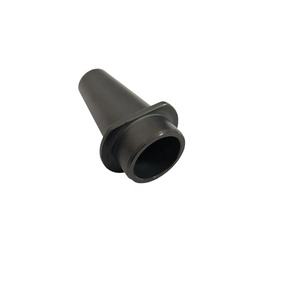
Silicon Nitride Plunger
Features of Silicon Nitride Plungers
High strength and hardness: Silicon nitride has excellent mechanical properties; its strength and hardness are very high, so that the plunger can withstand high pressure and high load, is not easy to deformation and wear, in long-term use to maintain good dimensional accuracy and shape stability, ensuring stable operation of equipment.
High-temperature resistance: Silicon nitride plungers have excellent high-temperature resistance, can maintain stable performance in high-temperature environments, and are not easy to soften or melt. This makes the silicon nitride plunger suitable for use in some equipment that needs to work under high temperature conditions, such as chemical reactors, high temperature furnaces, etc., in the fluid transportation system, which broadens its scope of application.
Good Abrasion Resistance: The material effectively resists particle scrubbing and friction in fluids, reducing wear and extending plunger life while lowering maintenance costs and downtime.
Corrosion Resistance: Silicon nitride plungers are resistant to most chemicals, including acids and alkalis, making them suitable for conveying corrosive fluids in industries like chemicals and pharmaceuticals.
Low Coefficient of Friction: The low friction coefficient reduces energy loss and improves equipment efficiency and stability by minimizing friction with seals and other components.
Specifications Table of Silicon Nitride Plunger
| Parameter |
Typical Value |
| Material |
Si₃N₄ |
| Density |
3.1 - 3.3 g/cm³ |
| Hardness |
14 - 16 GPa (Vickers hardness HV50) |
| Bending Strength |
700 - 900 MPa |
| Compressive Strength |
2500 - 3000 MPa |
| Young's Modulus |
300 GPa |
| Poisson's Ratio |
0.25 - 0.28 |
| Fracture Toughness |
5 - 8 MPa·m¹/² |
| Maximum Operating Temperature in Oxidizing Atmosphere |
1100 - 1200 °C |
| Maximum Operating Temperature in Neutral Atmosphere |
1600 °C |
| Thermal Conductivity |
20 - 25 W/(m·K) |
| Thermal Expansion Coefficient |
3×10⁻⁶ - 3.1×10⁻⁶ /°C |
| Thermal Shock Resistance |
550 - 800 °C |
| Surface Roughness after Polishing |
Ra 0.02 μm |
| Cylindricity Tolerance |
±0.006 mm |
| Concentricity Tolerance |
±0.002 mm |
|
Applications of Silicon Nitride Plungers
Chemical Industry: Used in pumps conveying acids, alkalis, salts, and other corrosive media due to their corrosion resistance, high-temperature resistance, and high strength, ensuring stable fluid conveyance and reducing leakage and equipment failures.
Petroleum field: In the process of petroleum extraction and refining, it is necessary to deal with high-viscosity, impurity-containing crude oil as well as a variety of chemical agents. Silicon nitride plungers are able to withstand high pressure and resist the wear and tear of impurities in crude oil and are suitable for oilfield water injection pumps, chemical raw material transfer pumps in refineries and other equipment to improve the reliability and operating life of the equipment.
Pharmaceutical field: The pharmaceutical industry requires high hygiene and precision. Silicon nitride plunger has good chemical stability and wear resistance, will not have chemical reactions with drugs, and can ensure the accuracy of the drug delivery dose; it is commonly used in pharmaceutical production of metering pumps, high-pressure infusion pumps and other equipment to ensure the quality control of the drug production process.
Ceramic Processing Field: Used in isostatic pressure molding machines to provide high pressure for dense ceramic blanks, with their high hardness and wear resistance ensuring stable operation and improving product quality and production efficiency.
Company Profile
Luoyang Tongrun Nano Technology Co. Ltd. (TRUNNANO) is a trusted global chemical material supplier & manufacturer with over 12-year-experience in providing super high-quality chemicals and nanomaterials, including boride powder, nitride powder, graphite powder, ceramic products, 3D printing powder, etc.
The company has a professional technical department and Quality Supervision Department, a well-equipped laboratory, and equipped with advanced testing equipment and after-sales customer service center.
If you are looking for high-quality Ceramic Products please feel free to contact us or click on the needed products to send an inquiry.
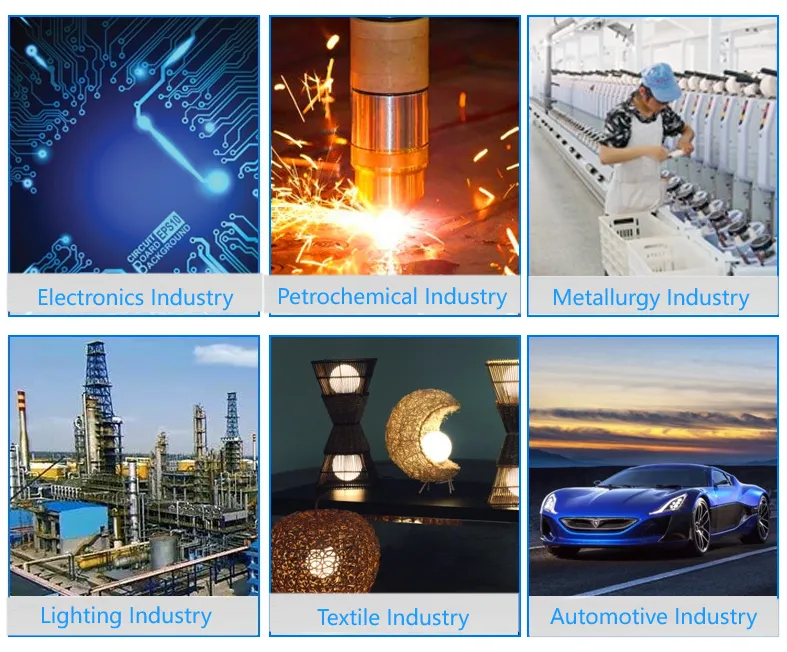
Applications of Ceramic Products
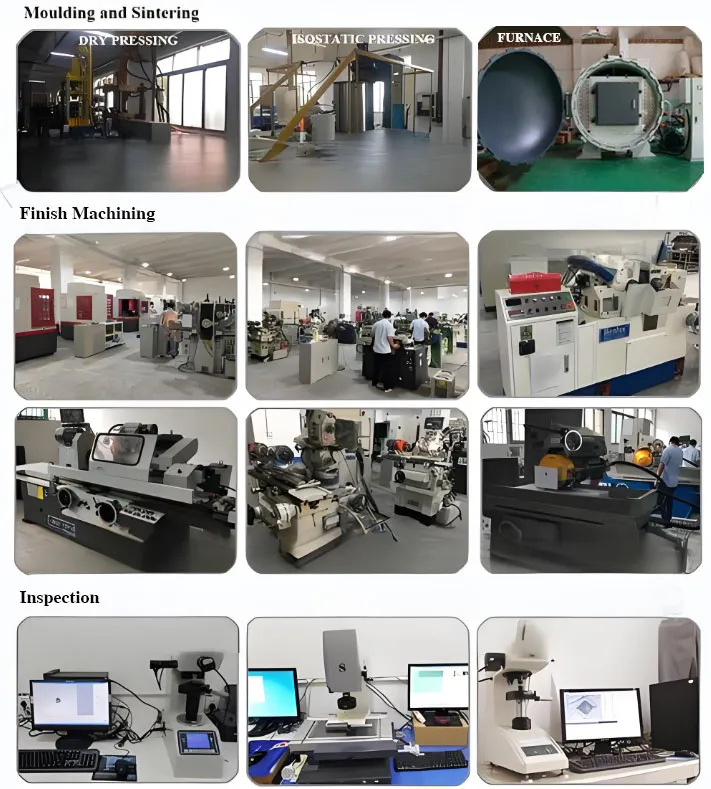
Process of Ceramic Products
Payment Term
T/T, Western Union, Paypal, Credit Card etc.
Shipment Term
By air, by sea, by express, as customers request.
5 FAQs of Silicon Nitride Plungers
Q1: How do I install a silicon nitride plunger?
Heating Fit Method: Heat the plunger or pump body to 100-150℃ to achieve a tight fit using thermal expansion, avoiding stress concentration during cold installation.
Cleaning Requirements: Clean the contact surface with alcohol or acetone before installation to ensure no oil or particles are present, preventing seal failure.
Q2: What do I need to pay attention to when maintaining a silicon nitride plunger?
Periodic Inspection: Check the wear condition every 500 hours of operation and measure surface finish with a roughness meter (Ra≤0.4 μm).
Lubrication Recommendation: Use special ceramic lubricants (e.g., high-temperature grease containing molybdenum disulfide) under high-pressure conditions to avoid contamination by metal lubricants.
Avoid Shock: Adjust pressure slowly during startup/stoppage to prevent plunger breakage due to the water hammer effect.
Q3: What is the service life of a silicon nitride plunger?
Regular Service: 5,000-8,000 hours (approximately 2-3 years) in non-particulate media.
Extreme Conditions: In high-temperature and high-pressure environments with abrasive particles (e.g., oilfield water injection pumps), the lifespan is about 1,000-2,000 hours, still 5-8 times longer than metal plungers.
Q4: Can silicon nitride plungers break?
Reason: They are brittle and may break under impact or stress concentration.
Prevention: Use fiber toughening processes (e.g., adding carbon fiber) or optimize the structure to reduce stress concentration during design.
Q5: How can I improve the wear resistance of silicon nitride plungers?
Surface Treatment: Reduce wear rate to 6.3 mm³/N-m (compared to 10 mm³/N-m for conventional processes) by applying CVD diamond coatings or laser micro-weaving.
Material Optimization: Add TiB₂ nanoparticles or carbon nanotubes to enhance matrix toughness and thermal conductivity.