Overview of Thermocouples for Silicon Nitride Furnaces
Thermocouples for Silicon Nitride Furnaces are specialized sensors designed to measure temperature within silicon nitride furnaces. These thermocouples typically consist of thermocouple wire, a protective tube, insulation material, and other components. With the characteristics of high-temperature resistance, oxidation resistance, corrosion resistance, etc., it can work stably in the harsh environment of a silicon nitride furnace, measure the temperature accurately, provide key data for the temperature control of silicon nitride furnace, ensure the stability and reliability of the production process of silicon nitride materials, and help to improve the quality of the product and the production efficiency.
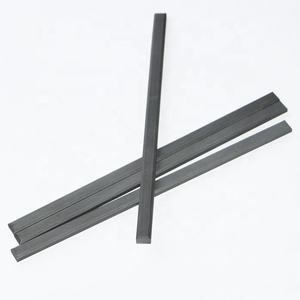
Thermocouples for Silicon Nitride Furnaces
Features of Thermocouples for Silicon Nitride Furnaces
High-Temperature Resistance: Designed to operate in the high-temperature environments typical of silicon nitride furnaces, often reaching up to 1000°C or higher, these thermocouples maintain stable performance and accurate temperature measurement without degradation.
Good Chemical Stability: The thermocouples resist corrosion from the complex and potentially corrosive atmospheres within silicon nitride furnaces, preventing oxidation and other chemical reactions that could affect their lifespan and accuracy.
Good Thermal Shock Resistance: They can withstand rapid temperature changes during the heating and cooling cycles of the furnace, reducing the risk of cracking or breaking and ensuring reliable operation through multiple thermal cycles.
High Precision: These thermocouples offer high accuracy in temperature measurement, with errors controlled within a small range, providing reliable data for precise process control.
Fast Response Speed: They quickly detect temperature changes within the furnace and convert these changes into electrical signals, enabling the control system to make timely adjustments and maintain stable production conditions.
Specifications Table of Thermocouples for Silicon Nitride Furnaces
| Thermocouple Type |
Measuring Range |
Accuracy Class |
Protection Tube Material |
Thermal Response Time |
Diameter of Protection Tube |
Length Specification |
| WRN - 530 (K - type)4 |
0 - 1100℃ |
I, II4 |
1Cr18Ni9Ti, GH3030, etc4 |
90s4 |
Φ16, Φ254 |
500x500, 750x750, etc4 |
| WRN - 531 (K - type) |
0 - 1100℃ |
I, II |
1Cr18Ni9Ti, GH3030, etc |
90s |
Φ16, Φ25 |
Customizable |
| S - type |
0 - 1600℃ |
±1.0℃ (0 - 1100℃), ±0.003×(t - 767)℃ (1100 - 1600℃) |
Silicon nitride - bonded silicon carbide |
Within 60s |
Φ18 - Φ22 |
300 - 1000mm |
| WRe - type |
0 - 2000℃ |
±2.2℃ or ±0.75% of the measured value |
Cerium - stabilized zirconia |
About 10 - 15s |
Φ6 - Φ10 |
400 - 800mm |
|
Applications of Thermocouples for Silicon Nitride Furnaces
In Silicon Nitride Ceramics Production: The properties of Silicon Nitride ceramics require demanding production temperatures. Thermocouples accurately measure the temperature in the furnace in real time to ensure temperature uniformity and stability so that the silicon nitride powder is sintered densely at the right temperature, preventing the ceramic from cracks, pores and other defects due to temperature deviations to ensure that the product's high strength, high hardness, and good abrasion resistance and other properties.
In the field of semiconductor manufacturing: silicon nitride film is often used in semiconductor manufacturing as an insulating layer or passivation layer. In chemical vapor deposition and other processes, the silicon nitride furnace with thermocouples accurately controls the temperature to provide a stable thermal environment for the reaction to ensure the uniformity, purity and densification of the film, thereby improving the performance and reliability of semiconductor devices, reducing device leakage and short circuit and other issues.
Scientific Research: Assisting researchers in studying the properties and preparation processes of silicon nitride materials by offering accurate temperature data for experimental control and analysis.
Company Profile
Luoyang Tongrun Nano Technology Co. Ltd. (TRUNNANO) is a trusted global chemical material supplier & manufacturer with over 12-year-experience in providing super high-quality chemicals and nanomaterials, including boride powder, nitride powder, graphite powder, ceramic products, 3D printing powder, etc.
The company has a professional technical department and Quality Supervision Department, a well-equipped laboratory, and equipped with advanced testing equipment and after-sales customer service center.
If you are looking for high-quality Ceramic Products please feel free to contact us or click on the needed products to send an inquiry.

Applications of Ceramic Products
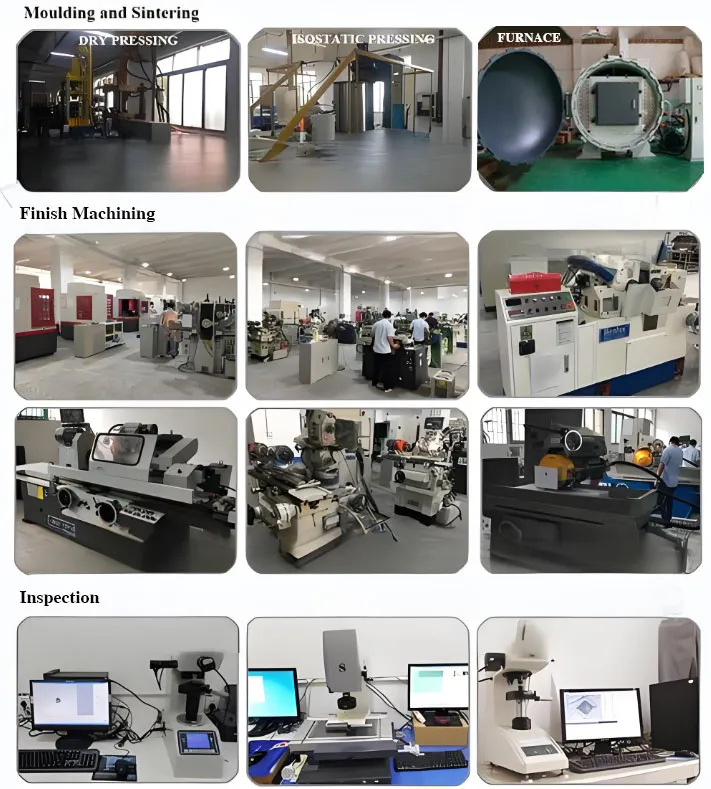
Process of Ceramic Products
Payment Term
T/T, Western Union, Paypal, Credit Card etc.
Shipment Term
By air, by sea, by express, as customers request.

5 FAQs of Thermocouples for Silicon Nitride Furnaces
Q1: Why do silicon nitride furnaces need special thermocouples?
Silicon nitride furnaces operate at extremely high temperatures (up to 1800-1900°C) and contain corrosive atmospheres (e.g., silicon vapor, nitrides). Ordinary thermocouples are prone to failure due to oxidation and sulfidation. Special thermocouples for silicon nitride furnaces feature a double-layer protection structure: an outer layer of silicon nitride combined with a silicon carbide (Si₃N₄-SiC) protection tube and an inner layer of corundum insulation tube. This design extends the thermocouple's lifespan 3-5 times longer than ordinary thermocouples.
Q2: What details should I pay attention to when installing thermocouples for silicon nitride furnaces?
Thermal Stress Control: Gradually warm up the protective tube (e.g., silicon carbide or silicon nitride) with the furnace (≤5°C/min) to prevent cracking from sudden temperature changes.
Insertion Depth: Ensure the measurement end is at least 8-10 times the diameter of the protective tube, located in the temperature uniformity zone, and away from furnace walls or heating elements.
Cold End Compensation: Use special compensation wire (e.g., KX type) or automatic instrument compensation to stabilize the cold end temperature at 0°C, controlling error within ±1°C.
Q3: How to extend the service life of thermocouples for silicon nitride furnaces?
Regular Cleaning: Perform ultrasonic cleaning of the protective tube quarterly to remove accumulated dirt (e.g., aluminum oxide),which can cause significant measurement errors.
Insulation Test: Measure insulation resistance with a megohmmeter; it should be ≥100MΩ at room temperature and ≥1MΩ at high temperature. Replace the insulating tube if the values are lower.
Calibration Cycle: Calibrate every 3 months in high-temperature environments (>1000°C) and every 6 months in low and medium-temperature environments. Use methods like the freezing point (0°C) and boiling point (100°C) methods.
Q4: Do thermocouples for silicon nitride furnaces need to comply with specific standards?
Domestic: Must meet GB/T 16839.1-2015 “Thermocouple Part 1: Indexing Table”; for example, S-type thermocouples have a tolerance of ±4°C at 1000°C.
International: Comply with IEC 60584-1 standard, CE certification for the EU market, and UL standard for North America.
Q5: How to verify the performance of thermocouples for silicon nitride furnaces?
Thermal Potential Test: Use a high-precision potentiometer to measure the thermocouple's output voltage at standard temperature points (e.g., 400°C, 800°C); error should be ≤±0.5% FS.
Thermal Shock Test: Rapidly increase the thermocouple's temperature from room temperature to 1200°C and check for cracks in the protective tube after 5 cycles.
Corrosion Resistance Test: Immerse in simulated furnace gas (e.g., 10% N₂+90% H₂S) for 24 hours; weight loss should be <0.1g/cm².