Overview of Silicon Nitride Bearing Balls
Silicon Nitride Bearing Balls are a kind of high-performance ceramic bearing ball. It has the advantages of low density, high hardness, high-temperature resistance, corrosion resistance and good self-lubrication. It can maintain good performance in high speed, high load and harsh environments, which can effectively reduce the friction loss of bearings, improve the rotational accuracy and stability of equipment, and prolong the service life. It is widely used in aerospace, precision machine tools, high-speed trains and other fields with very high requirements on the performance of bearings.
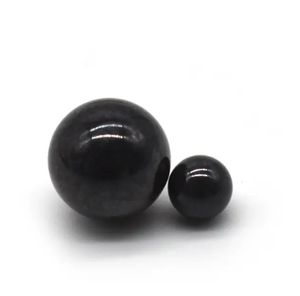
Silicon Nitride Bearing Balls
Features of Silicon Nitride Bearing Balls
High Hardness and Strength: Silicon nitride has extremely high hardness, second only to diamond and a few other materials. This enables the bearing balls to maintain good shape and dimensional stability under high loads without easy deformation.
Low Density: The density of silicon nitride is relatively low, about 40% of steel. The lighter weight effectively reduces bearing rotational inertia, decreases energy loss, and improves equipment operating efficiency. This is especially suitable for high-speed rotating equipment, such as aviation engines and high-speed centrifuges.
High-Temperature Performance: Silicon nitride has excellent high-temperature performance and can maintain good mechanical properties and chemical stability in high-temperature environments. With a melting point as high as 1900°C, it can operate normally at temperatures several hundred degrees Celsius, significantly expanding the application scope of bearings. For example, it performs excellently in high-temperature industrial fields like metallurgy and glass.
Good Corrosion Resistance: Silicon nitride has excellent corrosion resistance to most acids, alkalis, and other chemical media and is not easily corroded or oxidized. This characteristic enables it to operate stably in corrosive working environments, such as chemical production and marine engineering, extending bearing service life and reducing maintenance costs.
Self-Lubrication: Silicon nitride bearing balls have good self-lubrication. In situations where good lubrication conditions cannot be provided, their self-lubricating characteristics enable them to work normally, reducing failures and damages caused by poor lubrication.
Specifications Table of Silicon Nitride Bearing Balls
| Specification |
Details |
| Material |
Silicon nitride (Si₃N₄) |
| Diameter |
Typically ranges from 0.794mm to 50mm, with common sizes like 1.588mm, 2mm, 2.381mm, 2.7781mm, 5mm, 10mm, 15mm, 20mm, 25mm, 44.451mm, etc124 |
| Hardness |
HRC 78, with a Vickers hardness of around 2200 HV1 |
| Density |
Approximately 3.2 g/cm³, which is 40% of the density of steel1 |
| Elastic Modulus |
44% larger than that of steel1 |
| Friction Coefficient |
0.02 - 0.051 |
| Thermal Expansion Coefficient |
1/4 of that of steel1 |
| Surface Finish |
Ra can reach 4 - 6 nanometers1 |
| Insulation Property |
Electrically insulating1 |
| Magnetic Property |
Non - magnetic |
| Magnetic Property |
Non - magnetic1 |
| Corrosion Resistance |
Excellent resistance to most acids, alkalis, and seawater1 |
| Operating Temperature |
Can work at high temperatures up to 1050°C1 |
| Accuracy Grade |
G3 - G100 |
|
Applications of Silicon Nitride Bearing Balls
Aerospace Field: Aircraft engines operate at high speed, high load, and high temperature. The high hardness, high strength, and high-temperature resistance of silicon nitride bearing balls ensure stable bearing operation under extreme conditions, guaranteeing engine reliability and safety.
Precision Machine Tools: Precision machine tools require bearings with extremely high rotational accuracy and stability. The high precision and low friction characteristics of silicon nitride bearing balls enable machine tool spindles to achieve high-speed, high-precision rotation. This improves machining accuracy and surface quality while reducing wear and extending machine tool service life.
High-Speed Train Field: High-speed train bearings need to withstand huge loads and frequent impacts. The high strength and good impact resistance of silicon nitride bearing balls adapt to the complex working conditions of high-speed train operation, reducing failure incidence and ensuring train safety.
Electronic Industry: In semiconductor manufacturing equipment, such as photolithography machines and etching machines, high-precision, high-reliability bearings are needed to ensure precise equipment movement and positioning. The high cleanliness, low friction, and anti-corrosion properties of silicon nitride bearing balls meet the electronics industry's strict requirements for equipment accuracy and stability. They also prevent damage to precision parts caused by particle contamination and corrosion.
Medical Device Field: In high-precision medical equipment, such as CT machines and centrifuges, silicon nitride bearing balls provide stable and precise rotary motion. This helps improve equipment imaging precision and detection accuracy. Their good biocompatibility and corrosion resistance also meet the hygiene requirements of medical devices.
Company Profile
Luoyang Tongrun Nano Technology Co. Ltd. (TRUNNANO) is a trusted global chemical material supplier & manufacturer with over 12-year-experience in providing super high-quality chemicals and nanomaterials, including boride powder, nitride powder, graphite powder, ceramic products, 3D printing powder, etc.
The company has a professional technical department and Quality Supervision Department, a well-equipped laboratory, and equipped with advanced testing equipment and after-sales customer service center.
If you are looking for high-quality Ceramic Products please feel free to contact us or click on the needed products to send an inquiry.
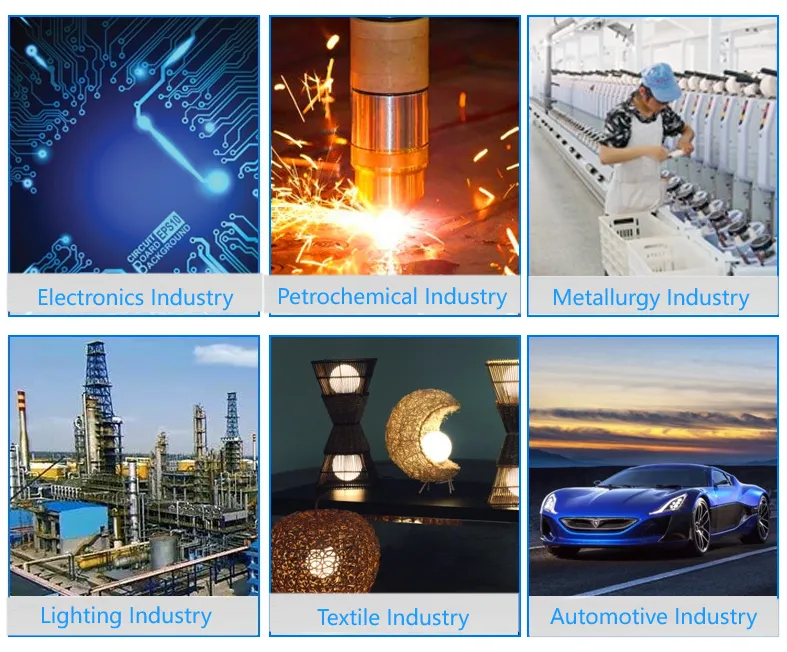
Applications of Ceramic Products
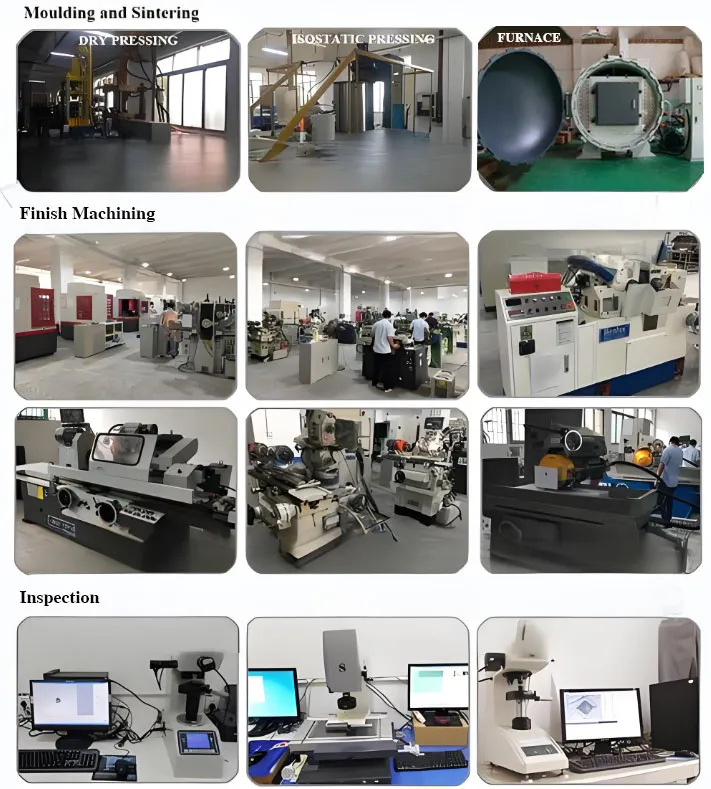
Process of Ceramic Products
Payment Term
T/T, Western Union, Paypal, Credit Card etc.
Shipment Term
By air, by sea, by express, as customers request.
5 FAQs About Silicon Nitride Bearing Balls
Q1: How is the self-lubrication of silicon nitride-bearing balls?
The surface of silicon nitride has natural lubricity, with a friction coefficient of only 0.02 - 0.05, which is 1/5 - 1/3 that of steel. In the absence of lubrication or under extreme conditions (such as vacuum or high temperature), its self-lubricating characteristics can reduce wear. For example, in the vacuum chamber of semiconductor lithography, silicon nitride bearings can achieve high-precision movement without additional lubrication.
Q2: What is the life expectancy of silicon nitride-bearing balls?
Under the same operating conditions, silicon nitride bearings typically last 3 - 5 times longer than steel bearings and up to 10 times longer under high loads or in harsh environments. For example, after 10,000 hours of continuous operation of a high-speed motor using silicon nitride bearings, there is no obvious wear on the surface, while steel bearings need to be replaced several times during this period.
Q3: Is the manufacturing process of silicon nitride-bearing balls complicated?
The manufacturing process involves powder metallurgy, isostatic pressure molding, high-temperature sintering, and other precision processes. For example, the use of cold isostatic pressing technology ensures that the density of the ball blanks is uniform. Then, densification is enhanced by hot pressing and sintering (at a temperature of 1800°C and a pressure of 250MPa). Finally, precision grinding and polishing achieve G3 grade accuracy (dimensional error ≤ 0.001mm).
Q4: What is the cost of silicon nitride bearing balls?
The initial cost is about 5 - 10 times that of steel balls, but the long-term overall cost is much lower. For example, in wind power equipment, the maintenance cycle of silicon nitride bearings can be extended to more than 5 years, while steel bearings need to be overhauled every year. The overall cost can be reduced by 40%.
Q5: What are the environmental advantages of silicon nitride-bearing balls?
Silicon nitride is produced in accordance with ISO 14001 environmental management standards, and the material itself is free of heavy metal contamination and can be recycled. Its long-life characteristics also reduce waste generation. For example, after the adoption of silicon nitride bearings in a chemical plant, the number of annual bearing replacements dropped from 1,000 to 100 sets.