| Property | Typical Value(s) |
| Appearance | White to off-white, waxy solid or flakes |
| Odor | Practically odorless or mild, characteristic odor |
| pH (1% solution in water at 25°C) | 6.0 - 8.0 |
| Active Matter (%) | ≥ 98 |
| Density (g/cm³ at 25°C) | 0.90 - 1.00 |
| Solubility | Soluble in water; insoluble in oils |
| HLB Value | Typically between 10 and 16 |
| Viscosity (cP at 25°C) | Not applicable (solid at room temperature) |
| Melting Point (°C) | 45 - 65 |
| Flash Point (closed cup, °C) | > 200 |
| Cloud Point (°C) | Not applicable (solid at room temperature) |
| Storage Conditions | Store in a cool, dry place away from incompatible materials and direct sunlight. Keep containers tightly closed. |
| Shelf Life (under proper storage conditions) | 2 years |
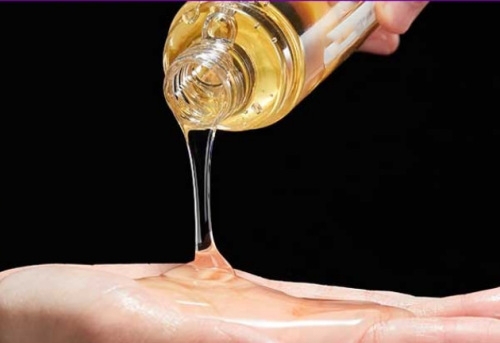



Q1: What is Polyglycol Stearate and what are its primary uses?
Re: Polyglycol Stearate (PGS) is a nonionic surfactant and emulsifier produced by the reaction of stearic acid with polyethylene glycol. It is commonly used in cosmetic and personal care products, pharmaceutical formulations, and some food applications. PGS is particularly valuable for creating stable oil-in-water emulsions in products such as creams, lotions, shampoos, and conditioners. Its excellent emulsifying properties help to ensure that oil and water components remain well mixed over time, leading to stable and effective formulations.
Q2: How does Polyglycol Stearate enhance the performance of formulations?
Re: Polyglycol Stearate enhances the performance of formulations by providing superior emulsification and stabilization capabilities. Its HLB value typically ranges between 10 and 16, making it highly effective in dispersing oils into water and stabilizing emulsions. This leads to improved product consistency and texture, ensuring that the formulation remains stable and homogeneous throughout its shelf life. Additionally, PGS can contribute to the viscosity of the product, which can improve the spreadability and feel on the skin or hair. The use of PGS can also lead to enhanced foaming properties in cleansing products, contributing to a richer lather.
Q3: Is Polyglycol Stearate safe for use in consumer products?
Re: Polyglycol Stearate is generally recognized as safe (GRAS) for use in cosmetic and personal care products when used within recommended concentrations. Regulatory bodies have reviewed its safety profile and approved it for various applications. However, individual sensitivity can vary, and some users may experience skin irritation. Proper handling during manufacturing and adherence to safety guidelines are important. Detailed safety information and handling instructions can be found in the Material Safety Data Sheet (MSDS) or Technical Data Sheet (TDS) provided by suppliers. Conducting patch tests on new formulations is advisable to ensure they are well-tolerated by most users.
Q4: What environmental considerations should be noted regarding Polyglycol Stearate?
Re: Environmental considerations for Polyglycol Stearate include its biodegradability and potential impact on aquatic life. While PGS compounds can be biodegradable, their degradation rates can vary depending on environmental conditions. Responsible disposal practices and adherence to local regulations help minimize any potential environmental effects. Manufacturers should consider the potential for bioaccumulation and toxicity to aquatic organisms when assessing the overall environmental footprint of products containing this ingredient.
| Other Names | PEG-n Stearate, Polyoxyethylene (n) monostearate | |
| CAS No. | SG-2:106-11-6;SG-3:10233-24-6;SG-4:106-07-0;SG-6:10108-28-8;SG-8:70802-40-3;SG-9:5349-52-0;SG-14:10289-94-8;SE-100:19004-99-3 | |
| Compound Formula | C18H20O3S•C6H15NO3 | |
| Molecular Weight | N/A | |
| Appearance | Milky paste to solid | |
| Density | N/A | |
| Solubility in H2O | N/A | |
| Exact Mass | N/A | |
Polyglycol Stearate Health & Safety Information |
||
| Signal Word | N/A | |
| Hazard Statements | N/A | |
| Hazard Codes | N/A | |
| Risk Codes | N/A | |
| Safety Statements | N/A | |
| Transport Information |
|
|