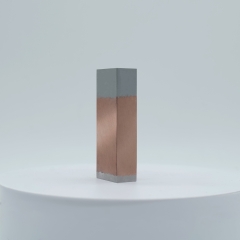
What is Ni/Cu Clad Rod Nickel-copper composite rod:
A nickel/nickel alloy/copper/copper alloy composite rod comprises copper, nickel, and a small number of elements of the fourth period.
Due to the unique properties of the composite material, it not only retains the excellent corrosion resistance, strength, toughness, metallurgical stability, machinability, weldability, and heat resistance of nickel and nickel alloys but also has copper conductivity, thermal conductivity, and flexibility. It is an excellent composite material with properties, corrosion resistance, heat resistance, anti-friction, and ease of processing.

TRUNNANO TR-Ni/Cu Clad Rod
Advantage/Characteristics of Ni/Cu Clad Rod Nickel-copper composite rod:
Nickel/nickel alloy/copper/copper alloy composite rod has the following advantages:
Good corrosion resistance: The surface of the nickel/nickel alloy/copper/copper alloy composite rod can form a continuous oxide film; the corrosion resistance is better than stainless steel, and when it is connected with aluminum, iron, and other materials, electrochemical corrosion will not occur.
Good conductivity: nickel/nickel alloy/copper/copper alloy composite rod has good conductivity.
Excellent wear resistance: the wear resistance of nickel/nickel alloy/copper/copper alloy composite rods is the best among all metal materials.
High strength: Nickel/nickel alloy/copper/copper alloy composite rod has high strength and can manufacture heavy-duty parts.
Good heat resistance: Nickel/nickel alloy/copper/copper alloy composite rods have good heat resistance at high temperatures and can manufacture parts for engines and other high-temperature equipment.
Easy to weld: Nickel/nickel alloy/copper/copper alloy composite rods can be joined softly and hard and are easy for mechanical processing such as welding.
Specification of TR-Ni/Cu Clad Rod
| Category | Property | Value/Range |
| Material Composition | Core | Copper |
| Outer Layer | Nickel | |
| Electrical Properties | Electrical Resistivity | 1.68-2.0 µΩ·cm |
| Mechanical Properties | Tensile Strength | 380-550 MPa |
| Yield Strength | 140-340 MPa | |
| Elongation | 15-25% | |
| Hardness | 120-150 HV | |
| Physical Properties | Density | 8.7-8.9 g/cm³ |
| Melting Point | 1080-1150°C | |
| Thermal Conductivity | 200-300 W/m·K | |
| Coefficient of Thermal Expansion | 16-17 × 10⁻⁶/K | |
| Common Applications | Industry Uses | - Electrical contacts |
| - Marine environments | ||
| - Chemical processing equipment | ||
| - Heat exchangers | ||
| - Electrodes | ||
| Manufacturing Method | Process | Extrusion or drawing |
Application of Ni/Cu Clad Rod Nickel-copper composite rod:
Nickel/nickel alloy/copper/copper alloy composite rods are widely used, mainly in the following aspects:
Industry: Nickel/nickel alloy/copper/copper alloy composite rods are mainly used to manufacture parts of various mechanical equipment or the fuselage of mechanical equipment because the resistivity of nickel/nickel alloy/copper/copper alloy composite rod itself is very strong and can be used in the manufacture of rheostats.
Electronics: Nickel/nickel alloy/copper/copper alloy composite rods can manufacture resistance materials, rheostats, heating wires, etc.
Ships: Nickel/nickel alloy/copper/copper alloy composite rods are widely used in the shipbuilding industry, mainly to manufacture ship pipes, valve bodies, seawater condensers, pump bodies, and other parts.
Aerospace: Nickel/nickel alloy/copper/copper alloy composite rods are mainly used in the aerospace industry to manufacture parts, bearings, gears, etc., of aero-engines.
Chemical industry: Nickel/nickel alloy/copper/copper alloy composite rods are widely used in the chemical industry, mainly to manufacture various catalysts, high-temperature alloys, fireproof materials, etc.
Medical: Nickel/nickel alloy/copper/copper alloy composite rods can also be used to manufacture medical equipment, medical supplies, etc.

Grade of Ni/Cu Clad Rod Nickel-copper composite rod:
Ni/Cu Clad Rod Nickel-copper composite rod grade is Ni&Ni alloy/Cu&Cu alloy.
Standard of Ni/Cu Clad Rod Nickel-copper composite rod:
GB/T12769.
Package of Ni/Cu Clad Rod Nickel-copper composite rod:
According to product characteristics and customer needs.
Remark of Ni/Cu Clad Rod Nickel-copper composite rod:
Please provide detailed technical requirements to facilitate communication and determine the solution.
Ni/Cu Clad Rod Nickel-copper composite rod supplier-TRUNNANO:
Luoyang Tongrun Nano Technology Co. Ltd. (TRUNNANO) is a trusted global chemical material supplier & manufacturer with over 12 years of experience providing super high-quality clad plates, clad rods, clad tubes, etc. If you are looking for a high-quality Ni/Cu-clad nickel-copper composite rod, please feel free to contact us and send an inquiry.
FAQs of Ni/Cu Clad Rod Nickel-copper composite rod:
What is Nickel Copper Used For?
Nickel-copper alloys are widely used in various industries due to their excellent corrosion resistance, thermal and electrical conductivity, and mechanical properties. Common applications include:
Marine and Chemical Processing: Used in seawater systems, desalination plants, and chemical processing equipment due to their resistance to seawater corrosion and biofouling.
Oil and Gas Industry: Used in pipelines, heat exchangers, and valves for their ability to withstand harsh environments.
Electronics: Used in connectors, switches, and other components due to their good electrical conductivity and solderability.
Aerospace: Used in aircraft components and engines for their high strength and temperature resistance.
Jewelry and Decorative Items: Used for their attractive appearance and durability.
What is Copper and Nickel Alloy Called?
Copper and nickel alloys are commonly referred to as cupronickels. These alloys typically contain 10-30% nickel and the remainder copper, along with small amounts of other elements for specific properties. Cupronickels are known for their excellent resistance to corrosion, particularly in seawater, and their good thermal and electrical conductivity.
Can You Weld Nickel to Copper?
Yes, it is possible to weld nickel to copper, but it requires careful consideration and the right techniques due to the differences in their physical properties. Here are some key points:
Welding Techniques: Common techniques include TIG (Tungsten Inert Gas) welding and MIG (Metal Inert Gas) welding. Using a filler material that is compatible with both metals, such as a nickel-based alloy, can help ensure a strong bond.
Preheating: Preheating the materials can help reduce the risk of cracking and improve the weld's quality.
Post-Weld Treatment: Post-weld heat treatment may be necessary to relieve residual stresses and improve the mechanical properties of the weld.
Is Copper-Nickel Better Than Stainless Steel?
Whether copper-nickel is better than stainless steel depends on the specific application and the required properties. Here are some comparisons:
Corrosion Resistance: Copper-nickel alloys generally have superior corrosion resistance, especially in seawater and marine environments. Stainless steel can corrode in certain conditions, such as in the presence of chloride ions.
Thermal and Electrical Conductivity: Copper-nickel alloys have much higher thermal and electrical conductivity compared to stainless steel, making them suitable for applications where these properties are critical.
Strength and Toughness: Stainless steel typically has higher tensile strength and toughness, making it more suitable for high-stress applications.
Cost: Stainless steel is generally less expensive than copper-nickel alloys, which can be a significant factor in large-scale projects.
Formability and Machinability: Stainless steel is easier to form and machine, whereas copper-nickel alloys can be more challenging to work with.