We use cookies to improve your online experience. By continuing browsing this website, we assume you agree our use of cookies.
Advanced Ceramics

High Performance Silicon Carbide Ring Mechanical Seals

Silicon Carbide (SiC) rings, made from high-purity SiC through precision machining and sintering, excel in high-temperature, wear-resistant, and corrosive industrial applications.
INQUIRY
Description
Introduction of Silicon Carbide Rings
Silicon Carbide (SiC) rings are ring-shaped structures made of high-purity silicon carbide material, formed through precision machining and high-temperature sintering processes. This component is widely used in a variety of industrial environments due to its excellent physical and chemical properties, especially in applications requiring high temperature, wear and corrosion resistance.

Silicon Carbide Rings
 
 
Features of Silicon Carbide Rings
Excellent heat resistance: Silicon carbide rings can withstand extremely high temperatures, typically up to 1600°C or more, and maintain stable mechanical properties at high temperatures.
High strength and hardness: very high compressive strength and hardness, which makes it ideal for use in environments with high wear.
Excellent abrasion resistance: even under extreme conditions, it can be used for a long time without easy wear and tear, which prolongs the service life of the equipment.
Good chemical stability: shows excellent resistance to most acid and alkali solutions and other corrosive media, reducing the risk of chemical attack.
Low density: Silicon carbide rings are lighter than traditional metal materials, helping to reduce overall weight and improve energy efficiency.
High dimensional accuracy: Thanks to advanced manufacturing technology, high precision external dimensions can be ensured to meet the requirements of precision assembly.
 
Specifications of Silicon Carbide Rings
Parameter Typical Value Unit
Physical Dimensions    
– Inner Diameter (ID) Customizable, standard sizes available mm
– Outer Diameter (OD) Customizable, standard sizes available mm
– Thickness 1 mm to 50 mm mm
– Shape Circular, can be customized  
Density 3.21 g/cm³
Hardness    
– Mohs Hardness 9.5  
– Vickers (HV) 2500 to 3500 kg/mm²
Thermal Conductivity 120 to 270 W/m·K
Coefficient of Thermal Expansion 4.0 to 4.5 × 10^-6 /°C (20-1000°C) /°C
Operating Temperature Up to 1600°C °C
Bending Strength 300 to 700 MPa
Tensile Strength 300 to 600 MPa
Chemical Resistance Excellent resistance to most acids, bases, and salts  
Electrical Resistivity > 10^12 Ω·cm
Thermal Shock Resistance Can withstand rapid temperature changes up to 1000°C  
Surface Finish Rough, polished, or other treatments  
Porosity Very low, typically less than 1% %
Crystal Structure α-SiC (hexagonal), β-SiC (cubic)  
Impurity Content Depends on application; high-purity grades available  
Dimensional Tolerance ±0.05 mm or tighter, depending on precision requirements mm
Color Typically black or dark gray  
 
 
Applications of Silicon Carbide Rings
Seals and bearings: Silicon carbide rings are often used as mechanical seals, pump shaft seals, and as an integral part of rolling bearings, providing reliable sealing effects and long life.
Chemical industry: used as internal components of reactors or piping connections when handling strong acids, alkalis or other corrosive chemicals to ensure stable operation of the system.
Metallurgical industry: suitable for supporting structure or protective cover in high temperature furnace, such as guide wheel in continuous casting machine to resist the erosion of molten metal.
Semiconductor manufacturing: Used as support ring for quartz crucible in single crystal silicon growth process or directly as heating element to ensure uniform heating.
Environmental protection equipment: Involved in filtration components in wastewater treatment plants or key parts of exhaust gas purification systems, helping to realize resource recycling.
Aerospace industry: Due to its light weight and high temperature resistance, the application of this material is gradually increasing in the components of aviation engines and space probes.
 
Packing and Storage
The product is in powder form and should be stored in a cool, ventilated place. Avoid inhalation when using it and keep away from open flames, heat sources, etc.
 
Company Profile
Luoyang Tongrun Nano Technology Co. Ltd. (TRUNNANO) is a trusted global chemical material supplier & manufacturer with over 12-year-experience in providing super high-quality chemicals and nanomaterials, including boride powder, nitride powder, graphite powder, sulfide powder, 3D printing powder, etc.
 
The company has a professional technical department and Quality Supervision Department, a well-equipped laboratory, and equipped with advanced testing equipment and after-sales customer service center.
 
If you are looking for high-quality Silicon Carbide Rings please feel free to contact us or click on the needed products to send an inquiry. 

Company Profile
 
 
Payment Term
T/T, Western Union, Paypal, Credit Card etc.
 
Shipment Term
By air, by sea, by express, as customers request.

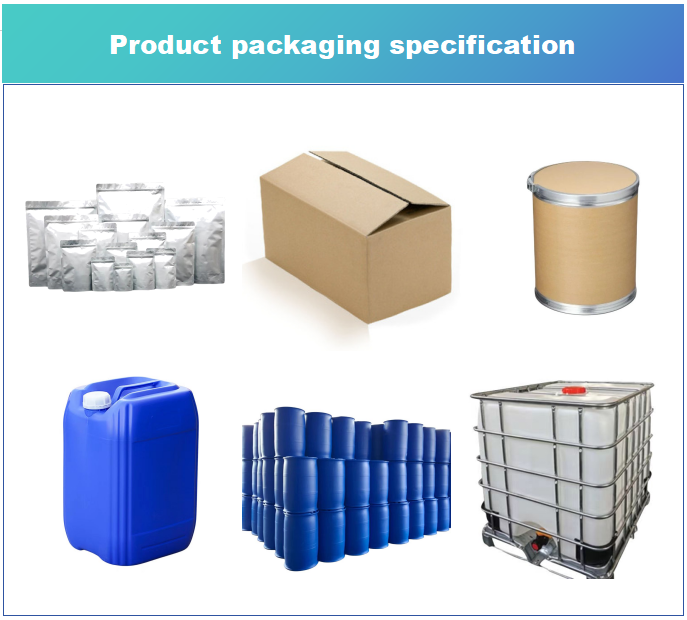
Packaging
 
FAQs of Silicon Carbide Rings
Question 1: What are the main application areas for silicon carbide rings?
Answer: Silicon carbide rings are widely used in a variety of applications, including mechanical seals, internal components of chemical reactors, support structures for metallurgical high-temperature furnaces, heating elements and support rings in semiconductor manufacturing, and filtration and purification components in environmental protection equipment. Their excellent heat resistance and chemical stability make them indispensable components in these harsh environments.
 
Question 2: What is the maximum temperature that silicon carbide rings can withstand?
Answer: Silicon carbide rings can withstand extremely high temperatures and are typically stable up to 1,600°C (2,912°F) and beyond. This makes them ideal for applications that require long-term exposure to high temperatures, such as molten metal processing or high-temperature chemical reactions.
 
Question 3: What are the advantages of silicon carbide rings over other materials?
Answer: Silicon carbide rings offer the following significant advantages over conventional materials:
Higher heat resistance: Ability to maintain performance at higher temperatures.
Greater wear resistance: Reduced wear due to friction.
Better chemical stability: good resistance to most acid and alkali solutions and other corrosive media.
Lower density: lighter weight, helping to reduce overall weight and improve energy efficiency.
High dimensional accuracy: Advanced manufacturing technology ensures highly accurate external dimensions, suitable for precision assembly needs.
 
Question 4: How do I choose the right size and shape of silicon carbide ring for a specific application?
Answer: Selecting the right size and shape of silicon carbide ring requires consideration of several factors:
Application environment: Determine the required material properties and specifications based on actual operating conditions (e.g., temperature, pressure, media type, etc.).
Installation space: Measure and confirm the size of the available installation space to ensure that the selected silicon carbide ring can be installed correctly without interfering with other components.
Functional requirements: Define the specific function of the silicon carbide ring (e.g., sealing, support, heating, etc.) to determine its geometry and tolerance requirements.
Machining accuracy: For precision assembly applications, higher precision machining may be required to ensure fit and sealing effectiveness.
Manufacturer recommendations: Consult with experienced suppliers or manufacturers who can provide professional advice and support to help select the most appropriate silicon carbide ring products for specific application scenarios.
 
Question 5: In what special cases are silicon carbide rings not suitable?
Answer: Despite their broad applicability, silicon carbide rings may not be suitable for use under certain extreme conditions:
High-temperature applications in strong alkaline environments: Although silicon carbide rings are stable to most chemicals, prolonged contact with strong alkalis at high temperatures may lead to erosion.
Environments with high mechanical stress: Damage to the silicon carbide ring may result if the system is not designed properly or if the load exceeds material limits.
Environments with frequent temperature changes: Rapid and frequent temperature fluctuations can lead to thermal shock, which in turn can cause material fatigue or fracture.
 
RNDKOREA | Sodium Silicate | Potassium Silicate | Spherical Alumina | Spherical SiO2 Powder | Zinc Sulfide ZnS Powder | 3D Printing Powder | Concrete foaming agent | Concrete Superplasticizer | Boron Nitride Powder | Nano Silicon Powder | CuO Powder | Cu2O Cuprous Oxide Powder | Cr2O3 Powder