Overview of Boron Nitride Ceramic Pipe
Boron nitride (BN) tubes, like boron nitride plates, are extremely in demand for their outstanding homes and can be made use of in a wide range of applications. These tubes are commonly made from hexagonal boron nitride (h-BN), which has a graphite-like layered framework, or cubic boron nitride (c-BN), which is recognized for its solidity and thermal stability.

Boron Nitride Tube
Features of Boron Nitride Ceramic Pipe
1. High thermal conductivity:
Boron nitride tubes have extremely high thermal conductivity, particularly along the plane of h-BN, making them outstanding for warm dissipation.
2. Outstanding electrical insulation:
In addition to their thermal conductivity, boron nitride tubes have solid electrical insulation, reducing the risk of short circuits and enhancing security.
3. Chemical stability:
BN tubes are immune to several chemicals also at rather heat, making them appropriate for use in corrosive atmospheres.
4. Mechanical toughness:
The high firmness offers excellent abrasion resistance and durability.
5. Low coefficient of thermal growth (CTE):
This residential or commercial property decreases thermal shock and fracturing, which boosts the efficiency under temperature level modifications.
6. Lubricity:
The split structure of h-BN offers BN tubing lubricating residential properties in dry lubrication applications.
7. Optical openness:
Transparent over a wide range of wavelengths from UV to infrared, making it ideal for optical applications.
8. Wide Band Void:
The large bandgap makes it ideal for high-power and high-frequency electronic devices.
Specifications of Boron Nitride Ceramic Pipe
|
Property |
Typical Value(s) |
Notes |
|
Material Type |
Hexagonal BN (h-BN), Cubic BN (c-BN) |
h-BN is more common; c-BN offers higher hardness. |
|
Outer Diameter (OD) |
1 mm to 500 mm |
Custom sizes available based on application needs. |
|
Inner Diameter (ID) |
Depends on OD; typically 0.5 mm to 490 mm |
ID determined by wall thickness and OD. |
|
Length |
10 mm to 2000 mm |
Longer lengths possible through custom manufacturing. |
|
Wall Thickness |
0.5 mm to 10 mm |
Thicker walls provide greater mechanical strength. |
|
Density |
~2.26 g/cm³ (h-BN) |
Density varies slightly with material form and purity. |
|
Melting Point |
~3000°C (5432°F) |
Exceptionally high melting point suitable for extreme temperature use. |
|
Thermal Conductivity |
Up to 300 W/m·K (along planes in h-BN) |
High thermal conductivity facilitates efficient heat dissipation. |
|
Coefficient of Thermal Expansion (CTE) |
~3.7 × 10⁻⁶/°C (h-BN) |
Low CTE minimizes thermal stress and cracking. |
|
Electrical Resistivity |
>10¹² Ω·cm at 20°C |
Excellent electrical insulation properties. |
|
Hardness (Mohs Scale) |
~2-3 (h-BN), ~9.5 (c-BN) |
c-BN has hardness second only to diamond. |
|
Chemical Stability |
Stable up to 1000°C in air, higher in vacuum or inert atmospheres |
Resistant to most chemicals even at elevated temperatures. |
|
Lubricity |
Yes (h-BN) |
Layered structure provides natural lubrication. |
|
Transparency |
Transparent from UV to IR |
Useful for optical applications. |
|
Bandgap |
~5.9 eV (h-BN) |
Wide bandgap suitable for high-power and high-frequency electronic devices. |
|
Porosity |
<1% |
Densification methods minimize porosity for enhanced performance. |
Manufacturing Methods
|
Method |
Description |
Advantages |
|
Hot Isostatic Pressing (HIP) |
Powdered BN compressed under high pressure and temperature |
Dense, uniform tubes with excellent mechanical properties. |
|
Sintering |
Heating BN powder without melting |
Cost-effective for large-scale production. |
|
Chemical Vapor Deposition (CVD) |
BN vapor deposited onto a substrate or mandrel |
Precise control over tube dimensions and properties. |
|
Pressureless Sintering |
BN parts formed without external pressure |
Suitable for complex shapes like tubes. |
|
Extrusion |
Material pushed through a die to form tubes |
Continuous process for long, consistent tubes. |
Applications of Boron Nitride Ceramic Pipe
1. Thermal Administration
Warm Exchangers and Air Conditioning Jackets: BN tubes are utilized in heat exchangers and air conditioning jackets for efficient warmth dissipation in electronic devices and machinery.
Thermal Interface Materials: They serve as effective thermal user interface materials in between heat resources and warm sinks.
2. Electronic devices and Semiconductors
Substrates and Insulation: BN tubes are utilized as substrates and insulation for semiconductor devices, offering thermal monitoring and electrical isolation.
Warm Sinks: Ideal for usage as heat sinks in power electronic devices, CPUs, GPUs and other high-performance digital elements.
3. Automotive and Aerospace
Engine Parts: Used in engine parts that call for resistance to high temperatures and destructive atmospheres.
Exhaust Systems: Appropriate for exhaust system parts due to their thermal stability and chemical inertness.
Power Electronic Devices: Essential for electrical and hy brid automobiles where efficient thermal administration is required for power modules and inverters.
Radiation Shielding: Supplies protection against radiation in aerospace electronics and spacecraft.
4. Manufacturing and Machining
High-Temperature Molds and Passes away: BN tubes are optimal for molds and passes away used in steel spreading and other making procedures requiring high thermal security and low CTE.
Accuracy Components: Utilized in accuracy design applications where dimensional security and thermal performance are important.
Cutting Tool Coatings: Boosts toughness and decreases endure reducing devices throughout machining operations.
5. Chemical Handling
Activator Linings: Utilized in activators where products need to stand up to harsh chemicals and high temperatures concurrently.
Warm Exchangers: Made use of industrial procedures entailing warm transfer at high temperatures.
6. Metallurgy
Crucibles and Refractory Parts: BN tubes are utilized in crucibles and other refractory elements for steel melting and alloying procedures as a result of their high melting point and chemical inertness.
7. Power Generation
Nuclear Reactors: Elements in atomic power plants take advantage of BN's neutron-absorbing residential properties and thermal security.
Gas Cells: Utilized as gas diffusion layers and stimulant supports, leveraging BN's high-temperature efficiency and chemical security.
8. Biomedical applications
Clinical implants: As a result of their non-reactivity and security, they can be used as biocompatible coverings for implants or tools.
Medicine delivery systems: BN nanoparticles can be functionalized for targeted medication shipment using the biocompatibility and security of BN.
9. r & d
Advanced Materials Growth: Research and development of new products with specific residential or commercial properties for certain applications.
Nanotechnology: Discover the special quantum homes of nanoelectronic and optoelectronic devices.
10. consumer electronic devices
Warmth Sinks and Thermal User Interfaces: Important to heat monitoring in customer electronics gadgets such as smartphones, laptop computers and video game gaming consoles.
11. Optics & Photonics
Lenses and Windows: The optical transparency of BN tubes makes them suitable for lenses, home windows and filters in optical tools.
Photodetectors and solar cells: Optically clear and steady under extreme conditions.
12. Environmental applications
Driver carriers: Offer a stable system for driver fragments in a range of chain reactions, specifically high-temperature processes.
Electrocatalysis: Energy conversion and storage systems for electrochemical cells.

Company Profile
Company Profile
Luoyang Tongrun Nano Technology Co. Ltd. (TRUNNANO) is a trusted global chemical material supplier & manufacturer with over 12-year-experience in providing super high-quality chemicals and nanomaterials, including boride powder, nitride powder, graphite powder, ceramic products, 3D printing powder, etc.
The company has a professional technical department and Quality Supervision Department, a well-equipped laboratory, and equipped with advanced testing equipment and after-sales customer service center.
If you are looking for high-quality Boron Nitride Ceramic Pipe, please feel free to contact us or click on the needed products to send an inquiry.
Payment Term
T/T, Western Union, Paypal, Credit Card etc.
Shipment Term
By air, by sea, by express, as customers request.
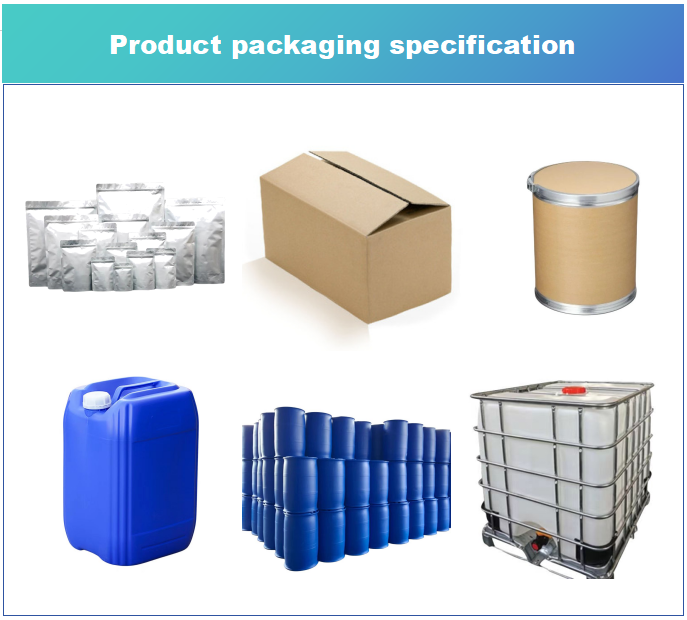
Packaging
FAQs of Boron Nitride Ceramic Pipe
Q: What is the maximum temperature boron nitride ceramic tubing can withstand?
A: Boron nitride ceramic tubing can operate stably in air up to approximately 900°C, and in non-oxidizing atmospheres (e.g., vacuum or inert gas environments) it can withstand temperatures up to 2,000°C or more. The high temperature resistance of this material makes it ideally suited for use in components subjected to high-temperature processing.
Q: Do boron nitride ceramic tubes provide good electrical insulation?
A: Yes, boron nitride ceramic tubing exhibits excellent electrical insulation properties over a wide range of temperatures. Its volume resistivity remains high even at high temperatures, making it ideal for power electronics and other applications requiring good electrical isolation.
Q: How chemically stable are boron nitride ceramic tubes?
A: Boron nitride ceramic tubing is highly resistant to most acids, alkalis and solvents, and performs particularly well in corrosive environments. Therefore, it is widely used in the chemical industry as reactor linings, pump components or other parts that may come into contact with corrosive media.
Q: What industrial applications are boron nitride ceramic tubes used in?
A: Due to its unique physical and chemical properties, boron nitride ceramic tubes are suitable for use in a variety of industries including, but not limited to, electronic semiconductor manufacturing (e.g., diffusion furnace tubes), metallurgy (e.g., melting crucibles), glass and ceramic production (e.g., heating elements), mechanical engineering (e.g., plain bearings), and the aerospace industry.
Q: Are boron nitride ceramic tubes difficult to machine?
A: Boron nitride ceramics are relatively hard and brittle, which makes molding and machining more difficult. However, by using advanced powder metallurgy technology and precision machining processes, it is possible to manufacture boron nitride ceramic products with complex shapes and high precision. In addition, modern tools such as CNC machine tools can be utilized to achieve finer machining requirements.