Brief Introduction:Silicon Nitride Ceramic Casing
Silicon Nitride Ceramic Sleeves is a high-performance ceramic product. It is made of silicon nitride as the main raw material through a special process, with high strength, high hardness, high-temperature resistance, wear resistance, oxidation resistance and other excellent characteristics. These sleeves maintain stable performance in harsh environments and find extensive applications across various industries, including metallurgy, chemical, and electronics. They play a crucial role in protecting heating elements and thermocouples while offering insulation, protection, and extended service life.
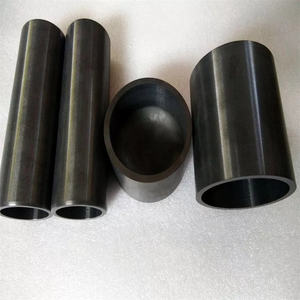
Silicon Nitride Ceramic Casing
Key Features of Silicon Nitride Ceramic Casing
Exceptional Hardness and Strength: Second only to diamond in hardness, these ceramic sleeves can withstand significant external forces without deformation. This makes them highly effective in resisting particle scouring and friction in machining and abrasive environments, ensuring long-term stable use.
Outstanding High-Temperature Resistance: With excellent high-temperature resistance, the ceramic sleeves maintain good mechanical and chemical stability at high temperatures. They can endure temperatures up to 1600℃ without softening, deforming, or melting, making them reliable in high-temperature industrial applications such as metallurgy and glass manufacturing.
Impressive Chemical Stability: The ceramic sleeves exhibit excellent corrosion resistance to most acids, alkalis, salts, and other chemicals. They are not easily eroded by chemical substances, making them suitable for use in harsh chemical environments within the chemical and electronic industries.
Low coefficient of thermal expansion: the coefficient of thermal expansion of silicon nitride ceramic casing is small when the temperature changes rapidly; the casing is not easy to crack or damage due to thermal stress, has good thermal shock resistance, can adapt to frequent temperature fluctuations, such as in ceramic sintering and other thermal equipment can be operated stably.
Excellent insulation performance: Silicon Nitride ceramics is a good electrical insulator, can effectively isolate the circuit, prevent leakage and short circuits, and can be used in electronics, electric power and other fields of insulation protection to ensure the safe operation of equipment.
Specifications of Silicon Nitride Ceramic Casing
| Material |
Silicon nitride (Si₃N₄) |
| Color |
Black |
| Size |
Typical dimensions include outer diameter 16 - 45mm, inner diameter 8 - 25mm, length 300 - 900mm. Can be customized according to requirements, with diameter range from 0.30 - 50mm and length up to 2000mm46 |
| Accuracy |
Dimensional accuracy can reach 0.005mm for diameter, 0.10mm for length, and roundness can be 0.001mm6 |
| Surface roughness |
The cylinder surface can be polished to Ra 0.20 or better6 |
| Density |
3.1 - 3.3 g/cm³5 |
| Hardness (HV) |
1400 - 16002 |
| Bending strength |
> 800 MPa2 |
| Compressive strength |
> 4000 MPa2 |
| Elastic modulus |
300 - 315 GPa2 |
| Fracture toughness |
6 - 8 MPa·m¹/²2 |
| Coefficient of thermal expansion |
2.2 - 3.0 × 10⁻⁶/℃2 |
| Maximum service temperature |
1000℃ in air, 1400℃ in protective atmosphere5 |
| Thermal conductivity |
15 - 27 W/(m·K)37 |
| Dielectric strength |
20 kV/mm |
|
Applications of Silicon Nitride Ceramic Casing
Metallurgical Industry: In the continuous casting process, the ceramic sleeves protect the immersed spout from erosion and scouring by molten steel, extending the spout's service life and ensuring stable steel pouring. They also serve as protective tubes for heating elements in high-temperature furnaces, enhancing heating efficiency
.
Chemical Industry: The ceramic sleeves can be used as thermocouple protection tubes in corrosive chemical media, providing accurate temperature measurement while resisting chemical corrosion. They also improve the wear and corrosion resistance of chemical pipelines, reducing maintenance and replacement costs.
Electronics Industry: In the semiconductor manufacturing process, silicon nitride ceramic casing used in the ion implantation process can withstand high-energy ion bombardment to protect equipment components from damage. In addition, as an encapsulation material for electronic components, it can provide good insulation and protection to ensure stable performance and reliability of electronic components.
Machining Industry: The ceramic sleeves enhance the wear resistance and thermal stability of cutting tools in high-speed machining, extending tool life and improving machining accuracy and efficiency. They can also be used in abrasives to strengthen and increase wear resistance.
Company Profile
Luoyang Tongrun Nano Technology Co. Ltd. (TRUNNANO) is a trusted global chemical material supplier & manufacturer with over 12-year-experience in providing super high-quality chemicals and nanomaterials, including boride powder, nitride powder, graphite powder, ceramic products, 3D printing powder, etc.
The company has a professional technical department and Quality Supervision Department, a well-equipped laboratory, and equipped with advanced testing equipment and after-sales customer service center.
If you are looking for high-quality Ceramic Products please feel free to contact us or click on the needed products to send an inquiry.
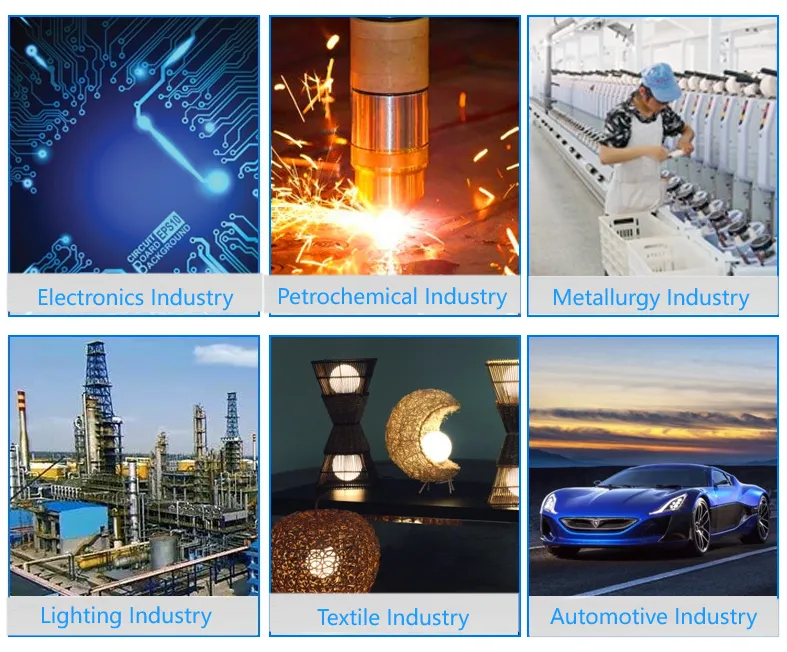
Applications of Ceramic Products
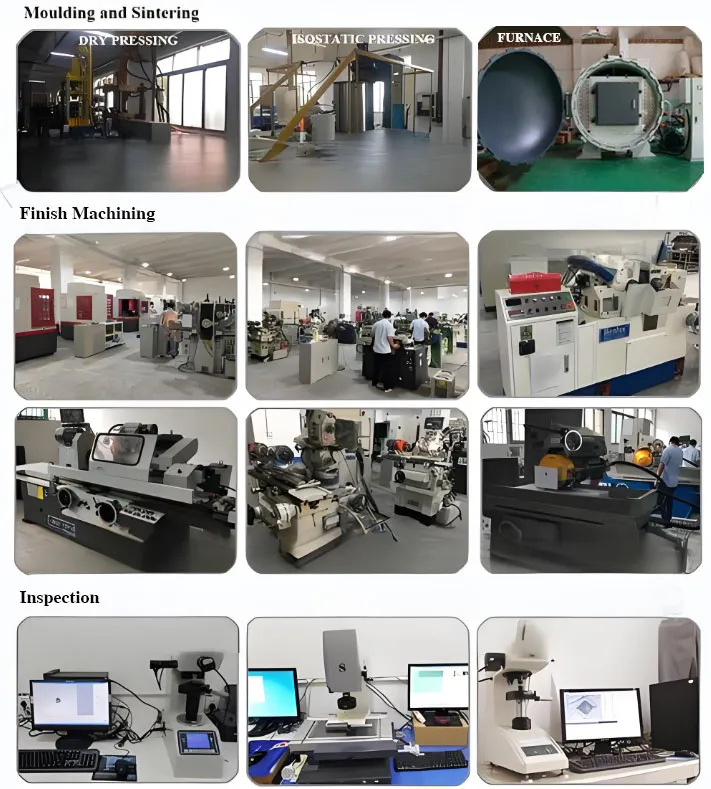
Process of Ceramic Products
Payment Term
T/T, Western Union, Paypal, Credit Card etc.
Shipment Term
By air, by sea, by express, as customers request.
5 FAQs About Silicon Nitride Ceramic Casing
Q1: What are the advantages of silicon nitride ceramic casing over alumina ceramic casing?
Silicon nitride ceramics boast higher hardness (approximately 9 on the Mohs scale, second only to diamond) and wear resistance, which is over three times that of alumina ceramics, with a thermal expansion coefficient of only one-third that of alumina; silicon nitride is less prone to cracking during sudden temperature changes. In ultra-high-voltage electrical equipment, silicon nitride ceramic pillar insulators are 50% smaller in volume than conventional alumina components yet offer 30% higher insulation strength.
Q2: What is the self-lubricating performance of silicon nitride ceramic bushings?
During friction, silicon nitride ceramics generate a nano-sized SiO₂ lubrication film on the surface, resulting in a dry friction coefficient as low as 0.1 - 0.3. This self-lubricating property is especially outstanding in high-temperature environments (above 300℃) or non-lubricated conditions.
Q3: Can silicon nitride ceramic casing withstand strong corrosive environments?
Silicon nitride demonstrates excellent corrosion resistance to strong acids, bases, and molten salts, with the exception of hydrofluoric acid. In aluminum electrolyzers, it can resist erosion by cryolite molten salt at 960°C for 18 months of continuous operation without significant corrosion. In H₂S-containing brine environments, its annual corrosion rate is a mere 0.002mm, far lower than that of stainless steel.
Q4: How to address the brittleness issue of silicon nitride ceramic casing?
By incorporating rare earth doping (e.g., Er₂O₃) and grain boundary engineering, the melting point of the glass phase at the grain boundaries can be raised from 1450°C to 1650°C, significantly enhancing toughness. Practically, adopting a “beer-bottle” shape design reduces stress concentrations, resulting in a 50% increase in mechanical strength.
Q5: Is the manufacturing process of silicon nitride ceramic casing complex?
The production of silicon nitride ceramic sleeves involves nitriding, molding, and sintering of high-purity silicon powder. Reaction sintering is suitable for complex shapes, while gas pressure sintering (GPS) can produce highly dense products with densities approaching theoretical values. Precision machining requires the use of diamond grinding wheels, and mirror surface machining precision can reach Ra <0.05μm.