Overview
Nano-sized cobalt ferrite is a spinel-type ferrite magnetic material with a partially inverse spinel structure. In this crystal lattice, Co²⁺ ions mainly occupy octahedral sites, while Fe³⁺ ions are distributed across both tetrahedral and octahedral sites. This unique structure endows the material with distinctive magnetic and electrical properties.
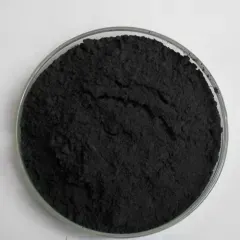
Cobalt Ferrite (CoFe₂O₄)
Physicochemical Parameters
| Parameter | Specification | Test Method |
|---|---|---|
| Primary particle size | 10–100 nm (model-dependent; typical 20–50 nm) | TEM/SEM/XRD |
| Morphology | Near-spherical, spherical | TEM/SEM |
| Specific surface area | 9–150 m²/g (varies with particle size and synthesis method) | BET |
| Tap density | 0.41–0.51 g/cm³ | Tap density tester |
| True density | ~4.52–5.3 g/cm³ | Pycnometer |
| Color | Black, grayish-black, or brown | Visual inspection |
Magnetostrictive Properties
CoFe₂O₄ exhibits a large positive magnetostriction coefficient (λ≈−110×10⁻⁶), among the highest known for magnetostrictive materials, making it uniquely valuable for magnetostrictive sensors and actuators. Additionally, some studies report photo-induced magnetic effects, with interesting coercivity changes under light illumination.
Curie Temperature
The Curie temperature of CoFe₂O₄ is approximately 520°C (793 K). Above this temperature, the material loses its ferrimagnetic/ferromagnetic behavior.
Electrochemical Performance
Thanks to its spinel structure, which accommodates Li⁺ ion intercalation and deintercalation, nano‑cobalt ferrite offers a theoretical specific capacity significantly higher than that of graphite as an anode material for lithium‑ion batteries. Its theoretical capacity is ~1000 mAh/g – nearly three times that of commercial graphite anodes (372 mAh/g).
| Parameter | Value | Conditions |
|---|---|---|
| Theoretical capacity (anode) | ~1000 mAh/g | Typical transition metal oxide value |
| Initial discharge capacity | 919.6 mAh/g | CoFe₂O₄/NC30 @ 0.1 A/g |
| Capacity after 200 cycles | 662.9 mAh/g | CoFe₂O₄/NC30 @ 0.1 A/g |
| Rate capability (2 A/g) | 357.9 mAh/g | CoFe₂O₄/NC30 |
| Cycling stability | >300 mAh/g after 500 cycles | CoFe₂O₄ nanoporous spheres @ 1000 mA/g |
| High-rate cycling | ~255 mAh/g after 1000 cycles | CoFe₂O₄ nanoporous spheres @ 3000 mA/g |
| Coulombic efficiency | >95% (500 cycles) | Typical energy storage data |
| Feature | Description |
|---|---|
| Spinel structure | Stable spinel crystal structure with high chemical stability |
| High coercivity (Hc) | Distinct from soft ferrites (e.g., NiFe₂O₄); suitable for hard-magnet applications |
| High magnetocrystalline anisotropy | Large anisotropy constant, beneficial for magnetic recording and high-frequency use |
| High saturation magnetization | Ms up to 36.5–53.4 emu/g, strong magnetic response |
| Excellent magnetostriction | Large positive coefficient (λ≈−110×10⁻⁶) for sensors and actuators |
| High electrochemical capacity | Theoretical capacity ~1000 mAh/g for LIB anodes, far exceeding graphite (372 mAh/g) |
| Good biocompatibility | Suitable for magnetic hyperthermia, drug delivery, MRI contrast, etc. |
| Excellent catalytic activity | Applicable in heterogeneous and electrocatalysis; magnetic separation enables easy recovery |
| Superior chemical stability | Resistant to water and weak acids/bases |
| Good microwave absorption | Synergistic magnetic and dielectric losses for EMI shielding and stealth materials |
| Easy composite processing | Compatible with carbon, polymers, ceramics, and other matrices |
Li‑ion battery anodes – high capacity (~1000 mAh/g) for high‑energy‑density cells
Supercapacitors – high rate capability and long cycle life
Magnetic materials – high‑coercivity ferrite for recording media, sensors, and magnetic separation
Biomedicine – magnetic hyperthermia, drug delivery, MRI contrast, photothermal/chemodynamic therapy
Environmental remediation – heavy metal adsorption (Pb²⁺, Cd²⁺, Hg²⁺), Cr(VI) removal, and organic pollutant degradation via Fenton‑like catalysis
Microwave absorption & EMI shielding – stealth materials and electromagnetic compatibility
Catalysis – heterogeneous and electrocatalytic reactions (e.g., oxidation, reduction, and syngas conversion) with magnetic recovery
High‑frequency devices & NTC thermistors
Composites & sputtering targets – magnetic functional additives and high‑quality targets for thin‑film deposition
Standard: 100 g, 500 g, 1 kg (PE‑lined bottles/bags)
Bulk: 5 kg, 10 kg, 25 kg drums (double‑layer sealed)
Custom: vacuum‑sealed, inert gas protection, moisture‑proof, or special quantities available upon request
FAQ
Q1: What is the typical particle size?
A: 10–100 nm, typically 20–50 nm, confirmed by TEM/SEM/XRD.
Q2: What is the theoretical capacity?
A: ~1000 mAh/g, about 3× that of graphite (372 mAh/g).
Q3: How stable is it during long‑term cycling?
A: Retains >300 mAh/g after 500 cycles at 1000 mA/g with >95% coulombic efficiency.
Q4: Can it be magnetically separated?
A: Yes, with Ms up to 53.4 emu/g, it enables easy magnetic recovery.
Q5: Is it biocompatible?
A: Yes, suitable for hyperthermia, drug delivery, and MRI contrast.
Q6: What is the Curie temperature?
A: ~520°C (793 K).
Q7: Do you offer custom sizes or surface modifications?
A: Yes, please contact us for customization.
Q8: How should it be stored?
A: In a sealed container, cool and dry, away from acids/bases and moisture.
Q9: What packaging is available?
A: Standard 100 g–1 kg, bulk 5–25 kg drums, and custom packaging upon request.Q10: Do you provide COA and SDS?
A: Yes, both are included with every shipment.