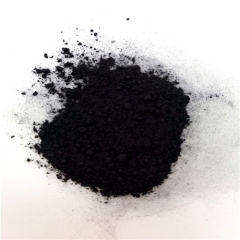
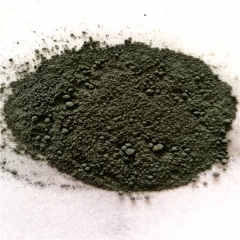
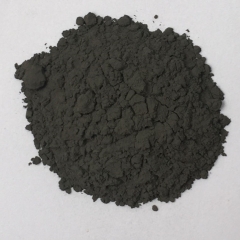
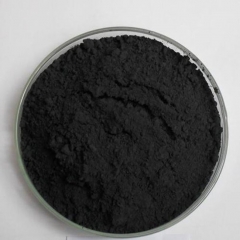
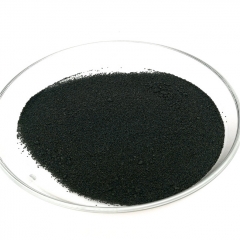
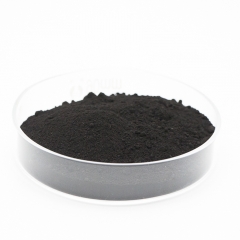
Overview of Boride Powder
Metallic boride powders are a unique class of functional advanced ceramics, standing at the forefront of boron and boride materials science. They combine exceptional properties—ultra-high melting points, extreme hardness, excellent electrical and thermal conductivity—making them indispensable in extreme environments. Unlike many ceramics, borides can be precisely machined via electrical discharge machining (EDM), thanks to their metallic conductivity. For example, titanium diboride (TiB₂) offers outstanding oxidation resistance and electrical stability, while chromium boride (CrB) excels in high-temperature strength and anti-oxidation performance. These characteristics firmly position boron-based powders as key enablers in modern materials engineering.

boride powders
Key Characteristics and Advantages of Boride Materials
Borides possess a unique combination of physical and chemical properties that set them apart from other ceramics and metals:
Ultra-high melting points: Most borides melt above 2000°C, with TiB₂ and ZrB₂ exceeding 3200°C, making them ideal for ultra-high-temperature applications.
Exceptional hardness and wear resistance: Boride phases are among the hardest known compounds, often rivaling carbides and nitrides, which suits them for cutting tools and armor.
Good electrical conductivity: Unlike oxide ceramics, many borides behave like metals electronically, enabling electrical discharge machining (EDM) for complex shapes.
High thermal conductivity: Efficient heat dissipation reduces thermal shock risk in rapid heating/cooling cycles.
Excellent chemical stability: Most boron-containing compounds resist oxidation and corrosion up to high temperatures, especially TiB₂ and CrB.
Metallic-like toughness: Compared to pure ceramics, borides offer better fracture toughness, improving structural reliability.
Versatile electronic properties: From semiconducting to superconducting (e.g., MgB₂), borides enable functional device innovations.
These advantages make boride powders not just passive structural materials, but active functional components in advanced systems.
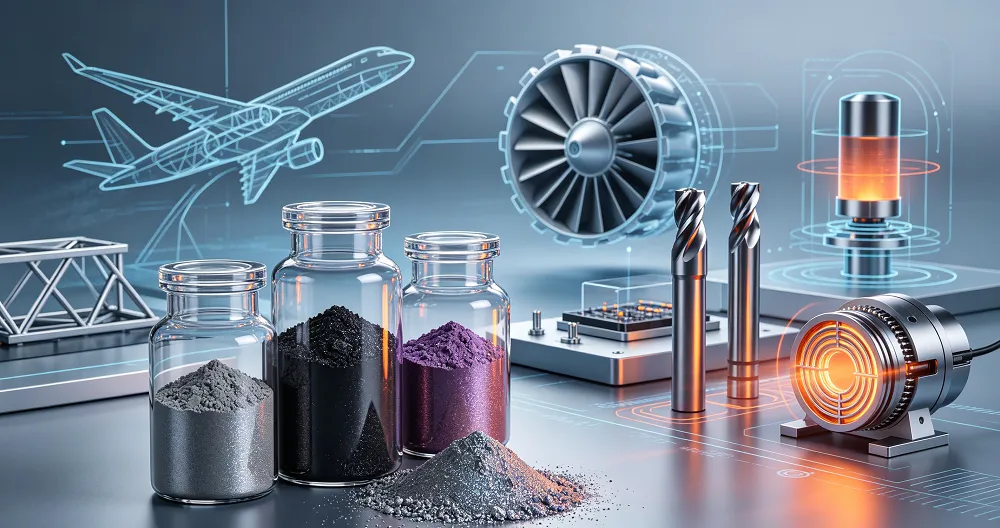
Applications of Boride Materials
Applications of Boride Powder
Boride ceramic powders are engineered for mission-critical uses, including rocket structural parts, aerospace airframes, turbine blades, specimen holders for high-temperature testing machines, instrument components, high-temperature hardness tester conical heads, bearings, and select nuclear energy device structures. Beyond these, boride powders serve as functional additives in ceramics, industrial deoxidizers, and sintering aids. As a new class of boron-containing functional ceramics, metal borides are expanding into electronics and energy fields. Notably, magnesium diboride (MgB₂)—a simple-structured superconductor—has opened revolutionary pathways for next-generation, high-temperature superconducting semiconductors, highlighting the vast potential of boron and boride compounds in future technologies.
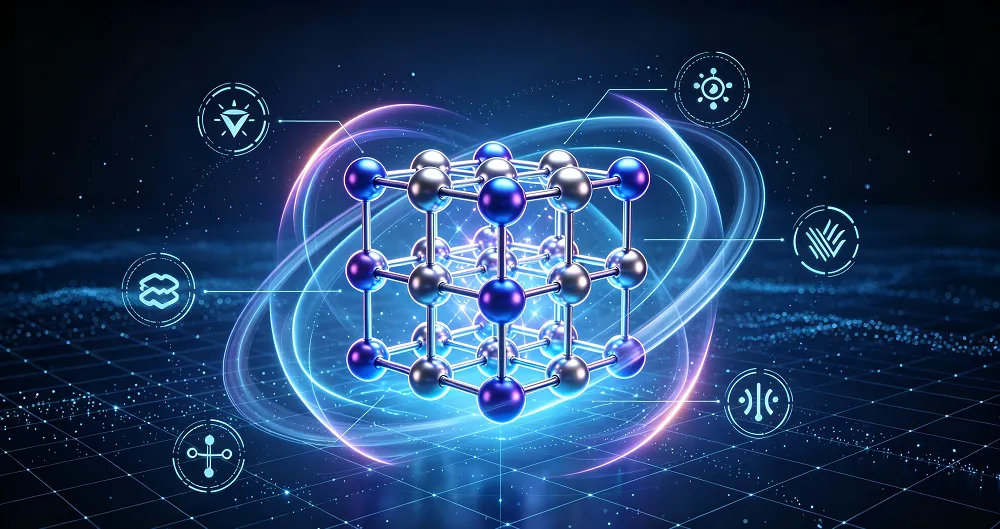
Characteristics of Boride Materials
Specifications of Boride Powder
|
Boride Powder Type |
Chemical Formula |
Purity (%) |
Particle Size (μm) |
Color |
Density (g/cm³) |
Melting Point (°C) |
Main Applications |
|
Titanium Diboride (TiB₂) |
TiB₂ |
≥ 98 |
1-5 |
Gray |
4.52 |
~3225 |
Cutting tools, armor plating, electrodes |
|
Zirconium Diboride (ZrB₂) |
ZrB₂ |
≥ 98 |
1-5 |
Black |
6.08 |
~3245 |
Aerospace components, refractory materials |
|
Chromium Boride (CrB) |
CrB |
≥ 99 |
1-10 |
Dark gray |
6.73 |
~2200 |
Wear-resistant coatings, cutting tools |
|
Lanthanum Hexaboride (LaB₆) |
LaB₆ |
≥ 99 |
1-10 |
Purple-red |
4.72 |
~2210 |
Electron emitters, cathodes |
|
Molybdenum Diboride (MoB₂) |
MoB₂ |
≥ 98 |
1-5 |
Gray |
6.17 |
~2300 |
High-temperature structural materials |
Company Profile
Luoyang Trunnano Tech Co., Ltd provide different kinds of boride powders, such as hafnium diboride powder, zirconium diboride powder, aluminum diboride powder, magnesium diboride powder, titanium diboride etc. Send us an email or click on the needed products to send an inquiry.
Payment Term:
T/T, Western Union, Paypal, Credit Card, etc.
Shipment Term:
By courier, by air, by sea, as customers request.
Storage conditions:
1) Store in a dry environment at room temperature.
2) Avoid damp and high temperature.
3) Use immediately after opening the inner packing bag.
5 FAQs of Boride Powder
What are the main uses of boride powders?
Boride powders are primarily used in high-performance applications such as cutting tools, wear-resistant coatings, aerospace components, refractory materials, and electron emitters. Their exceptional hardness and thermal stability make them ideal for these roles.
How do you handle boride powders safely?
Boride powders should be handled with care due to their fine particle size and potential health hazards. Use appropriate personal protective equipment (PPE), including gloves, goggles, and masks. Ensure good ventilation or work under a fume hood.
Can boride powders be customized for specific applications?
Yes, many manufacturers offer custom formulations of boride powders tailored to specific needs, including particle size distribution, purity levels, and surface treatments to enhance performance in particular applications.
What is the typical shelf life of boride powders?
When stored properly in a dry, cool environment and sealed containers, boride powders can have a shelf life of several years. However, it is important to check for any signs of degradation before use.
How are boride powders typically produced?
Boride powders are generally produced through chemical synthesis methods such as carbothermal reduction, direct reaction between elements, or sol-gel processes. The choice of method depends on the desired purity, particle size, and cost considerations.