Magnesium nitride is an inorganic compound with the chemical formula Mg3N2. It belongs to the cubic crystal system. It is a yellow-green powder under pure magnesium nitride at room temperature, but magnesium nitride containing a part of magnesium oxide impurities is gray-white. Magnesium nitride, like many metal nitrides, reacts with water to produce ammonia and is often used as a catalyst.
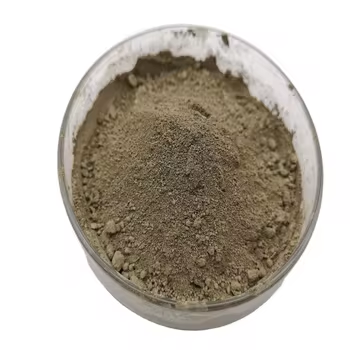
Magnesium Nitride Powder
The characteristics of Magnesium Nitride Powder
The chemical formula is Mg3N2. Molecular weight 100.95. Green-yellow to yellow-orange loose powder. Relative density 2.71225. Soluble in acid, insoluble in ethanol. 800℃ and decomposes in water. Sublimation at 700°C in vacuum. In the air, it is decomposed into Mg(OH)2 and NH3. Preparation method: Mg(NH2)2 can be obtained by reacting magnesium with nitrogen at high temperature, or by passing ammonia into the ether solution of MgEt2, and then heating the latter to red heat to decompose. Uses: Used to measure the moisture in alcohol-containing fuels. Magnesium nitride is an inorganic compound with a wide range of applications. It can be used to prepare nitrides of other elements with high hardness, high thermal conductivity, corrosion resistance, wear resistance and high temperature resistance, and to prepare special ceramic materials.
Magnesium Nitride Properties
|
| Other Names |
trimagnesium dinitride, Mg3N2 powder |
| CAS No. |
12057-71-5 |
| Compound Formula |
Mg3N2 |
| Molecular Weight |
100.93 |
| Appearance |
Yellow to Brown Powder |
| Melting Point |
N/A |
| Boiling Point |
N/A |
| Density |
2.71 g/cm3 |
| Solubility in H2O |
N/A |
| Exact Mass |
99.961273 |
The applications of Magnesium Nitride Powder
1. It is used as a catalyst when preparing nitrides of other elements with high hardness, high thermal conductivity, corrosion resistance, wear resistance and high temperature resistance. When the cubic boron nitride was successfully synthesized for the first time, the catalyst used was magnesium nitride;
2. Additives for high-strength steel smelting. Magnesium nitride (Mg3N2) replaces desulfurized magnesium in the smelting of construction steel, which is beneficial to improve the density, strength, tensile force and bearing capacity of steel. In addition, the use of magnesium nitride (Mg3N2) for desulfurization can reduce other additives in an appropriate amount, thereby helping to reduce the production cost of construction steel;
3. Preparation of special ceramic materials;
4. Foaming agent for the manufacture of special alloys;
5. Used in the manufacture of special glass;
6. Catalytic polymer cross-linking;
7. Recycling of nuclear waste.
Advanced Synthesis Methods and Process Engineering
The industrial and laboratory preparation of magnesium nitride demands rigorous control over reaction conditions, as the material’s purity and crystalline structure directly dictate its performance in downstream applications. While the original text briefly mentions the high-temperature reaction of magnesium with nitrogen, the full picture involves several sophisticated routes, each tailored to specific purity requirements and morphological needs.
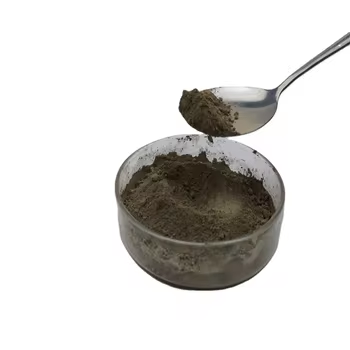
Magnesium Nitride Powder
The most prevalent method is the direct nitridation of magnesium metal. In this process, high-purity magnesium turnings or powder are placed in a refractory crucible within a high-temperature tube furnace. The system is evacuated and then backfilled with high-purity nitrogen gas, often with trace amounts of oxygen or hydrogen to catalyze the surface reaction. The temperature is gradually raised to between 700°C and 900°C. At these temperatures, magnesium melts and its vapor pressure increases, allowing the vapor-phase reaction with nitrogen to form magnesium nitride. The reaction is highly exothermic, requiring careful thermal management to prevent thermal runaway. The product is typically a yellow-green to brownish powder, the exact shade indicating the presence of residual magnesium oxide or unreacted magnesium metal.
An alternative route involves the thermal decomposition of magnesium amide (Mg(NH₂)₂). This precursor is synthesized by reacting magnesium metal with ammonia gas under pressure. The resulting amide is then heated to temperatures exceeding 400°C under a flow of inert gas, driving off ammonia and leaving behind high-purity magnesium nitride. This method offers superior control over stoichiometry and particle size, making it suitable for electronic and optical applications where trace impurities can be detrimental.
For nanoscale magnesium nitride, modern techniques such as plasma-enhanced chemical vapor deposition (PECVD) and magnetron sputtering are employed. In PECVD, magnesium-containing precursors and nitrogen plasma are introduced into a vacuum chamber, where they react on a heated substrate to form thin films or nanoparticles. Sputtering uses a magnesium target in a nitrogen atmosphere, bombarding the target with ions to eject magnesium atoms that react with nitrogen to form a deposited film. These methods allow for the creation of amorphous or nanocrystalline Mg₃N₂ with tailored thickness and surface area, critical for catalytic and sensor applications.
Chemical Reactivity, Stability, and Degradation Pathways
Understanding the chemical behavior of magnesium nitride is essential for safe handling and effective application. The most defining reaction of Mg₃N₂ is its vigorous hydrolysis in the presence of water or moisture. When exposed to humid air or liquid water, magnesium nitride reacts to form magnesium hydroxide and ammonia gas. This reaction is not merely a surface phenomenon; it proceeds throughout the bulk of the material if sufficient moisture penetrates the particle structure. The liberated ammonia has a pungent odor and is detectable even at low concentrations, serving as a warning sign for material degradation.
In acidic environments, the reaction is accelerated. Acids protonate the nitride ions, releasing ammonia and forming magnesium salts. This property is exploited in analytical chemistry, where magnesium nitride is used to trap and quantify water in organic solvents, as the amount of ammonia produced correlates directly with the water content. However, in storage and transport, contact with acids must be strictly avoided.
Thermal stability is another critical parameter. Under vacuum, magnesium nitride sublimes at approximately 700°C, transitioning directly from solid to vapor without melting. This allows for purification via sublimation. In inert atmospheres, it remains stable up to about 800°C, beyond which it begins to decompose into its constituent elements. In air, oxidation occurs at lower temperatures, forming a mixture of magnesium oxide and nitrogen. This oxidative instability limits its use in high-temperature oxidizing environments unless protected by inert atmospheres or coatings.
Expanded Applications in Materials Science and Engineering
1. Catalysis for Advanced Nitride Synthesis:
Beyond the synthesis of cubic boron nitride (cBN), magnesium nitride serves as a catalyst in the production of other ultra-hard and functional nitrides. For instance, in the synthesis of gallium nitride (GaN) nanowires—essential for next-generation LEDs and high-electron-mobility transistors—Mg₃N₂ acts as a seed promoter, lowering the energy barrier for nucleation. It is also investigated as a catalyst for nitrogen fixation, facilitating the conversion of atmospheric nitrogen into ammonia under mild conditions, a potential green alternative to the energy-intensive Haber-Bosch process.
2. Steel and Metallurgical Processing:
In steelmaking, magnesium nitride is emerging as a superior desulfurization agent compared to pure magnesium. The nitride form provides a slower, more controlled release of magnesium vapor, reducing the violent splashing and fuming associated with elemental magnesium additions. This controlled reactivity improves sulfur removal efficiency, leading to cleaner steel with fewer inclusions. The resulting reduction in sulfide stringers enhances the steel’s ductility, impact toughness, and resistance to hydrogen-induced cracking—critical properties for pipelines, offshore platforms, and automotive chassis.
3. Specialty Ceramics and Composites:
Magnesium nitride is a precursor for magnesium silicon nitride (MgSiN₂), a promising ceramic for high-temperature structural applications. When combined with silicon nitride (Si₃N₄), Mg₃N₂ forms a liquid phase at sintering temperatures, aiding densification and improving the fracture toughness of the final composite. These ceramics exhibit excellent thermal shock resistance and are being evaluated for use in gas turbine components and advanced nuclear fuel cladding.
4. Nuclear Waste Immobilization:
The original text mentions nuclear waste recycling. Specifically, magnesium nitride is being studied for encapsulating radioactive iodine-129, a long-lived fission product. Mg₃N₂ can incorporate iodine into its crystal lattice, forming stable iodide-nitride compounds that are highly insoluble in groundwater. This immobilization strategy is crucial for the safe, long-term geological disposal of spent nuclear fuel.
5. Polymer and Materials Chemistry:
In polymer science, Mg₃N₂ acts as a cross-linking agent for silicone rubbers and epoxies. The nitride groups react with terminal hydroxyl or epoxy groups, creating a three-dimensional network that enhances thermal stability and mechanical strength. Additionally, it is used as a blowing agent in the production of magnesium-based foams. When heated, it decomposes to release nitrogen gas, creating a uniform cellular structure within the metal matrix, resulting in lightweight, energy-absorbing materials for automotive crash boxes and aerospace panels.

Magnesium Nitride Powder
Safety, Handling, and Environmental Considerations
Despite its utility, magnesium nitride presents specific hazards that necessitate strict safety protocols. The primary risk is the release of ammonia gas upon contact with moisture, which can cause respiratory irritation and, in confined spaces, reach toxic concentrations. Inhalation of fine Mg₃N₂ dust can lead to metal fume fever, characterized by flu-like symptoms. Therefore, handling must occur in well-ventilated areas or glove boxes with inert atmospheres.
Storage requires airtight containers with desiccants to exclude moisture. Packaging often includes double polyethylene bags within sealed metal drums. Transportation classifications typically label it as a hazardous material due to its reactivity with water. Environmentally, while magnesium is an essential nutrient, high concentrations of dissolved magnesium and ammonia from degraded Mg₃N₂ can disrupt aquatic ecosystems, elevating pH and causing eutrophication. Waste disposal must therefore comply with local regulations, often requiring neutralization with dilute acids before discharge or secure landfilling.
Comparative Analysis with Other Alkaline Earth Nitrides
Magnesium nitride is part of a family that includes beryllium nitride (Be₃N₂), calcium nitride (Ca₃N₂), strontium nitride (Sr₃N₂), and barium nitride (Ba₃N₂). Each exhibits distinct properties. Beryllium nitride is extremely toxic and has a much higher thermal stability. Calcium nitride is more reactive with water, releasing ammonia even faster than Mg₃N₂. Barium nitride is sensitive to air and must be handled under rigorous inert conditions. Magnesium nitride strikes a balance: it is reactive enough to be useful as a precursor and catalyst but stable enough for practical handling and storage, making it the most industrially viable member of this group.
Current Research Frontiers and Future Outlook
Research is actively exploring the use of magnesium nitride in energy storage. Theoretical studies suggest that Mg₃N₂ could serve as a novel anode material for magnesium-ion batteries, offering higher capacity than conventional graphite anodes. Its layered structure may allow reversible insertion of magnesium ions, enabling high-energy-density, low-cost batteries that avoid the dendrite formation issues plaguing lithium-metal systems.
In optoelectronics, doped magnesium nitride is under investigation for deep-ultraviolet (DUV) light emitters. By doping with group IV elements like silicon or germanium, researchers aim to tune the bandgap of Mg₃N₂ into the DUV region, which is vital for sterilization, water purification, and high-density optical data storage.
Furthermore, the development of magnesium nitride-based ceramics for extreme environments continues. New composite materials combining Mg₃N₂ with boron nitride and aluminum nitride are being engineered to withstand temperatures exceeding 1500°C in oxidizing atmospheres, targeting applications in hypersonic vehicle thermal protection systems and next-generation rocket nozzles.
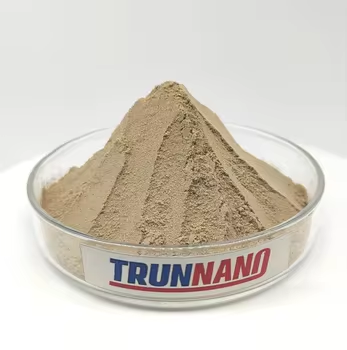
Magnesium Nitride Powder
Magnesium nitride powder, with its unique combination of chemical reactivity, thermal properties, and catalytic activity, stands as a pivotal material in modern materials engineering. From the synthesis of ultra-hard tools to steel purification, from the immobilization of nuclear waste to innovative new battery technologies, their impact is wide and profound. As synthesis methods advance and our understanding of its surface chemistry deepens, the applications of Mg₃N₂ will undoubtedly expand, solidifying its role as a cornerstone of inorganic functional materials for decades to come.
The supplier of Magnesium Nitride Powder
Luoyang Trunnano Tech Co., Ltd (TRUNNANO) is a professional nitride powder supplier with over 12 years of experience in Nitride Powder research and development. We accept payment via Credit Card, T/T, West Union, and Paypal. Trunnano will ship the goods to customers overseas through FedEx, DHL, by air, or by sea.
If you are looking for high-quality boron carbide powder, please feel free to contact us and send an inquiry.
Tags:inorganic compound cubic, Magnesium Nitride Powder, Nitride Powder