The Science and Applications of Ultrafine Zinc Stearate: A Comprehensive Exploration
Views : 287
Author : Vincy
Update time : 2025-11-26 16:41:33
1. Understanding the Science of Ultrafine Zinc Stearate
1.1 Chemical Composition and Structure 1.1.1 The Role of Zinc and Stearic Acid. Ultrafine zinc stearate is a compound formed by combining zinc ions with stearic acid, a long-chain fatty acid. Zinc, a transition metal, reacts with the carboxyl group of stearic acid to create a salt-like structure. This reaction occurs in aqueous or solvent-based environments, where zinc ions bond with two stearate molecules to form a neutral, stable compound. The resulting structure features zinc atoms at the center, surrounded by stearate chains that extend outward, creating a layered arrangement.
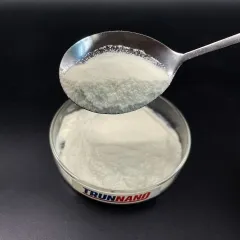
Ultrafine zinc stearate
1.1.2 Molecular Arrangement in Ultrafine Particles. In ultrafine formulations, the particle size is reduced to the nanoscale, altering how molecules pack together. Smaller particles exhibit higher surface area-to-volume ratios, enhancing reactivity and interaction with other materials. The layered molecular structure remains intact but becomes more accessible due to reduced particle size, allowing for improved dispersion and functional performance in applications. 1.2 Physical Properties and Their Significance 1.2.1 Particle Size and Surface Area. Ultrafine zinc stearate particles measure between 10 and 100 nanometers, significantly smaller than conventional grades. This reduction in size increases the surface area available for chemical interactions, making the material more effective as a lubricant, stabilizer, or additive. The enhanced surface area also improves solubility in certain solvents and dispersion in polymers, leading to more uniform distribution. 1.2.2 Thermal and Mechanical Behavior. Thermal analysis reveals that ultrafine zinc stearate has a lower melting point compared to bulk material, facilitating easier integration into heat-sensitive systems. Mechanically, the material acts as a lubricant by reducing friction between surfaces, while its platy particle shape helps in reinforcing mechanical properties like tensile strength and impact resistance in composites.
2. Manufacturing Processes for Ultrafine Zinc Stearate
2.1 Traditional Production Methods 2.1.1 Precipitation and Crystallization. The most common method involves reacting zinc salts, such as zinc chloride or zinc sulfate, with sodium stearate in water. This precipitation reaction forms zinc stearate crystals, which are then filtered, washed, and dried. The process requires careful control of pH, temperature, and reactant concentrations to ensure consistent particle size and purity. Crystallization techniques, like adding antisolvents or adjusting cooling rates, further refine particle size distribution. 2.1.2 Mechanical Grinding Techniques. For coarser grades, mechanical grinding is employed to reduce larger particles to ultrafine sizes. Ball mills or jet mills subject the material to high-energy collisions, breaking down aggregates into smaller fragments. While effective, this method may introduce impurities or alter particle morphology, requiring post-processing steps like sieving or classification to achieve desired uniformity. 2.2 Advanced Techniques for Ultrafine Particles 2.2.1 Sol-Gel Synthesis. Sol-gel methods offer precise control over particle size and morphology. Zinc precursors, such as zinc acetate, are dissolved in a solvent with stearic acid, forming a sol. Hydrolysis and condensation reactions convert the sol into a gel, which is then dried and calcined to produce ultrafine particles. This approach allows for doping or functionalization during synthesis, enabling tailored properties for specific applications. 2.2.2 Spray Drying and Atomization. Spray drying involves atomizing a zinc stearate solution or slurry into a hot chamber, where droplets rapidly dry to form fine particles. Parameters like nozzle size, temperature, and feed rate are optimized to control particle size and prevent aggregation. Atomization techniques, such as ultrasonic or pressure nozzles, ensure uniform droplet formation, resulting in consistent ultrafine powders with minimal processing residues.
3. Applications in Various Industries
3.1 Use in Plastics and Rubber 3.1.1 Enhancing Mechanical Properties. In polymer composites, ultrafine zinc stearate acts as a lubricant and processing aid, reducing viscosity during melt processing and improving flow characteristics. This enhances mold filling and reduces defects like voids or warping. Additionally, it reinforces mechanical properties by improving interfacial adhesion between fillers and polymer matrices, increasing tensile strength and elongation at break. 3.1.2 Improving Processing Efficiency. The material’s lubricating properties reduce friction between polymer chains and machinery, lowering energy consumption during extrusion or injection molding. This efficiency gain translates to faster production cycles and reduced wear on equipment, extending machine lifespan and lowering maintenance costs. 3.2 Role in Coatings and Inks 3.2.1 Anti-Blocking and Slip Properties. In coatings like paints or varnishes, ultrafine zinc stearate prevents blocking—where layers stick together—by forming a thin, slippery layer on surfaces. This property is crucial for packaging materials, ensuring easy opening and closing without tearing. In inks, it improves printability by reducing tackiness and enabling smooth ink transfer from printers to substrates. 3.2.2 Enhancing Adhesion and Durability. The compound’s platy structure acts as a barrier, reducing permeability to moisture, gases, or chemicals. This improves the durability of coatings in harsh environments, such as outdoor applications exposed to UV radiation or humidity. Enhanced adhesion to substrates ensures long-lasting protection, reducing flaking or peeling over time. 3.3 Applications in Pharmaceuticals and Cosmetics 3.3.1 Drug Delivery Systems. In pharmaceuticals, ultrafine zinc stearate serves as a carrier for active ingredients in controlled-release formulations. Its high surface area allows for efficient drug loading, while its biocompatibility ensures safe interaction with biological tissues. Applications include topical creams for skin conditions, where it aids in drug penetration and sustained release. 3.3.2 Skincare and Hair Care Products. In cosmetics, the material functions as an emulsifier, stabilizer, and thickening agent. It helps blend oils and water-based ingredients in creams or lotions, ensuring smooth texture and consistent application. In hair care, it reduces friction between strands, preventing tangles and improving manageability while adding shine.
4. Future Perspectives and Innovations
4.1 Emerging Technologies 4.1.1 Nanotechnology Integration. Advances in nanotechnology enable the synthesis of zinc stearate nanoparticles with tailored surface functionalities. These particles can be engineered to target specific sites in the body for drug delivery or to enhance catalytic activity in chemical reactions. Surface modifications, such as coating with silica or polymers, improve dispersibility and stability in complex formulations. 4.1.2 Green Manufacturing Approaches. Sustainable production methods, like bio-based synthesis using renewable stearic acid sources, are gaining traction. Microbial fermentation or plant-derived oils reduce reliance on petrochemical feedstocks, aligning with global sustainability goals. Closed-loop systems that recycle solvents and minimize waste further enhance environmental credentials.
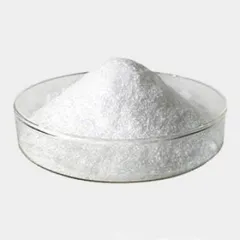
Ultrafine zinc stearate
4.2 Potential New Applications 4.2.1 Advanced Materials for Energy Storage. Research explores ultrafine zinc stearate as a component in battery electrolytes or separator coatings. Its ion-conducting properties and thermal stability could improve energy density and cycle life in lithium-ion or solid-state batteries. In supercapacitors, it may enhance electrode performance by facilitating ion transport and reducing internal resistance. 4.2.2 Biomedical Engineering Innovations. Beyond drug delivery, the material shows promise in tissue engineering as a scaffold material due to its biocompatibility and degradation properties. In diagnostics, functionalized zinc stearate nanoparticles could serve as contrast agents for imaging techniques like MRI or fluorescence microscopy, enabling early disease detection with higher sensitivity. The exploration of ultrafine zinc stearate bridges scientific curiosity with practical innovation, offering solutions to challenges in materials science, healthcare, and environmental sustainability. As research advances, this versatile compound may unlock new frontiers in technology and human well-being, solidifying its role as a cornerstone of modern industrial and biomedical applications.
5. Supplier
TRUNNANOis a globally recognized Ultrafine Zinc Stearate manufacturer and supplier of compounds with more than 12 years of expertise in the highest quality nanomaterials and other chemicals. The company develops a variety of powder materials and chemicals. Provide OEM service. If you need high quality Ultrafine Zinc Stearate, please feel free to contact us. You can click on the product to contact us. Tags: Ultrafine zinc stearate, zinc stearate, zinc stearate emulsion