The High-Temperature Paradox: Unlocking the Secrets of Molybdenum Disilicide
Views : 85
Author : Vincy
Update time : 2026-04-22 17:02:45
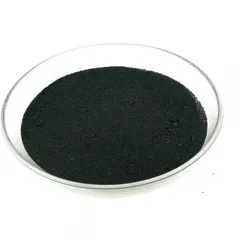
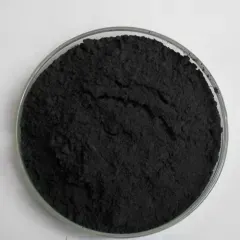
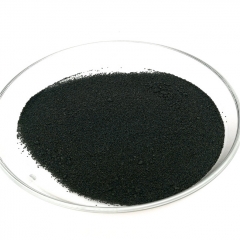
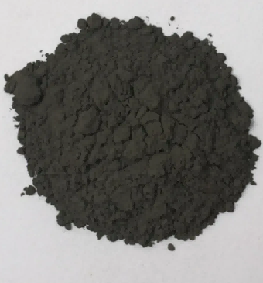
If you are looking for a material that can stare directly into the sun without blinking, you need to talk about molybdenum disilicide. In the world of advanced ceramics and high-temperature materials, this compound—often abbreviated as MoSi2—is a bit of a celebrity. It occupies a very strange and wonderful niche in materials science because it refuses to pick a side. Is it a metal? Is it a ceramic? The answer is "yes." It possesses the electrical conductivity of a metal but the thermal stability and corrosion resistance of a refractory ceramic. As we dive into the chemistry and physics of this gray, metallic-looking crystal, you will see why it is indispensable for everything from heating elements in furnaces to protecting hypersonic aircraft from burning up in the atmosphere.
Molybdenum Disilicide
The Atomic Identity: A Metal That Acts Like Glass
To understand why molybdenum disilicide is so special, we have to look at its atomic architecture. The chemical formula is simple enough: one atom of molybdenum (Mo) bonded with two atoms of silicon (Si). However, the way these atoms arrange themselves is what gives the material its superpowers. It crystallizes in a tetragonal structure, which is essentially a stretched cube. This specific arrangement creates a bond that is part-metallic and part-covalent. This hybrid bonding leads to some fascinating physical properties. For one, it conducts electricity. Most ceramics—like the porcelain insulators on power lines—are electrical insulators. If you run current through them, nothing happens. But molybdenum disilicide has low resistivity, meaning electrons can flow through it relatively easily. This is crucial because it allows us to use the material as a resistor. When you pass an electric current through a rod of MoSi2, it resists the flow, generating intense heat. Because the material itself can withstand temperatures up to 1900°C without melting (its melting point is around 2030°C), it becomes the perfect heater. But the real magic happens when it gets hot. We usually think of metals rusting or oxidizing when heated—think of iron turning into flaky red rust. Ceramics are generally more stable, but they can still degrade. Molybdenum disilicide does something incredible when exposed to oxygen at high temperatures (above 1000°C). The silicon within the crystal structure migrates to the surface and reacts with the oxygen to form a thin layer of silicon dioxide (SiO2). You might know SiO2 by its common name: quartz or glass. This layer is dense, continuous, and self-healing. If the coating cracks, more silicon diffuses to the surface, forms new glass, and seals the breach. This prevents oxygen from reaching the molybdenum underneath, effectively stopping the material from burning up. It is like a lizard regenerating a lost tail, but for corrosion protection.
The Heating Element King: Defying the Heat
The most ubiquitous application of molybdenum disilicide is undoubtedly in electric heating elements. If you walk into a university lab or a factory producing high-tech ceramics, you will likely see vertical rods glowing bright orange or yellow inside a furnace. Those are almost certainly MoSi2 elements. Why do we use this instead of standard metal alloys like nichrome? The answer lies in the temperature ceiling. Standard metal heaters start to sag, oxidize rapidly, or fail once you push them past 1200°C. Molybdenum disilicide, however, thrives in this environment. It is routinely used in applications requiring temperatures between 1700°C and 1800°C. This makes it essential for sintering advanced materials like neodymium magnets (used in EVs), firing technical ceramics, and heat-treating aerospace components. Furthermore, unlike carbon heaters which must be used in a vacuum or inert gas (because carbon burns in air), molybdenum disilicide actually needs oxygen to form its protective glass layer. This means it can operate in standard atmospheric air. This is a massive convenience for industrial processes. You don't need expensive vacuum chambers or gas purging systems; you just turn on the switch, and the element heats up while protecting itself with that invisible shield of silica glass. However, there is a catch. While it handles extreme heat beautifully, it is incredibly brittle at room temperature. You have to handle these heating elements with the utmost care, much like you would handle fine china. Drop a MoSi2 rod, and it will shatter. This brittleness is the trade-off for its high-temperature strength. It behaves like a ductile metal only when it is extremely hot (above 1000°C); at room temperature, it is a rigid ceramic that cannot be bent or shaped.
Molybdenum Disilicide
The Achilles Heel: The Pest Phenomenon
No material is perfect, and molybdenum disilicide has a notorious weakness known as "pesting" or "pest oxidation." This is a classic case of a material failing in a very specific, narrow window of conditions. While MoSi2 is stable at high temperatures (forming the protective glass) and stable at very low temperatures (where reaction kinetics are too slow to cause damage), it falls apart in the intermediate range—specifically between 400°C and 600°C. In this temperature zone, the kinetics of oxidation are fast enough to occur but not fast enough to form that nice, continuous, protective SiO2 layer we talked about earlier. Instead, the oxygen attacks the grain boundaries of the material. It penetrates the internal structure and reacts with the molybdenum to form molybdenum trioxide (MoO3). Here is the problem: MoO3 is volatile. It doesn't stay solid; it turns into a gas (sublimes) or expands violently. This internal expansion causes the solid material to crumble into powder. Imagine a brick wall where the mortar suddenly turns into expanding foam and then evaporates—the bricks would fall apart. That is what happens to MoSi2 during pesting. For engineers, this is a critical design constraint. You cannot leave a molybdenum disilicide component sitting at 500°C for a long time. In industrial furnaces, operators are trained to ramp the temperature up quickly through this danger zone to avoid degradation. Alternatively, scientists have learned to "dope" the material. By adding small amounts of other elements—like aluminum or boron—to the crystal lattice, they can alter the oxidation mechanism, forcing the formation of a protective layer even at these lower intermediate temperatures. It is a great example of how understanding the fundamental chemistry allows us to engineer a solution to a fatal flaw.
Coatings: The Armor for Carbon Composites
While heating elements are the bread and butter of the industry, the most exciting research is happening in the field of coatings. We live in an era of composite materials. Carbon-carbon (C/C) composites are lightweight, incredibly strong, and retain their strength at high temperatures. They are perfect for the nose cones of missiles, the leading edges of hypersonic vehicles, and the turbine blades of jet engines. There is just one problem: carbon burns. At temperatures above 500°C, carbon reacts with oxygen to form carbon dioxide. If you fly a carbon-composite jet engine part at supersonic speeds, the friction heat will literally cause the part to disappear into thin air. We need a barrier. We need a coating that is impervious to oxygen but won't crack under the stress of rapid heating. Enter molybdenum disilicide. When applied as a coating onto carbon composites, it acts as a diffusion barrier. It stops oxygen from getting in and stops carbon from getting out. But here is the tricky part: different materials expand by different amounts when heated. This is called the coefficient of thermal expansion (CTE). If you coat carbon with a material that expands too much or too little compared to the carbon, the coating will peel off (spall) the moment the engine heats up. Molybdenum disilicide has a CTE that is reasonably close to many structural ceramics and superalloys, though it is still a bit of a mismatch for pure carbon. To fix this, materials scientists use "graded coatings." Instead of a sharp boundary between the carbon and the MoSi2, they create a gradient layer—a mixture that slowly transitions from pure carbon to a MoSi2-rich top layer. This manages the thermal stress, keeping the armor attached to the substrate even as it glows red hot. This technology is what allows hypersonic vehicles to survive the immense heat of atmospheric re-entry or sustained Mach 5+ flight.
Molybdenum Disilicide
The Electronic Frontier: From Furnaces to Microchips
It is not just heavy industry that loves this material; the microelectronics industry relies on it too. As computer chips get smaller and faster, the layers of material inside them get thinner. We are talking about nanometers. One of the challenges in chip manufacturing is creating "contacts"—the tiny bridges that allow electricity to flow from the silicon chip to the outside world. We need a material that conducts electricity well but doesn't react with the silicon underneath it. If the contact material reacts with the silicon, it destroys the delicate circuitry. Molybdenum disilicide is chemically compatible with silicon. It can be deposited as a thin film (using techniques like sputtering or chemical vapor deposition) to act as a gate electrode or a contact layer. It provides a low-resistance path for electrons while remaining stable during the high-temperature processing steps required to build the rest of the chip. Furthermore, researchers are looking at MoSi2 for ultra-high-temperature sensors. In a jet engine or a nuclear reactor, standard electronic sensors would melt. A sensor based on the piezoresistive properties of molybdenum disilicide could theoretically survive inside the combustion chamber, providing real-time data on pressure and temperature. This moves the material from being a passive structural component to an active "smart" material.
Showdown at High Noon: Comparing Refractory Materials
To really appreciate where molybdenum disilicide fits, we have to compare it to its rivals. In the world of high-temperature materials, there are a few other heavy hitters. First, let's look at Tungsten. Tungsten has the highest melting point of all metals (3422°C). It is a beast. However, tungsten has zero oxidation resistance. If you heat a tungsten rod in air to 1000°C, it will burn. It needs to be in a vacuum or hydrogen atmosphere. Molybdenum disilicide, with its ability to operate in air, wins on versatility. Then there is Silicon Carbide (SiC). This is a classic ceramic. It is harder and stronger than MoSi2 at lower temperatures. However, SiC begins to decompose (sublime) around 2000°C, whereas MoSi2 melts at roughly 2030°C. More importantly, MoSi2 has better electrical conductivity, making it easier to machine using Electrical Discharge Machining (EDM) and better suited for certain electronic applications. We also have Graphite. Graphite is amazing—it gets stronger as it gets hotter (up to 2500°C). But again, graphite is basically pure carbon. Without a heavy-duty coating (often made of... you guessed it, molybdenum disilicide), graphite cannot exist in an oxygenated environment above 500°C. MoSi2 offers a "monolithic" solution—it is its own protector. Finally, consider Nickel-based Superalloys. These are the standard for jet engines. They are tough and ductile. But they have a melting point limit around 1300°C-1400°C. Beyond that, they turn into soup. Molybdenum disilicide extends the operating temperature window by another 500°C to 600°C. In thermodynamics, that difference is massive; it represents a huge gain in energy efficiency and speed.
Processing the Beast: How We Make It
Working with molybdenum disilicide is not easy. You cannot simply cast it like steel or mold it like plastic. Because it is a ceramic, traditional sintering (heating powder until it sticks together) is difficult. It tends to coarsen—meaning the grains grow large and weak—before the material fully densifies. To get around this, scientists use advanced techniques like Spark Plasma Sintering (SPS). This involves applying a pulsed electric current directly to the powder while pressing it. The electricity heats the particles internally and rapidly, allowing them to bond before they have time to grow into large, brittle grains.
Molybdenum Disilicide
Another method gaining traction is Self-propagating High-temperature Synthesis (SHS). This is essentially a controlled explosion. You mix molybdenum powder and silicon powder, ignite it, and the reaction releases so much heat that it sustains itself, converting the reactants into MoSi2 almost instantly. It is fast, energy-efficient, and produces very pure powders. We are also seeing the rise of additive manufacturing (3D printing) with MoSi2. Printing ceramics is notoriously hard because they crack when they dry. However, new binder-jetting techniques allow us to print complex shapes—like intricate cooling channels for rocket nozzles—that would be impossible to machine out of a solid block. This opens up entirely new geometries for thermal management systems.
Alloying for Toughness: The Composite Approach
One of the holy grails of MoSi2 research is fixing its room-temperature brittleness. Pure MoSi2 has a fracture toughness that is quite low. If you bend it, it snaps. To fix this, we turn to composites. By embedding other materials into the MoSi2 matrix, we can stop cracks from spreading. For example, adding Silicon Carbide (SiC) whiskers or particles creates a composite where the crack has to navigate around obstacles, absorbing energy as it goes. Another approach is alloying with Aluminum. Creating a Molybdenum-Silicon-Aluminum phase can improve the oxidation resistance at lower temperatures (fighting the pest phenomenon) and slightly improve ductility. Researchers are also looking at "in-situ" toughening. Instead of mixing powders, they design the chemistry so that as the MoSi2 solidifies, it naturally precipitates a second, tougher phase within the structure. It is like reinforced concrete, but on a microscopic scale. This allows the material to survive the thermal shocks of being launched into space or switched on in a furnace.
The Environmental Angle: Green Steel and Hydrogen
Why does any of this matter right now? Because the world is trying to decarbonize. One of the biggest hurdles in green energy is hydrogen. Hydrogen is a fantastic fuel, but it is hard to store and transport. One promising method is using Liquid Organic Hydrogen Carriers (LOHCs). These are organic liquids that can absorb and release hydrogen. The process of releasing the hydrogen (dehydrogenation) requires heat—lots of it. The reactors used for this need to operate at 300°C to 400°C continuously. This is exactly the "pesting" zone for MoSi2, but modern alloys have largely overcome this. The superior corrosion resistance of molybdenum disilicide compared to stainless steel makes it a candidate for the harsh chemical environments inside these reactors. Furthermore, in the production of "Green Steel," electric arc furnaces are replacing coal-fired blast furnaces. These electric furnaces require massive amounts of reliable, high-temperature heating. Molybdenum disilicide heating elements are cleaner and more efficient than fossil fuel burners, helping to reduce the carbon footprint of steel manufacturing.
Molybdenum Disilicide
TRUNNANO CEO Roger Luo said:"Current research prioritizes overcoming low-temperature oxidation and brittleness via alloying and composite fabrication for aerospace applications.”
Supplier
TRUNNANOis a globally recognized molybdenum disilicide manufacturer and supplier of compounds with more than 12 years of expertise in the highest quality nanomaterials and other chemicals. The company develops a variety of powder materials and chemicals. Provide OEM service. If you need high quality molybdenum disilicide, please feel free to contact us. You can click on the product to contact us. Tags: Molybdenum disilicide, MoSi2, Molybdenum disilicide powder