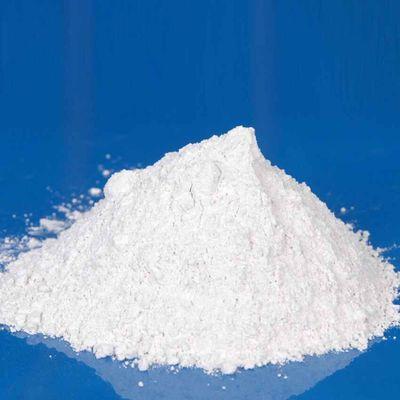
Quartz powder

Properties and Quality Specifications of Quartz Powder
The quality of quartz powder is determined by several key parameters that influence its performance in different applications.
Chemical Composition: High-purity quartz powder typically contains more than 99.0% SiO2, with iron oxide content often controlled below 0.02% for applications requiring color purity and optical clarity. The presence of impurities such as aluminum oxide, titanium oxide, and alkali metal oxides can affect thermal properties and electrical insulation characteristics.
Particle Size Distribution: Quartz powder is available in a wide range of particle sizes, from coarse grains (e.g., 120 mesh) to ultra-fine powder with particle diameters of several micrometers. The particle size distribution affects flowability, packing density, surface area, and reactivity. Common D50 values range from 2 to 50 micrometers depending on the application.
Physical Properties: Quartz powder has a Mohs hardness of 7, a density of approximately 2.65 g/cm³, and a melting point of 1650°C. The material exhibits excellent thermal stability, low thermal expansion, and high electrical resistance, making it suitable for high-temperature and electrical insulation applications. The coefficient of thermal expansion is approximately 14 × 10⁻⁶/K.
White Degree: For applications in paints, coatings, and engineered stone, the whiteness of quartz powder is an important quality indicator. High-purity quartz powder can achieve whiteness values above 90%, with some grades exceeding 94% whiteness.
Acid Resistance: Quartz powder is insoluble in most acids, providing excellent chemical stability in corrosive environments. This property is particularly valuable for applications in chemical processing equipment and acid-resistant coatings.
Application-Specific Requirements: Different applications require different quality specifications. Electronic-grade quartz powder requires extremely high purity (SiO2 > 99.9%) and controlled particle size. Ceramic-grade powder may have higher tolerance for impurities. Paint and coating applications prioritize whiteness and particle size distribution. Engineered stone applications require consistent color and particle packing characteristics.

Key Properties and Quality Specifications
Quality Specifications of Quartz Powder
| Parameter | Specification / Value | Application Impact |
|---|---|---|
| SiO₂ Content (Purity) | ≥ 99.0% (standard); > 99.9% (electronic grade) | Determines optical clarity, thermal stability, and electrical insulation |
| Iron Oxide (Fe₂O₃) Content | < 0.02% (high-purity grade) | Affects color purity; critical for optical and white-pigment applications |
| Mohs Hardness | 7 | Enables abrasive applications; superior durability |
| Melting Point | 1650°C | Suitable for high-temperature applications |
| Density | ~2.65 g/cm³ | Affects packing density and flowability |
| Coefficient of Thermal Expansion | ~14 × 10⁻⁶/K | Low thermal expansion; ideal for thermal shock resistance |
| Whiteness | > 90% (standard); > 94% (premium) | Critical for paints, coatings, and engineered stone aesthetics |
| Particle Size (D50) | 2 – 50 μm (varies by application) | Affects flowability, surface area, and reactivity |
| Acid Solubility | Insoluble in most acids | Excellent chemical stability in corrosive environments |
| Mesh Size Definition | < 120 mesh (powder); > 120 mesh (sand) | Industry classification standard |
Processing and Classification of Quartz Powder
The production of quartz powder involves several processing steps to achieve the desired purity, particle size, and physical properties.
Raw Material Selection: High-quality natural quartz ore is selected based on purity, color, and physical characteristics. Different grades of ore are used for different applications, with electronic-grade quartz requiring the highest purity ore.
Primary Crushing: The raw quartz ore is crushed to reduce the size to manageable pieces using jaw crushers or cone crushers.
Secondary Crushing and Milling: The crushed quartz is further reduced in size using ball mills, vibration mills, or jet mills. The grinding process can be controlled to achieve specific particle size distributions.
Classification: The ground powder is classified using air classifiers or sieving systems to separate particles into different size fractions. This step ensures that the final product meets the required particle size specifications.
Purification: For high-purity grades, additional purification steps such as acid leaching, flotation, and magnetic separation may be employed to remove iron and other impurities.
Surface Treatment: Some specialty grades of quartz powder undergo surface treatment with silane coupling agents to improve compatibility with organic resins and polymers.
Packaging: The final product is packaged in bags, containers, or bulk bags, depending on customer requirements.
Quality Control: Throughout the processing chain, quality control tests are performed to verify chemical composition, particle size distribution, whiteness, and other key properties.

Quartz Powder Processing and Classification
Safety and Handling Considerations
Quartz powder is generally considered a safe material for industrial use, but appropriate safety precautions should be taken during handling.
Health Hazards: Inhalation of fine quartz dust may cause respiratory irritation. Prolonged or repeated exposure to respirable crystalline silica may cause silicosis, a lung disease. Workers should avoid breathing dust and use appropriate respiratory protection when handling the powder.
Protective Measures: When handling quartz powder, work in a well-ventilated area or use local exhaust ventilation. Wear protective gloves, safety goggles, and a dust mask or respirator to avoid inhalation and skin contact. Avoid creating dust during handling and processing.
Storage Requirements: Store quartz powder in a cool, dry, well-ventilated area in sealed containers. Protect from moisture to prevent caking and contamination. The material is not flammable and can be stored safely with other non-combustible materials.
Spill Response: In case of spills, avoid creating dust. Collect the material carefully using vacuum or wet sweeping methods. Place collected material in a sealed container for disposal. Wash the spill area to remove residual dust.
Regulatory Compliance: Users should be aware of occupational exposure limits for crystalline silica in their jurisdiction and implement appropriate control measures.

Quartz Powder Safety and Handling
FAQ: Frequently Asked Questions About Quartz Powder
Q: What is quartz powder?
A: Quartz powder is a hard, wear-resistant, chemically stable silicate mineral powder with SiO₂ as its main ingredient. It is produced by processing natural quartz stone to a fineness below 120 mesh. This material has a Mohs hardness of 7, a melting point of 1650°C, and is insoluble in most acids, making it valuable across multiple industries.
Q: What is quartz powder used for?
A: Quartz powder has diverse applications. It is used in glass making for instruments, flat glass, and fiberglass. As an abrasive, it is used for sandblasting and grinding. In the slab industry, it is used for artificial marble and quartz slabs. Quartz powder is also used as a filler in rubber, paint, and putty, as well as in construction materials, filter media, roofing granules, and recreational surfaces like golf courses and sandboxes.
Q: Why is powdered quartz used as an abrasive?
A: Powdered quartz is used as an abrasive because of its high hardness—7 on the Mohs scale. This makes quartz more durable than most natural substances, enabling effective sandblasting, scouring, grinding, and sanding applications. Its hardness and angular particle shape provide excellent cutting and wear-resistant properties.
Q: How to make quartz powder?
A: Quartz powder is made through a multi-step process: raw quartz ore is selected, crushed, milled to desired fineness, classified by particle size, and optionally purified through acid leaching or magnetic separation. High-purity grades undergo additional purification. The final quartz powder is then packaged for shipment.
Q: What is the purity of high-quality quartz powder?
A: High-purity quartz powder typically contains more than 99.0% SiO₂. For electronic and optical applications, iron oxide content is often controlled below 0.02% to maintain color purity and optical clarity. Electronic-grade quartz powder requires SiO₂ > 99.9%.
Q: Is quartz powder safe to handle?
A: Quartz powder is generally safe for industrial use, but precautions are necessary. Inhalation of fine quartz dust may cause respiratory irritation, and prolonged exposure to respirable crystalline silica can cause silicosis. Workers should use respiratory protection, work in well-ventilated areas, and follow occupational safety guidelines when handling quartz powder.
Q: What is the particle size of quartz powder?
A: Quartz powder is generally defined as product below 120 mesh. However, it is available in a wide range of sizes, from coarse grains to ultra-fine powder with D50 values from 2 to 50 micrometers, depending on the application requirements.
Q: Can quartz powder improve concrete strength?
A: Yes, quartz powder can significantly improve concrete strength. In ECC, the addition of quartz powder increased compressive strength by 6.85% for PVA fiber-based ECC and by 8.09% for steel fiber-based ECC at 28 days of curing, compared to samples without quartz powder.
Q: What is the melting point of quartz?
A: Quartz has a melting point of 1650°C. This high thermal stability, combined with its low thermal expansion (~14 × 10⁻⁶/K) and high electrical resistance, makes quartz powder suitable for high-temperature and electrical insulation applications.
Q: Is quartz powder soluble in acid?
A: Quartz powder is insoluble in most acids, providing excellent chemical stability in corrosive environments. This acid resistance makes quartz valuable for chemical processing equipment, acid-resistant coatings, and applications where chemical durability is essential.
TRUNNANO is a trusted global chemical material supplier & manufacturer with over 12 years' experience in providing super high-quality chemicals and Nanomaterials. Currently, our company has successfully developed a series of materials. The Quartz Powder produced by our company has high purity, fine particle size and impurity content.
Tags: Quartz Powder, Silica Powder, Silicon Dioxide, SiO₂, High Purity Quartz