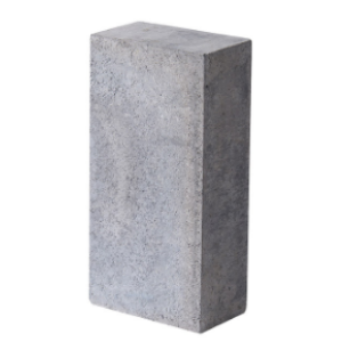
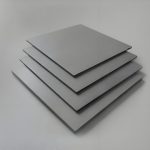
Recrystallized Silicon Carbide: The King of Ceramic Materials in Extreme Environments
Views : 290
Author : Vincy
Update time : 2026-01-23 16:35:27
The Material Evolution from Traditional Ceramics to Pure-Phase Silicon Carbide
In the high-temperature industrial field, the choice of materials often determines the limits of the process and the life of the equipment. Although traditional refractory materials such as alumina and mullite perform well in general industrial environments, when faced with extremely high temperatures exceeding 1500°C, severe temperature changes and highly corrosive environments, their performance shortcomings are clearly revealed. It is against the background of this stringent demand that silicon carbide ceramics came into being, among which Recrystallized Silicon Carbide (RSiC) has become the best choice under extreme working conditions due to its unique preparation process and excellent performance.
Recrystallized Silicon Carbide
Recrystallized silicon carbide is a high-purity silicon carbide ceramic prepared through a special process. Its preparation process abandons the sintering aids commonly used in traditional ceramic sintering, and instead sinters high-purity silicon carbide powder in an ultra-high temperature environment of about 2400°C. During this process, evaporation-condensation and recrystallization occur on the surface of silicon carbide particles, and through the covalent bond of pure silicon carbide between the grains, a pure material without second phases and glass phases is formed. This unique microstructure gives recrystallized silicon carbide excellent properties that are unmatched by a series of traditional materials.
The Unique Manufacturing Process and Microstructure of Recrystallized Silicon Carbide
In the high-temperature industrial field, the choice of materials often determines the limits of the process and the life of the equipment. Although traditional refractory materials such as alumina and mullite perform well in general industrial environments, when faced with extremely high temperatures exceeding 1500°C, severe temperature changes and highly corrosive environments, their performance shortcomings are clearly revealed. It is against the background of this stringent demand that silicon carbide ceramics came into being, among which Recrystallized Silicon Carbide (RSiC) has become the best choice under extreme working conditions due to its unique preparation process and excellent performance. Recrystallized silicon carbide is a high-purity silicon carbide ceramic prepared through a special process. Its preparation process abandons the sintering aids commonly used in traditional ceramic sintering, and instead sinters high-purity silicon carbide powder in an ultra-high temperature environment of about 2400°C. During this process, evaporation-condensation and recrystallization occur on the surface of silicon carbide particles, and through the covalent bond of pure silicon carbide between the grains, a pure material without second phases and glass phases is formed. This unique microstructure gives recrystallized silicon carbide excellent properties that are unmatched by a series of traditional materials. In the ultra-high temperature environment of about 2400°C, the surface of silicon carbide particles begins to sublimate, and gaseous substances recondense in the neck regions between particles. This process is similar to the recrystallization phenomenon in nature. Through the evaporation-condensation mechanism, direct SiC-SiC covalent bonds form between particles. Since no other elements are involved, the grain boundaries are entirely composed of pure silicon carbide, with no low-melting-point glassy or metallic phases present. This pure grain boundary structure is the key to the stability of recrystallized silicon carbide under extremely high temperatures.
Recrystallized Silicon Carbide
However, this manufacturing process also comes with certain costs. Due to complete reliance on solid-state diffusion and vapor-phase transport, recrystallized silicon carbide typically retains 15%-20% porosity after sintering. These pores are uniformly distributed within the material, forming a unique open-pore structure. It is this porous structure that, on one hand, reduces the material's room-temperature mechanical strength, but on the other hand, endows it with excellent thermal shock resistance—pores can act as buffers for microcracks and release points for thermal stress. From a microstructural perspective, the grains of recrystallized silicon carbide typically exhibit irregular shapes, with grain sizes ranging from tens to hundreds of micrometers. Strong covalent bonds directly connect grains without the presence of an intermediate phase. This structure gives the material excellent stability at high temperatures because the binding energy of covalent bonds is extremely high, making them difficult to break even at elevated temperatures.
Analysis of Extreme Performance: Why Recrystallized Silicon Carbide Stands Out
Unparalleled Chemical Purity and Corrosion Resistance The most notable characteristic of recrystallized silicon carbide is its extremely high chemical purity. Since no sintering aids are added during its preparation, its silicon carbide content typically reaches 98.5%-99%, making it almost pure SiC. This property gives it outstanding resistance when facing various corrosive media. Compared to traditional reaction-sintered silicon carbide, recrystallized silicon carbide has a clear advantage in corrosion resistance. Reaction-sintered silicon carbide contains 8%-12% free silicon. This silicon phase is susceptible to attack in strong acid and alkali environments, especially in high-temperature alkali metal vapor environments where the silicon phase reacts with alkali metals to form silicates, leading to rapid degradation of material properties. Recrystallized silicon carbide has no such issue; it can resist corrosion from most acids, alkalis, and salt solutions and remains stable even in molten non-ferrous metals like aluminum, copper, and zinc. Exceptional High-Temperature Performance and Creep Resistance In high temperature environments, the creep resistance of materials has become a key indicator to measure their applicability. Creep refers to the slow plastic deformation of a material over time under constant stress. For load-bearing parts in high-temperature furnaces, such as rollers, beams, etc., the creep resistance directly determines the service life and process stability of the equipment. Recrystallized silicon carbide still maintains excellent creep resistance at high temperatures of 1650°C, mainly due to its pure grain boundary structure. The glass phase or metal phase existing in traditional ceramic materials will soften or even melt at high temperatures, becoming a fast channel for creep to occur. However, the pure SiC covalent bonds at the grain boundaries of recrystallized silicon carbide remain stable even at extremely high temperatures, effectively suppressing the occurrence of grain boundary slip and diffusion creep. Experimental data show that under conditions of 1500°C and 10 MPa stress, the creep rate of recrystallized silicon carbide is two orders of magnitude lower than that of reaction-sintered silicon carbide and more than four orders of magnitude lower than that of mullite ceramics. This means that under identical operating conditions, recrystallized silicon carbide components exhibit higher dimensional stability and longer service life.
Outstanding Thermal Shock Resistance Thermal shock failure is a common failure form of high-temperature materials. When the material experiences rapid temperature changes, internal thermal stress may lead to crack initiation and propagation. Recrystallized silicon carbide performs particularly well in this regard, thanks to its unique combination of thermophysical properties.
Recrystallized Silicon Carbide
Firstly, silicon carbide itself has high thermal conductivity. Recrystallized silicon carbide has a room-temperature thermal conductivity of up to 100 W/m·K, which can still maintain 35 W/m·K at 1200°C. High thermal conductivity means smaller temperature gradients within the material, resulting in lower thermal stress. Secondly, the coefficient of thermal expansion (CTE) of recrystallized silicon carbide is only 4.6×10^-6 K^-1, much lower than that of most ceramic materials. A low CTE means smaller dimensional changes during temperature fluctuations, further reducing thermal stress. Finally, the uniformly distributed pores in the material can act as initiation sites for microcracks, preventing catastrophic crack propagation by dispersing and blunting the crack tip stress. Good Oxidation Resistance In high-temperature oxidizing environments, a dense layer of silicon dioxide (SiO2) forms on the surface of recrystallized silicon carbide. The formation process of this protective layer starts at about 1200°C, and as the temperature increases, the protective layer gradually thickens and becomes denser. The dense SiO2 layer can effectively block further penetration of oxygen and protect the silicon carbide inside from continued oxidation. It is worth noting that the protective effect of this oxide layer is closely related to the purity of the material. The high purity of recrystallized silicon carbide ensures the uniformity and compactness of the oxide layer, while materials containing impurities may form weak points in the oxide layer, reducing its protective effect. form weak points in the oxide layer, reducing its protective effect.
Performance Comparison: Recrystallized Silicon Carbide vs. Other Refractory Materials
In order to better understand the performance advantages of recrystallized silicon carbide, we systematically compared it with traditional silicon carbide crucible materials and mullite materials commonly used in the industry. Comparison with Traditional Silicon Carbide Crucible Materials Traditional silicon carbide crucibles are mostly made using reaction sintering or clay-bonded silicon carbide. Although these materials also primarily consist of silicon carbide, their performance differs significantly from that of recrystallized silicon carbide. Regarding maximum service temperature, the safe use temperature of traditional silicon carbide crucibles in air typically does not exceed 1380°C. This is because the bonding phases within them (such as free silicon or clay phases) soften or even melt at high temperatures. In contrast, due to the absence of low-melting-point phases, recrystallized silicon carbide can be used up to 1650°C in oxidizing atmospheres and even above 1800°C in inert or reducing atmospheres. In terms of corrosion resistance, the bonding phases in traditional silicon carbide crucibles often become weak points for corrosion. For example, reaction-sintered silicon carbide containing free silicon is rapidly eroded in molten alkali metal environments. Recrystallized silicon carbide, however, can resist attack from almost all common corrosive media, including strong acids, strong alkalis, and most molten metals. Regarding high-temperature stability, traditional silicon carbide crucibles are prone to deformation after long-term high-temperature use, especially when under mechanical load, where creep is more evident. The high-temperature creep resistance of recrystallized silicon carbide is far superior, making it suitable as a long-term high-temperature load-bearing component.
Recrystallized Silicon Carbide
Comparison with Mullite Materials Mullite (3Al2O3·2SiO2) is another common high-temperature refractory material that is widely used in the ceramic industry. However, compared with recrystallized silicon carbide, there are many gaps in its performance. In terms of thermophysical properties, the thermal conductivity of mullite is usually only 2-3 W/m·K, which is more than one order of magnitude lower than that of crystalline silicon carbide. Low thermal conductivity leads to uneven temperature distribution within the material and is prone to thermal stress. At the same time, the thermal expansion coefficient of mullite is about 5.5×10^-6 K^-1, which is slightly higher than that of recrystallized silicon carbide. These two factors work together to make the thermal shock resistance of mullite far less than that of recrystallized silicon carbide. In terms of high temperature performance, the softening temperature of mullite is about 1650°C, but in actual use, considering safety margins, its long-term use temperature usually does not exceed 1400°C. Above this temperature, the strength of the material will decrease significantly, and the creep rate will increase sharply. However, recrystallized silicon carbide can still maintain sufficient strength at 1650°C and has excellent creep resistance. In terms of chemical stability, mullite is relatively stable in acidic environments, but is easily eroded in alkaline environments. Especially at high temperatures, alkali metal vapors react with mullite and destroy its structure. Recrystallized silicon carbide shows excellent corrosion resistance over a wide pH range.
A Revolutionary Material for High-Temperature Furnace Furniture In high-temperature sintering processes for industries such as advanced ceramics, lithium battery materials, and magnetic materials, recrystallized silicon carbide has become the material of choice for furnace furniture. Roller hearth kiln rollers are among the most typical applications. The sintering temperatures for modern lithium battery cathode materials often reach 850-1000°C, with extremely high requirements for atmosphere purity. Recrystallized silicon carbide rollers can not only withstand this temperature but, more importantly, their high purity ensures no contamination of the sintered materials. Compared with traditional mullite roller bars, the life of recrystallized silicon carbide roller bars can be extended by 3-5 times, and their straightness remains better throughout their service life, thus ensuring product uniformity. In terms of load-bearing beams and brackets, recrystallized silicon carbide also performs well. Taking a 1500°C pusher kiln as an example, using a mullite beam may need to be replaced every 6-8 months, while using a recrystallized silicon carbide beam, the service life can reach more than 3 years, significantly reducing maintenance costs and shutdown time. Wear and Corrosion-Resistant Components in Harsh Environments In the chemical and metallurgical industries, many processes involve high-temperature corrosive media. Nozzles, seal rings, bearings and other components made of recrystallized silicon carbide can work stably for a long time in these extreme environments. For example, in the aluminum electrolysis industry, recrystallized silicon carbide can be used to manufacture sidewall materials for electrolytic cells. Compared to traditional carbon materials, recrystallized silicon carbide is not eroded by molten aluminum, extending service life several times over. In a high temperature chlorine environment, heat exchanger tubes made of recrystallized silicon carbide can resist chlorine corrosion, and most metallic materials will fail quickly in this case.
Recrystallized Silicon Carbide
Emerging Applications in Environmental Protection DPF substrate materials require high porosity, good thermal conductivity, and excellent thermal shock resistance. The porous structure and outstanding thermophysical properties of recrystallized silicon carbide make it an ideal material for DPF substrates. Compared to traditional cordierite DPFs, recrystallized silicon carbide DPFs have a higher temperature limit (up to 1400°C or more) and better thermal shock resistance. This means that during the regeneration process, even if the internal temperature of the filter rises sharply, it will not crack due to thermal stress. Additionally, the higher thermal conductivity of silicon carbide material helps distribute heat evenly during regeneration, avoiding local overheating.
Technical Challenges and Countermeasures
Although recrystallized silicon carbide has many excellent properties, it also faces some challenges in practical applications, and corresponding coping strategies need to be adopted. The Challenge of Relatively Low Room-Temperature Strength Due to the porosity of 15%-20%, the room temperature bending strength of recrystallized silicon carbide is usually between 80-100 MPa, which is lower than the 300-400 MPa of densely sintered silicon carbide. This means that special care needs to be taken during transportation, installation and use to avoid mechanical impact. To solve this problem, manufacturers usually consider strength factors during the design stage and improve structural strength by optimizing component shapes and adding reinforcing ribs. During the installation process, attention needs to be paid to avoid stress concentrations and use appropriate installation tools and methods. In recent years, some advanced manufacturing technologies, such as 3D printing, have also been applied to the formation of recrystallized silicon carbide to improve the overall properties of materials by optimizing pore distribution. Machining Difficulty and Cost Control The extremely high hardness of recrystallized silicon carbide (Mohs hardness 9.5) makes machining very difficult and can only be processed using diamond tools, which increases manufacturing costs. At the same time, the sintering process needs to be carried out at ultra-high temperatures above 2400°C, which consumes huge amounts of energy. Faced with these challenges, the industry is seeking breakthroughs from multiple directions. In terms of processing technology, non-contact processing methods such as water jet processing and laser processing are gradually being applied to the formation of recrystallized silicon carbide. In terms of manufacturing processes, researchers are developing new sintering aid systems, hoping to reduce the sintering temperature without excessively damaging material properties. In addition, the development of near-net forming technology has also reduced the amount of subsequent processing and helped control overall costs. Size Limitations and Large Component Manufacturing The sintering process of recrystallized silicon carbide involves complex heat and mass transfer, making uniform sintering of large-sized components particularly challenging. Currently, the size of single-piece recrystallized silicon carbide products is typically limited to within 1.5 meters; larger components require joining techniques. To address this limitation, materials scientists are researching new sintering processes like step sintering and microwave sintering, hoping to achieve uniform preparation of larger-sized components. Meanwhile, the application of modular design concepts allows large structures to be realized through the combination of multiple standard parts, which has seen successful applications in areas like furnace construction.
Recrystallized Silicon Carbide
Future Development Trends
As high-temperature industries continue to demand higher material performance, recrystallized silicon carbide will continue to develop towards higher purity, better performance, larger sizes, and lower costs. Its unique combination of properties will enable it to replace traditional materials in more extreme operating conditions.
TRUNNANO CEO Roger Luo said:"Recrystallized silicon carbide is bonded by ultra-high-purity covalent bonds, achieving unparalleled performance stability in extremely high-temperature and corrosive environments.”
Supplier
TRUNNANOis a globally recognized Recrystallized Silicon Carbide manufacturer and supplier of compounds with more than 12 years of expertise in the highest quality nanomaterials and other chemicals. The company develops a variety of powder materials and chemicals. Provide OEM service. If you need high quality Recrystallized Silicon Carbide, please feel free to contact us. You can click on the product to contact us. Tags: Recrystallized Silicon Carbide, RSiCCrucible, Reaction Sintered Silicon Carbide