Lithium Stearate and Lithium 12-Hydroxystearate: The Molecular Architects of Modern Lubrication
Views : 5
Author : Vincy
Update time : 2026-06-15 11:55:00
The Invisible Chemistry That Keeps the World Moving
Modern industry depends on the reliable performance of countless moving parts, and at the heart of this reliability lies a remarkable class of materials: lithium soaps. Among these,Lithium stearateandlithium dodecyl stearate(more precisely known as lithium 12-hydroxystearate) stand as the most commercially significant thickeners in the global lubricating grease market, collectively accounting for over 50% of all grease production worldwide. These compounds are not merely additives; they are the structural architects that transform liquid oils into semi-solid greases capable of withstanding extreme temperatures, heavy loads, and corrosive environments.
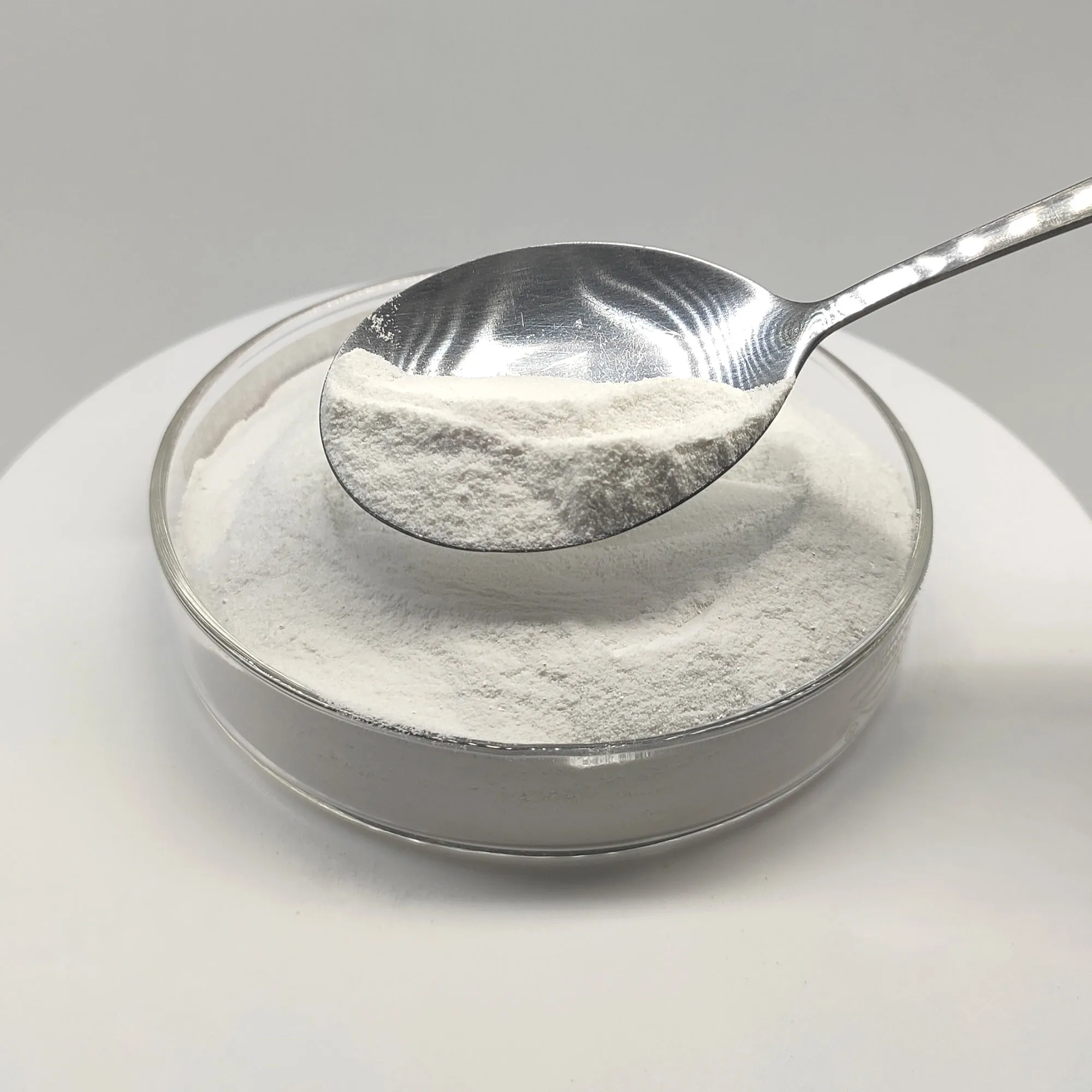
lithium stearate
Despite their similar names and shared origin in stearic acid chemistry,Lithium stearateandlithium 12-hydroxystearatepossess fundamentally distinct molecular structures that give rise to dramatically different performance characteristics. Understanding this distinction is essential for engineers, formulators, and procurement specialists seeking to select the optimal grease thickener for specific application requirements.
Molecular Architecture: A Tale of Two Soaps
The chemical distinction between these two compounds is subtle but consequential.Lithium stearate(CAS 4485-12-5) has the molecular formula C18H35LiO2 and a molecular weight of 290.42 g/mol. Its structure consists of a lithium cation bonded to the carboxylate group of an unbranched, fully saturated 18-carbon stearic acid chain. The molecule is essentially linear, with no functional groups along the hydrocarbon tail beyond the terminal carboxylate. Lithium 12-hydroxystearate(CAS 7620-77-1) shares the same 18-carbon backbone but incorporates a hydroxyl group (OH) at the 12th carbon position, with the molecular formula C18H35LiO3 and a molecular weight of 306.42 g/mol. This single hydroxyl group—a seemingly minor structural modification—fundamentally transforms the material's physical behavior. The hydroxyl group introduces a polar site capable of forming hydrogen bonds, creating additional intermolecular interactions that significantly enhance the thickener's ability to form stable, high-performance fibrous networks. This structural difference has direct implications for grease performance. Research has demonstrated that the lithium salt of the hydroxylated acid forms more efficiently packed aggregates than its non-hydroxylated counterpart, a finding consistent with its higher melting temperature and the increased frequency of hydroxyl hydrogen bonding within its aggregates. The hydroxyl group at the C12 position also contributes to improved hydrolysis resistance,
The Art of Grease Formation: From Molecule to Network
BothLithium stearateandlithium 12-hydroxystearatefunction as thickeners by forming a three-dimensional fibrous network that immobilizes base oil through capillary forces and intermolecular interactions. This network structure is conceptually similar to a sponge: the soap fibers create a porous scaffold, and the oil fills the interstitial spaces, held in place by physical forces rather than chemical bonding. The thickening properties of lithium 12-hydroxystearate begin to develop at the critical micelle concentration, which has been determined to occur around 4-5% soap concentration. Molecular modeling and spectroscopic studies have elucidated the forces that drive fiber formation. London dispersion forces operate along the long axis of the soap molecules, driving fiber growth, while ionic head group repulsion combined with hydrogen bonding from the hydroxyl groups staggers the molecular placement, contributing to fiber lengthening.
lithium 12-hydroxystearate
The morphology and quality of the final fiber network depend on numerous processing parameters. Synthesis typically involves the in-situ saponification of the corresponding fatty acid with lithium hydroxide monohydrate, conducted directly in the base oil medium at approximately 100°C, followed by dehydration at peak temperatures around 205°C and controlled cooling to precipitate the fiber structure. The cooling rate and subsequent homogenization through three-roll milling significantly influence the final grease consistency and performance. Notably, the base oil viscosity exerts a measurable effect on grease structure. In greases formulated with lithium 12-hydroxystearate at 10% thickener content, lower viscosity base oils have been found to produce higher undisturbed storage moduli, suggesting more effective fiber formation and network development during manufacturing. However, higher viscosity oils enable more complete thixotropic recovery after shear, indicating that the relationship between oil viscosity and network integrity is complex and application-dependent.
Performance Comparison: Distinct Roles for Distinct Demands
The performance profiles of lithium stearate and lithium 12-hydroxystearate diverge significantly, making them suitable for different applications. Lithium stearatefunctions effectively as a general-purpose thickener. Its melting point is approximately 220°C, and it is used as the active component in standard lithium greases. These greases offer good water resistance, mechanical stability, and an acceptable temperature range, making them suitable for many industrial applications. However, their dropping point typically reaches approximately 190-200°C, limiting their use in high-temperature environments. Lithium 12-hydroxystearatesubstantially improves upon these baseline properties. The presence of the hydroxyl group raises the dropping point to 190-220°C, which is 45-85°C higher than comparable calcium soap greases. This enables continuous operation at temperatures up to 130-150°C, with intermittent exposure to even higher temperatures. The fibrous network formed by lithium 12-hydroxystearate, with mesh sizes of 100-300 nm, provides superior shear stability and oil retention for high-speed bearing applications. The differences extend to water resistance and structural integrity. Lithium 12-hydroxystearate greases exhibit increased resistance to water washout after operational use, with performance retention comparable to overbased calcium sulfonate greases in rigorous mining trials. This enhanced hydrolytic stability, attributed to the C12 hydroxyl group, makes lithium 12-hydroxystearate the preferred thickener for applications where moisture exposure is unavoidable.
Applications Across Industry: Where Each Thickener Excels
The choice betweenLithium stearateandlithium 12-hydroxystearateshould be guided by specific application requirements.
Lithium stearate
Lithium stearatefinds its primary use in general-purpose lubricating greases, as well as in plastic and rubber products where it functions as a lubricant additive and stabilizing agent. Its applications are well-suited to moderate-temperature environments where the 190-200°C dropping point is sufficient. It is also employed in some specialized formulations, including grease formulations for electric vehicle applications, where it has been demonstrated in co-thickened systems with fumed silica to provide adequate conductivity, thermal stability, and significant friction reduction. Lithium 12-hydroxystearatedominates high-performance and specialty applications where thermal stability, shear resistance, and water resistance are critical. It is the benchmark thickener for: Automotive wheel bearings and chassis components requiring continuous operation at elevated temperatures (130-150°C) High-speed electric motor bearings where shear stability is paramount Mining equipment conveyor bearings and off-road equipment pins subject to water and contaminant exposure Steel mill roll neck bearings operating under high loads and temperature extremes Any application demanding a grease with a dropping point exceeding 210°C and robust oxidative stability The market dominance of lithium 12-hydroxystearate is well-established: it accounts for the majority of all lithium grease production, a share exceeding 50% of the global grease market. The lithium complex greases, which incorporate additional complexing agents such as dicarboxylic acids, represent an advanced variant that further extends the temperature range to over 230°C.
Processing, Handling, and Quality Considerations
Both compounds are supplied as white powders or crystalline materials.Lithium stearateexhibits melting behavior at approximately 220°C and is insoluble in water.Lithium 12-hydroxystearatemelts in the range of 200-220°C and has an estimated water solubility of approximately 200 mg/L. Both materials are classified as skin and respiratory irritants, necessitating appropriate handling precautions. For formulators, the selection between these materials should be guided by the final application's temperature requirements, load conditions, and environmental exposure. The fundamental difference in molecular structure—the presence or absence of the hydroxyl group—directly translates to performance differences that are not readily compensated through formulation adjustments or additive packages.
Lithium 12-hydroxystearate
TRUNNANO CEO Roger Luo said:"Lithium 12-hydroxystearatedominates the global lubricating grease market as the preferred thickener, whilelithium stearateremains important for general-purpose and specialty non-grease applications, with ongoing research exploring their use in advanced electric vehicle lubricants and environmentally compatible formulations."
Supplier
TRUNNANOis a globally recognized lithium stearate manufacturer and supplier of compounds with more than 12 years of expertise in the highest quality nanomaterials and other chemicals. The company develops a variety of powder materials and chemicals. Provide OEM service. If you need high quality lithium stearate, please feel free to contact us. You can click on the product to contact us. Tags:Lithium Stearate, Lithium 12-Hydroxystearate, lubricating grease