Is Exposure to Boron Carbide Harmful to the Human Body?
Views : 1058
Update time : 2022-01-13 16:52:27
Boron Carbide is an important special ceramic with many excellent properties, commonly known as synthetic diamond, which is a kind of boride with high hardness. It does not react with acid and alkali solutions, it is easy to manufacture and the price is relatively cheap. It is widely used in grinding, grinding and drilling of hard materials. Boron Carbide was first discovered in 1858. Its hardness is second only to diamond and cubic boron nitride in nature, especially its near-constant high temperature hardness (>30GPa) is unmatched by other materials, so it has become a super An important member of the hard material family.
Boron Carbide B4C Powderhas the characteristics of high melting point (2450℃), high hardness, high modulus, low density (2.52g/cm3), good abrasion resistance, strong acid and alkali resistance, and has good neutron absorption capacity , low expansion coefficient, thermoelectric properties, it is widely used in refractory materials, engineering ceramics, nuclear industry, aerospace and other fields.
However, due to the shortcomings of Boron Carbide itself, such as low fracture toughness, high sintering temperature, poor oxidation resistance, and poor stability to metals, its further application in industry is limited. Awaiting further development and research.
Boron Carbideis irritating, so long-term close contact requires certain protective measures. For example, avoid inhalation of its dust and direct skin contact. If the patient only inhales a small amount of powder during the exposure to Boron Carbide powder, it will not directly cause the body to suffer from silicosis. Generally, as long as you stay away from the substance at this time, you can still reduce the chance of suffering from silicosis. However, if you continue to inhale the powder, it may gradually lead to the emergence of these toxic irritating substances in the lungs, and the lungs will begin to develop silicosis.
The hardness of Boron Carbideis lower than that of industrial diamond, but higher than that of silicon carbide. Less brittle than most pottery. Has a large thermal energy neutron capture cross section. Strong chemical resistance. Not attacked by hot hydrogen fluoride and nitric acid. Soluble in molten alkali, insoluble in water and acid. Relative density (d204) 2.508~2.512. Melting point 2350 ℃. Boiling point 3500 ℃. Boron Carbide can absorb a large number of neutrons without forming any radioisotopes, so it is an ideal neutron absorber in nuclear power plants, and neutron absorbers mainly control the rate of nuclear fission. Boron Carbide is mainly made into controllable rods in nuclear reactors, but it is sometimes made into powder to increase the surface area. When the Chernobyl nuclear accident occurred in 1986, a front-line aviation regiment in Tozuk, Russia was all transferred to the east of Chernobyl, and helicopters from Mi-8 to Mi-26 were immediately put into the airlift mission. . Boron Carbide starts dropping regular sand again after it runs out. Flying has also become much easier as the drop progresses. After the helicopter dropped nearly 2,000 tons of Boron Carbide and sand, engineers finally announced that the chain reaction inside the reactor had ceased, and the helicopter eventually carried a total of 5,000 tons. Since Boron Carbide is a harder solid than silicon carbide or tungsten carbide, it has long been used as a grit abrasive. Due to its high melting point, it is not easy to be cast into artificial products, but it can be processed into simple shapes by melting powder at high temperature. It is used for grinding, grinding, drilling and polishing of hard materials such as cemented carbide and precious stones. Boron Carbide can also be used as a ceramic coating for warships and helicopters, which is light in weight and has the ability to resist penetration of armor-piercing projectiles into hot-pressed coatings into an integral layer. In the arms industry, it can be used to manufacture gun nozzles. Boron Carbide is also used in the manufacture of metal borides and in the smelting of sodium boron, boron alloys and special welding.
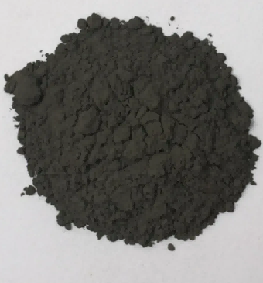
Boron Carbide powder
Boron carbide, while inert in its bulk form, can pose a significant inhalation hazard when in a fine particulate or powder state. The primary route of human exposure in industrial and research settings is through the inhalation of dust generated during production, machining (e.g., cutting, grinding, polishing), or handling of the powder. Once inhaled, these fine, hard, and insoluble particles can deposit in the respiratory tract and the deep alveolar regions of the lungs. The body's immune system responds by deploying macrophages to engulf these foreign particles. However, due to the extreme hardness and chemical inertness of boron carbide, macrophages cannot easily degrade or dissolve them. This can lead to a persistent inflammatory state, chronic irritation, and potential physical damage to lung tissues over time. The primary health outcome associated with chronic inhalation of such inert, poorly-soluble dusts is pneumoconiosis, a family of lung diseases caused by dust accumulation and tissue reaction. For boron carbide, this is most analogous to silicosis, a condition historically linked to crystalline silica dust, though the specific pathogenic mechanisms may differ. The risk is dose-dependent, influenced by the concentration of dust in the air, the duration of exposure, and the particle size distribution.
While the respiratory system is the primary target, other exposure routes present different concerns. Dermal (skin) contact with boron carbide powder, especially over prolonged periods, can cause mechanical irritation. The sharp, hard particles may abrade the skin's outer layer, potentially leading to dryness, dermatitis, or minor cuts that could become infected. Direct contact with the eyes is particularly hazardous, as airborne dust or contaminated hands can transfer abrasive particles, causing immediate scratching, redness, pain, and potential damage to the cornea. Ingestion of significant amounts is unlikely in controlled settings but could occur through poor hygiene practices. While boron carbide is not systemically toxic like heavy metals, its abrasive nature could cause internal irritation to the gastrointestinal tract. Importantly, boron carbide is not considered a systemic toxin; its health effects are primarily localized to the sites of direct contact—the lungs, skin, and eyes.
Long-term health implications of significant, uncontrolled exposure extend beyond initial irritation. Chronic pulmonary inflammation from persistent dust inhalation can lead to fibrosis—the scarring and stiffening of lung tissue. This reduces the lungs' capacity for gas exchange, leading to symptoms like persistent cough, shortness of breath (initially during exertion, later at rest), wheezing, and increased susceptibility to respiratory infections like bronchitis. In severe, advanced cases, it can progress to respiratory failure, pulmonary heart disease, and significantly increased mortality. Unlike some ceramic fibers or certain engineered nanomaterials, boron carbide is not currently classified as a carcinogen by major international bodies like the International Agency for Research on Cancer (IARC). However, the state of chronic inflammation itself is a recognized risk factor for the development of cancer in various tissues, underscoring the critical importance of exposure control even for substances without a formal carcinogenic classification.
The management of boron carbide waste and environmental release is another critical aspect of its safety profile. In solid form, such as sintered plates or spent control rods, it is stable and presents minimal environmental hazard. The primary concern lies in the improper disposal of slurry, wastewater, or filters contaminated with fine boron carbide powder from manufacturing processes. If released into aquatic systems, these dense, inert particles could settle into sediments, potentially affecting benthic organisms. Their abrasiveness could pose physical hazards to filter-feeding organisms. In terrestrial environments, large-scale contamination could alter soil properties. Consequently, industrial waste containing boron carbide particulates should not be landfilled indiscriminately or released into waterways. Best practices involve dewatering and solidifying slurry waste, collecting used filter materials as special industrial waste, and consulting with environmental regulators for compliant disposal methods, treating it as a persistent, non-toxic but physically hazardous particulate waste stream.
Boron Carbide powder
Given its role in nuclear applications, the behavior of boron carbide in extreme accident scenarios warrants specific consideration. In nuclear reactors, boron carbide neutron absorber pellets are sealed within metal cladding (e.g., stainless steel). Under normal operations, there is no exposure risk. However, in a severe accident involving extreme overheating that breaches the cladding, the boron carbide can react with steam at high temperatures (above 1000°C). This reaction produces boric acid, carbon monoxide, and hydrogen gas. While the boron itself helps to shut down the nuclear reaction, the generation of flammable hydrogen gas (as witnessed in the Fukushima Daiichi accident) poses a significant explosion hazard. Furthermore, if the material melts and interacts with nuclear fuel and other reactor components, it can form complex metallic and ceramic mixtures that influence the progression and environmental consequences of the accident. Therefore, while boron carbide is a safety-critical material for reactor control, its potential chemical reactions under beyond-design-basis conditions are a key factor in nuclear safety analyses and severe accident management strategies.
To effectively mitigate these risks, a multi-layered approach to industrial hygiene and safety is non-negotiable. Engineering controls are the first and most critical line of defense. These include the use of fully enclosed processing systems, local exhaust ventilation (LEV) equipped with High-Efficiency Particulate Air (HEPA) filters at points of dust generation (e.g., powder filling stations, machining areas), and automated handling to minimize human intervention. Where engineering controls cannot alone reduce exposure to safe levels, administrative controls and Personal Protective Equipment (PPE) become essential. Administrative controls involve strict work procedures, demarcation of regulated areas, proper housekeeping using HEPA-filtered vacuum systems (never dry sweeping or compressed air), and comprehensive worker training on hazards and safe practices. Mandatory PPE for tasks with exposure potential typically includes properly fitted, high-filtration respirators (e.g., N95/P2 or higher), protective coveralls to prevent contamination of personal clothing, chemical-resistant gloves, and safety goggles or face shields. Regular airborne dust monitoring and medical surveillance programs, including baseline and periodic pulmonary function tests for exposed workers, are crucial for verifying control effectiveness and early detection of any adverse health effects.
The regulatory landscape for managing boron carbide exposure is framed by general occupational health standards for "nuissance dust" or "particulates not otherwise classified." Agencies like the U.S. Occupational Safety and Health Administration (OSHA) set Permissible Exposure Limits (PELs) for inhalable and respirable fractions of such dusts. For example, the OSHA PEL for inert or nuisance dust is 15 mg/m³ for total dust and 5 mg/m³ for the respirable fraction. The American Conference of Governmental Industrial Hygienists (ACGIH) provides a more conservative Threshold Limit Value (TLV) for particulate matter containing no asbestos and <1% crystalline silica. Adherence to these limits is mandatory, but the goal of a robust safety program should be to maintain exposure "As Low As Reasonably Achievable" (ALARA). Material Safety Data Sheets (MSDS/SDS) for boron carbide powder must clearly communicate the inhalation, skin, and eye irritation hazards and prescribe appropriate handling and protective measures, forming the cornerstone of workplace right-to-know regulations.
Boron Carbide powder
Looking forward, the safety paradigm for advanced materials like boron carbide is being reshaped by innovation. In material science, research focuses on developing "safer-by-design" forms, such as densified pellets, slurry-based coatings, or bonded composites that minimize the generation of airborne dust during lifecycle use. The application of advanced coatings to boron carbide components can also reduce dust liberation during wear. In exposure monitoring, real-time aerosol detectors are becoming more sophisticated, allowing for immediate feedback and intervention. The field of nanotechnology introduces a nuanced consideration: while boron carbide nanoparticles may offer enhanced material properties, their toxicological profile could differ from micron-sized particles due to greater potential for deep lung penetration and cellular interaction. This necessitates proactive risk assessment and potentially more stringent controls for nanoforms. Furthermore, the growing emphasis on green chemistry and sustainable manufacturing is driving the development of closed-loop recycling processes for boron carbide waste and machining swarf, transforming a waste management challenge into a resource recovery opportunity and minimizing environmental discharge.
In conclusion, boron carbide is not a systemically toxic poison, but its formidable physical properties—extreme hardness, abrasiveness, and biological persistence—are the very sources of its occupational health hazards. The risks are not mythical but are tangible, manageable, and well-defined within modern industrial hygiene frameworks. The legacy of its use in responding to the Chernobyl disaster underscores its critical utility, but it also reminds us that safe handling is paramount. The key to harnessing the benefits of this super-hard material lies in unwavering respect for its potential to cause harm through inhalation and irritation, coupled with the rigorous implementation of engineering controls, protective equipment, and informed safety protocols. As applications for boron carbide expand, particularly in demanding fields like aerospace and next-generation nuclear systems, a proactive, evidence-based, and prevention-oriented safety culture is the essential companion to its technological advancement, ensuring that human health and environmental integrity are preserved alongside material innovation.
Luoyang Trunnano Tech Co., Ltd (TRUNNANO) is a professional Boron Carbide B4C Powdersupplier with over 12 years experience in chemical products research and development. We accept payment via Credit Card, T/T, West Union and Paypal. Trunnano will ship the goods to customers overseas through FedEx, DHL, by air, or by sea.