In today's world, semiconductors have become an integral part of modern technology. As the basic unit of current control and amplification, semiconductor chips are found in almost every electronic device, from the most common mobile phones to highly complex satellite systems.
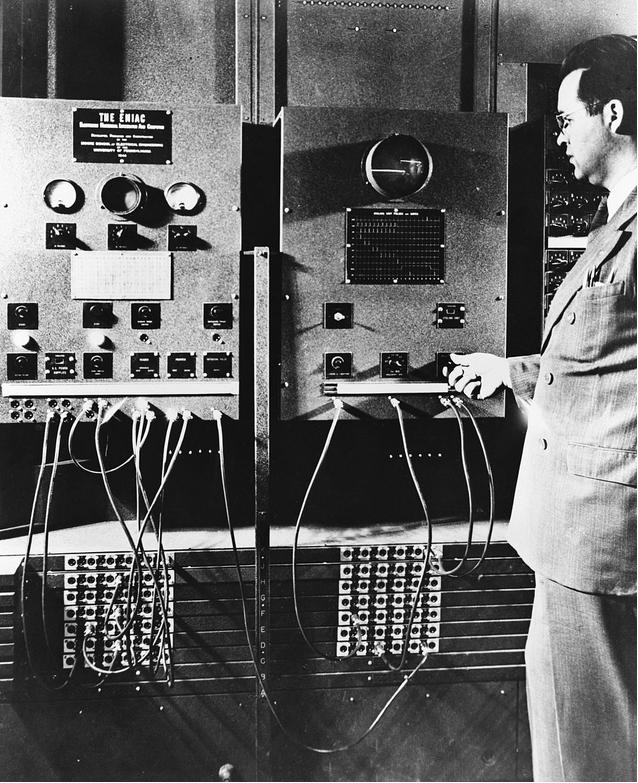
Before the birth of the first transistor, human society's potential technological development was significantly limited. Although technologies such as the telegraph and early telephones had begun to make information travel faster before the mid-20th century, the technology behind them mainly relied on vacuum tubes. Vacuum tubes are large, consume high energy, have poor heat dissipation, and have a short lifespan. These factors greatly restrict the performance and practicality of the equipment. For example, a computer in the early 1940s used about 18,000 vacuum tubes, covered an area of 170 square meters and weighed 30 tons.
Although the Industrial Revolution greatly improved production efficiency, the limitations of vacuum tubes made progress in information processing and communication technology relatively slow. Although the emergence of computers brought revolutionary changes to data processing, early computers were large, extremely energy-consuming, and slow in operation due to vacuum tube technology. They were far from being widely used in all fields of society.
At the level of personal life, before the birth of semiconductor technology, people's entertainment methods, information acquisition channels, and social patterns were relatively simple. Although radios are popular, they are bulky and have limited options; television has just started, but it has not yet become a common consumer product because of its high price; newspapers and books are the main ways for people to obtain information.
In 1947, a year that will forever go down in the history of technology, John Bardeen, William Shockley, and Walter Bratton at Bell Labs invented the world's first transistor. This invention is undoubtedly one of the greatest scientific and technological achievements of the 20th century. It marks the birth of modern electronics and the revolution of communication technology.
The advent of the transistor revolutionized the design and manufacture of electronic devices. Compared with early vacuum tubes that were bulky, power-consuming, and fragile, transistors are small in size, consume less power, and have stable performance, which greatly enhances the efficiency and reliability of electronic equipment. This progress not only promoted the rapid development of electronic technology but also paved the way for the information technology revolution.
Initial applications of transistors focused on radios and early computing devices. The radio was able to be greatly reduced in size, become lighter and more portable, and its performance was significantly improved, which directly promoted the popularity of broadcast media. In the field of computers, the application of transistors made the computer's operating speed and processing power leap forward, and its size also began to shrink, which laid the foundation for the subsequent development of personal computers (PCs) and mobile communication devices.
The invention of the transistor paved the way for the development of integrated circuits, and the emergence of integrated circuits allowed computers to shrink from the size of a room to the size of a desktop and then develop into something that can be held in the palm of your hand today. With the continuous breakthroughs in integrated circuit technology (such as silicon chips) and the emergence of microprocessors, personal computers (PCs) emerged in the 1970s and then began to spread rapidly. During this period, the rapid development of microelectronics greatly improved computer processing speed and storage capacity. Over the past few decades, the processing power of the CPU followed Moore's Law and doubled approximately every 18 months. The capacity growth rate exceeded expectations.
The information technology revolution is not only reflected in the computer field. In 1973, the world's first mobile phone call marked the beginning of the mobile communication era. At the beginning of the 21st century, the rapid development of the Internet pushed this revolution to a new climax. Services such as social media, instant messaging, and online video platforms have differed the way people obtain information, entertainment, and communication. In 1984, there were 10 million computers in the world; driven by the information revolution, as of 2024, the number of connected devices worldwide has exceeded 50 billion.
In addition, with the help of integrated circuits and microprocessors, the birth of smartphones has changed human lifestyle. From the launch of the first-generation iPhone in 2007, global smartphone penetration has experienced explosive growth. According to the International Telecommunications Union, by 2024, global smartphone penetration will be close to 90%.

Semiconductor technology has not only changed our daily lives but also profoundly changed the global economic structure and industrial development direction. From the perspective of direct economic contribution, the growth of the semiconductor industry has been staggering. Taking 2024 data as an example, the total value of the global semiconductor market is predicted to reach US$588 billion, an increase of thousands of times compared with the market size of only billions of US dollars in the 1970s. From the Semiconductor Industry Association (SIA), it is reported global semiconductor industry sales reached US$46.2 billion in February 2024, an increase of 16.3% compared with the same period last year.
Semiconductor technology has an equally huge impact on other industries. The rise of e-commerce is inseparable from the popularity of smartphones. According to the IDC (International Data Corporation), by 2024, there will be more than 6 billion smartphone users worldwide. This has promoted the development of emerging business models, such as online shopping and mobile payments, and greatly promoted the digital transformation of industries such as retail and finance.
In addition, semiconductor technology is used in a board range of applications, from consumer electronics to automotive, industrial manufacturing, and even aerospace and defense. Especially in the automotive industry, with the development of electrification and intelligence, the demand for automotive semiconductors has increased significantly. Industry analysts predict that the value of semiconductors in each new car will reach $600 by 2025, more than double the level a decade ago.
In the field of emerging science and technology, the role of semiconductor technology is even more indispensable. Taking artificial intelligence as an example, the construction of high-performance computing and data centers is inseparable from high-performance semiconductor chips. According to IDC, global spending on AI(artificial intelligence) will reach US$500 billion by 2024.
In addition, the application of semiconductor technology in the environment and energy fields is also receiving more and more attention. According to Earth.org, while the manufacturing process of semiconductors can have adverse effects on the environment, it plays a fundamental role in the development of green technologies. Taking energy conservation as an example, optimally designed semiconductors can not only reduce the energy consumption of electronic products but also reduce the power consumption of the entire system. LED lighting technology is a significant example. LED lamps have a longer service life and are more energy efficient, comparing with traditional incandescent lamps. According to the U.S. Department of Energy, the energy use efficiency of LED lighting is five times that of incandescent bulbs, and The life span can be more than 25,000 hours.
TRUNNANO is a globally recognized manufacturer and supplier of compounds with more than 12 years of expertise in the highest quality nanomaterials and other chemicals. The company develops a variety of powder materials and chemicals. Provide OEM service. If you need high quality semiconductor materials, please feel free to contact us. You can click on the product to contact us.