Cellular Concrete Foam, also known as bubble lightweight concrete, is a new type of porous, lightweight inorganic building material. Relying on special foaming technology and scientific formula, it forms a uniform closed pore structure inside the concrete, which is different from traditional dense concrete. With multiple characteristics such as lightweight, thermal insulation, sound insulation, anti-seepage, and environmental protection, as well as outstanding advantages such as low density, easy construction, and controllable cost, it is widely used in various construction projects such as energy-saving buildings, roadbed backfilling, roof insulation, and foundation pit filling. With the rapid development of green building and prefabricated building industries, the application scenarios of low-density bubble concrete and prefabricated bubble concrete components continue to expand, gradually replacing traditional building materials and becoming the core materials for building energy conservation and lightweight construction.
Core formula composition and action principle of foam bubble concrete
The forming quality and performance stability of foam concrete completely depend on the formula ratio. The core is composed of four major components, namely, cementitious base material, foaming agent, admixture and mixing water. Each component works together to form a stable porous structure, which is the core foundation of material performance.
1. Basic formula composition
The cementitious substrate is mainly composed of ordinary Portland cement and sulfoaluminate cement, which are the core raw materials for concrete strength forming, ensuring the stability of the matrix structure and the later strength growth. Foaming agent is the core functional raw material, which is divided into plant-type, animal-type and composite-type foaming agents. A large number of uniform, fine and stable foam is generated through physical foaming, and air is introduced to form a pore structure. Admixtures include foam stabilizing agent, water reducing agent, early strength agent, etc. The foam stabilizing agent can prevent foam from bursting and pore collapse, and ensure molding uniformity; Water reducing agents optimize the flowability of the slurry, reduce the water-cement ratio, and improve the compactness and strength of concrete. Strictly control the amount of mixing water, adapt to the foaming system, and avoid excessive moisture, causing pore collapse and insufficient strength.

Cellular Concrete Foam
2. Principle of integral forming reaction
The forming of foam bubble concrete can be divided into two stages: physical foaming and curing. First, the foaming agent is mixed with water, and an independent closed foam is generated by a special foaming device. The foam is evenly mixed into the cement-based slurry, and the foam-cement mixed slurry is formed after full mixing. At this time, foam is evenly dispersed in the slurry, without agglomeration and damage. Then the slurry is poured and formed, the cement base material undergoes a hydration reaction, gradually sets and hardens, and the foam is wrapped and solidified. Finally, a large number of closed microporous structures are formed inside the concrete, forming a lightweight porous bubble concrete material. Compared with the throop bubble concrete process, the formula of conventional foam concrete is more adaptable, which can flexibly adjust the density and strength to meet different engineering needs.
Core forming characteristics of foam concrete
Thanks to the unique formula system and porous forming structure, foam bubble concrete has unique characteristics different from ordinary concrete, and is also the core highlight of its adaptation to green building projects.
1. Lightweight and low-density, with low load pressure
The density of foam bubble concrete can be flexibly adjusted. The conventional density range is 300 – 1200kg/m ³, which is only 1/3 to 1/5 of that of ordinary concrete. It is a typical low-density cellular concrete. Internal sealed air holes effectively reduce the weight of materials. When applied to building roofs, floors, and bridge projects, they can significantly reduce the load on the building body, reduce the pressure on the foundation and structural reinforcement, avoid structural settlement and deformation risks, and adapt to large-span and lightweight construction scenarios.
2. Excellent insulation and energy-saving effect
A large number of enclosed micropores inside the material can retain static air, and the thermal conductivity of air is extremely low, making bubble concrete have excellent thermal insulation performance. Its thermal conductivity is much lower than traditional building materials such as ordinary concrete and red bricks, which can effectively block indoor and outdoor heat transfer, reduce building heating and cooling energy consumption, and meet the requirements of modern building energy conservation and consumption reduction. It is widely used in roof insulation, exterior wall insulation, and floor heating cushion construction.
3. Sound insulation and earthquake resistance, strong structural stability
The porous honeycomb structure can effectively absorb and block the propagation of sound waves, weaken noise transmission, and has good sound insulation and noise reduction effects. It is suitable for building scenes such as residential buildings, office buildings, and computer rooms that require sound insulation. At the same time, the lightweight characteristics make the material have excellent seismic performance, low seismic loads, strong structural impact resistance and deformation resistance, and are less prone to collapse and damage during earthquakes, greatly improving the building safety factor.

Cellular Lightweight Concrete
4. Self-flowing and easy construction, with wide adaptability
The foam bubble concrete slurry has good fluidity and excellent self-leveling performance. The pouring construction does not require vibration and rolling, but can be automatically leveled, filled and compacted. The construction process is simple and efficient. It can be constructed on-site, or prefabricated cellular concrete components can be made to adapt to complex construction scenarios such as irregular structures, narrow spaces, large areas of flooring, and foundation pit backfilling, and meet the construction needs of various building projects.
5. Impervious and durable, good anti-aging performance
The material pores are independent closed structures without connected pores, which can effectively block the path of moisture and water vapor infiltration, and have good waterproof and anti-seepage performance, making it less susceptible to moisture, water seepage, and mold growth. At the same time, the stability of cement-based hydration products is extremely strong, acid and alkali-resistant, anti-aging, corrosion resistant long-term use is not easy to pulverize, crack or fall off. The service life of buildings is long, and the later maintenance cost is extremely low.
Comprehensive advantages of foam bubble concrete in construction engineering
Combined with formula characteristics and molding advantages, foam bubble concrete has comprehensive advantages over traditional building materials in the fields of building energy conservation, civil construction, renovation and renovation, and is suitable for the high-quality development needs of modern buildings.
1. Cost reduction and efficiency improvement, shortening the construction period
Traditional insulation and backfilling construction processes are cumbersome, requiring multiple layers of construction, multiple maintenance, and a long construction period. The foam bubble concrete is poured and formed at one time, which is fast in construction speed, without secondary leveling and compaction, greatly simplifying the construction process and shortening the construction period. At the same time, the cost of raw materials is low, without the need for complex auxiliary materials, which can effectively reduce labor costs and building material losses. The comprehensive engineering cost advantage is significant, and it is suitable for large-scale construction projects.
2. Green and environmentally friendly, in line with energy-saving standards
The main raw materials of foam bubble concrete are cement and environmental protection foaming agent, which are free of formaldehyde, toxic and harmful substances, dust pollution and odor during construction and belong to green environmental protection building materials. The energy-saving effect of material insulation is outstanding, which can effectively reduce building energy consumption, help buildings meet energy-saving acceptance standards, adapt to the construction requirements of green and low-carbon buildings, and conform to industry development trends.
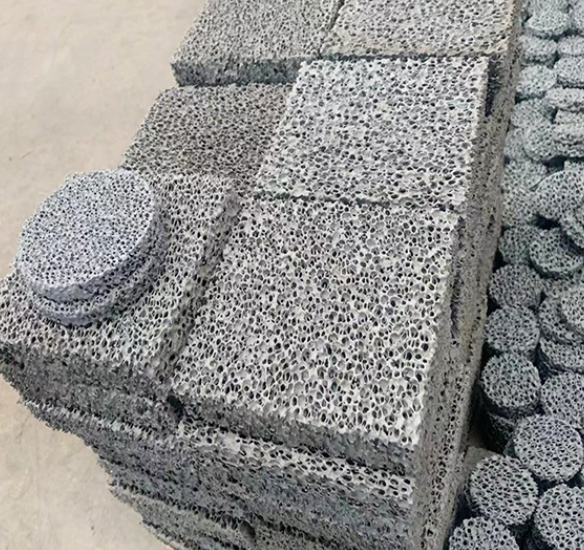
Low Density Cellular Concrete
3. Diverse adaptation scenarios with strong universality
As a multifunctional lightweight building material, cellular lightweight concrete can flexibly adjust the formula density and strength to adapt to different engineering scenarios. Low-density models are used for insulation, backfilling, and slope making; Medium to high-density models are used for floor cushion, wall filling, and structural leveling; Prefabricated components can be used in prefabricated building construction, covering multiple fields such as new construction, renovation of old buildings, municipal engineering, road and bridge engineering, and their versatility far exceeds that of traditional building materials.
4. Good overall integrity, eliminating engineering hazards
The on-site cast-in-place bubble concrete is seamless and has strong integrity, with no joint gaps, which can effectively avoid engineering hazards such as cracking, water seepage, and hollowing that occur in traditional board and block splicing. Good structural adhesion, closely adhered to the base layer, stable structure for long-term use, greatly improving the construction quality of building projects, and reducing the probability of later repairs.
Supplier
TRUNNANO is a globally recognized cellular concrete foam manufacturer and supplier of compounds with more than 12 years of expertise in the highest quality nanomaterials and other chemicals. The company develops a variety of powder materials and chemicals. Provide OEM service. If you need high quality Cellular Concrete Foam, please feel free to contact us. You can click on the product to contact us.
Tags:Cellular Concrete Foam,Cellular Lightweight Concrete,Low Density Cellular Concrete