Product Introduction of Silicon Carbide Ceramic Crucible
This series of silicon carbide ceramic crucibles is manufactured using advanced pressureless sintering, recrystallized sintering, and reaction-bonded sintering processes. With an extremely strong covalent bond structure, silicon carbide ceramics exhibit outstanding physical and chemical stability. As a top-tier high-temperature structural ceramic, silicon carbide ceramic crucibles feature high-temperature strength, excellent oxidation resistance, wear resistance, thermal shock resistance, and high thermal conductivity. In extremely harsh environments involving high temperatures, strong corrosion, and severe temperature fluctuations, silicon carbide ceramic crucibles maintain excellent dimensional stability and chemical inertness. They are ideal upgrade materials to replace traditional graphite, corundum, and quartz crucibles, and are widely used in high-end manufacturing fields such as semiconductors, photovoltaics, powder metallurgy, and advanced fine ceramics.

Silicon Carbide SiC Ceramic Products
Product Features & Core Advantages of Silicon Carbide Ceramic Crucible
1. Exceptional High-Temperature Resistance & Creep Resistance: Thanks to the strong covalent bonding of silicon carbide ceramics, this series of crucibles can withstand maximum operating temperatures of up to 1350°C (reaction-bonded) to over 1650°C (recrystallized). They do not soften or deform at high temperatures and exhibit extremely high high-temperature creep resistance.
2. Excellent Thermal Shock Stability: Silicon carbide ceramics possess high thermal conductivity, enabling rapid heat transfer and providing excellent thermal shock resistance. They can withstand severe temperature fluctuations without cracking, significantly improving operational safety.
3. High Mechanical Strength & Wear Resistance: The flexural strength of silicon carbide ceramics reaches 220-700 MPa (depending on the specific process), with extremely high hardness, erosion resistance, and wear resistance. They can withstand severe friction from materials, significantly extending crucible service life.
4. High Chemical Stability & Corrosion Resistance: Silicon carbide ceramics offer good corrosion resistance to acids, alkalis, and molten metals (such as aluminum and copper). They do not volatilize or decompose at high temperatures, ensuring no contamination of sintered materials and guaranteeing the quality of high-purity products.
5. High Density & Permeation Resistance: Pressureless-sintered silicon carbide ceramics have extremely low apparent porosity, effectively preventing high-temperature melt penetration and volatile corrosion. They are particularly suitable for powder metallurgy and electronic component sintering that require high density.
6. Excellent Thermal Conductivity: The thermal conductivity of silicon carbide ceramics exceeds 100 W/(m·K), ensuring uniform heating of materials inside the crucible, high thermal efficiency, and significantly improved sintering and melting efficiency.
Applications of Silicon Carbide Ceramic Crucible
1. Industrial Kilns & High-Temperature Sintering: General-purpose kiln furniture for sintering special ceramics, electronic components, and advanced refractory materials.
2. Powder Metallurgy & Calcination: Sintering of powder metallurgy products, calcination of rare metals and loose materials.
3. Non-Ferrous Metal Smelting: Melting, holding, and transferring of non-ferrous metals and their alloys such as aluminum, copper, zinc, and magnesium.
4. Semiconductor & Photovoltaic Industry: Polycrystalline silicon ingot casting, monocrystalline silicon growth, high-temperature processing of semiconductor materials, and high-purity powder sintering.
5. Machinery & Chemical Industry: Mechanical seals, wear-resistant linings, high-temperature corrosion-resistant components, and chemical reaction vessels.

Applications of Silicon Carbide Ceramic Crucibles
Technical Specifications of Silicon Carbide Ceramic Crucible
|
Parameter |
Reaction-Bonded Silicon Carbide (RBSiC) |
Pressureless-Sintered Silicon Carbide (SSiC) |
Recrystallized Silicon Carbide (RSiC) |
|---|---|---|---|
|
SiC Content |
≥ 85% |
- |
≥ 88% |
|
Bulk Density |
2.85 - 3 g/cm³ |
3.06 - 3.16 g/cm³ |
≥ 2.7 g/cm³ |
|
Apparent Porosity |
- |
< 1.5% |
- |
|
Flexural Strength |
220 - 250 MPa (at 1350°C) |
400 - 700 MPa |
- |
|
Thermal Conductivity |
- |
> 100 W/(m·K) |
Up to 45 W/(m·K) at 1200°C |
|
Max Operating Temperature |
1350°C |
- |
1650°C or Higher |
|
Core Applications |
General kiln furniture, seals, wear parts |
Electronic components, powder metallurgy, refractory firing |
Fine ceramics, advanced refractories, non-ferrous smelting |
(Note: For specific dimensions, wall thickness, and custom-shaped requirements, please contact customer service with drawings.)
Manufacturing Process of Silicon Carbide Ceramic Crucible
Different forming and sintering processes determine the microstructure and final performance of silicon carbide ceramics. We provide the most suitable silicon carbide ceramic products for different application scenarios:
Reaction-Bonded Silicon Carbide Ceramics (RBSiC): Silicon carbide powder mixed with carbon powder → Forming (dry pressing/slip casting/extrusion) → Green body drying → Vacuum silicon infiltration reaction sintering (liquid silicon infiltrates and reacts with carbon to form secondary SiC, filling pores).
Pressureless-Sintered Silicon Carbide Ceramics (SSiC): Submicron silicon carbide powder + trace sintering aids → Forming (dry pressing/cold isostatic pressing/slip casting) → Drying → High-temperature pressureless sintering (>1900°C, densification without external pressure).
Recrystallized Silicon Carbide Ceramics (RSiC): High-purity coarse/fine silicon carbide powder grading → Forming → Drying → High-temperature recrystallization sintering (>2200°C, fine powder evaporation-condensation bonds coarse particles, no shrinkage).

Storage & Maintenance Guide of Silicon Carbide Ceramic Crucible
Storage Environment: Store silicon carbide ceramic crucibles in a dry, ventilated indoor environment. Avoid prolonged exposure to high-humidity conditions to prevent packaging damage.
Handling Precautions: Although silicon carbide ceramic materials have high hardness, they are somewhat brittle. Handle with care during loading and unloading. Avoid violent impacts, drops, or heavy object compression.
Daily Maintenance:
Allow silicon carbide ceramic crucibles to cool naturally to room temperature before cleaning. Never expose them directly to cold water while hot, as excessive local thermal stress may cause cracking.Company Profile
Luoyang Tongrun Nano Technology Co. Ltd. (TRUNNANO) is a trusted global chemical material supplier & manufacturer with over 12-year-experience in providing super high-quality chemicals and nanomaterials, including boride powder, nitride powder, silicates, concrete admixtures and advanced ceramic products, etc.
The company has a professional technical department and Quality Supervision Department, a well-equipped laboratory, and equipped with advanced testing equipment and after-sales customer service center.
If you are looking for high-quality Ceramic Crucible and relative products please feel free to contact us or click on the needed products to send an inquiry.
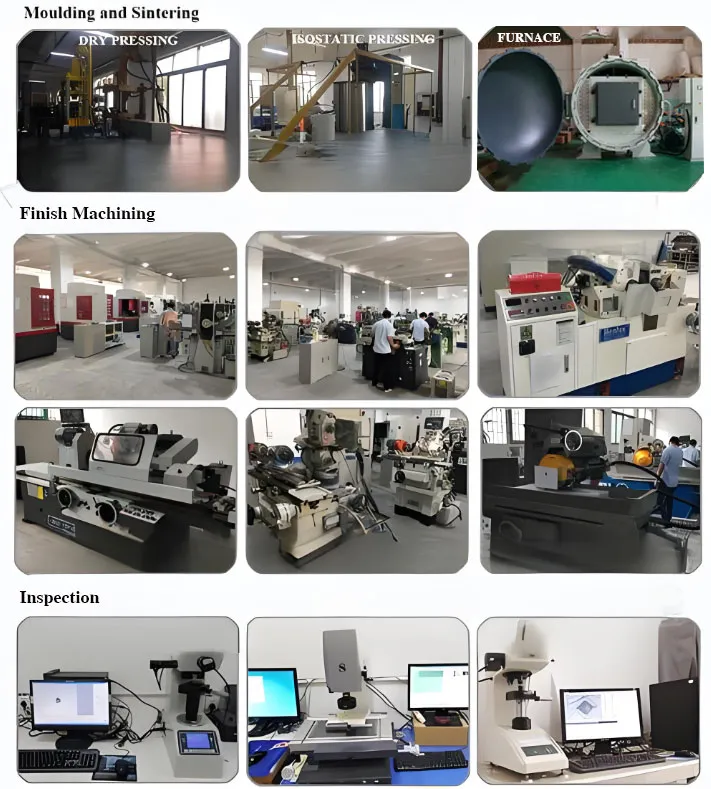
Process of Ceramic Products
Payment Term
T/T, Western Union, Paypal, Credit Card etc.
By air, by sea, by express, as customers request.
Frequently Asked Questions (FAQs) of Silicon Carbide Ceramic Crucible
Q1: How do I choose among the three types of silicon carbide ceramic crucibles?
A: If you need extreme thermal shock resistance and large sizes for firing fine ceramics, we recommend recrystallized silicon carbide ceramics. For powder metallurgy and electronic components requiring high density and no permeation, pressureless-sintered silicon carbide ceramics are recommended. For general industrial kiln furniture and non-ferrous metal smelting where cost-effectiveness and comprehensive performance are priorities, reaction-bonded silicon carbide ceramics are the best choice.
Q2: Can silicon carbide ceramic crucibles be used in oxidizing atmospheres?
A: Yes. At high temperatures, silicon carbide ceramics form a dense silicon dioxide (SiO₂) glass film on the surface, which effectively prevents further internal oxidation. However, in strongly oxidizing atmospheres above 1500°C, the oxidation rate accelerates. It is recommended to control the operating environment or use protective atmospheres.
Q3: Why does pressureless-sintered silicon carbide ceramic have such low apparent porosity? What are the benefits?
A: Pressureless sintering achieves high densification through solid-phase or liquid-phase sintering mechanisms at extremely high temperatures with trace sintering aids. The extremely low apparent porosity (around 1.5% or even lower) means the surface of silicon carbide ceramic crucibles is highly dense, effectively preventing penetration of molten metals or corrosive liquids. This is particularly suitable for sintering and melting of high-purity materials.
Q4: How much longer is the service life of silicon carbide ceramic crucibles compared to traditional crucibles?
A: Compared with traditional corundum or quartz crucibles, high-quality silicon carbide ceramic crucibles, with their high strength, high thermal conductivity, and excellent thermal shock resistance, are less prone to cracking during frequent thermal cycles. Under normal operating procedures, their service life is typically several times to even ten times longer than traditional crucibles, significantly reducing overall usage costs.
Q5: Do you support custom sizes for silicon carbide ceramic crucibles?
A: Yes. We have mature forming processes and can provide custom silicon carbide ceramic crucible services with different aspect ratios, wall thicknesses, and special shapes (such as with spouts, holes, or partitions) based on customer drawings or samples.
Q6: Will silicon carbide ceramic crucibles cause contamination when melting non-ferrous metals?
A: No. Silicon carbide ceramics have extremely high chemical stability and do not react with common non-ferrous metals such as aluminum, copper, and zinc at high temperatures. They contain no harmful binders and will not contaminate molten metals, effectively ensuring metal purity.
Q7: How high is the purity of recrystallized silicon carbide ceramic crucibles?
A: The silicon carbide content of recrystallized silicon carbide ceramics reaches over 88%. Since no metal sintering aids are added during the sintering process, their chemical purity is extremely high. They do not release impurity gases at high temperatures, making them ideal for clean sintering of advanced refractory materials and fine ceramics.
Q8: Does the wall thickness of silicon carbide ceramic crucibles affect thermal conductivity and strength?
A: Yes. Increased wall thickness improves the mechanical strength of the crucible but reduces heat transfer efficiency and increases thermal stress. Our engineers will recommend or design the most reasonable wall thickness solution based on your specific operating temperature, heating rate, and material characteristics to achieve the optimal balance between thermal conductivity and strength.
Q9: If slight cracks appear on the crucible surface, can it still be used?
A: This depends on the depth and location of the cracks. If they are micro-cracks in the surface oxidation layer or shallow cracks in non-load-bearing areas, they typically do not affect usage. However, if through-cracks or cracks appear in the bottom load-bearing areas, it is recommended to stop using and replace the crucible immediately to prevent leakage or fracture accidents at high temperatures.
Q10: Are your silicon carbide ceramic crucibles quality-tested?
A: Yes. Every batch of silicon carbide ceramic crucibles undergoes strict bulk density, apparent porosity, flexural strength, and dimensional inspection before leaving the factory. Some high-end products also undergo ultrasonic flaw detection to ensure that the silicon carbide ceramic products delivered to customers are stable and reliable in performance.
Material Comparison: Silicon Carbide Ceramics vs. Other Ceramic Crucibles
|
Material Property |
Silicon Carbide Ceramic (SiC) Crucible |
Corundum (Al₂O₃) Crucible |
Quartz Crucible |
Graphite Crucible |
|---|---|---|---|---|
|
Max Operating Temperature |
1350°C - 1650°C+ |
1600°C - 1700°C |
1100°C - 1200°C |
3000°C (with protective gas) |
|
Thermal Shock Resistance |
Excellent |
Moderate (prone to cracking) |
Poor (prone to devitrification) |
Good |
|
Thermal Conductivity |
High |
Low |
Medium |
Extremely High |
|
Flexural Strength |
High (220-700 MPa) |
Low |
Low |
Low |
|
Chemical Stability |
Excellent (acid, alkali & metal resistant) |
Acid-resistant but not alkali-resistant |
Acid-resistant but not alkali-resistant |
Highly prone to oxidation |
|
Wear Resistance |
Excellent |
Moderate |
Poor |
Poor |
|
Cleanliness |
High (no material contamination) |
High |
High (spalling at high temps) |
Prone to contamination (requires coating) |
|
Overall Cost-Effectiveness |
Extremely High (long service life) |
Moderate |
Low (consumable) |
Medium |
For more information on silicon carbide ceramic crucibles or to request free samples, please contact our technical engineers. We will provide you with the most suitable silicon carbide ceramic high-temperature solutions.