Boron Nitride Nail: An Overview
Boron Nitride Nails are special fasteners made of boron nitride. It has the advantages of high-temperature resistance, abrasion resistance and chemical stability. The characteristics of boron nitride give this nail good insulating properties and a low coefficient of friction so that it is used in some special areas, such as high-temperature industrial environments, electronic equipment manufacturing, etc., to meet the needs of complex working conditions that can not be adapted to the ordinary nails, it is a kind of unique performance and application value of the material products.
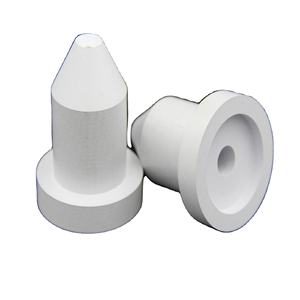 Boron Nitride Nails
Features of Boron Nitride Nails
High Hardness and Wear Resistance: Boron nitride has a high hardness, second only to diamond. This makes boron nitride nails in the use of the process can resist wear, even in frequent friction and contact, but also can maintain a better shape and dimensional accuracy, prolonging the service life, suitable for long-term use and the requirements of high wear resistance occasions.
High-temperature resistance: Boron nitride has excellent high-temperature resistance characteristics and can maintain stable performance in high-temperature environments. It can withstand high temperatures of thousands of degrees Celsius without deformation or melting, so in high-temperature industrial fields, such as metallurgy, glass manufacturing and other industries, boron nitride nails can work reliably and will not be affected by high temperatures and its fastening effect.
Good Chemical Stability: Boron nitride nails are inert to most chemicals, making them suitable for harsh chemical environments such as chemical production and electroplating.
Excellent Insulating Properties: As a good insulating material, boron nitride nails prevent current leakage and avoid short circuits. They are widely used in electronics and electrical fields to ensure equipment safety.
Specifications of Boron Nitride Nails
| Property |
Typical Value |
| Density |
2.29 |
| Melting Point |
2973 |
| Hardness (Knoop) |
16 - 39 |
| Compressive Strength |
100 - 317 |
| Flexural Strength |
17.2 - 20.6 |
| Electrical Resistivity |
≥1×10¹² - ≥1×10¹⁵ |
| Dielectric Constant |
3.0 - 4.1 |
| Dielectric Strength |
54 - 79 |
| Dissipation Factor |
≤0.00034 - ≤0.0002 |
| Coefficient of Thermal Expansion (linear, 25 - 1500°C) |
0.4 - 0.8 |
| Thermal Conductivity |
20 - 28 |
| Maximum Service Temperature (air) |
850 - 1000 |
| Maximum Service Temperature (inert) |
2000 - 3000 |
|
Applications of Boron Nitride Nails
Electronics Industry: Boron nitride nails are used to fix circuit boards and electronic components. They ensure component stability, prevent short circuits, and extend device life in high-power, high-frequency electronic devices.
Aerospace: Components in the aerospace field are often required to work under extreme conditions such as high temperatures and high pressure. The high hardness, abrasion resistance and high-temperature resistance of boron nitride nails make them an ideal choice for the assembly of aircraft engines, aviation instruments and other components, which can maintain good fastening performance in complex flight environments, guarantee the reliability of components, and help to improve the overall performance and safety of the aviation and spacecraft.
Metallurgical Industry: Boron nitride nails fix refractory materials and insulating parts in high-temperature furnaces and heat treatment equipment. Their high-temperature resistance and chemical stability resist erosion from high-temperature metal liquids and slag, ensuring equipment integrity and reducing maintenance frequency.
Mechanical Manufacturing: In high-precision machining equipment, boron nitride nails fix precision parts. Their high hardness and wear resistance ensure part installation accuracy under long-term vibration and shock, improving machining precision and quality.
Company Profile
Luoyang Tongrun Nano Technology Co. Ltd. (TRUNNANO) is a trusted global chemical material supplier & manufacturer with over 12-year-experience in providing super high-quality chemicals and nanomaterials, including boride powder, nitride powder, graphite powder, ceramic products, 3D printing powder, etc.
The company has a professional technical department and Quality Supervision Department, a well-equipped laboratory, and equipped with advanced testing equipment and after-sales customer service center.
If you are looking for high-quality Ceramic Products please feel free to contact us or click on the needed products to send an inquiry.

Applications of Ceramic Products
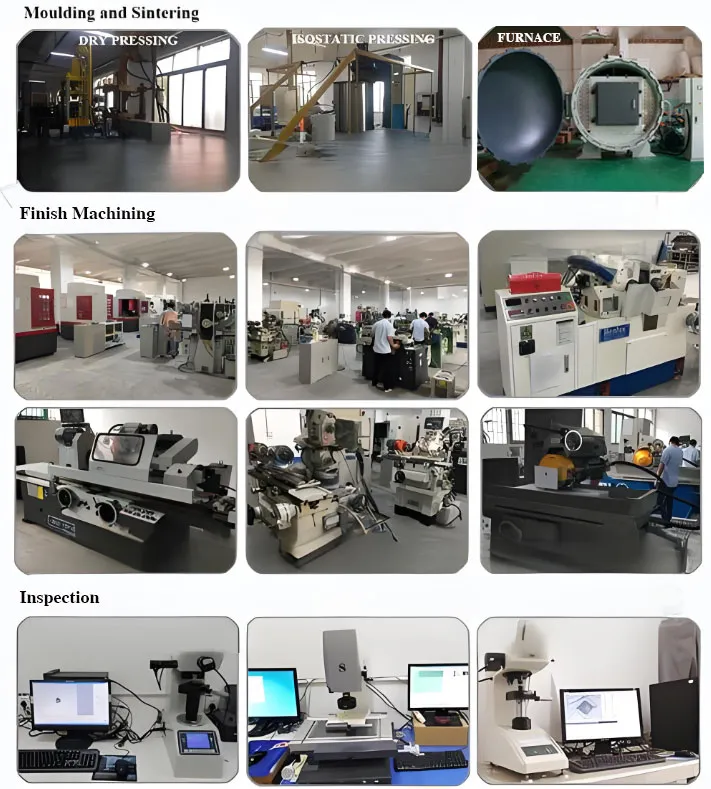
Process of Ceramic Products
Payment Term
T/T, Western Union, Paypal, Credit Card etc.
Shipment Term
By air, by sea, by express, as customers request.

5 FAQs About Boron Nitride Nails
Q1: What is the main component of boron nitride nails, and how do they differ from common metal nails?
Boron nitride nails are made from hexagonal boron nitride (h-BN) or cubic boron nitride (c-BN) through high-temperature sintering or chemical vapor deposition (CVD). Compared to metal nails, they offer high hardness (second only to diamond), high-temperature resistance (above 2000℃), strong insulation, and chemical inertness, making them suitable for extreme environments.
Q2: What is the hardness of boron nitride nails, and can they replace diamond tools?
Hexagonal boron nitride has a hardness of about 2-2.5 on the Mohs scale, while cubic boron nitride reaches 9.8, close to diamond. Although hard, boron nitride is more ductile than brittle, making it suitable for replacing diamonds in high-temperature and corrosive environments like glass processing and semiconductor manufacturing.
Q3: Are special tools required for installing boron nitride nails?
Boron nitride nails are hard, so carbide drills or diamond-coated tools are recommended for drilling to prevent wear of steel drills. Torque control during installation is necessary to avoid nail breakage. Some manufacturers provide matching ceramic tools to reduce stress concentration.
Q4: What is the service life of boron nitride nails?
Under normal use, boron nitride nails can last for years to decades. However, under high-frequency vibration or shock loads, fatigue fracture may occur. Regular inspection and replacement are recommended. For example, in high-speed train braking systems, nail integrity should be tested every 100,000 kilometers.
Q5: How to clean and maintain boron nitride nails?
Routine maintenance involves using dry compressed air to remove dust and avoiding organic solvents. Surface oil can be wiped with alcohol or acetone, followed by timely drying. For long-term storage, please keep them in a sealed, moisture-proof container to prevent performance degradation from moisture absorption.