About Penetrating agent JFC-1:
Soluble in water, with excellent permeability, turbidity point above does not affect the permeability; With strong ability to wash hair, easy to wash all kinds of oil and feel soft.
TRUNNANO is a trusted global Penetrating agent JFC-1. Feel free to send an inquiry to get the latest price of Penetrating agent JFC-1 if you would like to buy Penetrating agent JFC-1 in bulk.
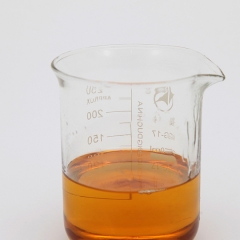
Penetrating agent JFC-1
Technical Parameter of Penetrating agent JFC-1:
|
Appearance |
Colorless to yellowish slightly viscous liquid |
|
Ion type |
Nonionic |
|
Cloud point(℃,1%Aqueous solution) |
40~50 |
|
HLB |
11.5~12.5 |
|
Solid content(%) |
100 |
|
ph(25℃,1%) |
5.0~7.0 |
Applications of Penetrating agent JFC-1:
As a penetrating agent in the textile industry, can be used for sizing, desizing, scouring, bleaching, carbonization, and other processes; Can be used as dyeing bath and finishing bath osmotic additives; Leather industry as a penetrating agent also can be used as a degreasing agent.
Packing & Shipping of Penetrating agent JFC-1:
We have many different kinds of packing which depend on Penetrating agent JFC-1 quantity.
Penetrating agent JFC-1 packing: 1kg/bottle, 25kg/barrel, or 200kg/ barrel.
Penetrating agent JFC-1 shipping: could be shipped out by sea, by air, by express as soon as possible once payment receipt.
FAQs of Penetrating agent JFC-1:
Q: What are the main applications of Penetrating Agents?
A: Penetrating Agents find application in several key industries: Pharmaceuticals: Used in transdermal drug delivery systems to enhance the absorption of drugs through the skin, improving therapeutic outcomes. Cosmetics and Personal Care: Incorporated into skincare and haircare products to deliver active ingredients deeper into the skin or hair shaft for better results, such as moisturizers, anti-aging creams, and hair treatments. Agriculture: Applied in pesticides and fertilizers to improve their uptake by plants, ensuring more effective pest control and nutrient delivery. Industrial Applications: Utilized in cleaning agents and coatings to help active components reach deeper into surfaces, enhancing cleaning efficiency and coating adhesion. Medical Devices: Used in devices like patches and microneedles to facilitate the delivery of drugs or diagnostic substances through the skin.
Q: How do Penetrating Agents work to enhance penetration?
A: Penetrating Agents can enhance penetration through various mechanisms: Lipid Solubilization: By dissolving lipids in the stratum corneum (the outermost layer of the skin), they create temporary pathways for active ingredients to pass through. Disruption of Barrier Structure: Some agents can temporarily alter the arrangement of molecules in the barrier, making it more permeable. Hydration: Increasing the water content in the barrier can make it more flexible and less resistant to penetration. Chemical Interaction: Certain agents interact with proteins or other components in the barrier, changing its properties to allow easier passage of active ingredients. Temperature Effects: Some agents can slightly raise the temperature of the skin, which can increase the rate of diffusion.
Q: Are there safety considerations when using Penetrating Agents?
A: Yes, there are several safety considerations when using Penetrating Agents: Skin Irritation: Some agents can cause irritation or allergic reactions, especially in individuals with sensitive skin. It's important to conduct patch tests before full application. Dosage Control: Excessive use can lead to over-penetration, potentially causing adverse effects or reducing the effectiveness of the formulation. Compatibility: Ensure that the penetrating agent is compatible with other ingredients in the formulation to avoid interactions that could compromise stability or efficacy. Regulatory Compliance: Adhere to local and international regulations regarding the use of specific penetrating agents, including limits on concentration and types of products where they can be used. Environmental Impact: Consider the biodegradability and environmental impact of penetrating agents, particularly in agricultural applications.
Q: How should Penetrating Agents be selected for different applications?
A: Selecting the appropriate Penetrating Agent depends on several factors: Target Application: Choose an agent based on whether it's for pharmaceutical, cosmetic, agricultural, or industrial use. Each application has specific requirements and regulatory guidelines. Active Ingredient Compatibility: Ensure the penetrating agent does not interfere with the stability or activity of the active ingredients it's meant to enhance. Barrier Type: Different barriers (skin, plant tissue, industrial coatings) have unique properties; select an agent that works effectively with the target barrier. Desired Effect: Consider the depth and rate of penetration required. Some applications need rapid delivery, while others benefit from sustained release. Safety Profile: Prioritize agents with a well-established safety record, especially for use on human skin or in food-related applications.
Penetrating agent JFC-1 Properties |
||
| Other Names | JFC-1 | |
| CAS No. | N/A | |
| Compound Formula | N/A | |
| Molecular Weight | N/A | |
| Appearance | Colorless to yellowish slightly viscous liquid | |
| Melting Point | N/A | |
| Boiling Point | N/A | |
| Density | N/A | |
| Solubility in H2O | N/A | |
| Exact Mass | N/A | |
Penetrating agent JFC-1 Health & Safety Information |
||
| Signal Word | N/A | |
| Hazard Statements | N/A | |
| Hazard Codes | N/A | |
| Risk Codes | N/A | |
| Safety Statements | N/A | |
| Transport Information |
|
|