Product Name: Nano Manganese Tetroxide (Mn₃O₄)
1. Overview
Nano Manganese Tetroxide is a transition metal oxide nanomaterial with a spinel structure where divalent and trivalent manganese ions occupy two different lattice sites. Compared to nano manganese monoxide (MnO) nano Mn₃O₄ exhibits superior stability in air resistance to oxidation and better electrical conductivity and cycling stability.
2. Technical Specifications
| Parameter |
Typical Value |
| Average Particle Size |
20 - 50 nm |
| Purity |
≥ 99.8% - 99.9% |
| Specific Surface Area (BET) |
20 - 60 m²/g |
| Bulk Density |
0.2 - 0.8 g/cm³ |
| Loss on Drying |
≤ 3% (120°C 2h) |
| Magnetic Impurities |
< 100 ppb |
| Appearance |
Black / brownish-black powder |
Electrochemical Performance Indicators
| Parameter |
Typical Value |
| Theoretical Specific Capacity |
~480 mAh/g (anode) |
| Initial Discharge Capacity |
Up to 1324.4 mAh/g (at 25.5 mA/g) |
| Cycling Stability |
~840 mAh/g after 250 cycles |
| Rate Performance |
~418 mAh/g at high current density of 4 A/g |
3. Key Features
Excellent Chemical Stability: More stable in air and resistant to oxidation compared to nano MnO.
Nanoscale Effect: Ultra-fine particle size provides high specific surface area (20-60 m²/g) abundant active sites and superior reaction kinetics.
Superior Electrochemical Performance: Multiple lithium-ion diffusion channels good rate capability and stable cycling performance.
High Purity: Purity up to 99.9% with magnetic impurities controlled below 100 ppb meeting stringent cleanliness requirements for battery materials.
Easy Dispersion: Low bulk density clean surface and no residual impurities facilitate excellent dispersibility.
4. Applications Lithium-Ion Batteries
Anode Material: Nano Mn₃O₄ offers a high theoretical specific capacity (~480 mAh/g) making it a promising anode material. In practice it is often compounded with carbon materials (e.g. graphene carbon nanotubes bio-carbon) to alleviate volume expansion during charge discharge and enhance cycling stability and rate performance.
Cathode Precursor: Serves as an important raw material for synthesizing lithium manganese oxide (LiMn₂O₄) cathode materials providing high-purity manganese source for power batteries and energy storage batteries.
Cathode Additive: Its nano particle size and high specific surface area improve electrode reaction activity and structural uniformity contributing to higher energy density rate performance and cycle life.
Supercapacitors
Nano Mn₃O₄ can be used as electrode material for supercapacitors leveraging its high specific surface area and good electrochemical performance for high-performance energy storage devices.
Sodium-Ion Batteries
With its excellent electrochemical performance nano Mn₃O₄ is also suitable as anode material for sodium-ion batteries.
Aqueous Zinc-Ion Batteries
Nano Mn₃O₄ can serve as cathode material for aqueous zinc-ion batteries. Studies show that after 500 charge-discharge cycles at 500 mA/g the specific capacity remains at 136 mAh/g with a capacity retention rate of 92%.
About Us
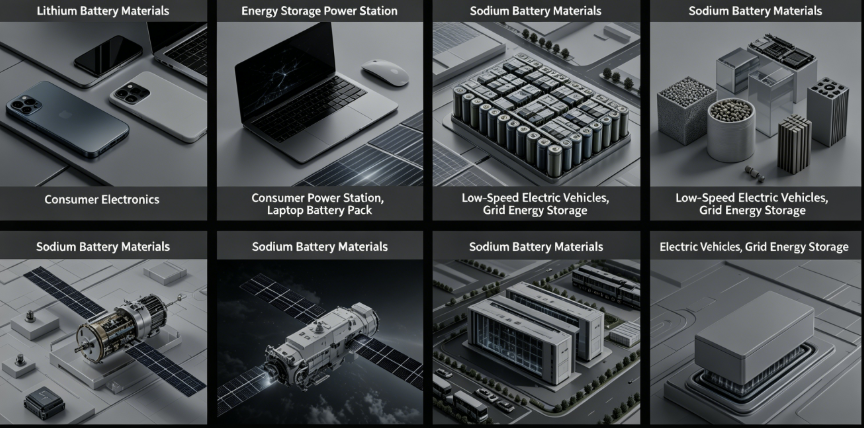
TRUNNANO is a leading supplier of high-performance battery materials for lithium-ion and sodium-ion batteries. Our portfolio includes nano cathodes, silicon-carbon anodes, hard carbon, and specialty additives. With strict quality control and consistent purity, we deliver reliable solutions for 3C electronics, power tools, and energy storage systems. Committed to innovation, TRUNNANO drives the future of energy storage with cutting-edge materials and dedicated customer support.
5. Packaging
Available in 100 g to 10 kg options with double-sealed moisture-proof liners. Custom sizes and inert gas purging are available upon request.
6. Frequently Asked Questions (FAQ)
Q1: How is nano Mn₃O₄ different from nano MnO?
A1: Compared to nano MnO nano Mn₃O₄ is significantly more stable in air and resistant to oxidation. It also offers better electrical conductivity and superior cycling stability making it more suitable for long-cycle-life battery applications.
Q2: What is the recommended storage condition?
A2: Store in a sealed container in a cool dry place. While Mn₃O₄ is more stable than MnO it is still recommended to avoid prolonged exposure to humid environments.
Q3: Can this product be directly used as anode material?
A3: While it can be used directly we recommend compositing it with conductive carbon materials (e.g. graphene carbon nanotubes) to optimize electronic conductivity and buffer volume expansion for the best performance.
Q4: What is the magnetic impurity level?
A4: Our product controls magnetic impurities below 100 ppb meeting the high cleanliness standards required for advanced battery manufacturing.
Q5: Is this product suitable for sodium-ion batteries?
A5: Yes nano Mn₃O₄ has shown excellent electrochemical performance in sodium-ion battery anodes and is actively being researched for this application.