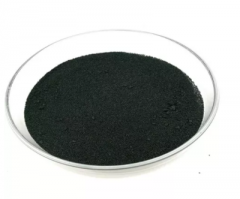
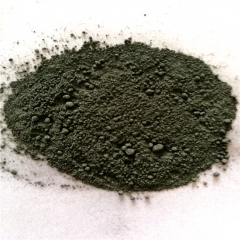
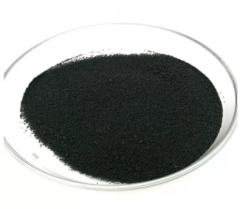
Overview of MAX Phase Materials
MAX phase material is a new type of machinable ceramic material that has received much attention. Because the MAX phase has metal-like bonding characteristics, it has the function of electrical and thermal conductivity. Most MAX phases materials have better electrical and thermal conductivity. This is also related to the electronic structure.
MAX phase (including Ti3SiC2, Ti2AlC, etc.) is a new type of machinable ceramic material that has attracted much attention.

Max Phase Material
Specifications of MAX Phase
|
Property |
Typical Value |
|---|---|
|
Chemical Formula |
Mn+1AXn, where M = transition metal, A = group 13-14 element, X = C or N; n = 1 to 3 |
|
Appearance |
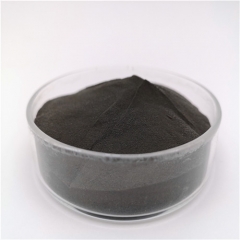
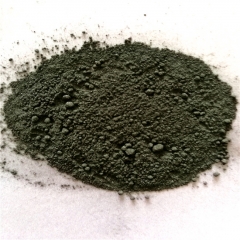
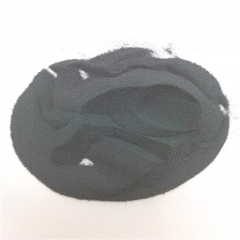
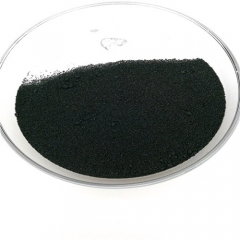
Solid, typically gray-black |
|
Purity |
≥98.0% |
|
Density |
Varies (e.g., Ti3SiC2 ~ 4.5 g/cm³) |
|
Hardness |
Vickers hardness varies (e.g., Ti3SiC2 ~ 3-6 GPa) |
|
Electrical Conductivity |
Conductive |
|
Thermal Conductivity |
High thermal conductivity |
|
Melting Point |
Varies depending on composition |
|
Coefficient of Thermal Expansion |
Moderate (e.g., Ti3SiC2 ~ 8.7×10⁻⁶/K) |
|
Oxidation Resistance |
Good at elevated temperatures |
Applications of MAX Phase
Max phase materials are widely used as high-temperature structural materials, electrode brush materials, chemical anti-corrosion materials and high-temperature heating materials. Due to the unique nano-layered crystal structure, MAX phase materials have the properties of self-lubrication, high toughness, and electrical conductivity.
Company Profile
Luoyang Trunnano Tech Co., Ltd supply high purity and super fine MAX phase powders, such as Ti3AlC2, Ti2AlC, Ti3SiC2, V2AlC, Ti2SnC, Mo3AlC2, Nb2AlC, V4AlC3, Mo2Ga2C, Cr2AlC, Ta2AlC, Ta4AlC3, Ti3AlCN, Ti2AlN, Ti4AlN3, Nb4AlC3, etc. Send us an email or click on the needed products to send an inquiry.
Payment Term:
T/T, Paypal, Western Union, Credit Card etc.
Shipment Term:
By sea, by air, by express, as customers request.
Storage conditions:
1) Store in a dry environment at room temperature.
2) Avoid damp and high temperature.
3) Use immediately after opening the inner packing bag.
5 FAQs of MAX Phase Materials
What are MAX phase materials used for?
MAX phase materials are utilized in high-temperature applications due to their excellent thermal shock resistance, machinability, and damage tolerance. They find applications in aerospace, nuclear reactors, and as coatings for cutting tools.
How do you synthesize MAX phase materials?
Common synthesis methods include reactive hot pressing, spark plasma sintering, and self-propagating high-temperature synthesis (SHS). Each method has its advantages and is chosen based on the desired properties and scale of production.
Are MAX phase materials electrically conductive?
Yes, MAX phase materials are electrically conductive, which makes them suitable for applications requiring both electrical conductivity and high-temperature stability, such as electrodes in batteries or supercapacitors.
What affects the properties of MAX phase materials?
The properties of MAX phase materials can be influenced by the choice of elements in the M, A, and X positions, as well as the value of n in the Mn+1AXn formula. Additionally, processing conditions like temperature and pressure during synthesis play a crucial role.
How stable are MAX phase materials at high temperatures?
MAX phase materials exhibit good stability at high temperatures, especially in oxidizing environments where they form protective oxide scales that prevent further oxidation. However, prolonged exposure to very high temperatures (>1200°C) may degrade some of their mechanical properties.