Overview and Technology
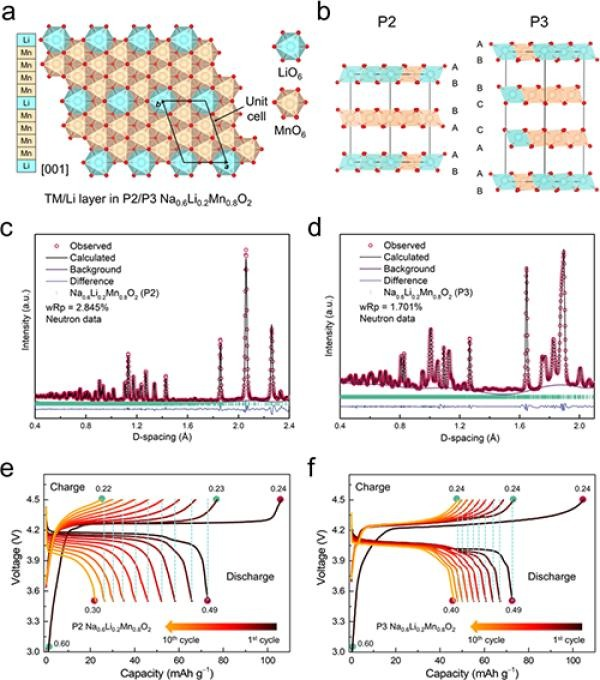
The Li-024 cathode material utilizes a P3-type layered architecture, optimized for high-capacity sodium-ion battery applications. As detailed in image_bc8f26.png, the strategic insertion of lithium into the transition metal layer effectively activates oxygen redox processes, which is the primary driver behind its industry-leading specific capacity of 210 mAh/g.

Li-024 P3-NaLi₀.₂Mn₀.₈O₂ High-Capacity Lithium-Doped Sodium-Ion Battery Cathode
Specifications Table
|
Feature |
Specification |
|
Product Code |
Li-024 |
|
Material System |
Li-doped high-capacity system |
|
Chemical Composition |
P3-NaLi₀.₂Mn₀.₈O₂ |
|
Crystal Structure |
P3-type |
|
Working Voltage (V) |
2.0 – 4.5 V |
|
Initial Specific Capacity |
210 mAh/g |
|
Cycling Stability |
88% retention after 100 cycles |
|
Rate Performance |
80% capacity at 1C |
|
Technical Highlights |
Li-insertion into transition metal layer, activated oxygen redox, ultra-high capacity |
About Us
TRUNNANO is a leading supplier of high-performance battery materials for lithium-ion and sodium-ion batteries. Our portfolio includes nano cathodes, silicon-carbon anodes, hard carbon, and specialty additives. With strict quality control and consistent purity, we deliver reliable solutions for 3C electronics, power tools, and energy storage systems. Committed to innovation, TRUNNANO drives the future of energy storage with cutting-edge materials and dedicated customer support.

5 FAQs
1. What is the primary advantage of Li-024?
The main advantage is its ultra-high specific capacity (210 mAh/g) achieved by lithium doping within the transition metal layer.
2. What type of crystal structure does this material have?
It features a P3-type layered structure, which provides distinct pathways for ionic movement.
3. What is the working voltage range?
The material is designed to operate efficiently within a voltage window of 2.0 to 4.5 V.
4. How stable is this material over time?
It maintains excellent integrity, with data showing 88% capacity retention after 100 cycles.
5. Is this material suitable for high-rate discharge?
Yes, it exhibits robust rate performance, maintaining 80% of its capacity at a 1C discharge rate.