Titanium Nitride: The Gold-Colored Ceramic Reshaping Modern Technology
Views : 175
Author : Vincy
Update time : 2026-02-11 16:29:00
Introduction: Beyond the Golden Veneer
Titanium nitride, bearing the chemical formula TiN and possessing a distinctive golden luster that rivals precious metals, is far more than an aesthetic coating material. This refractory transition metal nitride belongs to an exclusive class of compounds where nitrogen atoms occupy interstitial sites within the parent titanium metal lattice. The result is a material that defies conventional classification—it is simultaneously a ceramic and a metallic conductor, a hard protective layer and a plasmonic optical component, a biocompatible implant material and an efficient catalyst support. As research into TiN accelerates across the globe, this gold-colored compound is rapidly transitioning from a traditional industrial coating to a cornerstone material for next-generation technologies spanning quantum optics, electrochemical energy storage, and sustainable catalysis.
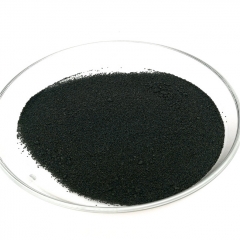
Titanium Nitride Powder
Fundamental Properties: The Exceptional Combination of Strength and Conductivity
Titanium nitride crystallizes in the rock salt (face-centered cubic) structure, a configuration it shares with titanium carbide and titanium monoxide. Within this lattice, titanium atoms occupy the face-centered positions while nitrogen atoms fill the octahedral interstitial sites. This interstitial arrangement is critical to understanding TiN’s unique property portfolio. Unlike ionic compounds where electron transfer is complete, TiN exhibits mixed bonding character—covalent Ti-N bonds provide exceptional hardness and chemical stability, while residual metallic Ti-Ti interactions near the Fermi level contribute to electrical conductivity rivaling that of pure titanium metal. The mechanical properties of TiN are nothing short of remarkable. With a hardness typically ranging between 18 and 21 GPa (approximately 2000 HV), it stands among the hardest of all transition metal nitrides. Quantum chemical calculations using self-consistent field Xα scattered-wave methods have confirmed that the hardness and strength hierarchy among titanium-based ceramics follows the order TiC > TiN > TiO, a sequence that correlates directly with the calculated bond orders and electron density distributions in these materials. This exceptional hardness, combined with a low coefficient of friction and excellent adhesion to various substrates, has established TiN as the industry standard for wear-resistant coatings on cutting tools, forming dies, and mechanical components. Thermally, TiN demonstrates extraordinary stability. Its melting point exceeds 2930°C, placing it among the most refractory of all ceramic materials. Unlike many high-hardness materials that soften dramatically at elevated temperatures, TiN retains substantial mechanical integrity well beyond 1000°C. This thermal resilience is accompanied by a thermal expansion coefficient of approximately 9.35 × 10⁻⁶ K⁻¹, closely matching that of common tool steels and cemented carbides—an essential compatibility characteristic that prevents coating delamination during thermal cycling. Electrically, TiN behaves as a metallic conductor with resistivity values in the range of 15–70 μΩ·cm, depending on deposition conditions and stoichiometry. This conductivity arises from the partially filled d-band electronic structure, where nitrogen 2p and titanium 3d orbitals hybridize to create a finite density of states at the Fermi level. Unlike elemental metals, however, TiN exhibits exceptional resistance to electromigration and chemical diffusion, making it an indispensable diffusion barrier layer in advanced semiconductor devices. Perhaps most intriguing from an optical perspective, titanium nitride possesses a plasma frequency in the visible to near-infrared region, enabling it to support localized surface plasmon resonances. This property, traditionally associated with noble metals such as gold and silver, positions TiN as a cost-effective, refractory alternative for plasmonic applications that demand thermal stability and CMOS compatibility.
Comparative Analysis: TiN Versus TiC, TiO2, and Other Coating Materials
To fully appreciate the distinctive position occupied by titanium nitride within the materials landscape, systematic comparison with its close relatives—titanium carbide (TiC) and titanium dioxide (TiO2)—as well as with traditional plasmonic metals proves instructive.
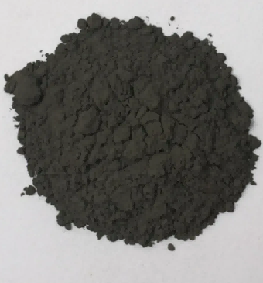
Titanium Nitride Powder
TiN Versus Titanium Carbide (TiC) Both TiN and TiC share the rock salt crystal structure and exhibit exceptional hardness, yet their property profiles diverge significantly. Quantum chemical calculations confirm that TiC possesses marginally higher hardness and strength than TiN, a difference attributable to the slightly stronger covalent bonding in the carbide system. However, this incremental hardness advantage comes with trade-offs. TiN demonstrates superior chemical stability in oxidizing environments and substantially higher electrical conductivity, making it more suitable for applications requiring combined mechanical protection and electrical functionality. The oxidation behavior of these two materials presents a particularly stark contrast. TiN begins to undergo detectable oxidation at approximately 350°C in ambient air, forming a thin passivating layer of titanium dioxide and nitrogen gas. TiC, conversely, exhibits substantially superior oxidation resistance, with significant reaction with oxygen delayed until approximately 810°C. This differential has direct practical implications: for ultra-high temperature applications in strongly oxidizing atmospheres, TiC may be preferred; for moderate-temperature applications where electrical conductivity or tribological performance is paramount, TiN emerges as the superior candidate. TiN Versus Titanium Dioxide (TiO2) TiO2 represents the fully oxidized end-member of the titanium-oxygen system, a wide-bandgap semiconductor with outstanding chemical inertness and photocatalytic activity. Comparison with TiN reveals complementary rather than competitive relationships. The anti-coking performance during hydrocarbon fuel pyrolysis provides an illuminating case study. When evaluated as protective coatings for stainless steel reactor tubes exposed to supercritical jet fuel, TiN and TiC coatings demonstrated equivalent and superior anti-coking effectiveness, while TiO2 coatings exhibited measurably inferior performance. Yet in oxidation resistance, the hierarchy reverses completely, with TiO2 > TiC > TiN. This inversion underscores a fundamental principle in materials selection: no single material excels across all performance metrics. TiN occupies a valuable intermediate position, offering superior anti-coking performance relative to TiO2 and superior electrical conductivity relative to TiC, while accepting compromises in high-temperature oxidation resistance.
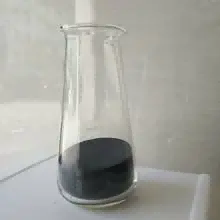
Titanium Nitride Powder
TiN Versus Conventional Plasmonic Metals (Au, Ag) Perhaps the most transformative development in recent TiN research has been its emergence as a plasmonic material. Gold and silver have historically dominated plasmonic applications due to their strong localized surface plasmon resonance in the visible spectrum. However, both noble metals suffer critical limitations: prohibitive cost, susceptibility to melting and morphological degradation at elevated temperatures, and incompatibility with complementary metal-oxide-semiconductor (CMOS) fabrication processes. TiN addresses each of these limitations simultaneously. Its plasmonic resonance, tunable through control of stoichiometry and nanostructure, spans the visible to near-infrared region. Its refractory nature enables plasmonic device operation at temperatures that would rapidly destroy gold or silver nanostructures. Its thin-film deposition processes are fully compatible with established semiconductor manufacturing infrastructure. And its material cost represents a fraction—often less than one-hundredth—of the precious metal alternatives.
Synthetic Strategies: From Bulk Powders to Controlled Nanostructures
The preparation of titanium nitride has evolved substantially from its origins in traditional powder metallurgy. Contemporary synthesis encompasses a diverse methodological toolkit, each approach offering distinct advantages in terms of product purity, morphological control, scalability, and energy efficiency. Chemical Vapor Deposition Chemical vapor deposition remains the most extensively industrialized technique for TiN thin film and coating production. The classical process employs titanium tetrachloride (TiCl4) and ammonia (NH3) as precursors, with hydrogen often serving as both carrier gas and reducing agent. The overall reaction proceeds according to: 2TiCl4 + 4H2 + N2 → 2TiN + 8HCl, or alternatively 6TiCl4 + 8NH3 → 6TiN + 24HCl + N2. Deposition temperatures typically range from 700 to 1000°C, with precise control over precursor flow rates, chamber pressure, and substrate temperature governing film thickness, crystallographic orientation, and grain morphology. Recent investigations have explored the influence of substrate composition on CVD TiN growth. Thermodynamic calculations and experimental validation demonstrate that nickel substrates exhibit superior resistance to etching by the reactive gas atmosphere compared to cobalt or iron substrates, an insight with direct implications for the development of alternative binder phases in cemented carbide cutting tools. Physical Vapor Deposition Reactive magnetron sputtering represents the dominant physical vapor deposition route to TiN films. In this process, a pure titanium target is sputtered in a mixed argon-nitrogen plasma, with titanium atoms liberated from the target surface reacting with activated nitrogen species during transport to and condensation upon the substrate. The energy of bombarding ions during film growth substantially influences the resulting microstructure, residual stress state, and crystallographic texture. Through careful control of substrate bias, working gas pressure, and target power, sputtered TiN films can be engineered with columnar, equiaxed, or nanocomposite microstructures tailored to specific application requirements.
Titanium Nitride Powder
Powder Synthesis Routes For applications requiring TiN in powder form—such as ceramic matrix composite reinforcements, thermally sprayed coatings, or battery electrode components—several synthesis approaches are available. Traditional solid-state methods include direct nitridation of titanium metal or titanium hydride powders in nitrogen or ammonia atmospheres, and carbothermal reduction nitridation wherein titanium dioxide is reduced by carbon black under flowing nitrogen at temperatures exceeding 1200°C. Each approach presents inherent trade-offs: direct nitridation yields high purity but proceeds slowly and incompletely; carbothermal reduction offers lower raw material costs but introduces carbonaceous residues requiring post-processing removal. Liquid-phase routes including sol-gel synthesis and gaseous methods such as plasma chemical vapor deposition enable finer particle sizes and more precise morphological control, though typically at higher production costs. Contemporary research emphasizes the development of synthesis protocols capable of producing phase-pure, well-crystallized TiN nanoparticles with controlled size distributions and minimal agglomeration—prerequisites for emerging applications in plasmonics, electrocatalysis, and biomedical engineering.
Emerging Applications: From Structural Workhorse to Functional Enabler
Plasmonics and Solar Energy Conversion The identification of TiN as an alternative plasmonic material represents perhaps the most significant shift in its application trajectory over the past decade. Conventional plasmonic metals suffer from high ohmic losses and limited thermal stability; TiN offers lower losses in the red-to-near-infrared spectral region and operational stability at temperatures exceeding 800°C. In organic photovoltaics, TiN nanoparticles and nanostructured films have been demonstrated as effective light-trapping components, enhancing absorption within thin photoactive layers through plasmonic scattering and near-field concentration effects. Similarly, in photothermal therapy and solar water evaporation, TiN nanoparticles exhibit broadband solar absorption and efficient photothermal conversion, leveraging the localized surface plasmon resonance effect to generate heat upon illumination. The biological compatibility of TiN further augments its appeal for photothermal therapeutic applications. Electrochemical Energy Storage Titanium nitride has attracted substantial research interest as an electrode material for supercapacitors and lithium-ion batteries. Its metallic conductivity—several orders of magnitude higher than typical transition metal oxides—enables rapid charge/discharge kinetics without the necessity for conductive carbon additives. Nanostructured TiN electrodes, including nanowires, nanotubes, and mesoporous films, demonstrate specific capacitances in the range of 100–250 F/g with excellent cycling stability.
Titanium Nitride Powder
As a lithium-ion battery anode material, TiN operates through a conversion reaction mechanism, offering theoretical capacities substantially higher than intercalation-type anodes. Practical implementation faces challenges associated with volume expansion during lithiation/delithiation, driving current research toward composite architectures wherein TiN nanoparticles are embedded within conductive carbon matrices or engineered with buffering void spaces. Electrocatalysis and Sustainable Chemistry The surface chemistry of titanium nitride, characterized by moderately strong adsorption energies for key reaction intermediates, positions it as a promising non-precious electrocatalyst platform. In the oxygen reduction reaction—cathodic process fundamental to fuel cells and metal-air batteries—TiN-based catalysts demonstrate activity approaching that of platinum group metals while offering superior tolerance to methanol crossover and carbon monoxide poisoning. For the nitrogen reduction reaction, an emerging electrochemical route to sustainable ammonia synthesis, TiN exhibits particular promise. Theoretical calculations suggest that nitrogen vacancies on TiN surfaces can activate molecular nitrogen through a distal associative mechanism, while experimental demonstrations confirm ammonia formation rates competitive with state-of-the-art precious metal catalysts. The electrochemical nitrogen fixation field, though still grappling with issues of faradaic efficiency and rate quantification, recognizes TiN as a leading candidate catalyst material. Biomedical Implants and Devices Titanium nitride combines mechanical robustness, chemical inertness, and biocompatibility in a combination rarely achieved within a single material system. TiN coatings on orthopedic and dental implants reduce wear particle generation, minimize metal ion release from underlying alloys, and promote osteoblast adhesion and proliferation. The golden color of TiN, visually distinct from both metallic substrates and adjacent tissue, provides surgeons with clear visual confirmation of coating integrity during implantation procedures. Beyond structural implants, TiN finds application in electrochemical biosensors. The combination of metallic conductivity, chemical stability, and surface functionalization flexibility enables TiN electrodes to serve as transducers for enzymatic and affinity-based sensing platforms. Surface modification with biorecognition elements—antibodies, nucleic acid probes, or synthetic receptors—converts TiN surfaces into selective detectors for clinically relevant analytes.
Titanium Nitride Powder
Protective and Functional Coatings While TiN coatings have been industrially established for decades, continued refinement of deposition technologies and expansion into new application domains persists. In microelectronics fabrication, TiN films serve as diffusion barriers preventing copper migration into silicon dielectrics, as adhesion layers promoting contact between dissimilar materials, and as gate electrodes in advanced metal-oxide-semiconductor field-effect transistors. In the aerospace sector, TiN coatings applied to stainless steel fuel system components provide effective inhibition of metal-catalyzed coking during endothermic fuel pyrolysis. The anti-coking performance of TiN coatings equals that of TiC coatings and substantially exceeds that of TiO2 coatings under supercritical hydrocarbon fuel conditions, directly addressing the carbon deposition challenges that limit cooling capacity and operational duration in high-Mach aircraft.
Current Limitations and Research Frontiers
Despite its impressive property portfolio and expanding application landscape, titanium nitride confronts several substantive challenges that define the frontiers of current research. Oxidation Susceptibility The initiation of TiN oxidation at approximately 350°C represents a significant limitation for high-temperature applications in ambient atmospheres. While the resulting titanium dioxide layer can provide partial passivation, continued oxidation ultimately consumes the TiN and degrades its functional properties. Research strategies to mitigate this vulnerability include the development of TiN-based composite coatings incorporating oxidation-resistant secondary phases, multilayer architectures with alternating oxide or carbide layers, and alloying with elements such as aluminum or chromium to form more oxidation-resistant ternary or quaternary nitrides. Nanostructure Stability The high surface area of TiN nanomaterials—essential for catalytic, electrochemical, and plasmonic applications—introduces thermodynamic driving forces for coarsening, agglomeration, and phase transformation. Maintaining nanoscale TiN with controlled size distribution and accessible surface area under operating conditions remains non-trivial. Carbon encapsulation, mesoporous host confinement, and atomic layer deposition of protective overcoats represent active research directions toward stabilization of active TiN nanostructures. Synthesis Selectivity and Scalability For powder-based applications, the production of phase-pure, stoichiometric TiN without residual oxide or carbide contamination continues to challenge manufacturing scalability. The high thermodynamic stability of titanium dioxide necessitates aggressive reduction conditions, while the narrow window of temperature and nitrogen potential for single-phase TiN formation demands precise process control. Alternative synthesis routes based on molten salt electrolysis, solution-phase ammonolysis, or non-thermal plasma processing may offer pathways to higher purity and finer particle sizes at commercially relevant production rates.
Titanium Nitride Powder
Mechanical Property Trade-offs The hardness of TiN, while exceptional, is accompanied by inherent brittleness characteristic of covalent ceramic materials. For coating applications subjected to high contact loads or cyclic deformation, this brittleness manifests as through-thickness cracking, delamination, and cohesive failure. Nanocomposite and multilayer architectures incorporating ductile metal or amorphous phases have demonstrated improved toughness but often at the expense of hardness or process simplicity. Optimizing this hardness-toughness balance for specific loading conditions remains an active materials engineering challenge. TRUNNANO CEO Roger Luo said:"Titanium nitride has transitioned from a mature coating material to a dynamic research frontier, with accelerating developments in plasmonics, energy storage, and sustainable catalysis positioning it as a cornerstone material for twenty-first-century technologies.”
Supplier
TRUNNANOis a globally recognized Titanium Nitride manufacturer and supplier of compounds with more than 12 years of expertise in the highest quality nanomaterials and other chemicals. The company develops a variety of powder materials and chemicals. Provide OEM service. If you need high quality Titanium Nitride, please feel free to contact us. You can click on the product to contact us.
Tags: Titanium Nitride, Titanium Nitride Powder, TiN Powder