The Secret Life of Boron Powder: From Rocket Fuel to Your Medicine Cabinet
Views : 5
Author : Vincy
Update time : 2026-06-23 15:26:00
Let’s start with a confession: if I say the words boron powder to most people, I get a blank stare, usually followed by a polite question about whether it’s something you put in laundry detergent or eat as a vitamin supplement. The truth, however, is far more thrilling—at least if you are a chemist, a rocket scientist, or someone who enjoys watching things burn at 3,000 degrees Celsius. Boron powder is the unsung workhorse of the materials world, a substance that is part ceramic, part fuel, part semiconductor, and all paradox. It is light as aluminum but harder than steel. It is a non-metal that behaves like a metal. It is essential for high-tech defense, yet it sits quietly on shelves in a form that looks like charcoal dust. To understand boron powder is to understand a slice of modern materials science that most textbooks gloss over. So, let us dive into the dark, gritty, and utterly fascinating universe of this black or brownish powder—and I promise, by the end, you will never look at a pencil sharpener’s graphite shavings the same way again.
Boron Powder
What Exactly Is This Mysterious Dust?
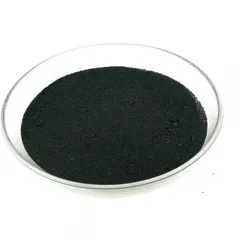
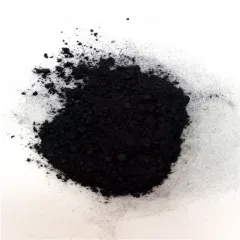
At its most fundamental level, boron powder is simply elemental boron that has been ground into a fine particulate state. But the word "elemental" does a lot of heavy lifting here. Boron is element number five on the periodic table, sitting just to the left of carbon and right above aluminum. That position is key—it has only three valence electrons, which means it is perpetually electron-hungry and desperate to bond. In its pure crystalline form, boron is incredibly hard (second only to diamond and cubic boron nitride), but it is also brittle. When you powder it, you lose the macroscopic hardness, but you gain something even more valuable: surface area. A single gram of fine boron powder can have a surface area of over 20 square meters. That means every tiny grain is a ready-to-react little reactor. The powder is typically amorphous (non-crystalline) when produced via reduction of boron oxide with magnesium, or crystalline when purified through chemical vapor deposition. The amorphous form is darker, cheaper, and more reactive—think of it as the "wild child" of the boron family. The crystalline form is silvery-gray, more stable, and used in high-end electronics. But no matter the form, boron powder is famously difficult to handle because it is pyrophoric: in fine dust form, it can ignite spontaneously in air. This is not a material you casually sprinkle over your breakfast cereal.
The Element That Refuses to Pick a Side
One of the most charming quirks of boron powder is its chemical split personality. In the periodic table’s p-block, boron is a metalloid, which means it sits on the fence between metals and non-metals. Compare it to its neighbor carbon—carbon gives us diamond and graphite, both of which are structurally elegant. Boron, on the other hand, gives us over 16 known polymorphs (different crystal structures), each with bizarre icosahedral units—think of 12 boron atoms forming a soccer-ball-like cage. This structural complexity is why boron powder is so chemically versatile. Unlike aluminum powder, which readily oxidizes to form a protective oxide layer (alumina) that stops further reaction, boron powder’s oxide (boron trioxide) is actually glassy and porous, meaning it does not protect the inner material well. That sounds like a weakness, but in pyrotechnics, it’s a gift—it allows boron to keep burning even at high temperatures, releasing enormous heat. Compare it to silicon powder, another metalloid: silicon is the darling of solar cells, but it burns slowly and reluctantly. Boron powder? It burns with a brilliant green flame, releasing about 58 kilojoules per gram, which is nearly twice the energy of TNT by weight, albeit over a longer time. This is why boron is a staple in solid rocket fuel igniters and air-augmented explosives. It is the bad boy of the periodic table—dangerous, unpredictable, but incredibly powerful when handled with respect.
From Rockets to Reactors: The Industrial Love Affair
Let’s move from theory to reality. Where do we actually use boron powder? The most famous application is in the aerospace and defense industry. When mixed with oxidizers like ammonium perchlorate, boron powder acts as a high-energy fuel. The challenge has always been its high ignition temperature—boron needs about 600 degrees Celsius to start burning, compared to aluminum’s 400 degrees. But once lit, it out-burns everything else. Researchers have spent decades coating boron particles with titanium or magnesium to lower that ignition barrier. The payoff? Ramjet engines that can fly at Mach 5, thanks to boron’s volumetric heat content—it packs more energy per cubic centimeter than jet fuel. Outside the military sphere, boron powder is the secret ingredient in neodymium magnets. Add a tiny amount of boron to an alloy of neodymium and iron, and you get the strongest permanent magnets on Earth, used in electric vehicle motors and wind turbines. Without that sprinkle of boron powder, your Tesla’s motor would be twice as heavy. Then there is the nuclear industry—boron is a neutron-absorbing superstar. Its isotope B-10 has a massive cross-section for thermal neutrons, so boron powder is pressed into control rods for nuclear reactors. It is the silent emergency brake of the atomic world. Even in everyday life, boron powder finds its way into fiberglass insulation (as borosilicate glass), ceramic glazes, and even as a flame retardant in plastics. It is everywhere, but you never see it—like a molecular stagehand.
Boron Powder
The Undisputed Champion of Hardness (With a Twist)
When people talk about hard materials, they think of diamond or tungsten carbide. But boron powder, when converted into boron carbide (B4C), becomes the third-hardest known material, just behind diamond and cubic boron nitride. What does that mean in practice? Boron carbide powder is used as an abrasive for grinding and polishing water jets, and it is also the material of choice for bulletproof vests—yes, the black ceramic plates in high-level body armor are often made of boron carbide. It is lighter than aluminum oxide and significantly harder than silicon carbide. But here is the twist: the powder form itself is soft enough to be pressed into shapes, then sintered (heated without melting) into a monolithic armor plate. So the same dusty powder that might puff away in a breeze can become a shield that stops a 7.62mm round. That transformation—from fragile grains to indestructible solid—is a beautiful example of how materials science manipulates microstructure rather than just chemistry. Compare it to graphite powder, which is a lubricant: both are group-13 elements, but graphite is soft because of its layered structure, while boron carbide is hard because of its covalent 3D network. Same neighborhood, completely different attitude.
Why Your Chemistry Textbook Lied About Boron
Most high-school chemistry teaches boron as a boring, electron-deficient element that forms weird hydrides like borane. That is technically true, but it misses the forest for the trees. Boron powder is actually a gateway to green chemistry. For instance, boron is being explored as a hydrogen storage medium. Why? Because boron can form compounds like ammonia borane (NH3BH3), which releases pure hydrogen gas when heated—without the need for high-pressure tanks. In theory, you could carry boron powder as a solid fuel and release hydrogen on demand for fuel cells. This is not science fiction; major automakers have pilot projects testing boron-based hydrogen carriers. Another revolutionary angle is boron’s role in "liquid metal" batteries, where molten boron compounds act as separators. And let’s not forget the medical front: boron neutron capture therapy (BNCT) is a cutting-edge cancer treatment. You inject a boron-10 enriched compound into a patient, let it accumulate in tumors, then zap the area with low-energy neutrons. The boron splits, releasing lethal alpha particles that kill only the cancer cells. Boron powder, in its isotopically enriched form, is literally saving lives. So next time someone calls boron dull, remind them that this dusty powder is fighting tumors, powering rockets, and holding up the grid—all while sitting quietly in a dark bottle.
The Great Comparison: Boron vs. Aluminum vs. Silicon
To really appreciate boron powder, let us pit it against its two most famous periodic neighbors. Aluminum powder is the darling of the pyrotechnics industry—it is cheap, burns brightly, and is easy to ignite. But aluminum’s oxide layer is a shield that prevents complete combustion; about 30% of its energy stays locked in the oxide. Boron powder, despite its higher ignition hurdle, burns almost completely to boron trioxide, releasing significantly more total heat. On the downside, boron trioxide is a sticky, glassy liquid that can coat unburned particles and choke the reaction—engineers call this the "boron curse." Silicon powder, in contrast, is the semiconductor king. It doesn't burn easily, but it alloys beautifully with metals to make lightweight structural components. Boron powder sits in the middle: it is harder than silicon, lighter than aluminum (density 2.34 g/cm3 vs. aluminum’s 2.70), and far more reactive than silicon. It is the overachiever that requires the most careful handling. If aluminum is the reliable pickup truck, and silicon is the smooth sedan, boron is the exotic sports car that catches fire if you look at it wrong—but when it runs, it leaves everything in the dust.
The Art of Making Boron Powder – Not as Simple as Grinding
You might think making boron powder is as easy as taking a chunk of boron and putting it in a ball mill. Wrong. Commercial boron powder is produced through two main routes: the magnesiothermic reduction of boron oxide (a process that involves a violent exothermic reaction at 1,200°C) and the chemical vapor deposition (CVD) using boron trichloride and hydrogen. The first method gives you impure, amorphous powder that must be acid-leached to remove magnesium oxide byproducts. The second produces ultra-pure crystalline boron but is expensive and slow. Even after production, the powder is typically milled and then classified by air-jet sieving to control particle size—a critical factor because particle size dictates reactivity, packing density, and even color. A 1-micron boron powder is dark brown and ignites easily; a 10-micron powder is blacker and more stable. Manufacturers also apply coatings—silane, titanate, or even vegetable oil—to passivate the surface and reduce pyrophoricity during shipping. So the bag of boron powder you buy from a chemical supplier is not just ground-up element; it is a carefully engineered product with a specific surface treatment, purity grade (usually 90% to 99.99%), and particle size distribution. It is a masterpiece of industrial chemistry, dressed in humble dusty clothes.
Boron Powder
Safety First: The Invisible Dragon in the Bottle
If this blog has a moral, it is this: boron powder is not a toy. The pyrophoric nature is real—in the presence of moisture, it can generate hydrogen gas, which adds an explosion risk. Inhaling fine boron dust can cause respiratory irritation, and chronic exposure has been linked to skin rashes and digestive issues (though it is far less toxic than heavy metals). But the real drama happens during combustion. Boron burns at over 2,200°C, and its flame is almost invisible in daylight—a terrifying quality for firefighters. Therefore, handling boron powder requires inert atmospheres (argon or nitrogen), anti-static equipment, and wet sweeping (never dry vacuuming). Compare this to graphite powder, which is relatively benign, or iron powder, which is combustible but less aggressive. Boron powder demands respect. In a laboratory setting, we store it under mineral oil or argon. In industrial sites, they use explosion-proof mills and water-spray systems. This is not bureaucracy; this is the price of harnessing one of the most energy-dense materials on Earth.
What About the Environment? A Surprising Twist
Here is a feel-good fact: boron is an essential micronutrient for plants, and boron powder, when oxidized, becomes boric acid or borates, which are water-soluble and relatively non-toxic to mammals. In fact, you can find boron in seawater at about 4.5 parts per million. So unlike lead or cadmium powders, boron powder does not bioaccumulate in the food chain. This makes it attractive for green propulsion systems where exhaust products are less harmful than perchlorate-based fumes. However, the energy used to produce pure boron—especially via the carbothermic reduction in electric arc furnaces—is substantial, so the carbon footprint is not negligible. But researchers are now developing electrochemical methods to produce boron from molten salts, which could cut energy consumption by half. In a world obsessed with sustainability, boron powder might actually be part of the solution, not the problem. It is recyclable, too: boron carbide waste from abrasive blasting can be collected and reprocessed into new abrasive grits. So while it is not a "green" material per se, it is far gentler than many of its metallic cousins.
The Future Is Boron – But With a Coat of Intelligence
So where do we go from here? The next decade will see boron powder transition from a bulk commodity to a precision-engineered functional material. Researchers are already synthesizing boron nanosheets—borophene—which is a two-dimensional material predicted to have superior electrical conductivity and mechanical strength compared to graphene. Imagine boron powder delaminated into single-atom-thick layers; that could revolutionize flexible electronics and battery anodes. Another frontier is the use of boron powder in additive manufacturing—3D printing of boron-containing alloys for lightweight aerospace parts. There are also ambitious projects to use boron as a "combustion catalyst" in hybrid rockets, where coating the powder with nano-aluminum reduces the ignition delay from milliseconds to microseconds. Additionally, isotope separation technology is becoming cheaper, so isotopically enriched B-10 powder will be more available for both medical and nuclear applications. But the holy grail remains the controlled combustion of boron in air-breathing engines—a challenge that has eluded engineers for 60 years. With new surface passivation layers using fluoropolymers and metal-organic frameworks, we are inching closer to a boron-fueled hypersonic aircraft.
Final Thoughts: The Powder That Punches Above Its Weight
In the grand tapestry of elemental materials, boron powder does not have the glamour of gold, the ubiquity of iron, or the charm of silicon. But it has something better: a stubborn refusal to be simple. It is the material that demands you understand its surface chemistry, its polymorphic heart, and its dangerous beauty. From the ceramic plates that save soldiers’ lives to the magnets spinning in wind turbines, from the control rods stopping nuclear meltdowns to the hydrogen carriers of tomorrow’s fuel cells—boron powder is the quiet alchemist turning mundane chemistry into high-stakes engineering. It is not a one-trick pony; it is a whole circus in a grey jar. And the best part? For all its complexity, the basic principle is accessible: small particles, huge surface, enormous potential. Next time you see a dusty powder, do not dismiss it. It might just be boron, waiting for its moment to ignite—metaphorically or literally.
Boron Powder
TRUNNANO CEO Roger Luo said:" As a professional in the field of chemical materials, I would wager that the next leap for boron powder lies in smart surface engineering to tame its ignition, unlocking hypersonic and biomedical goldmines."
Supplier
TRUNNANOis a globally recognized boron powder manufacturer and supplier of compounds with more than 12 years of expertise in the highest quality nanomaterials and other chemicals. The company develops a variety of powder materials and chemicals. Provide OEM service. If you need high quality boron powder, please feel free to contact us. You can click on the product to contact us. Tags: boron powder, Amorphous boron powder, boron powder price