TiC is light gray, cubic crystal system, insoluble in water, has high chemical stability, hardly reacts with hydrochloric acid and sulfuric acid, but can be dissolved in aqua regia, nitric acid and hydrofluoric acid, and also soluble in alkaline oxidation solution.

titanium carbide
TiC is an iron gray crystal with metallic luster. It belongs to the simple cubic structure of NaCl type. The lattice constant is 0.4329 nm. The space group of Fm3m. The carbon atoms and titanium atoms between TiC are equivalent to strong covalent bonds in the lattice position. Bonded atoms, which have several properties similar to metals, such as high melting point, high boiling point and hardness, hardness second only to diamond, good thermal conductivity and electrical conductivity, and show superconductivity even at extremely low temperatures sex. Therefore, TiC is widely used in the manufacture of cermets, heat-resistant alloys, cemented carbides, anti-wear materials, high-temperature radiation materials and other high-temperature vacuum equipment.
Titanium dioxide and carbon black as raw materials:
The high-purity titanium dioxide and carbon black are fully mixed in proportion, and the dry powder mixture is press-formed in a hydrogen atmosphere using a horizontal carbon tube furnace or a vertical carbon tube furnace. At 19002300°C, reduction to obtain block TiC, and then pulverization to obtain titanium carbide powder product. Or using sponge titanium and carbon black as raw materials, sponge titanium (or titanium alloy, titanium waste recovered from carbide solid solution) and carbon black are fully mixed in proportion and heated to 15001700°C in a high-purity hydrogen stream. Titanium carbide.
The raw material synthesis method using titanium dioxide is one of the most common industrial routes for producing TiC powder. The carbothermal reduction reaction can be represented by the following equation: TiO₂ + 3C → TiC + 2CO. This reaction is highly endothermic, requiring high temperatures to drive the reaction to completion. The hydrogen atmosphere serves a dual purpose: it prevents oxidation of the product and facilitates the removal of oxygen in the form of water vapor and carbon monoxide. The use of sponge titanium as an alternative titanium source is advantageous because sponge titanium is more reactive than titanium dioxide, allowing for lower reaction temperatures (1500–1700°C) and shorter processing times. However, titanium scrap must be carefully cleaned to remove surface oxides and impurities before use. The particle size of the final TiC powder is influenced by the particle size of the starting materials, the mixing uniformity, and the reduction conditions. Finer starting powders generally produce finer TiC powders, which are preferred for sintering and coating applications.
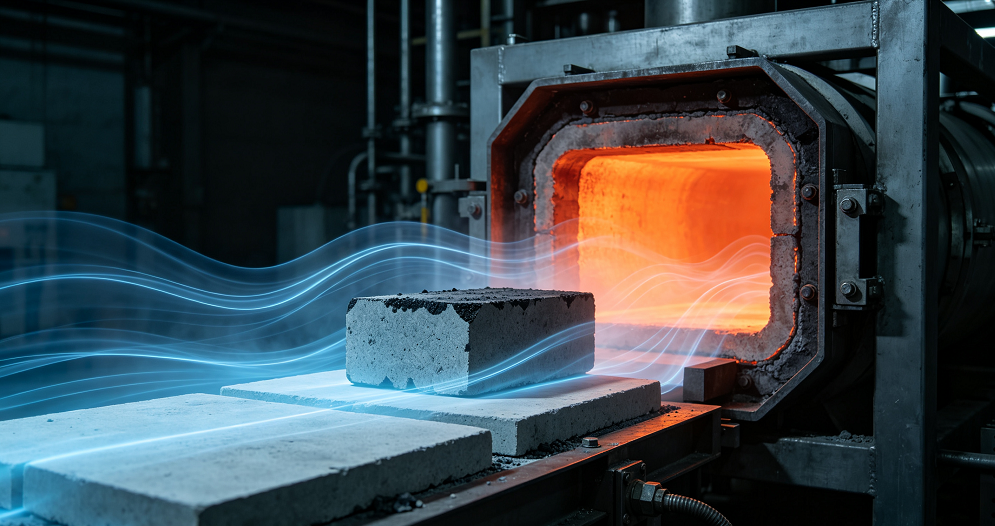
Carbothermal reduction synthesis
Direct carbonization of titanium metal:
Titanium powder (reduced by sodium or decomposed from titanium hydride, less than 325 mesh) is mixed with carbon black and molded under a pressure of about 0.98 Pa. Then it was put into a graphite container and heated to 15001700°C in a stream of high-purity hydrogen to infiltrate the carbon. The reaction temperature and holding time depend on the type of raw material, particle size and reaction performance.
The direct carbonization method offers several advantages over the carbothermal reduction route. The use of metallic titanium powder eliminates the need for the high-temperature reduction of titanium dioxide, resulting in a purer product with fewer oxide inclusions. The reaction proceeds through a solid-state diffusion mechanism, where carbon atoms diffuse into the titanium lattice to form the titanium carbide phase. The reaction rate is controlled by the diffusion kinetics and is influenced by the particle size of the titanium powder, the mixing uniformity, and the reaction temperature. The pressure applied during molding (approximately 0.98 Pa) is relatively low, serving primarily to create a compact that ensures good contact between titanium particles and carbon black. The graphite container not only holds the compact but also acts as a carbon source if needed, and it provides a protective environment for the reaction. The reaction typically requires holding times of several hours to ensure complete conversion, with longer times needed for coarser starting powders.
Gas phase reaction method:
The steam of titanium tetrachloride is mixed with hydrogen-containing hydrocarbons (methane, benzene, etc.), and then sent to the titanium carbide deposited by induction heating or other methods. The reaction precipitates titanium carbide on the substrate. The reaction conditions such as the concentration ratio of the reaction gas, the reaction temperature and the gas flow rate are different, and the form of the precipitated titanium carbide is different.
The gas-phase reaction method is primarily used for the production of TiC coatings and thin films rather than bulk powders. The typical reaction can be represented by the following equation: TiCl₄ + CH₄ → TiC + 4HCl. The advantage of this method is the ability to deposit TiC films with controlled thickness, composition, and microstructure directly onto substrate materials. The deposition temperature is typically in the range of 900–1200°C, which is significantly lower than the temperatures required for the carbothermal reduction method. The concentration ratio of titanium tetrachloride to hydrocarbon gas determines the carbon content of the deposited film, with higher ratios producing films with the desired stoichiometric TiC composition. The reaction temperature influences the crystallinity and hardness of the film, with higher temperatures generally producing better crystallinity and higher hardness. The gas flow rate affects the deposition rate and film uniformity, with optimal flow rates needed to achieve uniform coating thickness. This method is widely used in the semiconductor and tool coating industries to produce wear-resistant TiC coatings with high hardness and excellent adhesion to various substrates.
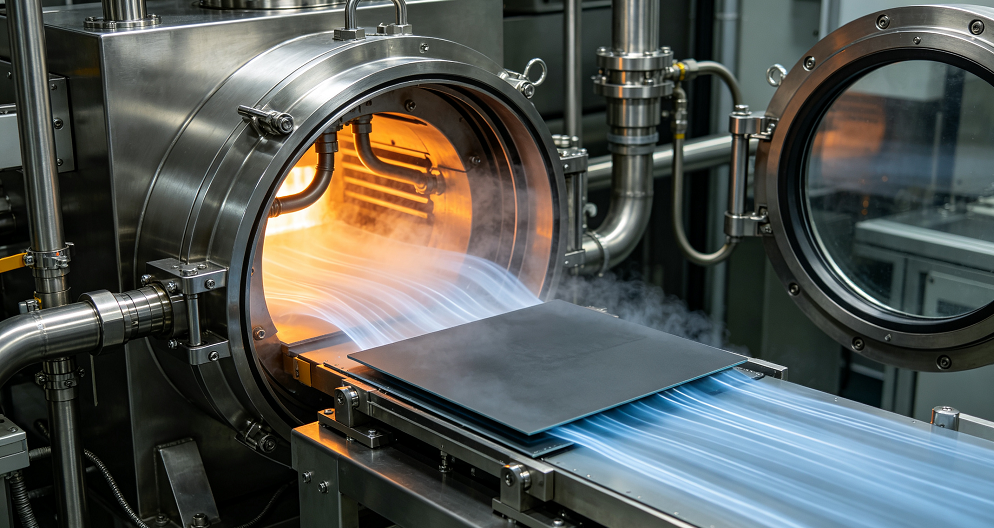
Direct carbonization of titanium metal
Key Applications of Titanium Carbide Powder
1. Cutting Tools and Wear-Resistant Components: TiC is widely used as an additive in cutting tool materials, significantly enhancing hardness, wear resistance, and high-temperature stability. TiC-based cutting tools operate at higher speeds and temperatures than conventional high-speed steel tools, resulting in improved machining efficiency and longer tool life. The addition of TiC also reduces adhesion to the workpiece, improving surface finish and dimensional accuracy.
2. Cermets and Cemented Carbides: In cermets, TiC is combined with metallic binders (Ni, Co, Mo) to produce materials with a balance of hardness, toughness, and thermal shock resistance. In cemented carbides, TiC is added to tungsten carbide (WC) to improve wear resistance and reduce density.
3. Electronics and Semiconductors: TiC thin films are deposited onto semiconductor substrates and hard disk drive (HDD) components to provide wear-resistant protective layers. TiC coatings on HDD read-write heads and disk surfaces reduce friction and wear, enabling reliable operation of high-capacity storage devices. TiC films are also used as diffusion barriers in microelectronics.
4. Aerospace and Nuclear Applications: TiC's radiation resistance and stability under extreme conditions make it suitable for fusion reactor components and aerospace structural materials. Its high melting point and thermal stability enable use in high-temperature radiation materials and other high-temperature vacuum equipment.
5. Crucibles for Molten Metals: TiC's chemical inertness and resistance to molten metal corrosion make it an ideal crucible material for melting bismuth, zinc, and cadmium, ensuring high-purity melt conditions for semiconductor and metallurgical applications.
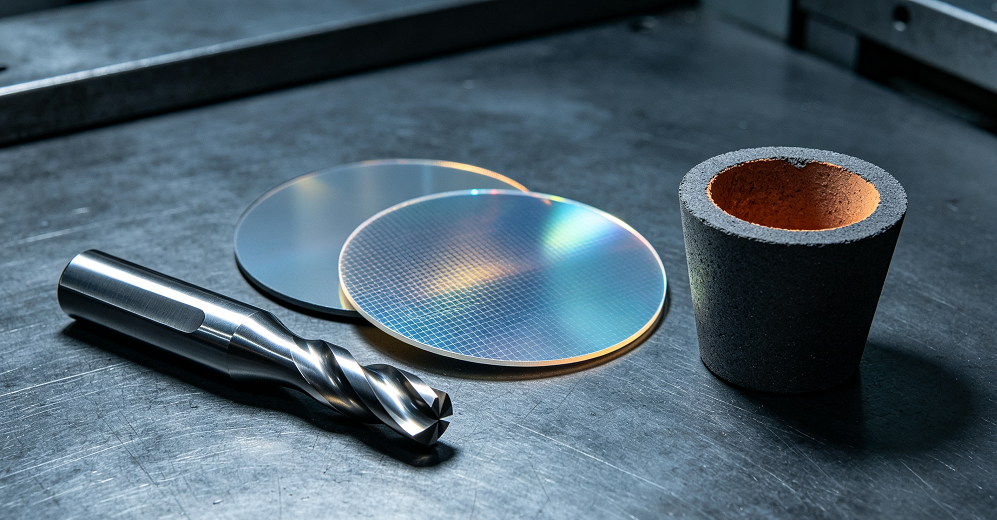
Key applications of titanium carbide
Key Properties of Titanium Carbide
For quick reference, the key properties of titanium carbide are summarized as follows:
Mechanical Properties: TiC exhibits exceptional hardness (9.0–9.5 Mohs, 2800–3000 HV) and high compressive strength. Its flexural strength typically ranges from 400–600 MPa, and its fracture toughness is moderate (3–5 MPa·m¹/²). The elastic modulus is approximately 450 GPa, indicating high stiffness. The moderate fracture toughness means that TiC-based materials are most effective when used in combination with metallic binders or reinforcement phases that can provide crack resistance.
Thermal Properties: The melting point is approximately 3160°C, with a boiling point above 4800°C. The thermal conductivity is moderate (approximately 20–30 W/m·K at room temperature), allowing for good heat dissipation in cutting tool applications. The coefficient of thermal expansion is 7.4 × 10⁻⁶/K (20–1000°C), which is well-matched to many metal matrices.
Electrical Properties: TiC is a metallic conductor with a resistivity of approximately 1.5 × 10⁻⁴ Ω·cm at room temperature. It exhibits superconductivity below approximately 1.2 K.
Chemical Properties: TiC is chemically stable and resistant to most acids and alkalis at room temperature. It can be oxidized at high temperatures in air, forming titanium dioxide (TiO₂), which limits its use in oxidizing environments above 600–800°C. It is compatible with many metal matrices and can be wetted by molten metals such as iron, cobalt, and nickel, facilitating its use in metal-matrix composites.
Luoyang Trunnano Tech Co., Ltd (TRUNNANO) is a professional boride powder supplier with over 12 years experience in chemical products research and development. We accept payment via Credit Card, T/T, West Union and Paypal. Trunnano will ship the goods to customers overseas through FedEx, DHL, by air, or by sea.
If you are looking for high quality TiC powder, please feel free to contact us and send an inquiry.