Manganous Oxide: Modern Innovation of a Traditional Material and Prospects for Diverse Applications
Views : 421
Author : Vincy
Update time : 2026-02-06 17:07:51
From Mineral to Nanomaterial: The Historical Evolution of Manganous Oxide
In the long history of human material utilization, the manganese oxide family has consistently played a unique and important role. Among them, manganous oxide (chemical formula MnO), as a fundamental member of this family, has an application history traceable to prehistoric times. Early humans used black pigments containing manganese oxide components in cave paintings, while ancient Egyptians and Romans utilized manganese minerals in glassmaking to eliminate the green tint caused by iron impurities. However, the true scientific recognition and systematic study of manganous oxide began only after the birth of modern chemistry.
Manganous oxide
In the late 18th century, with the development of analytical chemistry, scientists began systematically studying various manganese oxides. In 1774, Swedish chemist Carl Wilhelm Scheele first clearly identified manganese as a distinct element. Subsequently, manganese oxides of different valence states were gradually distinguished and characterized. With its unique crystal structure, magnetic characteristics, and chemical properties, manganous oxide began to see scaled applications during the Industrial Revolution, initially mainly as an additive in iron and steel smelting and a base material for ceramic glazes. Entering the 20th century, with the rapid development of materials science, understanding of manganous oxide deepened continuously. From its initial crude mineral form to later micron-sized powders, and now to the much-anticipated nanoscale materials, revolutionary changes have occurred in the preparation technology, performance research, and application fields of manganous oxide. Especially after the rise of nanotechnology, nanoscale manganous oxide exhibits physical and chemical properties drastically different from those of traditional materials, opening up entirely new spaces for its application in emerging fields such as new energy, electronics, and environmental remediation.
Analysis of Fundamental Properties and Crystal Structure
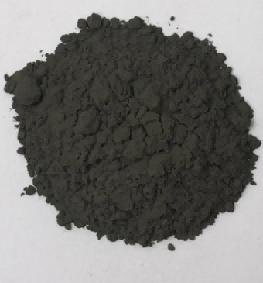
At room temperature and pressure, manganous oxide typically exists in a rock salt structure, belonging to the cubic crystal system with a space group of Fm-3m. In this structure, manganese ions and oxygen ions form face-centered cubic lattices respectively, which interpenetrate each other. Each manganese ion is octahedrally coordinated by six oxygen ions, and simultaneously, each oxygen ion is also octahedrally coordinated by six manganese ions. This highly symmetrical structure endows manganous oxide with many unique properties. In terms of chemical composition, manganous oxide is the oxide of divalent manganese, with an oxidation state of +2 for manganese. Compared to other manganese oxides, such as manganese dioxide (MnO₂) where manganese is +4, and manganese(III) oxide (Mn₂O₃) where manganese is +3, manganous oxide is in a lower oxidation state. This characteristic determines its relatively stronger reducibility, making it easily oxidized to higher-valent manganese oxides when heated in air. Regarding physical properties, pure manganous oxide typically appears as gray-green or olive-green powder, with a density of approximately 5.43 g/cm³ and a Mohs hardness between 5 and 6. It has a high melting point of 1945°C and a boiling point of about 3127°C. These thermal properties enable it to withstand high-temperature environments, making it suitable for use as a high-temperature material. The electrical and magnetic properties are among the most unique characteristics of manganous oxide. It is an antiferromagnetic material with a Néel temperature of about 118 K. Below this temperature, it exhibits antiferromagnetism, and above it, paramagnetism. This magnetic characteristic gives it potential application value in fields like magnetic storage and magnetic sensing. In terms of electrical performance, manganous oxide is a wide-bandgap semiconductor, with a room-temperature bandgap of approximately 3.6-4.2 electron volts, giving it certain application potential in optoelectronic devices. Notably, when the particle size of manganous oxide decreases to the nanoscale, its physical and chemical properties undergo significant changes. Nanoscale manganous oxide typically exhibits quantum size effects, surface effects, and small-size effects, leading to marked differences in its optical, magnetic, catalytic, and electrochemical properties compared to bulk materials. For example, the specific surface area of nanoscale manganous oxide increases dramatically, and the proportion of surface atoms rises substantially, significantly enhancing its surface activity and resulting in higher efficiency in catalytic reactions.
Manganous oxide
Preparation Methods: From Traditional Processes to Modern Nanotechnology
There are several main traditional pathways for the industrial production of manganous oxide. The most direct method is through the thermal decomposition of manganese carbonate or manganese hydroxide: heating manganese carbonate (MnCO₃) or manganese hydroxide (Mn(OH)₂) to an appropriate temperature (typically 300-600°C) in an inert or reducing atmosphere, decomposing it to generate manganous oxide while releasing carbon dioxide or water vapor. This method is relatively simple in process, but product purity is greatly affected by raw material purity, and particle size is usually in the micron range. Another common industrial preparation method is the reduction of manganese dioxide. Heating natural manganese dioxide ore (like pyrolusite) or synthetic manganese dioxide in a reducing atmosphere (such as carbon monoxide, hydrogen, or methane) yields manganese oxides of different valence states. High-purity manganous oxide can be obtained by precisely controlling the reduction temperature and time. This method uses widely available raw materials and is suitable for large-scale production but requires strict control of reduction conditions to avoid over-reduction to metallic manganese or insufficient reduction leading to mixed-valence oxides. With the rise of nanomaterials science, new methods for preparing nanoscale manganous oxide continue to emerge. Hydrothermal and solvothermal methods are commonly used for synthesizing nanoscale manganous oxide. By controlling parameters such as reaction temperature, pressure, time, and precursor concentration, manganous oxide nanomaterials with different morphologies (e.g., nanoparticles, nanowires, nanosheets) and sizes can be synthesized. This method typically yields well-crystallized, uniformly sized products but requires special equipment like high-pressure reactors and has relatively limited production capacity. The precipitation method is another widely used technique for preparing nanoscale manganous oxide. Typically, a manganese salt solution (e.g., manganese sulfate, manganese chloride) is reacted with an alkaline precipitant (e.g., sodium hydroxide, ammonia) to generate manganese hydroxide or basic manganese salt precipitates, which are then washed, dried, and thermally treated to obtain nanoscale manganous oxide. By controlling precipitation conditions (e.g., pH, concentration, temperature, additives), the particle size, morphology, and dispersity of the product can be adjusted. This method uses simple equipment and is suitable for scaled production but requires strict control of process conditions to obtain high-quality products. In recent years, some novel preparation methods have gradually developed. Microwave-assisted synthesis utilizes the rapid and uniform heating characteristics of microwaves, significantly shortening reaction time, improving energy efficiency, and often yielding more uniformly sized nanoparticles. Sonochemical methods use the cavitation effect generated by ultrasound to promote chemical reactions, enabling the synthesis of nanoscale manganous oxide at lower temperatures. Green synthesis methods employ natural extracts or environmentally friendly reagents as reducing or stabilizing agents, reducing environmental impact. These new methods each have their own characteristics, providing more options for obtaining nanoscale manganous oxide with specific properties. Regardless of the preparation method used, post-processing of the product is crucial. The washing process needs to thoroughly remove impurity ions, drying conditions affect the agglomeration state of particles, and heat treatment temperature and time determine the product's crystallinity and particle size. The application of advanced characterization techniques such as X-ray diffraction, scanning electron microscopy, transmission electron microscopy, and surface area analysis provides strong support for optimizing preparation processes and controlling product quality.
Performance Comparison: Similarities and Differences Between Manganous Oxide and Other Manganese Oxides
Within the manganese oxide family, oxides of different valence states possess significantly different properties and applications. Comparing manganous oxide with other common manganese oxides allows for a clearer understanding of its unique value.
Manganous oxide
Compared to manganese dioxide (MnO₂), manganous oxide exhibits stronger reducibility in chemical properties. Manganese dioxide is a common oxidizing agent, used as a cathode material in dry batteries and widely used in oxidation processes for iron and manganese removal in water treatment. In contrast, manganous oxide more often exhibits reducing or neutral properties, used as a deoxidizer and desulfurizer in steelmaking. In terms of crystal structure, manganese dioxide has multiple polymorphs (e.g., α, β, γ, δ types), with structural complexity far exceeding that of the rock salt structure of manganous oxide. Regarding electrochemical performance, manganese dioxide exhibits excellent performance in lithium-ion batteries and supercapacitors due to its variable oxidation states and tunnel structure; the application of manganous oxide in energy storage is relatively newer, primarily based on its conversion reaction mechanism. Compared to manganese(III) oxide (Mn₂O₃), manganous oxide has higher thermal stability. Manganese(III) oxide decomposes to trimanganese tetroxide (Mn₃O₄) and oxygen when heated to about 950°C, whereas the decomposition temperature of manganous oxide is much higher. Magnetically, manganese(III) oxide is paramagnetic at room temperature, transitioning to antiferromagnetic below 80 K; the antiferromagnetic transition temperature (Néel temperature) of manganous oxide is about 118 K, slightly higher than that of Mn₂O₃. In catalysis, manganese(III) oxide, due to its moderate redox capability, is commonly used for catalytic oxidation of volatile organic compounds; manganous oxide exhibits unique performance in some selective oxidation reactions. Compared to trimanganese tetroxide (Mn₃O₄), the crystal structure of manganous oxide is simpler. Trimanganese tetroxide has a spinel structure where manganese exists in both +2 and +3 valence states, making its structural complexity higher than the simple rock salt structure. Magnetically, trimanganese tetroxide is paramagnetic at room temperature, transitioning to ferromagnetism below 42 K; manganous oxide does not exhibit ferromagnetism across the entire temperature range. In terms of applications, trimanganese tetroxide is widely used as a magnetic material, catalyst, and battery material; the traditional applications of manganous oxide are more concentrated in metallurgy and ceramics, though it has recently shown potential in battery materials as well. Compared to higher-valent manganese oxides like manganese heptoxide (Mn₂O₇), the chemical stability of manganous oxide is much higher. Manganese heptoxide is a strong oxidizer, extremely unstable, and prone to explosive decomposition at room temperature; manganous oxide is quite stable at room temperature and is only oxidized under high-temperature, strongly oxidizing conditions. This difference in stability determines their completely different handling methods and application fields. It is noteworthy that when these manganese oxides are all prepared as nanomaterials, their performance differences may change. Nano-size effects can cause some properties that are not prominent in bulk materials to become significant or alter the original performance ranking. For example, nanoscale manganous oxide may exhibit stronger catalytic activity than its bulk counterpart, potentially even surpassing manganese oxides traditionally considered to have better catalytic performance in certain reactions. This size effect provides possibilities for the application of manganous oxide in new fields.
Traditional Application Fields: Key Roles in Foundational Industries
In the steel industry, manganous oxide has long played an indispensable role. As an additive in steelmaking processes, it primarily serves three functions: deoxidation, desulfurization, and alloying. In the deoxidation of molten steel, manganese from manganous oxide combines with oxygen to form manganese oxides that enter the slag phase, thereby reducing oxygen content in the steel, minimizing bubble and inclusion defects, and improving steel quality. For desulfurization, manganese has a stronger affinity for sulfur than iron, forming stable manganese sulfide, thus reducing the content of the harmful element sulfur in steel and improving its hot-working properties. Furthermore, manganese itself is an important alloying element that can enhance the strength, hardness, wear resistance, and hardenability of steel. Manganese steel (containing 11-14% manganese) is renowned for its extremely high wear resistance and is widely used in manufacturing railway switches, excavator teeth, safes, and other wear-resistant components. In non-ferrous metallurgy, manganous oxide also has its application value. In copper smelting, adding manganous oxide can improve slag properties, lower its melting point and viscosity, and promote the separation of metal from slag. In aluminum smelting, manganous oxide can serve as an additive to the electrolyte, helping to adjust its composition and properties. Additionally, manganous oxide is an important source for introducing manganese in the smelting of some special alloys.
Manganous oxide
The ceramics and glass industries are another significant application field for manganous oxide. Adding manganous oxide in ceramic production serves a dual purpose as both a colorant and a mineralizer. As a colorant, manganous oxide can produce various shades from pink to purple-brown in glazes and bodies, with the specific color depending on content, firing atmosphere, and base formulation. This coloring effect finds wide application in architectural ceramics, art ceramics, and domestic ceramics. As a mineralizer, manganous oxide can lower the firing temperature of ceramics, promote the sintering process, and improve product performance. In the glass industry, manganous oxide is primarily used to eliminate the green tint caused by iron impurities, producing colorless transparent glass. This application principle is based on the redox properties of manganese: in molten glass, manganous oxide can oxidize green ferrous iron (Fe²⁺) to yellow ferric iron (Fe³⁺), while itself being reduced to nearly colorless manganese(III), with the two colors complementing each other to produce a decolorizing effect. In the agricultural field, manganous oxide is an important raw material for trace element fertilizers. Manganese is an essential micronutrient for plants, involved in various physiological processes such as photosynthesis, nitrogen metabolism, and enzyme activation. Manganese deficiency in soil leads to poor plant growth and chlorosis symptoms in leaves. Adding manganous oxide to fertilizers can replenish manganese in the soil, promoting healthy crop growth. Compared to soluble manganese salts, manganous oxide dissolves more slowly, providing a more sustained manganese supply, reducing leaching losses, and improving utilization efficiency. In the chemical industry, manganous oxide is an important precursor for preparing other manganese compounds. Through different chemical reactions, various manganese salts such as manganese sulfate, manganese chloride, and manganese carbonate can be prepared from manganous oxide. These manganese salts have wide applications in battery materials, catalysts, feed additives, and other fields. Furthermore, manganous oxide itself can serve as a catalyst or catalyst support for certain organic reactions, such as in olefin polymerization and alcohol oxidation.
Emerging Application Fields: New Opportunities Brought by Nanotechnology
With the development of nanomaterials science, nanoscale manganous oxide shows great application potential in emerging fields, often based on its unique nano-effects and surface properties. In the field of energy storage, research on manganous oxide as an anode material for lithium-ion batteries has attracted significant attention. Compared to traditional graphite anodes, manganous oxide-based anode materials have a higher theoretical specific capacity (approximately 756 mAh/g, over twice that of graphite). Its energy storage mechanism is primarily based on a conversion reaction: MnO + 2Li⁺ + 2e⁻ ↔ Li₂O + Mn. However, this reaction is accompanied by significant volume changes and low conductivity, leading to poor cycling stability and rate capability. To address these issues, researchers have developed various strategies: preparing nanostructured manganous oxide to shorten ion/electron transport paths and alleviate volume strain; compositing with carbon materials to improve conductivity and structural stability; designing special morphologies (e.g., porous structures, core-shell structures) to provide buffer space. These improvements have significantly enhanced the electrochemical performance of manganous oxide-based anode materials, showing promising application prospects. Additionally, manganous oxide exhibits potential application value in new battery systems like sodium-ion and magnesium-ion batteries. In the field of supercapacitors, manganous oxide has garnered attention due to its advantages such as high theoretical specific capacity, low cost, and environmental friendliness. Compared to traditional electric double-layer capacitor materials (e.g., activated carbon), manganous oxide, based on a pseudocapacitive mechanism involving redox reactions, can provide higher specific capacity. However, its low conductivity and cycling stability limit practical application. Methods such as preparing nanostructures, compositing with conductive materials, and controlling crystal defects can significantly improve the electrochemical performance of manganous oxide. For example, compositing nanoscale manganous oxide with graphene or carbon nanotubes combines the advantages of both, yielding electrode materials with high capacity, high power density, and long cycle life. In the field of catalysis, nanoscale manganous oxide exhibits unique catalytic performance. Compared to other manganese oxides, manganous oxide shows higher selectivity and activity in specific reactions. For instance, in the catalytic oxidation of volatile organic compounds, manganous oxide performs well for oxidizing certain aldehydes and alcohols; in the selective catalytic reduction of nitrogen oxides, manganous oxide-based catalysts show good low-temperature activity; in water splitting for hydrogen production, manganous oxide can act as a co-catalyst to improve overall efficiency. The high specific surface area and abundant surface active sites brought by the nanoscale size are key factors for its enhanced catalytic performance. Moreover, by doping other elements or forming composite oxides, the electronic structure and surface properties of manganous oxide can be further tuned to optimize its catalytic performance. In the field of environmental remediation, manganous oxide can be used for water treatment and exhaust gas purification. In water treatment, manganous oxide can adsorb and remove heavy metal ions (e.g., lead, cadmium, copper) through mechanisms including surface complexation, ion exchange, and coprecipitation. Nanoscale manganous oxide, due to its large specific surface area and numerous surface active sites, has significantly higher adsorption capacity than traditional materials. In exhaust gas purification, manganous oxide can be used in desulfurization and denitrification processes; its multivalent nature allows it to participate in redox reactions, promoting the conversion and removal of pollutants. Furthermore, manganous oxide exhibits certain photocatalytic activity, capable of degrading organic pollutants under light irradiation, a property with application potential in wastewater treatment and air purification.
Manganous oxide
In the biomedical field, research on the application of nanoscale manganous oxide is increasingly active. Based on its magnetic properties, manganous oxide nanoparticles can be used as contrast agents for magnetic resonance imaging (MRI). Compared to traditional gadolinium-based contrast agents, manganese-based materials may offer lower toxicity and better biocompatibility. In cancer therapy, manganous oxide nanoparticles can be used in drug delivery systems, achieving targeted drug delivery through surface modification; they can also be used for hyperthermia, generating heat under an applied alternating magnetic field to kill tumor cells. Additionally, manganous oxide exhibits certain enzyme-mimicking activity, catalyzing the decomposition of reactive oxygen species like hydrogen peroxide, a property that may have application value in antioxidant therapy and inflammation regulation. In the field of electronic devices, the semiconductor properties of manganous oxide give it application potential in devices such as thin-film transistors, sensors, and resistive random-access memory (RRAM). Particularly, its resistive switching characteristic can be utilized to develop next-generation non-volatile memory. Compared to traditional flash memory, oxide-based RRAM offers advantages like simple structure, fast operation speed, and good scalability. As a resistive switching material, the switching mechanism in manganous oxide may be related to the formation and migration of oxygen vacancies, and device performance can be optimized by controlling oxygen vacancy concentration and distribution.
Material Modification: Multidimensional Strategies for Enhancing Performance
To expand the application range and enhance the performance of manganous oxide, material modification research is deepening, with main strategies including morphology control, size regulation, compositing, doping modification, and surface functionalization. Morphology control is an important means to regulate the properties of manganous oxide. Nanoscale manganous oxide with different morphologies has different surface atom arrangements, exposed crystal facets, and specific surface areas, thereby affecting its physicochemical properties. Common morphologies include nanoparticles, nanowires, nanorods, nanosheets, nanospheres, nanoflowers, etc. For example, one-dimensional nanowires facilitate electron transport and may exhibit better rate performance in electrode materials; two-dimensional nanosheets have a large specific surface area and abundant edge active sites, potentially offering advantages in catalysis and adsorption; three-dimensional hierarchical structures can combine the advantages of different dimensions, providing more active sites and faster mass transport channels. By adjusting synthesis conditions (e.g., precursor concentration, reaction temperature, pH, surfactants), the growth process of manganous oxide can be controlled to achieve the controllable preparation of specific morphologies. Size regulation is another fundamental modification strategy. When the particle size of manganous oxide decreases to the nanoscale, quantum size effects, surface effects, and small-size effects occur, leading to significant differences in its optical, electrical, magnetic, and chemical properties compared to bulk materials. Generally, reducing particle size increases specific surface area, enhances surface activity, and improves reaction kinetics. For instance, in lithium-ion batteries, nanoscale manganous oxide can shorten lithium-ion diffusion paths, improving rate performance; simultaneously, nanoparticles can better accommodate volume changes during charge/discharge cycles, enhancing cycling stability. However, excessively small sizes may cause severe particle agglomeration, reducing the effective specific surface area, and may also present challenges in preparation and stability. Therefore, particle size needs to be optimized according to specific application requirements. Compositing is a strategy that combines manganous oxide with other materials to form composite materials. Compositing can combine the advantages of different materials, achieving complementary or synergistic enhancement of properties. Common composite partners include carbon materials (e.g., graphene, carbon nanotubes, porous carbon), conductive polymers, metal nanoparticles, and other metal oxides. For example, compositing manganous oxide with graphene can simultaneously improve material conductivity and structural stability, exhibiting excellent performance in supercapacitors and lithium-ion batteries; compositing with titanium dioxide can extend the light response range and enhance photocatalytic activity; compositing with noble metal nanoparticles can enhance surface plasmon resonance effects, improving light absorption and catalytic performance. The properties of composite materials depend not only on the properties of each component but also on the interfacial structure, dispersion state, and synergistic effects. Doping modification is a strategy to alter the crystal structure and electronic properties of manganous oxide by introducing foreign elements. Dopant elements can be metals (e.g., iron, cobalt, nickel, copper) or non-metals (e.g., nitrogen, sulfur, fluorine). Doping can create lattice defects, change electronic structure, adjust band positions, and introduce new active sites, thereby improving material conductivity, catalytic activity, optical properties, and stability. For example, iron doping can alter the magnetic properties of manganous oxide, broadening its application in magnetic devices; nitrogen doping can introduce n-type semiconductor characteristics, increasing electronic conductivity; co-doping with multiple elements may produce synergistic effects, further optimizing material performance. Controlling the doping amount is crucial, as appropriate doping improves performance, while excessive doping may cause structural distortion and performance degradation.
anganous oxideM
Surface functionalization is a strategy to change the surface properties of manganous oxide through chemical modification. Surface modifiers can be small molecules (e.g., silane coupling agents, phosphates, carboxylic acids), polymers (e.g., polyethylene glycol, polyethylenimine, polyaniline), or biomolecules (e.g., proteins, peptides, DNA). Surface functionalization can improve the dispersibility of manganous oxide in different media, enhance compatibility with matrix materials, introduce specific functional groups for selective adsorption or reaction, and reduce biological toxicity to improve biocompatibility. For example, modification with polyethylene glycol can increase the circulation time of manganous oxide nanoparticles in biological systems; modification with aminosilanes can introduce amino groups, facilitating further conjugation with targeting molecules; modification with conductive polymers can enhance surface conductivity. The method and extent of surface functionalization need optimization based on specific application requirements. TRUNNANO CEO Roger Luo said:" Manganous oxide materials are evolving towards high performance, multifunctionality, and sustainability, with their application boundaries in fields like new energy, environmental remediation, and advanced electronics continuing to expand."
Supplier
TRUNNANOis a globally recognized Manganous oxide manufacturer and supplier of compounds with more than 12 years of expertise in the highest quality nanomaterials and other chemicals. The company develops a variety of powder materials and chemicals. Provide OEM service. If you need high quality Manganous oxide, please feel free to contact us. You can click on the product to contact us. Tags: Manganous oxide, MnO, Manganous oxidepowder