Features of 3d Printing 2024 Powder Metal Alloy Powder
3D printing with metal powders, specifically 2024 aluminum alloy powder, offers a range of unique features and advantages for manufacturing complex parts and components. Here are some key features of 3D printing with 2024 powder metal alloy:
High Strength-to-Weight Ratio: 2024 aluminum alloy is known for its high strength and excellent weight-to-strength ratio. This makes it ideal for applications where lightweight yet durable components are required, such as in aerospace, automotive, and defense industries.
Excellent Mechanical Properties: The alloy exhibits good tensile strength, fatigue resistance, and moderate ductility, which are retained even after the 3D printing process. These properties make it suitable for parts subjected to stress and load-bearing applications.
Design Freedom: One of the significant advantages of 3D printing with 2024 powder is the ability to create internal structures that are challenging or impossible to manufacture using traditional methods. This includes lattice structures, which can further enhance the part's mechanical properties while reducing weight.
Precise Control: Additive manufacturing allows for precise control over the printing process, enabling the production of parts with tight tolerances and intricate details. This precision ensures consistent quality and performance of the final product.
Material Efficiency: 3D printing is generally more material-efficient compared to subtractive manufacturing processes, as it only deposits material where needed, reducing waste and potentially lowering costs.
Customization and Rapid Prototyping: The ability to quickly produce customized parts directly from digital designs accelerates product development cycles and enables rapid prototyping. This is particularly valuable for industries requiring frequent design iterations or small batch production runs.
Potential for Repair and Rebuilding: 3D printing can also be used to repair or rebuild worn or damaged parts, extending their lifespan and reducing the need for complete replacement. This is especially useful for high-value components in industries like aerospace.
Consistency and Quality: High-quality 2024 aluminum alloy powders are specifically engineered for 3D printing, ensuring uniform particle size distribution, low porosity, and high purity, which contribute to consistent print quality and part performance.
Post-processing Flexibility: Parts printed with 2024 alloy powder often require post-processing steps like heat treatment, machining, or surface finishing to achieve optimal mechanical properties and aesthetics. These processes can be tailored to meet specific application requirements.
It's important to note that working with 2024 aluminum alloy in 3D printing may also present challenges related to thermal management during printing, potential for warping, and the need for specialized equipment capable of handling high temperatures and maintaining precise control over the process. However, advancements in technology continue to address these challenges, making 3D printing with 2024 powder an increasingly viable option for various industries.
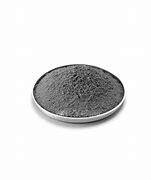
3d Printing 2024 Powder Metal Alloy Powder
Parameter of 3d Printing 2024 Powder Metal Alloy Powder

(Product Particle Size and Distribution of 3d Printing 2024 Power Metal Alloy Powder)

(Electron microscope image of 3d Printing 2024 Power Metal Alloy Powder)
Advantages of 3d Printing 2024 Powder Metal Alloy Powder
3D printing metal powder has good plasticity, high powder purity, low oxygen content, fine particle size, narrow particle size distribution, high sphericity, good fluidity and high bulk density.
3D printing is a revolutionary technology for rapid and precise manufacturing of complex structural parts, which are difficult to manufacture and have high manufacturing costs. The implementation of this technology is very different from traditional manufacturing in terms of metallurgical mechanism, microstructure, structural form, defect form, etc., and can solve some problems encountered by traditional manufacturing methods.
Application Areas of 3d Printing 2024 Powder Metal Alloy Powder
The 2024 metal alloy powder, when utilized in 3D printing processes, finds application across several industries due to its unique combination of strength, persistence, and design flexibility. Some key application areas include:
Aerospace: One of the primary industries benefiting from 3D printing with 2024 powder is aerospace. Components such as brackets, structural parts, and aerospace fittings require high strength-to-weight ratios and precise customization, making 3D printing an ideal manufacturing method.
Automotive: Lightweighting is a important focus in the automotive industry to improve fuel efficiency and vehicle performance. 2024 alloy parts produced through 3D printing can replace heavier traditional parts without compromising on strength, making them suitable for engine components, chassis parts, and interior structures.
Defense: Military applications often demand lightweight, high-strength components that can withstand harsh environments. 3D-printed 2024 alloy parts find use in armor systems, weapon components, and other critical military equipment.
Sports Equipment: The need for lightweight, high-performance materials in sports equipment aligns well with the properties of 2024 alloy. Bicycles, golf clubs, and various sporting gear can benefit from custom, lightweight parts made via 3D printing.
Tooling and Fixtures: Complex, custom tooling and fixtures with intricate geometries can be rapidly produced using 2024 powder, improving manufacturing efficiency and flexibility in industries like automotive and aerospace.
Rapid Prototyping: The ability to quickly produce functional prototypes with material properties similar to the final product makes 3D printing with 2024 alloy powder invaluable for product development in various sectors.
Medical Devices: While less common due to biocompatibility considerations, 2024 alloy could potentially be used in certain medical device applications where its mechanical properties are advantageous and direct contact with body tissue is limited or appropriately coated.
Space Exploration: In satellite construction and space vehicle components, every gram counts. The combination of strength and lightness offered by 2024 powder in 3D printing is beneficial for space applications where minimizing mass is crucial.
Renewable Energy: As the renewable energy sector seeks to optimize efficiency and reduce weight in wind turbines, solar panel mounting systems, and other infrastructure, 3D-printed 2024 alloy components can offer a competitive advantage.
Overall, 3D printing with 2024 powder metal alloy offers a compelling solution for applications that demand strength, lightweight, and complex geometry, making it a versatile material across numerous industries.
Packaging and Precautions
Packaging according to product characteristics, or customized according to customer needs. Wear protective equipment, goggles, rubber gloves, masks, etc. when using. If accidentally contact with mucous membranes, rinse with plenty of water and seek medical attention in time.

Packaging and Precautions
Company Profile
Luoyang Tongrun Nano Technology Co. Ltd. (TRUNNANO) is a trusted global chemical material supplier & manufacturer with over 12-year-experience in providing super high-quality chemicals and nanomaterials, including boride powder, nitride powder, graphite powder, sulfide powder, 3D printing powder, etc.
The company has a professional technical department and Quality Supervision Department, a well-equipped laboratory, and equipped with advanced testing equipment and after-sales customer service center.
If you are looking for high-quality 3d Printing 2024 Powder Metal Alloy Powder, please feel free to contact us or click on the needed products to send an inquiry.

Company Profile
Payment Term
T/T, Western Union, Paypal, Credit Card etc.
Shipment Term
By air, by sea, by express, as customers request.
FAQs of 3d Printing 2024 Powder Metal Alloy Powder
Q1. What is 2024 Aluminum Alloy Powder?
A1. 2024 aluminum alloy powder is a specialized metal powder formulated specifically for 3D printing (additive manufacturing) processes. It contains primarily aluminum with additional elements like copper, magnesium, and manganese, providing high strength and a good strength-to-weight ratio.
Q2. How does 3D printing with 2024 powder work?
A2. In 3D printing, 2024 aluminum alloy powder is spread in thin layers over a build platform. A laser or electron beam then selectively melts the powder particles, fusing them layer by layer to form a solid part based on a digital model.
Q3. Why is 2024 powder popular for 3D printing?
A3. Its popularity stems from its excellent mechanical properties, including high strength, good fatigue resistance, and lightweight. It is suitable for industries requiring strong, lightweight components, such as aerospace and automotive.
Q4. Can I print any shape with 2024 powder?
A4. Almost any geometric complexity can be achieved with 3D printing using 2024 powder, allowing for the creation of intricate designs, internal structures, and parts with undercuts that would be difficult or impossible to manufacture conventionally.
Q5. Is post-processing necessary for 3D-printed 2024 parts?
A5. Yes, typically, post-processing is required. This can include heat treatment to enhance mechanical properties, machining for tighter tolerances, and surface finishing for improved aesthetics and functionality.
Q6. Is 2024 powder cost-effective compared to traditional manufacturing?
A6. The cost-effectiveness depends on factors such as part complexity, volume, and required precision. For complex, low-volume, or highly customized parts, 3D printing can be more cost-efficient due to reduced material waste and tooling costs.
Q7. Are there any limitations to using 2024 powder in 3D printing?
A7. Yes, there are limitations. The process requires specialized and expensive equipment capable of handling high temperatures. Additionally, controlling thermal distortion during printing can be challenging, and post-processing steps are often necessary.
Q8. Is 2024 aluminum alloy powder safe to handle?
A8. Like all metal powders, precautions should be taken when handling 2024 powder to avoid inhalation, skin contact, or ignition sources. Proper personal protective equipment (PPE), ventilation, and storage practices are essential.
Q9. Can I recycle unused 2024 powder from 3D printing?
A9. Yes, unused or surplus 2024 powder can often be recycled, contributing to sustainability efforts. However, the recycling process must ensure that the powder’s properties remain consistent for reuse in future prints.
Q10. Are there alternatives to 2024 powder for 3D printing in similar applications?
A.Yes, other aluminum alloys like 6061, 7075, and Scalmalloy, as well as titanium and stainless steel powders, are also used in 3D printing for applications requiring high strength and durability. The choice depends on the specific requirements of the end-use part.