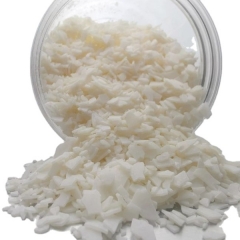


Overview of 2-Chloro-1,4-Phenylenediamine
It is a hygroscopic, easily sublimated solid with a melting point of 62-66°C, a boiling point of about 232°C, and a flash point of 127.9°C. The water solubility of 2-chloro-1,4-phenylenediamine is good, and it can be dissolved in 49.61g/L of water at 25℃. It is an important dye intermediate that can be used to prepare azo dyes, sulfide dyes, and acid dyes. It is also an intermediate in the production of the anti-cancer drug etoposide. In addition, 2-chloro-1,4-phenylenediamine can also be used as fuel. After processing and use, it can be converted into fuel.
It should be noted that 2-chloro-1,4-phenylenediamine is irritating, can cause skin, eyes, and respiratory tract and other adverse reactions, and should avoid long-term contact and inhalation of its dust.
Chemical Properties of 2-Chloro-1,4-Phenylenediamine
Melting point: 62-66 ° C
Flash point: 127.9C
Water solubility: 49.61g/Lat25 ℃
Vapor pressure: 0.274Pa at 25C
Refractive index: 1.5210 (estimate)
Acidity coefficient: 4.800.10 (Predicted)
Storage conditions: Keep in dark place, Inert atmosphere, Room temperature
Exterior: solid
Colour: Very Dark Green to Black
Application of 2-Chloro-1,4-Phenylenediamine
Pigment manufacturing: 2-chloro-1,4-phenylenediamine sulfate is an important intermediate in the production of pigments, which can be used to produce macromolecular brown SR, macromolecular red BR and other pigments.

Pharmaceutical intermediates: In some drug synthesis, 2-chloro-1,4-phenylenediamine sulfate serves as an intermediate, which helps to produce specific drugs or drug components.
Synthetic polymer monomer: 2-chloro-1,4-phenylenediamine sulfate can be used as a monomer for polymer synthesis and plays an important role in the production of polymers such as plastics and rubber.

Company Profile
Luoyang Tongrun Nano Technology Co. Ltd. (TRUNNANO) is a trusted global chemical material supplier & manufacturer with over 12-year-experience in providing super high-quality chemicals and nanomaterials, including boride powder, nitride powder, graphite powder, sulfide powder, 3D printing powder, etc.
The company has a professional technical department and Quality Supervision Department, a well-equipped laboratory, and equipped with advanced testing equipment and after-sales customer service center.
If you are looking for high-quality 2-Chloro-1,4-Phenylenediamine, please feel free to contact us or click on the needed products to send an inquiry.

Packing of 2-Chloro-1,4-Phenylenediamine
We have many different kinds of packing which depend on 2-Chloro-1,4-Phenylenediamine quantity.
2-Chloro-1,4-Phenylenediamine packing: 100g, 1kg, 10kg,etc.

Payment methods of 2-Chloro-1,4-Phenylenediamine
L/C, T/T, Western Union, Paypal, Credit Card etc.
Shipment of 2-Chloro-1,4-Phenylenediamine
By sea, by air or by express as soon as possible once payment is received.
FAQs of 2-chloro-1,4-phenylenediamine
Q: What are the main application areas of 2-chloro-1,4-phenylenediamine?
A:Used as intermediates of dyestuff, synthesise many kinds of azo dyestuff and disperse dyestuff, widely used in textile, leather and paper dyeing. Used as intermediate of drug synthesis, involved in the synthesis of some antibacterial drugs, anti-inflammatory drugs and anti-cancer drugs. Used as pesticide intermediates, synthesising herbicides, insecticides and fungicides. Used as chemical reagent in laboratory, used in organic synthesis and analytical chemistry. Used as modifier of polymers to improve the performance of polymers, such as improving heat resistance, corrosion resistance and mechanical strength.
Q:What is the method of preparation of 2-chloro-1,4-phenylenediamine?
A:Ammonolysis:Reduction of 2-chloro-1,4-dinitrobenzene to 2-chloro-1,4-phenylenediamine in the presence of a reducing agent (e.g. iron powder, tin powder, etc.) and under acidic conditions. Diazotisation-reduction method: 2-chloro-1,4-phenylenediamine is first diazotised to produce a diazonium salt, and then 2-chloro-1,4-phenylenediamine is produced by reduction reaction. The specific steps include: reacting 2-chloro-1,4-phenylenediamine with sodium nitrite and hydrochloric acid to form the diazonium salt, and then reducing to 2-chloro-1,4-phenylenediamine under the action of a reducing agent (e.g., sodium sulfite). Direct reduction: 2-chloro-1,4-dinitrobenzene is reduced directly to 2-chloro-1,4-phenylenediamine in the presence of a catalyst
Q:How safe and environmentally friendly is 2-chloro-1,4-phenylenediamine?
A:2-Chloro-1,4-phenylenediamine is irritating and corrosive and may cause irritation or burns in contact with skin and eyes. Protective gloves and goggles should be worn when using. Inhalation of 2-chloro-1,4-phenylenediamine dust or vapour may cause respiratory discomfort and, in severe cases, respiratory distress. Good ventilation should be maintained during operation. Accidental ingestion of 2-chloro-1,4-phenylenediamine may cause gastrointestinal irritation or poisoning. If accidentally swallowed, seek medical attention immediately. 2-Chloro-1,4-phenylenediamine and its derivatives may affect aquatic ecosystems and soils when discharged into the environment. Therefore, waste water after use should be properly treated to ensure compliance with environmental standards before discharge. Waste solid or solution of 2-chloro-1,4-phenylenediamine should be disposed of in accordance with hazardous waste treatment regulations to avoid pollution of the environment.
Q:What is the future of 2-chloro-1,4-phenylenediamine?
A:Developing new dyes and pigments with higher colour fastness and richer colours to meet the needs of the high-end market. Research and development of new types of drugs based on 2-chloro-1,4-phenylenediamine to improve the efficacy and safety of drugs, especially for the treatment of cancer, inflammation and other diseases. Develop more environmentally friendly and less toxic pesticides to reduce the impact on the environment and improve crop yield and quality. Broaden the application of 2-chloro-1,4-phenylenediamine in the field of functional materials by giving it more functions, such as electrical conductivity and magnetism, through modification and copolymerisation reactions. Explore the application of 2-chloro-1,4-phenylenediamine in biomedical fields, such as bioactive materials, drug slow-release materials, etc., to provide new solutions for medical health.