
By trunnano | 14 August 2026 | 0 Comments
What is boron carbide?
What is boron carbide?
The boron carbide chemical formula is B4C, which is a compound known for its hardness. It is the third hardest compound, made of boron and carbon. It doesn't exist naturally, but it can be synthesized. 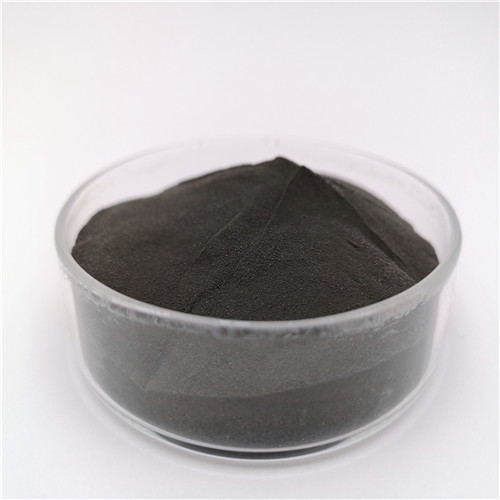
boron carbide
Boron carbide properties
Boron carbide is a kind of hard ceramic. Its Vickers hardness is more than 30GPa. The only materials harder than boron carbide are diamond and boron nitride. It usually has a dark gray appearance and sometimes looks black. Commonly known as "black diamond".
The exceptional hardness of boron carbide arises from its unique crystal structure and strong covalent bonding between boron and carbon atoms. The material's Vickers hardness typically ranges from 30 to 40 GPa, making it comparable to cubic boron nitride and only slightly less than diamond. This hardness, combined with its relatively low density (approximately 2.52 g/cm³), gives boron carbide an exceptional specific hardness that surpasses that of diamond. The material's hardness is anisotropic, meaning it varies with crystallographic direction, which is an important consideration in certain applications. The dark gray to black appearance of boron carbide is due to its electronic structure, which absorbs light across a broad spectrum. The material's high melting point (3036 K) and thermal stability make it suitable for high-temperature applications where other materials would soften or decompose. The thermal conductivity of boron carbide is moderate, approximately 30-40 W/m·K, which is sufficient for many thermal management applications. The material's coefficient of thermal expansion is relatively low, approximately 4.5 × 10⁻⁶/K, providing good thermal shock resistance. The combination of high hardness, low density, and thermal stability makes boron carbide an ideal material for lightweight armor applications where both protection and weight reduction are critical.
At room temperature, this compound is usually a solid. It melts at 3036 K and boils at 3770 K. Boron carbide has rhombohedral crystal structure. In addition, it is insoluble in water.
The boron carbide density is about 2.52g/cm3. In addition, boron carbide molar mass is about 55.3 g/mol. The electrical properties of boron carbide are partly similar to those of insulators and partly similar to conductors. Therefore, it is described as a semiconductor.
Boron carbide is chemically inert. It rarely reacts spontaneously with chemicals. Boron carbide also has a high cross section and can absorb neutrons.
Boron carbide ceramic bandgap is 2.09eV. Its elastic modulus and fracture toughness are close to the range of diamond. The elastic modulus of boron carbide is about 480 GPa and its fracture toughness is 4 MPa.m1/2. 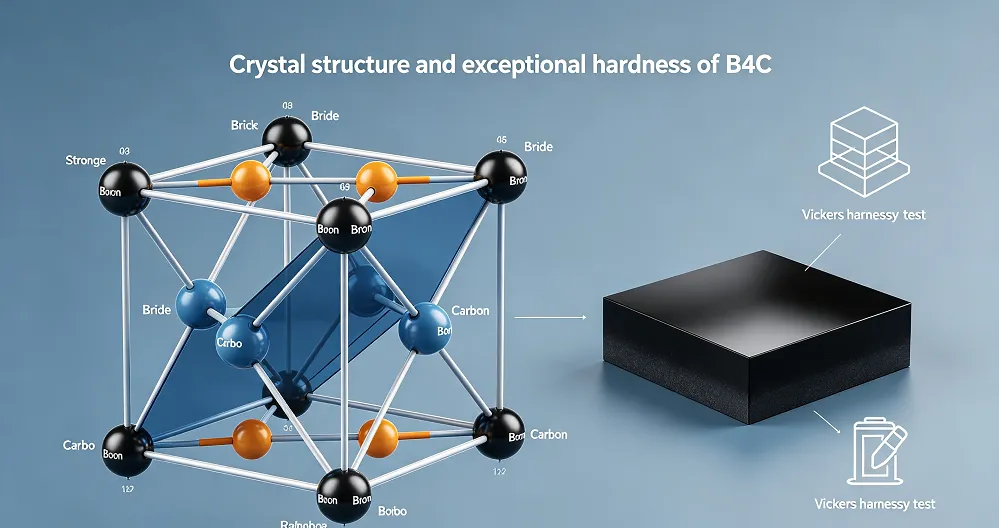
Crystal structure and exceptional hardness of B₄C
What is boron carbide used for?
Boron carbide filament
Because boron carbide has the ability to absorb neutrons. Boron carbide filaments are less harmful than filaments made of other materials, such as cadmium.
Boron carbide filaments and fibers are used in specialized applications where neutron absorption is required. The use of boron carbide in filament form offers advantages in terms of flexibility and ease of integration into composite materials. Boron carbide filaments are used in nuclear reactor control systems, neutron shielding materials, and in neutron detection systems. The filaments can be woven into fabrics or incorporated into polymer matrices to create flexible neutron shielding materials for use in medical, industrial, and defense applications. The ability to create neutron-absorbing materials that are both flexible and lightweight has expanded the application of boron carbide in areas where traditional rigid shielding materials are impractical. The development of boron carbide-based neutron shielding materials has been driven by the growing need for radiation protection in medical facilities, nuclear power plants, and space exploration. The cost-effectiveness of boron carbide compared to alternative neutron absorbers, such as hafnium or rare earth elements, further enhances its attractiveness for large-scale applications.
Petrol
One of the uses of boron carbide independent of hardness is as a fuel. Boron carbide is usually used as a high-energy fuel in ramjet.
The use of boron carbide as a fuel takes advantage of its high energy content and combustion characteristics. Boron carbide reacts with oxygen at high temperatures to release significant amounts of energy, making it valuable as a fuel additive for ramjet and scramjet engines. The combustion of boron carbide produces boron oxides, which contribute to the overall energy output of the propulsion system. The high energy density of boron carbide, combined with its stability at ambient conditions, makes it an attractive fuel for hypersonic propulsion applications where high energy density and rapid combustion are critical. The use of boron carbide as a fuel is being explored in advanced propulsion systems for missiles, spacecraft, and high-speed aircraft. The combustion characteristics of boron carbide can be optimized through the addition of other fuels or oxidizers, and the development of new formulations and processing methods continues to improve the performance of boron carbide-based fuels. The potential for using boron carbide in combined-cycle engines and as an additive for conventional jet fuels is also being investigated.
Metal matrix composites
Ceramics are needed in the second stage of manufacturing metal matrix composites. Boron carbide is usually a ceramic suitable for this phase.
Boron carbide is widely used as a reinforcing phase in metal matrix composites due to its exceptional hardness, high elastic modulus, and low density. The incorporation of boron carbide particles into metal matrices, such as aluminum, magnesium, and titanium, significantly improves the mechanical properties of the resulting composite materials. The addition of boron carbide particles to aluminum alloys, for example, can increase the hardness, wear resistance, and strength of the material while maintaining its lightweight nature. The manufacturing of boron carbide metal matrix composites involves various processing techniques, including powder metallurgy, liquid infiltration, and stir casting. The interface between the boron carbide particles and the metal matrix plays a crucial role in determining the properties of the composite, and surface treatments of the boron carbide particles are often used to improve bonding. Boron carbide-aluminum composites are used in aerospace, automotive, and defense applications, where high strength and light weight are critical. The development of new metal matrix composites with optimized properties continues to expand the application of boron carbide in structural and functional applications.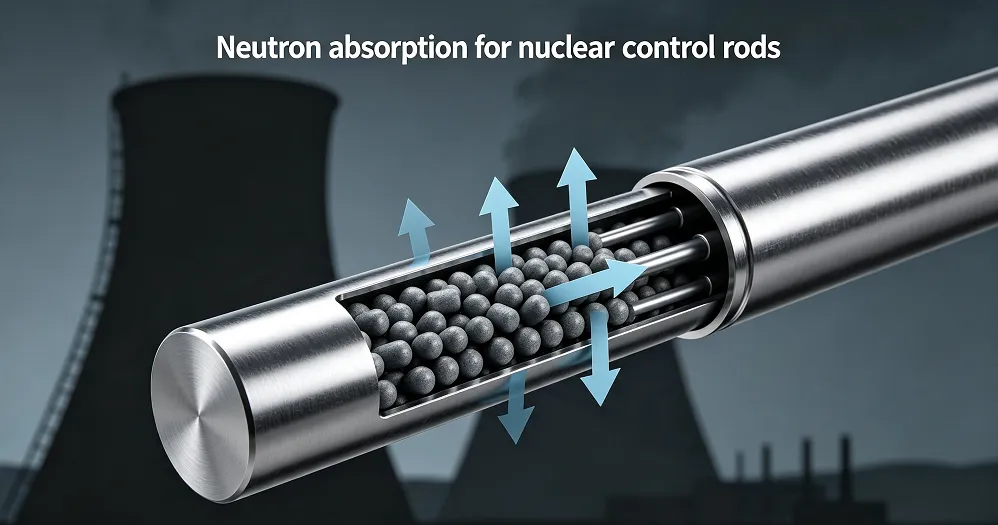
Neutron absorption for nuclear control rods
Coating material
Boron carbide sputtering targets and boron carbide evaporation materials are used in deposition processes, including semiconductor deposition, chemical vapor deposition (CVD) and physical vapor deposition (PVD). This is because it is chemically inert and hard. Its chemical inertia ensures that it is less likely to be corroded. On the other hand, its hardness ensures that it protects the material from wear.
Boron carbide coatings are applied to various substrates to enhance their wear resistance, chemical stability, and mechanical performance. The coatings can be deposited using techniques such as sputtering, chemical vapor deposition (CVD), and physical vapor deposition (PVD). The high hardness of boron carbide coatings provides excellent protection against abrasive wear, while the chemical inertness ensures resistance to corrosion and oxidation. Boron carbide coatings are used in cutting tools, dies, and bearings to extend their service life and improve their performance. The coatings are also applied to components in the chemical and semiconductor industries to protect them from aggressive chemicals and high temperatures. The development of boron carbide-based coatings with improved adhesion and reduced residual stress continues to be an active area of research. The ability to produce boron carbide coatings with controlled thickness and composition has enabled their use in advanced applications, such as optical coatings, where the high refractive index of boron carbide can be exploited. The use of boron carbide coatings in defense applications, such as protective coatings for military equipment, is also being explored.
Padlock
High security padlocks are usually made of boron carbide. This is because the padlock is difficult to break because of the hardness of boron carbide.
The extreme hardness of boron carbide makes it an ideal material for high-security applications requiring resistance to cutting, drilling, and other forms of mechanical attack. The use of boron carbide in padlocks and other security devices provides a level of protection that is difficult to achieve with conventional steel materials. The hardness of boron carbide ensures that the lock mechanism and shackle are resistant to sawing, drilling, and other forms of physical attack. The high hardness of boron carbide also makes it difficult to shatter or deform, providing reliable security for valuable assets and facilities. The use of boron carbide in security applications extends beyond padlocks to include safes, vaults, and security doors. The cost-effectiveness of boron carbide compared to other superhard materials, such as diamond or cubic boron nitride, makes it a practical choice for high-security applications.
Control rod
Boron carbide has a high cross section that enables it to absorb neutrons. Therefore, boron carbide is commonly used as control rods in nuclear reactors.
The use of boron carbide as a neutron absorber in nuclear reactors is one of its most important applications. Boron carbide control rods are used to regulate the fission process in nuclear reactors by absorbing excess neutrons and controlling the reaction rate. The high neutron absorption cross-section of the boron-10 isotope makes boron carbide an effective neutron absorber. Boron carbide control rods are typically used in fast breeder reactors, high-temperature gas-cooled reactors, and research reactors. The control rods are composed of boron carbide pellets or powders encased in stainless steel or other cladding materials. The choice of boron carbide for control rods is based on its high neutron absorption capability, high melting point, and resistance to radiation damage. The material's chemical stability and resistance to corrosion in the reactor environment further enhance its suitability for this application. The use of boron carbide in nuclear applications continues to evolve, with research focusing on the development of new compositions and processing methods to improve the performance and reliability of boron carbide-based control rods. The material's ability to withstand the harsh conditions of the reactor core, including high temperatures and neutron flux, makes it an essential component of nuclear power generation.
 Bulletproof vests and tank armor
Because of its extraordinary hardness, boron carbide is commonly used to make bulletproof vests and tank armor. Bulletproof vests and tank armor made of boron carbide are impenetrable to bullets and other sharp objects.
Boron carbide armor is widely used in military and law enforcement applications due to its exceptional hardness and lightweight nature. The material's high specific hardness (hardness-to-weight ratio) makes it superior to other armor materials, including steel and aluminum oxide ceramics. Boron carbide armor plates are used in body armor, vehicle armor, and helicopter seat armor to provide protection against ballistic threats. The armor is typically manufactured by hot pressing or sintering boron carbide powder into dense plates, which are then shaped and installed into armor systems. The high hardness of boron carbide ensures that the armor can effectively stop bullets and other projectiles by breaking them up upon impact. The lightweight nature of boron carbide reduces the burden on the wearer or vehicle, improving mobility and performance. The material's ability to withstand multiple impacts without catastrophic failure is also an important factor in its use in armor applications. The development of boron carbide-based armor with improved impact resistance and reduced weight continues to be an active area of research.
Abrasive material
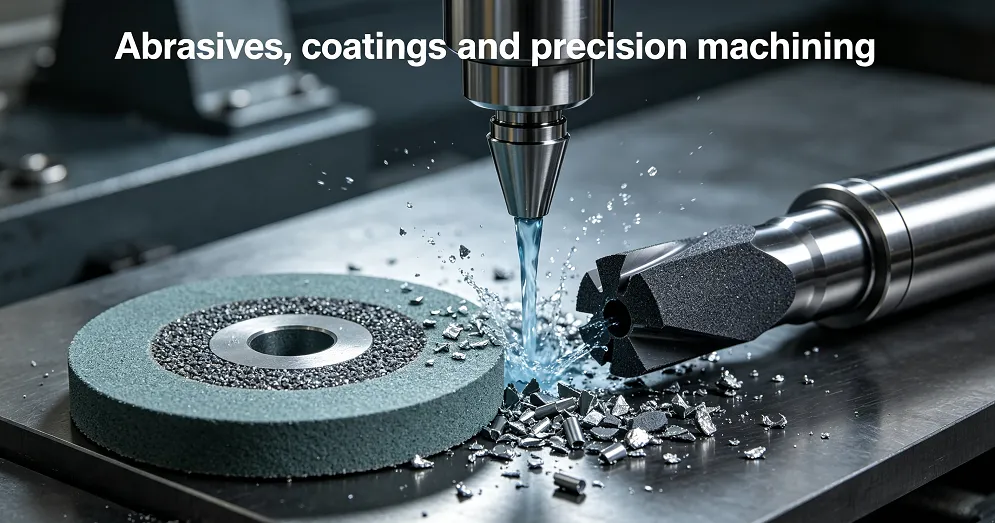
Boron carbide is used as an abrasive because of its hardness. It is well known that harder abrasives such as boron carbide are more effective. Boron carbide is usually crushed into smaller sizes to be used as abrasives. Boron carbide is used in cutting tools and grinders.
Boron carbide is one of the most effective abrasive materials available, second only to diamond and cubic boron nitride in hardness. The material's extreme hardness, combined with its chemical stability and thermal resistance, makes it suitable for grinding and polishing applications where other abrasives would fail. Boron carbide abrasives are used in the processing of hard materials, including cemented carbide, ceramics, glass, and stones. The abrasives are typically produced by crushing boron carbide into various particle sizes, which are then used in grinding wheels, lapping compounds, and polishing pastes. The effectiveness of boron carbide abrasives is enhanced by their sharp edges and irregular shapes, which provide aggressive cutting action. The use of boron carbide in water jet cutting applications is also common, where the abrasive particles are mixed with high-pressure water to cut hard materials. The development of boron carbide abrasives with controlled particle size and shape has improved their performance in precision grinding and polishing applications. The environmental impact of boron carbide abrasives is relatively low compared to some other hard materials, making them an attractive choice for sustainable manufacturing processes. 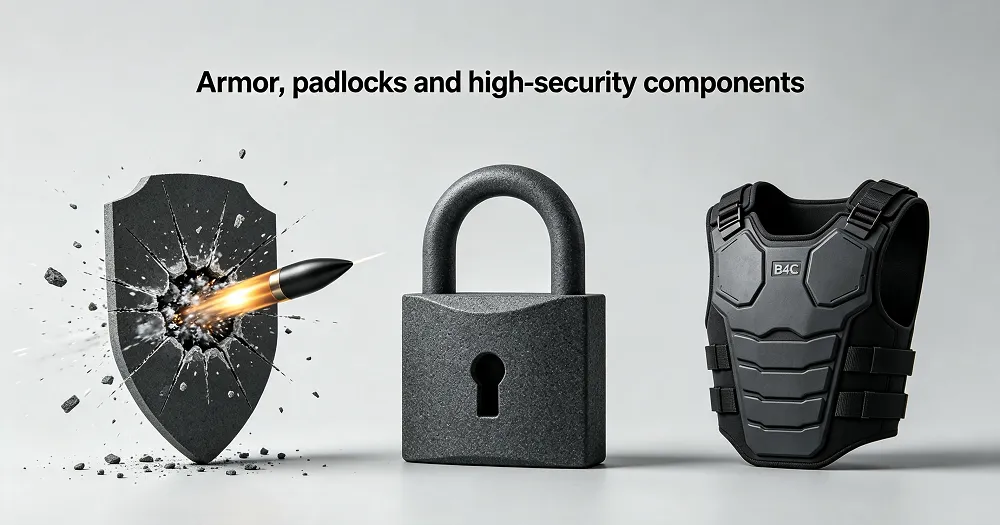
Armor, padlocks and high-security components
Can boron carbide cut diamond?
Because of its high hardness, boron carbide powder is used as an abrasive for polishing and grinding applications, as well as as a loose abrasive in cutting applications, such as water jet cutting. It can also be used for dressing diamond tools.
While boron carbide cannot cut diamond in the same way that a saw cuts wood, it is used in processes that shape and finish diamond materials. The hardness of boron carbide is sufficient to abrade diamond surfaces, making it useful for polishing diamond and for dressing diamond grinding wheels. The use of boron carbide as a loose abrasive in diamond cutting applications is based on its ability to wear away diamond surfaces through mechanical abrasion. The effectiveness of boron carbide in diamond processing is attributed to its high hardness and the availability of large quantities of high-quality abrasive materials. The use of boron carbide in diamond tool dressing is a common practice, where the abrasive is used to expose fresh diamond particles on the surface of grinding wheels. The cost-effectiveness of boron carbide compared to diamond abrasive materials makes it an attractive choice for diamond processing applications. The development of new boron carbide-based abrasives with improved performance continues to be an area of active research.
Boron carbide B4C Price
The price is influenced by many factors including the supply and demand in the market, industry trends, economic activity, market sentiment, and unexpected events.
If you are looking for the latest boron carbide price, you can send us your inquiry for a quote. (sales3@nanotrun.com)
Boron carbide Supplier
Luoyang Tongrun Nano Technology Co. Ltd. (TRUNNANO) is a trusted boron carbide manufacturer and boron carbide supplier with over 12-year-experience. We ship our goods all over the world.
If you are looking for high-quality B4C powder, please feel free to contact us and send an inquiry. (sales3@nanotrun.com)
The boron carbide chemical formula is B4C, which is a compound known for its hardness. It is the third hardest compound, made of boron and carbon. It doesn't exist naturally, but it can be synthesized.
boron carbide
Boron carbide properties
Boron carbide is a kind of hard ceramic. Its Vickers hardness is more than 30GPa. The only materials harder than boron carbide are diamond and boron nitride. It usually has a dark gray appearance and sometimes looks black. Commonly known as "black diamond".
The exceptional hardness of boron carbide arises from its unique crystal structure and strong covalent bonding between boron and carbon atoms. The material's Vickers hardness typically ranges from 30 to 40 GPa, making it comparable to cubic boron nitride and only slightly less than diamond. This hardness, combined with its relatively low density (approximately 2.52 g/cm³), gives boron carbide an exceptional specific hardness that surpasses that of diamond. The material's hardness is anisotropic, meaning it varies with crystallographic direction, which is an important consideration in certain applications. The dark gray to black appearance of boron carbide is due to its electronic structure, which absorbs light across a broad spectrum. The material's high melting point (3036 K) and thermal stability make it suitable for high-temperature applications where other materials would soften or decompose. The thermal conductivity of boron carbide is moderate, approximately 30-40 W/m·K, which is sufficient for many thermal management applications. The material's coefficient of thermal expansion is relatively low, approximately 4.5 × 10⁻⁶/K, providing good thermal shock resistance. The combination of high hardness, low density, and thermal stability makes boron carbide an ideal material for lightweight armor applications where both protection and weight reduction are critical.
At room temperature, this compound is usually a solid. It melts at 3036 K and boils at 3770 K. Boron carbide has rhombohedral crystal structure. In addition, it is insoluble in water.
The boron carbide density is about 2.52g/cm3. In addition, boron carbide molar mass is about 55.3 g/mol. The electrical properties of boron carbide are partly similar to those of insulators and partly similar to conductors. Therefore, it is described as a semiconductor.
Boron carbide is chemically inert. It rarely reacts spontaneously with chemicals. Boron carbide also has a high cross section and can absorb neutrons.
Boron carbide ceramic bandgap is 2.09eV. Its elastic modulus and fracture toughness are close to the range of diamond. The elastic modulus of boron carbide is about 480 GPa and its fracture toughness is 4 MPa.m1/2.
Crystal structure and exceptional hardness of B₄C
What is boron carbide used for?
Boron carbide filament
Because boron carbide has the ability to absorb neutrons. Boron carbide filaments are less harmful than filaments made of other materials, such as cadmium.
Boron carbide filaments and fibers are used in specialized applications where neutron absorption is required. The use of boron carbide in filament form offers advantages in terms of flexibility and ease of integration into composite materials. Boron carbide filaments are used in nuclear reactor control systems, neutron shielding materials, and in neutron detection systems. The filaments can be woven into fabrics or incorporated into polymer matrices to create flexible neutron shielding materials for use in medical, industrial, and defense applications. The ability to create neutron-absorbing materials that are both flexible and lightweight has expanded the application of boron carbide in areas where traditional rigid shielding materials are impractical. The development of boron carbide-based neutron shielding materials has been driven by the growing need for radiation protection in medical facilities, nuclear power plants, and space exploration. The cost-effectiveness of boron carbide compared to alternative neutron absorbers, such as hafnium or rare earth elements, further enhances its attractiveness for large-scale applications.
Petrol
One of the uses of boron carbide independent of hardness is as a fuel. Boron carbide is usually used as a high-energy fuel in ramjet.
The use of boron carbide as a fuel takes advantage of its high energy content and combustion characteristics. Boron carbide reacts with oxygen at high temperatures to release significant amounts of energy, making it valuable as a fuel additive for ramjet and scramjet engines. The combustion of boron carbide produces boron oxides, which contribute to the overall energy output of the propulsion system. The high energy density of boron carbide, combined with its stability at ambient conditions, makes it an attractive fuel for hypersonic propulsion applications where high energy density and rapid combustion are critical. The use of boron carbide as a fuel is being explored in advanced propulsion systems for missiles, spacecraft, and high-speed aircraft. The combustion characteristics of boron carbide can be optimized through the addition of other fuels or oxidizers, and the development of new formulations and processing methods continues to improve the performance of boron carbide-based fuels. The potential for using boron carbide in combined-cycle engines and as an additive for conventional jet fuels is also being investigated.
Metal matrix composites
Ceramics are needed in the second stage of manufacturing metal matrix composites. Boron carbide is usually a ceramic suitable for this phase.
Boron carbide is widely used as a reinforcing phase in metal matrix composites due to its exceptional hardness, high elastic modulus, and low density. The incorporation of boron carbide particles into metal matrices, such as aluminum, magnesium, and titanium, significantly improves the mechanical properties of the resulting composite materials. The addition of boron carbide particles to aluminum alloys, for example, can increase the hardness, wear resistance, and strength of the material while maintaining its lightweight nature. The manufacturing of boron carbide metal matrix composites involves various processing techniques, including powder metallurgy, liquid infiltration, and stir casting. The interface between the boron carbide particles and the metal matrix plays a crucial role in determining the properties of the composite, and surface treatments of the boron carbide particles are often used to improve bonding. Boron carbide-aluminum composites are used in aerospace, automotive, and defense applications, where high strength and light weight are critical. The development of new metal matrix composites with optimized properties continues to expand the application of boron carbide in structural and functional applications.
Neutron absorption for nuclear control rods
Boron carbide sputtering targets and boron carbide evaporation materials are used in deposition processes, including semiconductor deposition, chemical vapor deposition (CVD) and physical vapor deposition (PVD). This is because it is chemically inert and hard. Its chemical inertia ensures that it is less likely to be corroded. On the other hand, its hardness ensures that it protects the material from wear.
Boron carbide coatings are applied to various substrates to enhance their wear resistance, chemical stability, and mechanical performance. The coatings can be deposited using techniques such as sputtering, chemical vapor deposition (CVD), and physical vapor deposition (PVD). The high hardness of boron carbide coatings provides excellent protection against abrasive wear, while the chemical inertness ensures resistance to corrosion and oxidation. Boron carbide coatings are used in cutting tools, dies, and bearings to extend their service life and improve their performance. The coatings are also applied to components in the chemical and semiconductor industries to protect them from aggressive chemicals and high temperatures. The development of boron carbide-based coatings with improved adhesion and reduced residual stress continues to be an active area of research. The ability to produce boron carbide coatings with controlled thickness and composition has enabled their use in advanced applications, such as optical coatings, where the high refractive index of boron carbide can be exploited. The use of boron carbide coatings in defense applications, such as protective coatings for military equipment, is also being explored.
Padlock
High security padlocks are usually made of boron carbide. This is because the padlock is difficult to break because of the hardness of boron carbide.
The extreme hardness of boron carbide makes it an ideal material for high-security applications requiring resistance to cutting, drilling, and other forms of mechanical attack. The use of boron carbide in padlocks and other security devices provides a level of protection that is difficult to achieve with conventional steel materials. The hardness of boron carbide ensures that the lock mechanism and shackle are resistant to sawing, drilling, and other forms of physical attack. The high hardness of boron carbide also makes it difficult to shatter or deform, providing reliable security for valuable assets and facilities. The use of boron carbide in security applications extends beyond padlocks to include safes, vaults, and security doors. The cost-effectiveness of boron carbide compared to other superhard materials, such as diamond or cubic boron nitride, makes it a practical choice for high-security applications.
Control rod
Boron carbide has a high cross section that enables it to absorb neutrons. Therefore, boron carbide is commonly used as control rods in nuclear reactors.
The use of boron carbide as a neutron absorber in nuclear reactors is one of its most important applications. Boron carbide control rods are used to regulate the fission process in nuclear reactors by absorbing excess neutrons and controlling the reaction rate. The high neutron absorption cross-section of the boron-10 isotope makes boron carbide an effective neutron absorber. Boron carbide control rods are typically used in fast breeder reactors, high-temperature gas-cooled reactors, and research reactors. The control rods are composed of boron carbide pellets or powders encased in stainless steel or other cladding materials. The choice of boron carbide for control rods is based on its high neutron absorption capability, high melting point, and resistance to radiation damage. The material's chemical stability and resistance to corrosion in the reactor environment further enhance its suitability for this application. The use of boron carbide in nuclear applications continues to evolve, with research focusing on the development of new compositions and processing methods to improve the performance and reliability of boron carbide-based control rods. The material's ability to withstand the harsh conditions of the reactor core, including high temperatures and neutron flux, makes it an essential component of nuclear power generation.
Abrasives, coatings and precision machining
Because of its extraordinary hardness, boron carbide is commonly used to make bulletproof vests and tank armor. Bulletproof vests and tank armor made of boron carbide are impenetrable to bullets and other sharp objects.
Boron carbide armor is widely used in military and law enforcement applications due to its exceptional hardness and lightweight nature. The material's high specific hardness (hardness-to-weight ratio) makes it superior to other armor materials, including steel and aluminum oxide ceramics. Boron carbide armor plates are used in body armor, vehicle armor, and helicopter seat armor to provide protection against ballistic threats. The armor is typically manufactured by hot pressing or sintering boron carbide powder into dense plates, which are then shaped and installed into armor systems. The high hardness of boron carbide ensures that the armor can effectively stop bullets and other projectiles by breaking them up upon impact. The lightweight nature of boron carbide reduces the burden on the wearer or vehicle, improving mobility and performance. The material's ability to withstand multiple impacts without catastrophic failure is also an important factor in its use in armor applications. The development of boron carbide-based armor with improved impact resistance and reduced weight continues to be an active area of research.
Abrasive material
Boron carbide is used as an abrasive because of its hardness. It is well known that harder abrasives such as boron carbide are more effective. Boron carbide is usually crushed into smaller sizes to be used as abrasives. Boron carbide is used in cutting tools and grinders.
Boron carbide is one of the most effective abrasive materials available, second only to diamond and cubic boron nitride in hardness. The material's extreme hardness, combined with its chemical stability and thermal resistance, makes it suitable for grinding and polishing applications where other abrasives would fail. Boron carbide abrasives are used in the processing of hard materials, including cemented carbide, ceramics, glass, and stones. The abrasives are typically produced by crushing boron carbide into various particle sizes, which are then used in grinding wheels, lapping compounds, and polishing pastes. The effectiveness of boron carbide abrasives is enhanced by their sharp edges and irregular shapes, which provide aggressive cutting action. The use of boron carbide in water jet cutting applications is also common, where the abrasive particles are mixed with high-pressure water to cut hard materials. The development of boron carbide abrasives with controlled particle size and shape has improved their performance in precision grinding and polishing applications. The environmental impact of boron carbide abrasives is relatively low compared to some other hard materials, making them an attractive choice for sustainable manufacturing processes.
Armor, padlocks and high-security components
Because of its high hardness, boron carbide powder is used as an abrasive for polishing and grinding applications, as well as as a loose abrasive in cutting applications, such as water jet cutting. It can also be used for dressing diamond tools.
While boron carbide cannot cut diamond in the same way that a saw cuts wood, it is used in processes that shape and finish diamond materials. The hardness of boron carbide is sufficient to abrade diamond surfaces, making it useful for polishing diamond and for dressing diamond grinding wheels. The use of boron carbide as a loose abrasive in diamond cutting applications is based on its ability to wear away diamond surfaces through mechanical abrasion. The effectiveness of boron carbide in diamond processing is attributed to its high hardness and the availability of large quantities of high-quality abrasive materials. The use of boron carbide in diamond tool dressing is a common practice, where the abrasive is used to expose fresh diamond particles on the surface of grinding wheels. The cost-effectiveness of boron carbide compared to diamond abrasive materials makes it an attractive choice for diamond processing applications. The development of new boron carbide-based abrasives with improved performance continues to be an area of active research.
Boron carbide B4C Price
The price is influenced by many factors including the supply and demand in the market, industry trends, economic activity, market sentiment, and unexpected events.
If you are looking for the latest boron carbide price, you can send us your inquiry for a quote. (sales3@nanotrun.com)
Boron carbide Supplier
Luoyang Tongrun Nano Technology Co. Ltd. (TRUNNANO) is a trusted boron carbide manufacturer and boron carbide supplier with over 12-year-experience. We ship our goods all over the world.
If you are looking for high-quality B4C powder, please feel free to contact us and send an inquiry. (sales3@nanotrun.com)
Leave a Reply
Your email address will not be published.Required fields are marked. *