Chromium oxide is an inorganic compound with significant application value, and its chemical formula is Cr2O3. Due to its special physical and chemical characteristics, such as high hardness, high melting point, and good chemical stability, chromium oxide has been widely used in many fields.
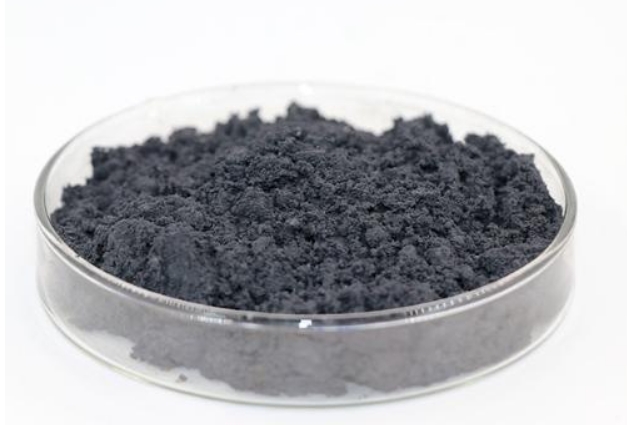 Chromium oxide
| Name |
Fused Cr2O3 |
EINECS NO. |
215-160-9 |
CAS NO. |
1308-38-9 |
| Molecular formula |
Cr2O3 |
Appearance |
Black metal Granules or powder |
| Item |
TR-E |
TR-H |
| Cr2O3 |
≥99% |
95-60% |
| Al2O3 |
---- |
5-40% |
| Fe2O3 |
≤0.3% |
≤0.3% |
| SiO2 |
≤0.2% |
≤0.3% |
| Density(g/cm3) |
≥5.0 |
4.4-4.8 |
| Sieve residue(45μm) |
≤0.5% |
≤0.5% |
≤0.2% |
| Particle size |
200mesh, 0-1mm, 2-3mm, 3-4mm, 4-5mm, or customized as needed |
The technical data presented above highlights the different grades of chromium oxide available for various applications. TR-E grade represents high-purity chromium oxide with a Cr₂O₃ content exceeding 99%, making it suitable for demanding applications where purity is critical, such as in electronic components and high-performance coatings. TR-H grade offers a more cost-effective option with a wider range of Cr₂O₃ content (95-60%) and the addition of Al₂O₃ (5-40%), which can modify the properties of the material for specific applications. The lower impurity levels of Fe₂O₃ and SiO₂ in both grades ensure consistent product quality and performance. The density and particle size specifications allow for customization based on the requirements of different applications, from fine powders for coatings and pigments to coarser granules for abrasive and refractory applications. The availability of various particle sizes, from 200 mesh to 4-5mm, provides flexibility for different processing and application needs.
1. Physical and chemical properties of chromium oxide
Chromium oxide is a black solid with metallic lustre and a hexagonal crystal structure. Its density is 5.21g/cm3, and its melting point is 2700 ℃. Chromium oxide has a high hardness, comparable to diamond, and has good chemical stability, making it less susceptible to acid and alkali attack. In addition, chromium oxide also has excellent conductivity and thermal stability, making it widely used in fields such as electronics and aerospace.
2. Preparation method of chromium oxide
Oxidation method
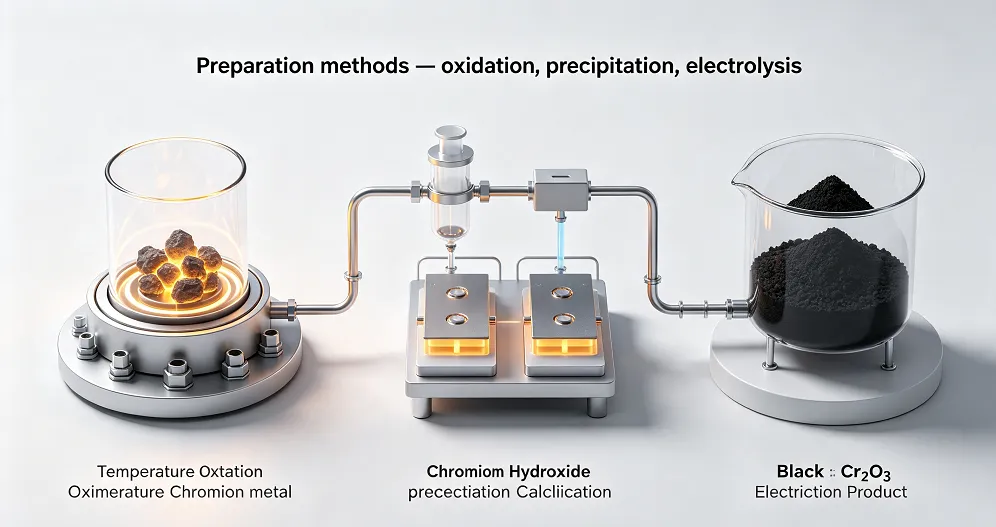
The oxidation method is one of the primary methods for preparing chromium oxide. This method involves reacting metal chromium or ferrochrome with oxygen at high temperatures to produce chromium oxide. The reaction equation is 2Cr+O2=2CrO3. The advantages of this method are a simple process and low cost, but it is easy to mix impurities and affect product quality. To improve product quality, techniques such as electrolysis or chemical precipitation can be used for purification.
The oxidation method, while straightforward, requires careful control of reaction conditions to achieve the desired product quality. The reaction temperature must be sufficiently high to ensure complete oxidation but not so high that the product decomposes or reacts with the container. The use of ferrochrome as a starting material can introduce impurities such as iron and silicon into the product, which may affect its properties and performance. The purification of the product through electrolysis or chemical precipitation can remove these impurities, but these additional steps increase the cost and complexity of the process. The oxidation method is particularly suitable for producing chromium oxide for applications where high purity is not critical, such as in certain pigment and refractory applications. The development of more selective oxidation methods, such as the use of catalysts or controlled atmosphere oxidation, is an area of ongoing research. The handling of high-temperature processes and the management of exhaust gases containing chromium compounds require careful consideration of environmental and safety regulations. Despite these challenges, the oxidation method remains a widely used industrial process due to its simplicity and cost-effectiveness. The integration of advanced process control and automation technologies has improved the consistency and quality of the product obtained by this method.
Preparation methods — oxidation, precipitation, electrolysis
The chromium hydroxide method is another method for preparing chromium oxide. This method involves reacting a chromate solution with an alkaline solution to form chromium hydroxide precipitate, which is then subjected to high-temperature calcination to obtain chromium oxide. The reaction equation is CrO3+2NaOH=Na2CrO4+NaOH. The advantages of this method are high product quality and low cost, but it requires the use of a large amount of alkaline solution, which can easily cause environmental pollution. To reduce environmental pollution, the method of recycling alkali solution or using other more environmentally friendly preparation methods can be used.
The chromium hydroxide method, also known as the precipitation method, offers better control over product purity compared to the oxidation method. The precipitation step allows for the separation of chromium hydroxide from soluble impurities, while the calcination step converts the hydroxide to the oxide with the release of water. The calcination temperature and time must be carefully controlled to achieve complete conversion and to control the particle size and morphology of the product. The use of large amounts of alkaline solution, typically sodium hydroxide or ammonium hydroxide, creates a waste stream that must be managed to prevent environmental pollution. The recycling of the alkali solution and the recovery of valuable by-products can improve the economics and sustainability of the process. The precipitation conditions, including pH, temperature, and the concentration of reactants, significantly influence the particle size and crystallinity of the product. The development of more environmentally friendly precipitation methods, such as the use of alternative alkalis or the incorporation of waste treatment processes, is an area of active research. The chromium hydroxide method is particularly suitable for producing high-purity chromium oxide for applications such as electronic materials and high-performance coatings. The product obtained by this method typically has a finer particle size and more uniform morphology compared to that obtained by the oxidation method.
Electrolytic method
Electrolysis is one of the methods for preparing high-purity chromium oxide. This method uses metal chromium or ferrochrome as the anode, graphite as the cathode, and the electrolyte as an alkaline or chromate solution. When energized, the metal chromium on the anode is oxidized to trivalent chromium ions, which are then reduced to chromium oxide on the cathode. The advantages of this method are high product purity and low cost, but it requires a large amount of electricity and is therefore not suitable for large-scale production. To improve production efficiency, advanced electrolysis equipment and technology can be used.
The electrolytic method produces chromium oxide with the highest purity among the various preparation methods, making it suitable for applications where even trace impurities can affect performance. The electrolytic process involves the oxidation of chromium metal at the anode to form trivalent chromium ions, which then migrate to the cathode where they are reduced and deposited as chromium oxide. The electrolyte composition, current density, and temperature are critical parameters that influence the quality and morphology of the deposited product. The high energy consumption of the electrolytic method is a significant cost factor, and efforts to improve energy efficiency are ongoing. The development of more efficient electrode materials and cell designs, as well as the use of renewable energy sources, could improve the sustainability of the electrolytic method. The electrolytic method is particularly suitable for producing high-purity chromium oxide for applications such as electronic components, optical materials, and specialized catalysts. The product obtained by electrolysis typically has a uniform particle size and high crystallinity, which can enhance its performance in demanding applications. The management of the electrolyte and the treatment of waste streams from the electrolytic process require careful attention to environmental and safety regulations.
3. Application fields of chromium oxide
Ceramic field
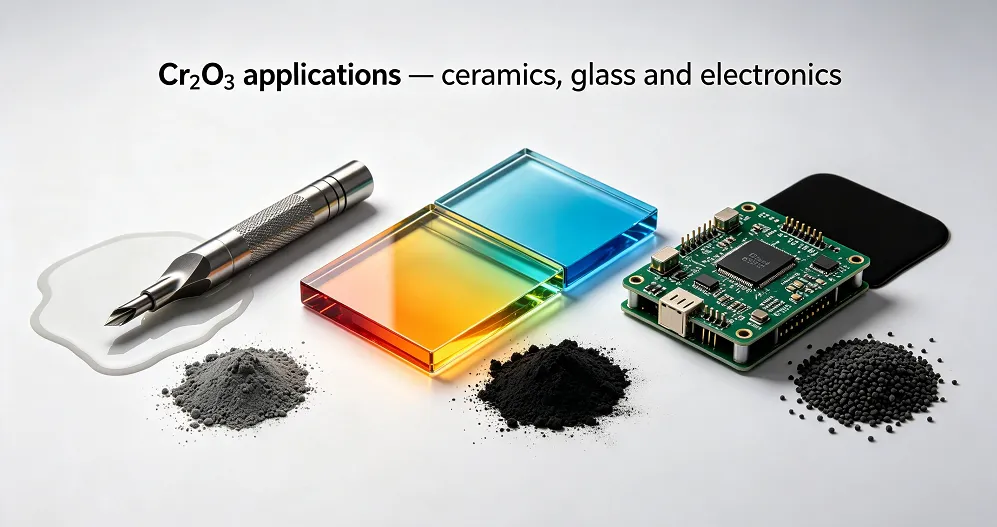
Chromium oxide has excellent physical and chemical properties, such as high hardness, melting point, and good chemical stability, making it widely used in ceramics. It can be used as an additive in ceramic glaze to improve the hardness and wear resistance of products. In addition, chromium oxide can also be used in the manufacturing of products such as ceramic cutting tools and cutting tools. With the development of the ceramic industry, the demand for chromium oxide is also constantly increasing.
 Chrome Oxide
Chromium oxide can be used to manufacture additives such as colourants and shading agents in glass. It can make glass present different colours and shading effects, improving the aesthetics and usability of the product. In addition, chromium oxide can also be used in the manufacturing of optical glass and precision glass products. Due to the increasing demand for glass products, higher needs have been put forward for the quality and performance of chromium oxide.
In the ceramics industry, Cr₂O₃ is valued for its ability to enhance the mechanical and aesthetic properties of ceramic products. As a glaze additive, it improves the hardness, wear resistance, and chemical durability of ceramic surfaces, making them suitable for demanding applications such as tiles, sanitary ware, and tableware. The distinctive green color of chromium oxide is widely used in ceramic glazes and body stains to produce a range of green, brown, and black shades. The color stability of Cr₂O₃ at high firing temperatures ensures consistent and vibrant coloration in the final product. In the production of ceramic cutting tools, Cr₂O₃ is used as an additive to improve the hardness and wear resistance of the tool material, enabling higher cutting speeds and longer tool life. The use of Cr₂O₃ in ceramic composites can enhance the fracture toughness and thermal shock resistance of the material, making it suitable for demanding applications. The demand for high-performance ceramic materials in automotive, aerospace, and electronics industries continues to drive the growth of the chromium oxide market in ceramics. The development of new ceramic formulations and processing techniques is expanding the range of applications for Cr₂O₃ in this field.
Cr₂O₃ applications — ceramics, glass and electronics
Electronic field
Chromium oxide has excellent conductivity and thermal stability, making it widely used in the electronic field. It can be used as a coating material and resistance material for electronic components to improve the conductivity and stability of products. In addition, chromium oxide can also be used in fields such as manufacturing battery electrodes and solar cells. With the rapid development of the electronic industry, the demand for chromium oxide is also constantly increasing.
The semiconductor properties of Cr₂O₃ make it a valuable material for electronic applications, particularly in the production of thin-film transistors, resistors, and capacitors. The high thermal stability of Cr₂O₃ ensures that electronic components maintain their performance at elevated temperatures, making them suitable for high-temperature and high-power applications. In the production of gas sensors, Cr₂O₃-based materials are used to detect the presence of gases such as hydrogen, carbon monoxide, and nitrogen oxides, exploiting the changes in electrical conductivity upon exposure to these gases. The use of Cr₂O₃ in battery electrodes, particularly in lithium-ion batteries, is being explored for its ability to improve the capacity and cycling stability of the electrode material. In solar cells, Cr₂O₃ is being investigated as a material for photovoltaic cells and as a protective coating for solar panels. The development of nanostructured Cr₂O₃ is enhancing its performance in electronic applications, with improved surface area and reactivity leading to better device performance. The demand for electronic devices, including smartphones, computers, and renewable energy systems, continues to drive the growth of the chromium oxide market in electronics. The integration of Cr₂O₃ into advanced electronic materials and devices is an area of active research, with the potential to enable new technologies and improve existing ones.
4. Safety protection
Due to the toxicity of chromium oxide, safety precautions need to be taken during use. Protective clothing, gloves, masks, and other protective equipment should be worn to avoid direct touch with the skin or inhalation of dust or gases. In addition, it should be stored in a cool and dry place to avoid direct sunlight and the influence of humid environments. During use, it is necessary to follow the operating procedures to prevent safety accidents strictly.
The health hazards of chromium compounds, particularly hexavalent chromium, are well-documented, and while trivalent chromium in Cr₂O₃ is less toxic than hexavalent forms, it is still important to handle the material with appropriate care. The dust and fumes from Cr₂O₃ can cause irritation to the respiratory tract, eyes, and skin, and prolonged exposure may lead to more serious health effects. The use of engineering controls, such as local exhaust ventilation and dust collection systems, is recommended to minimize the release of Cr₂O₃ dust into the workplace environment. The provision of appropriate personal protective equipment, including respirators, gloves, and protective clothing, is essential for workers handling Cr₂O₃. The storage of Cr₂O₃ should be in sealed containers in a clean, dry, and well-ventilated area, away from incompatible materials such as strong acids and oxidizing agents. The handling of Cr₂O₃ should be done in accordance with applicable safety data sheets and regulatory requirements. In case of accidental release, the contaminated area should be cleaned promptly using appropriate methods, and the waste should be disposed of in accordance with local environmental regulations. The training of workers in the safe handling of Cr₂O₃ and the implementation of emergency response procedures are essential elements of a comprehensive safety program. The development of safer handling methods and the use of engineering controls are important for the sustainable use of Cr₂O₃ in industrial applications. The monitoring of workplace exposure levels and the implementation of health surveillance programs for workers handling Cr₂O₃ are recommended to ensure their long-term health and safety.

Safety protection — dust control and personal protection
High-quality chromium oxide supplier
TRUNNANO is a trusted global chemical materials supplier and manufacturer with over 12 years of experience in ultra-high quality nanomaterials and chemicals. The company develops a variety of powder materials and chemicals. Provide OEM services. If you are looking for chromium oxide, please contact us. You can click on the product to contact us.