
By Vincy | 08 September 2025 | 0 Comments
The Nanoscale Marvel: Exploring the Wonders of Molybdenum Disulfide in Modern Science and Technology
1. Introduction to Nanoscale Molybdenum Disulfide
1.1 Historical Context and Discovery
1.1.1 Early Exploration of Layered Materials
The journey of molybdenum disulfide (MoS₂) began in the early 20th century when scientists first isolated its layered crystal structure. Unlike graphene, which lacks a natural bandgap, MoS₂’s unique atomic arrangement—consisting of alternating molybdenum and sulfur atoms stacked in layers—was recognized as a semiconducting material with tunable electronic properties. Early research focused on its lubricating capabilities due to weak interlayer van der Waals forces, which enable easy shearing between layers.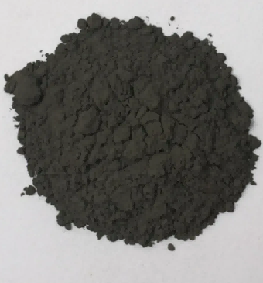
Molybdenum Disulfide Powder
1.1.2 Recent Advances in Nanoscale Applications
By the 21st century, advances in nanotechnology revealed MoS₂’s potential beyond lubrication. Its nanoscale form—particularly single-layer or few-layer variants—exhibits enhanced electrical conductivity, optical transparency, and catalytic activity. Researchers discovered that reducing MoS₂ to the nanoscale amplifies its surface area-to-volume ratio, making it ideal for applications in electronics, energy storage, and environmental remediation.
2. Scientific Principles and Properties at the Nanoscale
2.1 Electronic Properties and Bandgap Engineering
2.1.1 Bandgap Engineering for Semiconductor Applications
MoS₂’s electronic behavior changes dramatically at the nanoscale. Bulk MoS₂ has an indirect bandgap of approximately 1.2 eV, but single-layer MoS₂ transitions to a direct bandgap of 1.8 eV. This shift enables efficient light absorption and emission, crucial for optoelectronic devices like photodetectors and LEDs. By doping or straining the material, scientists can further tailor its bandgap to optimize performance for specific applications, such as high-speed transistors or flexible solar cells.
2.1.2 Charge Carrier Mobility and Conductivity
The mobility of charge carriers—electrons and holes—in nanoscale MoS₂ depends on layer thickness and defect density. Few-layer MoS₂ exhibits higher mobility compared to bulk counterparts due to reduced scattering from grain boundaries. However, defects introduced during synthesis can trap carriers, limiting conductivity. Advanced techniques like chemical vapor deposition (CVD) minimize defects, enhancing carrier mobility for next-generation electronics.
2.2 Mechanical and Tribological Properties
2.2.1 Lubrication Mechanisms and Wear Resistance
MoS₂’s lubricating prowess stems from its layered structure. Under shear stress, layers slide past each other, reducing friction between surfaces. At the nanoscale, this mechanism becomes even more effective. Nanoparticles of MoS₂ form protective tribofilms on metal surfaces, preventing direct contact and wear. Studies show that nanoscale MoS₂ coatings reduce friction coefficients by up to 70% compared to conventional lubricants, extending machinery lifespan in industries like aerospace and automotive.
2.2.2 Elastic Modulus and Mechanical Stability
Despite its softness in bulk form, nanoscale MoS₂ exhibits remarkable mechanical strength. Single-layer MoS₂ has an elastic modulus of 270 GPa, comparable to steel, while maintaining flexibility. This combination of strength and flexibility makes it ideal for flexible electronics and wearable devices. However, mechanical stability is sensitive to environmental factors like humidity, which can degrade performance over time.
3. Manufacturing Processes and Techniques
3.1 Chemical Synthesis Methods
3.1.1 Hydrothermal and Solvothermal Synthesis
Hydrothermal synthesis involves reacting molybdenum and sulfur precursors in high-temperature water, producing nanoscale MoS₂ with controlled size and morphology. Solvothermal methods use organic solvents to enhance reaction kinetics, yielding higher purity particles. These techniques are scalable for industrial production but require precise control of temperature and pH to avoid unwanted byproducts.
3.1.2 Chemical Vapor Deposition (CVD)
CVD grows MoS₂ layers on substrates like silicon or sapphire by vaporizing molybdenum hexacarbonyl and hydrogen sulfide gases. This method produces high-quality, defect-free monolayers with uniform thickness. Recent advances in plasma-enhanced CVD have accelerated growth rates while improving crystal quality, making it suitable for large-area electronics.
3.2 Physical and Mechanical Production Techniques
3.2.1 High-Energy Ball Milling
Ball milling mechanically exfoliates bulk MoS₂ into nanosheets using grinding media. While cost-effective, this method introduces defects and size variations. Post-processing steps like sonication or centrifugation are required to isolate high-quality nanosheets.
3.2.2 Liquid-Phase Exfoliation
Liquid-phase exfoliation uses surfactants or solvents to disperse bulk MoS₂ into nanosheets via sonication. This scalable technique produces large quantities of nanomaterials but requires careful solvent selection to prevent re-aggregation.
4. Applications in Modern Technology
4.1 Electronics and Optoelectronics
4.1.1 Transistors and Flexible Electronics
MoS₂’s natural bandgap and mechanical flexibility make it a prime candidate for field-effect transistors (FETs). Single-layer MoS₂ FETs demonstrate on-off ratios exceeding 10⁸, outperforming amorphous silicon. When integrated into flexible substrates like polyimide, MoS₂ enables bendable displays and wearable sensors.
4.1.2 Photodetectors and Solar Cells
In optoelectronics, MoS₂’s direct bandgap allows efficient photon absorption. Photodetectors based on MoS₂ nanosheets exhibit high sensitivity and fast response times. In solar cells, MoS₂ acts as an electron transport layer, improving efficiency in tandem with silicon or perovskite absorbers.
4.2 Energy Storage and Conversion
4.2.1 Lithium-Ion Batteries
MoS₂ nanosheets enhance lithium-ion battery performance as anode materials. Their high surface area allows rapid lithium intercalation, increasing capacity and charge rates. Doping with metals like iron or cobalt further improves conductivity and cycle life.
4.2.2 Hydrogen Evolution Reaction (HER) Catalysts
MoS₂’s edge sites exhibit platinum-like catalytic activity for hydrogen production via electrolysis. Nanoscale MoS₂ catalysts reduce overpotential and improve durability compared to bulk counterparts, offering a cost-effective alternative to noble metals.
5. Future Prospects and Challenges
5.1 Current Research Trends
5.1.1 Quantum Applications and Valleytronics
Research is exploring MoS₂’s quantum properties, such as valley polarization, for use in quantum computing. Valleytronics leverages electron momentum in specific crystal directions to encode information, potentially enabling ultra-low-power devices.
5.1.2 Hybrid Materials and Heterostructures
Combining MoS₂ with other 2D materials like graphene or hexagonal boron nitride creates van der Waals heterostructures. These hybrids exhibit emergent properties, such as tunable bandgaps or enhanced light-matter interactions, for advanced optoelectronics and quantum devices.
5.2 Environmental and Health Considerations
5.2.1 Ecological Impact and Toxicity
While MoS₂ nanomaterials offer environmental benefits, their release into ecosystems raises concerns. Studies show that nanoscale MoS₂ can alter soil microbiomes and affect plant growth. Long-term ecological impact assessments are critical to ensure sustainable deployment.
5.2.2 Health Risks and Mitigation Strategies
Occupational exposure to MoS₂ nanoparticles poses respiratory risks. Research indicates that inhalation may cause oxidative stress and inflammation. Engineering controls like ventilation and personal protective equipment, coupled with regulatory standards, can mitigate health hazards.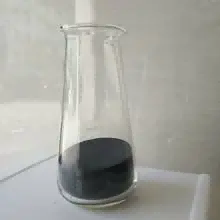
Molybdenum Disulfide Powder
6. Conclusion
Nanoscale molybdenum disulfide represents a paradigm shift in materials science, bridging gaps between electronics, energy, and environmental sustainability. Its unique properties—from tunable bandgaps to exceptional lubricity—position it as a cornerstone of next-generation technologies. While challenges like scalable synthesis and ecological impacts remain, ongoing research continues to unlock new frontiers, ensuring MoS₂’s role as a nanoscale marvel in shaping the future of science and technology.
7. Supplier
TRUNNANO is a globally recognized Molybdenum Disulfide manufacturer and supplier of compounds with more than 12 years of expertise in the highest quality nanomaterials and other chemicals. The company develops a variety of powder materials and chemicals. Provide OEM service. If you need high quality Molybdenum Disulfide, please feel free to contact us. You can click on the product to contact us. (sales5@nanotrun.com)
Tags: Molybdenum Disulfide, nano molybdenum disulfide, MoS2
1.1 Historical Context and Discovery
1.1.1 Early Exploration of Layered Materials
The journey of molybdenum disulfide (MoS₂) began in the early 20th century when scientists first isolated its layered crystal structure. Unlike graphene, which lacks a natural bandgap, MoS₂’s unique atomic arrangement—consisting of alternating molybdenum and sulfur atoms stacked in layers—was recognized as a semiconducting material with tunable electronic properties. Early research focused on its lubricating capabilities due to weak interlayer van der Waals forces, which enable easy shearing between layers.
Molybdenum Disulfide Powder
By the 21st century, advances in nanotechnology revealed MoS₂’s potential beyond lubrication. Its nanoscale form—particularly single-layer or few-layer variants—exhibits enhanced electrical conductivity, optical transparency, and catalytic activity. Researchers discovered that reducing MoS₂ to the nanoscale amplifies its surface area-to-volume ratio, making it ideal for applications in electronics, energy storage, and environmental remediation.
2. Scientific Principles and Properties at the Nanoscale
2.1 Electronic Properties and Bandgap Engineering
2.1.1 Bandgap Engineering for Semiconductor Applications
MoS₂’s electronic behavior changes dramatically at the nanoscale. Bulk MoS₂ has an indirect bandgap of approximately 1.2 eV, but single-layer MoS₂ transitions to a direct bandgap of 1.8 eV. This shift enables efficient light absorption and emission, crucial for optoelectronic devices like photodetectors and LEDs. By doping or straining the material, scientists can further tailor its bandgap to optimize performance for specific applications, such as high-speed transistors or flexible solar cells.
2.1.2 Charge Carrier Mobility and Conductivity
The mobility of charge carriers—electrons and holes—in nanoscale MoS₂ depends on layer thickness and defect density. Few-layer MoS₂ exhibits higher mobility compared to bulk counterparts due to reduced scattering from grain boundaries. However, defects introduced during synthesis can trap carriers, limiting conductivity. Advanced techniques like chemical vapor deposition (CVD) minimize defects, enhancing carrier mobility for next-generation electronics.
2.2 Mechanical and Tribological Properties
2.2.1 Lubrication Mechanisms and Wear Resistance
MoS₂’s lubricating prowess stems from its layered structure. Under shear stress, layers slide past each other, reducing friction between surfaces. At the nanoscale, this mechanism becomes even more effective. Nanoparticles of MoS₂ form protective tribofilms on metal surfaces, preventing direct contact and wear. Studies show that nanoscale MoS₂ coatings reduce friction coefficients by up to 70% compared to conventional lubricants, extending machinery lifespan in industries like aerospace and automotive.
2.2.2 Elastic Modulus and Mechanical Stability
Despite its softness in bulk form, nanoscale MoS₂ exhibits remarkable mechanical strength. Single-layer MoS₂ has an elastic modulus of 270 GPa, comparable to steel, while maintaining flexibility. This combination of strength and flexibility makes it ideal for flexible electronics and wearable devices. However, mechanical stability is sensitive to environmental factors like humidity, which can degrade performance over time.
3. Manufacturing Processes and Techniques
3.1 Chemical Synthesis Methods
3.1.1 Hydrothermal and Solvothermal Synthesis
Hydrothermal synthesis involves reacting molybdenum and sulfur precursors in high-temperature water, producing nanoscale MoS₂ with controlled size and morphology. Solvothermal methods use organic solvents to enhance reaction kinetics, yielding higher purity particles. These techniques are scalable for industrial production but require precise control of temperature and pH to avoid unwanted byproducts.
3.1.2 Chemical Vapor Deposition (CVD)
CVD grows MoS₂ layers on substrates like silicon or sapphire by vaporizing molybdenum hexacarbonyl and hydrogen sulfide gases. This method produces high-quality, defect-free monolayers with uniform thickness. Recent advances in plasma-enhanced CVD have accelerated growth rates while improving crystal quality, making it suitable for large-area electronics.
3.2 Physical and Mechanical Production Techniques
3.2.1 High-Energy Ball Milling
Ball milling mechanically exfoliates bulk MoS₂ into nanosheets using grinding media. While cost-effective, this method introduces defects and size variations. Post-processing steps like sonication or centrifugation are required to isolate high-quality nanosheets.
3.2.2 Liquid-Phase Exfoliation
Liquid-phase exfoliation uses surfactants or solvents to disperse bulk MoS₂ into nanosheets via sonication. This scalable technique produces large quantities of nanomaterials but requires careful solvent selection to prevent re-aggregation.
4. Applications in Modern Technology
4.1 Electronics and Optoelectronics
4.1.1 Transistors and Flexible Electronics
MoS₂’s natural bandgap and mechanical flexibility make it a prime candidate for field-effect transistors (FETs). Single-layer MoS₂ FETs demonstrate on-off ratios exceeding 10⁸, outperforming amorphous silicon. When integrated into flexible substrates like polyimide, MoS₂ enables bendable displays and wearable sensors.
4.1.2 Photodetectors and Solar Cells
In optoelectronics, MoS₂’s direct bandgap allows efficient photon absorption. Photodetectors based on MoS₂ nanosheets exhibit high sensitivity and fast response times. In solar cells, MoS₂ acts as an electron transport layer, improving efficiency in tandem with silicon or perovskite absorbers.
4.2 Energy Storage and Conversion
4.2.1 Lithium-Ion Batteries
MoS₂ nanosheets enhance lithium-ion battery performance as anode materials. Their high surface area allows rapid lithium intercalation, increasing capacity and charge rates. Doping with metals like iron or cobalt further improves conductivity and cycle life.
4.2.2 Hydrogen Evolution Reaction (HER) Catalysts
MoS₂’s edge sites exhibit platinum-like catalytic activity for hydrogen production via electrolysis. Nanoscale MoS₂ catalysts reduce overpotential and improve durability compared to bulk counterparts, offering a cost-effective alternative to noble metals.
5. Future Prospects and Challenges
5.1 Current Research Trends
5.1.1 Quantum Applications and Valleytronics
Research is exploring MoS₂’s quantum properties, such as valley polarization, for use in quantum computing. Valleytronics leverages electron momentum in specific crystal directions to encode information, potentially enabling ultra-low-power devices.
5.1.2 Hybrid Materials and Heterostructures
Combining MoS₂ with other 2D materials like graphene or hexagonal boron nitride creates van der Waals heterostructures. These hybrids exhibit emergent properties, such as tunable bandgaps or enhanced light-matter interactions, for advanced optoelectronics and quantum devices.
5.2 Environmental and Health Considerations
5.2.1 Ecological Impact and Toxicity
While MoS₂ nanomaterials offer environmental benefits, their release into ecosystems raises concerns. Studies show that nanoscale MoS₂ can alter soil microbiomes and affect plant growth. Long-term ecological impact assessments are critical to ensure sustainable deployment.
5.2.2 Health Risks and Mitigation Strategies
Occupational exposure to MoS₂ nanoparticles poses respiratory risks. Research indicates that inhalation may cause oxidative stress and inflammation. Engineering controls like ventilation and personal protective equipment, coupled with regulatory standards, can mitigate health hazards.
Molybdenum Disulfide Powder
6. Conclusion
Nanoscale molybdenum disulfide represents a paradigm shift in materials science, bridging gaps between electronics, energy, and environmental sustainability. Its unique properties—from tunable bandgaps to exceptional lubricity—position it as a cornerstone of next-generation technologies. While challenges like scalable synthesis and ecological impacts remain, ongoing research continues to unlock new frontiers, ensuring MoS₂’s role as a nanoscale marvel in shaping the future of science and technology.
7. Supplier
TRUNNANO is a globally recognized Molybdenum Disulfide manufacturer and supplier of compounds with more than 12 years of expertise in the highest quality nanomaterials and other chemicals. The company develops a variety of powder materials and chemicals. Provide OEM service. If you need high quality Molybdenum Disulfide, please feel free to contact us. You can click on the product to contact us. (sales5@nanotrun.com)
Tags: Molybdenum Disulfide, nano molybdenum disulfide, MoS2
Leave a Reply
Your email address will not be published.Required fields are marked. *