
By Vincy | 07 August 2025 | 0 Comments
Nano-Silicon Powder: The Tiny Titan Transforming Industries from Energy to Medicine
1. Introduction: The Rise of Nano-Silicon in the Material Science Revolution
Silicon, the second most abundant element in Earth’s crust, has long been a cornerstone of modern technology, from semiconductors to solar cells. However, its conventional bulk form faces inherent limitations in performance and efficiency. Enter nano-silicon powder—a material engineered at the atomic scale to unlock unprecedented properties. By reducing silicon particles to the nanometer range (1–100 nm), scientists have created a substance with enhanced reactivity, surface area, and quantum effects, revolutionizing fields such as energy storage, electronics, and biomedicine.
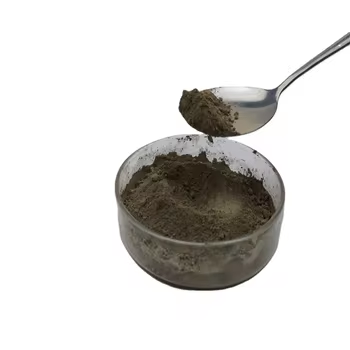
Nano-Silicon Powder
This article explores the science behind nano-silicon powder, its production methods, applications, and the challenges it faces in scaling from laboratory innovation to industrial reality.
2. The Science of Nano-Silicon: Structure, Properties, and Quantum Effects
2.1 Atomic-Scale Engineering: Why Size Matters
Nano-silicon’s properties diverge dramatically from bulk silicon due to quantum confinement and surface-to-volume ratio effects:- Quantum Confinement: When silicon particles shrink below a critical size (typically <10 nm), electrons are restricted to discrete energy levels, altering optical and electrical behavior. For example, nano-silicon exhibits tunable bandgaps, enabling applications in photovoltaics and optoelectronics.
- Surface Area Dominance: Nano-silicon particles have a vast surface area relative to their volume, increasing reactivity. This makes them ideal for catalysis and energy storage, where rapid ion exchange is critical.
- Mechanical Flexibility: Unlike brittle bulk silicon, nano-silicon powders can be embedded in polymers or metals to create flexible composites, expanding their use in wearable electronics and biomedical implants.
2.2 Synthesis Methods: Crafting the Perfect Nanoparticle
Producing nano-silicon powder requires precise control over particle size, morphology, and purity. Key methods include:2.2.1 Mechanical Milling (Top-Down Approach)
- Process: Bulk silicon is ground using high-energy ball mills or jet mills to produce nanoparticles.
- Advantages: Scalable and cost-effective for large quantities.
- Limitations: Particle size distribution is broad, and surface defects may reduce performance.
2.2.2 Chemical Vapor Deposition (CVD) (Bottom-Up Approach)
- Process: Silicon-containing gases (e.g., silane, SiH₄) decompose at high temperatures to form nanoparticles on substrates.
- Advantages: Produces monodisperse particles with precise control over size and shape.
- Limitations: High energy consumption and expensive equipment.
2.2.3 Sol-Gel Synthesis
- Process: Silicon alkoxides (e.g., tetraethyl orthosilicate, TEOS) hydrolyze and condense into nanostructured silica, which is then reduced to silicon.
- Advantages: Enables porous structures for drug delivery or catalytic applications.
- Limitations: Multi-step process with potential for impurities.
2.2.4 Laser Ablation
- Process: A high-power laser vaporizes a silicon target in a liquid or gas medium, forming nanoparticles.
- Advantages: Produces ultra-pure particles with minimal aggregation.
- Limitations: Low yield and high operational costs.
3. Applications: Transforming Industries with Nano-Silicon
3.1 Energy Storage: The Future of Batteries
Lithium-ion batteries (LIBs) dominate portable electronics and electric vehicles (EVs), but their energy density is limited by graphite anodes. Nano-silicon offers a breakthrough:- Higher Capacity: Silicon can theoretically store 10× more lithium than graphite (4,200 mAh/g vs. 372 mAh/g).
- Faster Charging: Nano-silicon’s high surface area enables rapid lithium-ion diffusion, reducing charging times.
- Challenges: Silicon expands by 300–400% during lithiation, causing particle pulverization and capacity fade.
- Nanostructuring: Smaller particles mitigate volume changes.
- Composite Anodes: Mixing nano-silicon with carbon (e.g., graphene) improves conductivity and structural stability.
- Binder Engineering: Advanced polymers (e.g., polyacrylic acid) maintain electrode integrity during cycling.
3.2 Photovoltaics: Boosting Solar Cell Efficiency
Silicon solar cells dominate the market, but their efficiency is capped by Shockley-Queisser limits (~33%). Nano-silicon enhances performance through:- Light Trapping: Nanostructured silicon layers scatter light, increasing absorption in thin-film cells.
- Multi-Junction Cells: Nano-silicon’s tunable bandgap enables tandem cells that capture a broader solar spectrum.
- Perovskite-Silicon Tandems: Combining nano-silicon with perovskites achieves efficiencies exceeding 33%, nearing theoretical limits.
3.3 Biomedicine: From Imaging to Drug Delivery
Nano-silicon’s biocompatibility and surface functionality make it valuable for medical applications:- Bioimaging: Fluorescent nano-silicon particles (e.g., silicon quantum dots) provide non-toxic alternatives to cadmium-based quantum dots.
- Drug Delivery: Porous nano-silicon carriers release therapeutics in response to pH or temperature changes.
- Tissue Engineering: Silicon-doped scaffolds promote bone regeneration by mimicking the mineral composition of natural tissue.
3.4 Advanced Manufacturing: Strengthening Materials
Nano-silicon reinforces metals, ceramics, and polymers:- Lightweight Composites: Adding nano-silicon to aluminum reduces weight while improving strength for aerospace applications.
- Self-Healing Coatings: Nano-silicon particles in paints repair scratches by migrating to damaged areas.
- 3D Printing: Silicon-infused resins enable high-temperature-resistant parts for automotive and aerospace industries.
4. Challenges and Future Directions: Scaling the Nanoscale Revolution
4.1 Technical Hurdles
- Stability: Nano-silicon oxidizes readily in air, requiring inert storage or protective coatings.
- Scalability: Many synthesis methods are lab-scale; industrial production demands cost-effective, high-throughput techniques.
- Toxicity: While silicon is biocompatible, inhalation of nanoparticles poses health risks, necessitating safe handling protocols.
4.2 Economic and Regulatory Barriers
- Cost: High-purity nano-silicon remains expensive compared to bulk silicon or carbon alternatives.
- Standardization: Lack of universal quality metrics complicates commercial adoption.
- Regulations: Nanomaterials face stringent safety evaluations, delaying market entry.
4.3 The Road Ahead: Innovations to Watch
- Green Synthesis: Using biomass or waste silicon (e.g., rice husks) to produce sustainable nano-silicon.
- AI-Driven Design: Machine learning models optimize particle size and morphology for specific applications.
- Hybrid Systems: Combining nano-silicon with other nanomaterials (e.g., MXenes, carbon nanotubes) for synergistic effects.
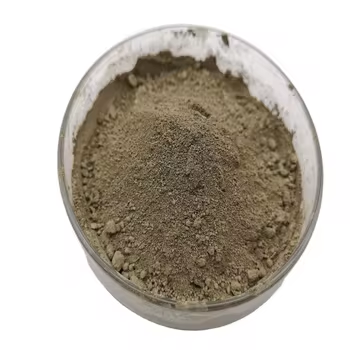
Nano-Silicon Powder
5. Conclusion: Nano-Silicon as the Keystone of the Next Industrial Era
Nano-silicon powder represents a paradigm shift in material science, merging atomic-scale precision with macro-scale impact. From ultra-efficient batteries to self-healing materials, its applications are limited only by imagination. However, realizing its full potential requires overcoming technical, economic, and regulatory challenges through interdisciplinary collaboration.
As researchers refine synthesis methods and engineers integrate nano-silicon into real-world systems, this tiny titan is poised to redefine industries—proving that sometimes, the smallest innovations drive the biggest transformations.
6. Supplier
TRUNNANO is a globally recognized Nano-Silicon Powder manufacturer and supplier of compounds with more than 12 years of expertise in the highest quality nanomaterials and other chemicals. The company develops a variety of powder materials and chemicals. Provide OEM service. If you need high quality Nano-Silicon Powder, please feel free to contact us. You can click on the product to contact us. (sales5@nanotrun.com)
Tags: Nano-Silicon Powder, Silicon Powder, Silicon
Leave a Reply
Your email address will not be published.Required fields are marked. *