
By lql | 12 February 2023 | 0 Comments
How is Hafnium Nitride made?
What is Hafnium Nitride?
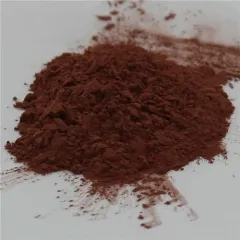
Hafnium Nitride is a gray powder with a cubic crystal structure. The melting point is 3310℃, and the microhardness is 16GPa. It is quite stable, but it is easily corroded by aqua regia, concentrated sulfuric acid, and hydrofluoric acid. It is produced by a direct reaction of hafnium and nitrogen at 900℃ or by a reaction of hafnium halide with ammonia or a mixed gas of nitrogen and hydrogen. It is an important component of an important refractory compound, hafnium alloy.
Hafnium Nitride is a gray powder with a cubic crystal structure. The melting point is 3310℃, and the microhardness is 16GPa. It is quite stable, but it is easily corroded by aqua regia, concentrated sulfuric acid, and hydrofluoric acid. It is produced by a direct reaction of hafnium and nitrogen at 900℃ or by a reaction of hafnium halide with ammonia or a mixed gas of nitrogen and hydrogen. It is an important component of an important refractory compound, hafnium alloy.
In nature, hafnium often coexists with zirconium, and all minerals containing zirconium contain hafnium, which is isomorphic with zirconium, and hafnium mainly occurs in zircon. The content of HfO2 in zircon used in industry is 0.5-2%. Beryllium zircon in secondary zirconium ore can contain as much as 15%. There is also a metamorphic zircon cryolite, which contains more than 5% of HfO2 _ 2. The latter two minerals have little reserves and have not been used in industry. Hafnium is mainly recovered from the process of producing zirconium.
Smelting method of Hafnium Nitride
The smelting of hafnium is basically the same as that of zirconium, and it is generally divided into five steps. The first step is the decomposition of ore, and there are three methods: ① chlorination of zircon to obtain (Zr, Hf)Cl4. (2) Alkaline melting of zircon: Zircon and NaOH are melted at about 600℃, and more than 90% of (Zr, Hf)O2 is transformed into Na2(Zr, Hf)O3, among which SiO2 is transformed into Na2SiO3, which is removed by water solution. Na2(Zr, Hf)O3 can be used as the original solution for zirconium and hafnium separation after being dissolved in HNO3, but it is difficult for solvent extraction and separation because it contains SiO2 _ 2 colloid. ③ Sintering with K2SiF6, and soaking in water to obtain K2(Zr,Hf)F6 solution. Zirconium and hafnium can be separated from the solution by fractional crystallization.
The second step is the separation of zirconium and hafnium, which can be separated by solvent extraction in the hydrochloric acid -MIBK (methyl isobutyl ketone) system and HNO3-TBP (tributyl phosphate) system. The technology of multi-stage fractionation by using the difference of vapor pressure between HfCl4 _ 4 and ZrCl4 _ 4 melts under high pressure (higher than 20 atmospheres) has been studied for a long time, which can save the secondary chlorination process and reduce the cost. However, due to the corrosion of (Zr, Hf)Cl4 and HCl, it is not easy to find a suitable fractionation column material, and it will reduce the quality of ZrCl4 and HfCl4 and increase the purification cost.
The third step is the secondary chlorination of HfO2 _ 2 to prepare crude HfCl4 _ 4 for reduction.
The fourth step is the purification of HfCl4 _ 4 and reduction with magnesium. This process is the same as the purification and reduction of ZrCl4, and the semi-finished product is coarse sponge hafnium.
The fifth step is vacuum distillation of crude sponge hafnium to remove MgCl2 and recover excess magnesium, and the finished product is sponge hafnium. If sodium is used instead of magnesium as the reducing agent, the fifth step is changed to water immersion.
Price of Hafnium Nitride
Hafnium Nitride particle size and purity will affect the product's price, and the purchase volume can also affect the cost of Hafnium Nitride. A large amount of large amount will be lower. The price of Hafnium Nitride can be found on our company's official website.
Hafnium Nitride supplier
Luoyang Tongrun Nano Technology Co. Ltd. (TRUNNANO) Luoyang City, Henan Province, China, is a reliable and high-quality global chemical material supplier and manufacturer. It has more than 12 years of experience providing ultra-high quality chemicals and nanotechnology materials, including Hafnium Nitride, nitride powder, Hafnium Nitride, sulfide powder, and 3D printing powder. If you are looking for high-quality and cost-effective Hafnium Nitride, you are welcome to contact us or inquire any time.
Smelting method of Hafnium Nitride
The smelting of hafnium is basically the same as that of zirconium, and it is generally divided into five steps. The first step is the decomposition of ore, and there are three methods: ① chlorination of zircon to obtain (Zr, Hf)Cl4. (2) Alkaline melting of zircon: Zircon and NaOH are melted at about 600℃, and more than 90% of (Zr, Hf)O2 is transformed into Na2(Zr, Hf)O3, among which SiO2 is transformed into Na2SiO3, which is removed by water solution. Na2(Zr, Hf)O3 can be used as the original solution for zirconium and hafnium separation after being dissolved in HNO3, but it is difficult for solvent extraction and separation because it contains SiO2 _ 2 colloid. ③ Sintering with K2SiF6, and soaking in water to obtain K2(Zr,Hf)F6 solution. Zirconium and hafnium can be separated from the solution by fractional crystallization.
The second step is the separation of zirconium and hafnium, which can be separated by solvent extraction in the hydrochloric acid -MIBK (methyl isobutyl ketone) system and HNO3-TBP (tributyl phosphate) system. The technology of multi-stage fractionation by using the difference of vapor pressure between HfCl4 _ 4 and ZrCl4 _ 4 melts under high pressure (higher than 20 atmospheres) has been studied for a long time, which can save the secondary chlorination process and reduce the cost. However, due to the corrosion of (Zr, Hf)Cl4 and HCl, it is not easy to find a suitable fractionation column material, and it will reduce the quality of ZrCl4 and HfCl4 and increase the purification cost.
The third step is the secondary chlorination of HfO2 _ 2 to prepare crude HfCl4 _ 4 for reduction.
The fourth step is the purification of HfCl4 _ 4 and reduction with magnesium. This process is the same as the purification and reduction of ZrCl4, and the semi-finished product is coarse sponge hafnium.
The fifth step is vacuum distillation of crude sponge hafnium to remove MgCl2 and recover excess magnesium, and the finished product is sponge hafnium. If sodium is used instead of magnesium as the reducing agent, the fifth step is changed to water immersion.
Price of Hafnium Nitride
Hafnium Nitride particle size and purity will affect the product's price, and the purchase volume can also affect the cost of Hafnium Nitride. A large amount of large amount will be lower. The price of Hafnium Nitride can be found on our company's official website.
Hafnium Nitride supplier
Luoyang Tongrun Nano Technology Co. Ltd. (TRUNNANO) Luoyang City, Henan Province, China, is a reliable and high-quality global chemical material supplier and manufacturer. It has more than 12 years of experience providing ultra-high quality chemicals and nanotechnology materials, including Hafnium Nitride, nitride powder, Hafnium Nitride, sulfide powder, and 3D printing powder. If you are looking for high-quality and cost-effective Hafnium Nitride, you are welcome to contact us or inquire any time.
Leave a Reply
Your email address will not be published.Required fields are marked. *