
Al2O3: Types, structures, and uses
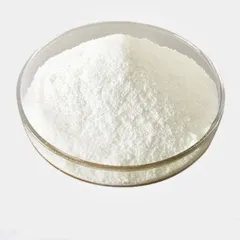
Alumina
Alumina belongs to the rhombohedral system with a melting point of 2054℃ and a boiling point of 2980℃. Due to the difference of steam partial pressure, temperature and pressure, there are many kinds of Al2O3 isomorphs before Al(OH)3 is completely dehydrated to α-Al2O3 at high temperature. It is reported that there are 12 kinds of crystal structures, such as α, β, γ, η, δ, κ, θ and ρ, the most common of which are α, β, and γ. Their density, specific surface area, porosity and acidity vary due to different dehydration conditions and initial aluminum hydroxide.
The existence of multiple transition phases results from the complex dehydration pathway of aluminum hydroxides upon heating. The transformation sequence—from gibbsite to χ, κ, γ, δ, θ, and finally to α-Al₂O₃—depends on heating rate, atmosphere, and particle size, making phase control essential for tailoring final properties.
α-Al2O3
α-Al2O3 is a rhombohedral system, also known as corundum. The O _ 2-in its Al2O3 crystal is packed closely in hexagonal, while the smaller particle spacing makes the crystal firm and stable. Among all the alumina, α-Al2O3 has the highest density and the most stable crystal phase. Its density is related to impurities and remains about 3.99g/cm3. α-Al2O3 is mainly found in rubies, sapphires and natural corundum.
The corundum structure consists of oxygen ions in a hexagonal close-packed lattice, with aluminum ions occupying two-thirds of the octahedral sites, resulting in exceptional hardness (9 on the Mohs scale). Trace chromium impurities produce red ruby, while iron and titanium yield blue sapphire.
Although the activity of α-Al2O3 is low, it has excellent properties such as high hardness, high strength, wear resistance, chemical corrosion resistance and good dielectric properties, so it is widely used in refractories and ceramics.
In refractories, α-Al₂O₃ is used in high-temperature furnace linings and crucibles capable of withstanding up to 1900°C. In structural ceramics, it is applied in cutting tools, wear-resistant linings, seals, and bearings. In electronics, high-purity α-Al₂O₃ serves as a substrate for integrated circuits. It is also widely used in biomedical implants—such as hip replacements and dental implants—due to its biocompatibility and wear resistance. Additionally, α-Al₂O₃ coatings deposited by thermal spraying enhance the wear and corrosion resistance of metal components. Typical fabrication involves pressing and sintering at 1600–1800°C, with sintering aids like MgO or ZrO₂ to improve density.

α-Al2O3
As a kind of alkaline aluminate, the density of β-Al2O3 is about 3.30g/cm3. The stability of β-Al2O3 is poor, and α-Al2O3 and Na2O will be decomposed from it after heating. The interior of Na- β-Al2O3 crystal has a layered structure. Na+ can move and ion exchange freely between layers, so that it has relaxation polarization and ionic conductivity, while Na+ can not be diffused parallel to the C-axis, so that it has no conductivity in the parallel C-axis direction.
β-Al₂O₃ is actually a sodium aluminate (Na₂O·11Al₂O₃), with a structure of spinel-like blocks separated by conduction planes containing mobile Na⁺ ions. Two polymorphs exist: β (hexagonal) and β'' (rhombohedral), with β'' exhibiting about three times higher ionic conductivity.
Using this property, β-Al2O3 can be used as a diaphragm material in sodium-sulfur battery, and widely used in electronic, medical, mechanical and other fields.
In sodium-sulfur (Na-S) batteries operating at 300–350°C, β-Al₂O₃ serves as the solid electrolyte separator, selectively conducting Na⁺ ions while preventing direct contact between molten sodium and sulfur. These batteries offer high energy density and long cycle life, making them attractive for grid-scale energy storage. Beyond Na-S batteries, β-Al₂O₃ is also explored in sodium-metal halide batteries, sensors, and sodium thermal electrochemical converters (Na-TEC). However, its application is limited by relatively high cost and sensitivity to moisture.

β-Al₂O₃
As a transition phase Al2O3, the density of γ-Al2O3 is about 3.42g/cm3. The O2-in γ-Al2O3 crystal structure is distributed at the vertex of cubic lattice, which is closely packed as cubic, and Al3+ is distributed in the packing gap of O2 -. γ-Al2O3 has strong loose adsorption, easy to absorb water and can be dissolved by acid and alkali. Its large specific surface area makes it have high surface energy and high activity. At the same time, γ-Al2O3 will be transformed into stable α-Al2O3 with the increase of temperature, and its volume density increases and volume shrinks at the same time, about 14.3%. The conversion rate and degree of conversion depend on the purity of alumina, preparation conditions and particle size.
γ-Al₂O₃ has a defect spinel structure with cation vacancies, resulting in extremely high specific surface areas—frequently exceeding 200 m²/g and reaching up to 400 m²/g. This makes it one of the most important catalyst support materials in the chemical and petroleum industries.
As a catalyst support, γ-Al₂O₃ is widely used for precious metals in automotive three-way catalytic converters, and for Co-Mo or Ni-Mo catalysts in petroleum hydrotreating for sulfur and nitrogen removal. It also serves as a catalyst itself for dehydration reactions, such as ethanol-to-ethylene conversion. As an adsorbent, it is used for removing fluoride and arsenic from water, as well as for drying compressed air and natural gas. γ-Al₂O₃ is typically produced by calcining aluminum hydroxides at 400–600°C. To prevent thermal transformation to α-Al₂O₃ at high temperatures—which causes surface area loss—rare earth oxides like La₂O₃ or CeO₂ are often added as stabilizers.

γ-Al₂O₃
The price is influenced by many factors including the supply and demand in the market, industry trends, economic activity, market sentiment, and unexpected events.
If you are looking for the latest al2o3 price, you can send us your inquiry for a quote. (sales3@nanotrun.com)
Alumina Supplier
Luoyang Tongrun Nano Technology Co. Ltd. (TRUNNANO) is a trusted al2o3 manufacturer and al2o3 supplier with over 12-year-experience. We ship our goods all over the world.
If you are looking for high-quality al2o3 powder, please feel free to contact us and send an inquiry. (sales3@nanotrun.com)