
By TRUNNANO | 09 August 2021 | 0 Comments
Zinc stearate of stearate series
About zinc stearate
Zinc stearate is also called "zinc octadecanoic". Its appearance is a fine white powder, with a melting point of 118 ℃~125 ℃, a relative density of 1.095, and a special smell. Zinc stearate is insoluble in water, soluble in hot organic solvents such as ethanol, benzene, toluene and turpentine. After heating and dissolving in an organic solvent, it becomes a jelly after cooling. It is decomposed into stearic acid and corresponding zinc salt in case of strong acid. There is a fire hazard in dry conditions, with a spontaneous ignition point of 900 ℃. The lowest explosion limit of the mixture of dust and air is 11.6 g/m3. There is a tendency to absorb moisture. It is non-toxic and can be used for products that come into contact with food. The toxicity coefficient is T=1 000.
It is generally a mixture of zinc stearate and zinc palmitate, and usually contains a slight excess (13.5% to 15%) of zinc oxide. It can be used as a stabilizer for polyvinyl chloride plastics, a reinforcing agent for styrene plastics, phenolic plastics and amino plastics, a drier for paints and coatings, a flattening agent, desiccant, sanding agent for enamel, a polishing agent for textiles, Plastic molding release agent, waterproofing agent, emollient in cosmetics, pharmaceutical powder, tablet, ointment, etc.
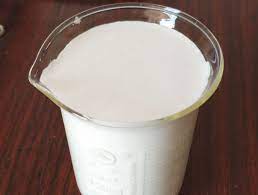 What is zinc stearate used for?
Zinc stearate is one of the representative varieties of main metal soap heat stabilizers. It can absorb HCl and replace active chlorine atoms, but the resulting zinc chloride has a catalytic effect on the dehydrochlorination reaction. If the amount is too large, it is prone to sudden occurrences. Degradation, the phenomenon of "zinc burning", causes hazards such as initial coloration. Generally not used alone, it is often used in conjunction with auxiliary metal soap heat stabilizers such as barium soap and calcium soap. Non-metal auxiliary stabilizers such as phosphite, β-diketone, and 2-phenylindole have a chelating effect on zinc chloride, so they are also important components of barium/zinc and calcium/zinc composite heat stabilizers. Zinc stearate is one of the main components of the non-toxic metal soap heat stabilizer. In addition to being used as a heat stabilizer, this product is also a lubricant and mold release agent for the processing of thermoplastic and thermosetting plastics such as rigid PVC, PS, ABS, phenolic resin and amino resin.
Zinc stearate is a type of additive with multiple functions used in many polymers. Based on its unique and diverse physical and chemical properties, it has been used in many important. The field has obtained a wide range of important applications, and new applications are constantly being developed. Its main application fields are coatings, plastics and rubber industries; for example, it can be used as heat stabilizers, lubricants, greases, and accelerators in the resin field. It is usually used as a heat stabilizer for PVC resin. PVC (Polyvinyl Chloride) is one of the most widely used plastics in the world second only to polyethylene. It has won a broad market with its flame retardant, insulating, and abrasion resistance properties. PVC resin and its products have the shortcomings of easy thermal degradation and aging due to their own structural defects. Its processing temperature is above 160°C, which is higher than the decomposition temperature of 120°C. Therefore, to transform PVC into products, it must be processed and molded. Heat stabilizers are added in the process to delay or prevent the thermal degradation of PVC resin. The main reason for the thermal aging of PVC is those small molecules are removed by thermal decomposition. On the one hand, zinc stearate can capture the dropped hydrogen chloride, on the other hand. It can also replace the chlorine atom in the allyl chloride present in it to generate a relatively stable ester, thereby eliminating the initiation source of dehydrochlorination in the polymer material. Therefore, zinc stearate is usually selected as a heat stabilizer and lubricant for PVC plastics in the field.
In view of the important use of zinc stearate, zinc stearate has been further modified in the industry to improve its performance or expand its application fields, and the preparation process of zinc stearate is also a bottleneck restricting its continued development. The production process of zinc fatty acid is mainly divided into two kinds of double decomposition method and melting method, and the double decomposition process is usually used in domestic manufacturers. The raw materials used in this method include stearic acid, zinc sulfate, caustic soda and other raw materials. After the metathesis reaction, a series of processes such as water washing, spin-drying, and drying are performed to obtain the final product.
About the preparation method of zinc stearate
Method 1
Dissolve stearic acid in 20 times the mass of hot water, add a caustic soda solution with a mass concentration of 1 074 kg/m3, and perform a saponification reaction at about 75 ℃ to generate a dilute sodium stearate solution. A zinc sulfate solution with a mass concentration of 1074 kg/m3 was added to the sodium stearate solution, and the metathesis reaction was carried out at about 60 ℃, and the product zinc stearate was precipitated. After filtering, washing with water, and drying at about 90 ℃, the finished product is obtained.
Method 2
A manufacturing method of zinc stearate, characterized in that the method includes the following steps:
a. Transport the stearic acid in a liquid state to the reaction kettle by a transfer pump for stirring and heating, the stirring time is 20~28min, and the heating temperature is 120-150℃;
b. Add zinc oxide to the reaction kettle three times and react at a temperature of 160-180°C and pressure of 0.18-0.24Mpa. The reaction time is 40-50min;
c. Transport the reacted zinc stearate to the tablet press for tablet compression;
d. The compressed zinc stearate is roughly pulverized by an ordinary pulverizer;
e. The coarsely pulverized zinc stearate is finely pulverized through a jet pulverizing system to obtain zinc stearate.
Advantages of zinc stearate
1. After testing and using, it is proved that the product quality index and use effect are equal to or better than similar imported products. It is an environmentally friendly heat stabilizer and lubricant for the processing of plastic raw materials, plastic masterbatches, engineering plastics, and rubber compounds.
2. Good lubricity can improve the appearance of scale deposition, and can also be used as a lubricant, release agent, flattening agent of paint, and additive of paint.
3. It has the characteristics of high purity, transparency and good thermal stability.
4. Generally, it can be used as a heat stabilizer for PVC resin. Used for general industrial transparent products; used with a calcium soap, can be used for environmentally friendly products, generally, this product is mostly used for soft products, but in recent years, it has begun to use hard and transparent products such as mineral water bottles, water pipes and other products.
Zinc stearate supplier
TRUNNANO (aka. Luoyang Tongrun Nano Technology Co. Ltd.) is a trusted global chemical material supplier & manufacturer with over 12 years' experience in providing super high-quality chemicals and Nanomaterials. Currently, our company has successfully developed a series of materials. The zinc stearate produced by our company has high purity, fine particle size and impurity content. For the latest zinc stearate send us an email or click on the needed products to send an inquiry.
Zinc stearate is also called "zinc octadecanoic". Its appearance is a fine white powder, with a melting point of 118 ℃~125 ℃, a relative density of 1.095, and a special smell. Zinc stearate is insoluble in water, soluble in hot organic solvents such as ethanol, benzene, toluene and turpentine. After heating and dissolving in an organic solvent, it becomes a jelly after cooling. It is decomposed into stearic acid and corresponding zinc salt in case of strong acid. There is a fire hazard in dry conditions, with a spontaneous ignition point of 900 ℃. The lowest explosion limit of the mixture of dust and air is 11.6 g/m3. There is a tendency to absorb moisture. It is non-toxic and can be used for products that come into contact with food. The toxicity coefficient is T=1 000.
It is generally a mixture of zinc stearate and zinc palmitate, and usually contains a slight excess (13.5% to 15%) of zinc oxide. It can be used as a stabilizer for polyvinyl chloride plastics, a reinforcing agent for styrene plastics, phenolic plastics and amino plastics, a drier for paints and coatings, a flattening agent, desiccant, sanding agent for enamel, a polishing agent for textiles, Plastic molding release agent, waterproofing agent, emollient in cosmetics, pharmaceutical powder, tablet, ointment, etc.
Zinc stearate is one of the representative varieties of main metal soap heat stabilizers. It can absorb HCl and replace active chlorine atoms, but the resulting zinc chloride has a catalytic effect on the dehydrochlorination reaction. If the amount is too large, it is prone to sudden occurrences. Degradation, the phenomenon of "zinc burning", causes hazards such as initial coloration. Generally not used alone, it is often used in conjunction with auxiliary metal soap heat stabilizers such as barium soap and calcium soap. Non-metal auxiliary stabilizers such as phosphite, β-diketone, and 2-phenylindole have a chelating effect on zinc chloride, so they are also important components of barium/zinc and calcium/zinc composite heat stabilizers. Zinc stearate is one of the main components of the non-toxic metal soap heat stabilizer. In addition to being used as a heat stabilizer, this product is also a lubricant and mold release agent for the processing of thermoplastic and thermosetting plastics such as rigid PVC, PS, ABS, phenolic resin and amino resin.
Zinc stearate is a type of additive with multiple functions used in many polymers. Based on its unique and diverse physical and chemical properties, it has been used in many important. The field has obtained a wide range of important applications, and new applications are constantly being developed. Its main application fields are coatings, plastics and rubber industries; for example, it can be used as heat stabilizers, lubricants, greases, and accelerators in the resin field. It is usually used as a heat stabilizer for PVC resin. PVC (Polyvinyl Chloride) is one of the most widely used plastics in the world second only to polyethylene. It has won a broad market with its flame retardant, insulating, and abrasion resistance properties. PVC resin and its products have the shortcomings of easy thermal degradation and aging due to their own structural defects. Its processing temperature is above 160°C, which is higher than the decomposition temperature of 120°C. Therefore, to transform PVC into products, it must be processed and molded. Heat stabilizers are added in the process to delay or prevent the thermal degradation of PVC resin. The main reason for the thermal aging of PVC is those small molecules are removed by thermal decomposition. On the one hand, zinc stearate can capture the dropped hydrogen chloride, on the other hand. It can also replace the chlorine atom in the allyl chloride present in it to generate a relatively stable ester, thereby eliminating the initiation source of dehydrochlorination in the polymer material. Therefore, zinc stearate is usually selected as a heat stabilizer and lubricant for PVC plastics in the field.
In view of the important use of zinc stearate, zinc stearate has been further modified in the industry to improve its performance or expand its application fields, and the preparation process of zinc stearate is also a bottleneck restricting its continued development. The production process of zinc fatty acid is mainly divided into two kinds of double decomposition method and melting method, and the double decomposition process is usually used in domestic manufacturers. The raw materials used in this method include stearic acid, zinc sulfate, caustic soda and other raw materials. After the metathesis reaction, a series of processes such as water washing, spin-drying, and drying are performed to obtain the final product.
About the preparation method of zinc stearate
Method 1
Dissolve stearic acid in 20 times the mass of hot water, add a caustic soda solution with a mass concentration of 1 074 kg/m3, and perform a saponification reaction at about 75 ℃ to generate a dilute sodium stearate solution. A zinc sulfate solution with a mass concentration of 1074 kg/m3 was added to the sodium stearate solution, and the metathesis reaction was carried out at about 60 ℃, and the product zinc stearate was precipitated. After filtering, washing with water, and drying at about 90 ℃, the finished product is obtained.
Method 2
A manufacturing method of zinc stearate, characterized in that the method includes the following steps:
a. Transport the stearic acid in a liquid state to the reaction kettle by a transfer pump for stirring and heating, the stirring time is 20~28min, and the heating temperature is 120-150℃;
b. Add zinc oxide to the reaction kettle three times and react at a temperature of 160-180°C and pressure of 0.18-0.24Mpa. The reaction time is 40-50min;
c. Transport the reacted zinc stearate to the tablet press for tablet compression;
d. The compressed zinc stearate is roughly pulverized by an ordinary pulverizer;
e. The coarsely pulverized zinc stearate is finely pulverized through a jet pulverizing system to obtain zinc stearate.
Advantages of zinc stearate
1. After testing and using, it is proved that the product quality index and use effect are equal to or better than similar imported products. It is an environmentally friendly heat stabilizer and lubricant for the processing of plastic raw materials, plastic masterbatches, engineering plastics, and rubber compounds.
2. Good lubricity can improve the appearance of scale deposition, and can also be used as a lubricant, release agent, flattening agent of paint, and additive of paint.
3. It has the characteristics of high purity, transparency and good thermal stability.
4. Generally, it can be used as a heat stabilizer for PVC resin. Used for general industrial transparent products; used with a calcium soap, can be used for environmentally friendly products, generally, this product is mostly used for soft products, but in recent years, it has begun to use hard and transparent products such as mineral water bottles, water pipes and other products.
Zinc stearate supplier
TRUNNANO (aka. Luoyang Tongrun Nano Technology Co. Ltd.) is a trusted global chemical material supplier & manufacturer with over 12 years' experience in providing super high-quality chemicals and Nanomaterials. Currently, our company has successfully developed a series of materials. The zinc stearate produced by our company has high purity, fine particle size and impurity content. For the latest zinc stearate send us an email or click on the needed products to send an inquiry.
Leave a Reply
Your email address will not be published.Required fields are marked. *