
By lql | 12 February 2023 | 0 Comments
What is the stability of colloidal gold solution?
What is Colloidal gold?
Colloidal solution refers to a solution formed by dispersing solid particles of drugs or polymer compounds of a certain size in a solvent. The particles of its dispersion system are generally between 1 and 100 nanometers, most of the dispersion media are water, and a few are non-aqueous solvents. Nano-gold uses high-purity gold as raw material, and the gold is made into a particle size below 15nm through a special new processing technology, which greatly improves the inherent characteristics of gold.
Colloidal solution refers to a solution formed by dispersing solid particles of drugs or polymer compounds of a certain size in a solvent. The particles of its dispersion system are generally between 1 and 100 nanometers, most of the dispersion media are water, and a few are non-aqueous solvents. Nano-gold uses high-purity gold as raw material, and the gold is made into a particle size below 15nm through a special new processing technology, which greatly improves the inherent characteristics of gold.
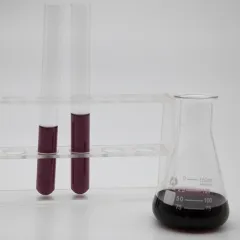
stability of Colloidal gold
The stability of the colloidal dispersion system mainly depends on hydration and the charge of colloidal particles. The stability of hydrophilic glue and hydrophobic glue is discussed as follows:
Stability of hydrophilic colloid
Mainly depends on its strong solvation and the hydration layer of colloidal particles. Because the hydration layer around the colloidal particles prevents the particles from agglomerating with each other, the thicker the hydration layer, the greater the stability. Therefore, all factors that can destroy the hydration layer of colloidal particles can cause the instability of hydrophilic colloids. For example, when a small amount of electrolyte is added to the hydrocolloid, condensation will not be caused by the ionic action of opposite charges. Once the hydration layer is removed, and hydrophobic colloidal particles are formed, it is easy to precipitate on the condensation surface. For example, after adding ethanol to gum Arabic and agar for dehydration, the colloidal particles lose their hydration layer and coagulate when they meet cations. Similarly, if a large amount of electrolyte is added to the hydrocolloid because the electrolyte ions themselves have strong hydration properties, the hydration layer of the colloidal particles will be removed after addition, which will also cause coagulation and precipitation. This action is called salting out.
Adding a large number of dehydrating agents, such as ethanol, acetone, syrup, etc., into hydrophilic colloids can also destroy the hydration layer of solvated colloidal particles, dehydrate and precipitate. Or, although it is not precipitated, its sensitivity to the electrolyte is increased, and it is easier to salt out.
If hydrocolloids undergo chemical changes under the influence of light, heat, air, and so on for a long time, and the products of the changes have small solubility, condensation will also occur. If immiscible liquids are added to the colloidal solution, some or all of the colloidal particles will coagulate when electrified, shaken violently, boiled, or frozen. Ultraviolet rays and X-rays can also make the glue sensitive to electrolytes.
Stability of Hydrophobic Colloids
Because its colloidal particles can't hydrate, they mainly rely on the same charge on the surface of the particles, and they are repelled from each other to avoid condensation and be stable. However, hydrophobic colloidal particles can be charged and have a certain degree of stability only when there are adsorption ions and some hetero ions that constitute the adsorption layer. If a small amount of electrolyte in lyophobic colloid (generally referred to as sol) is removed by dialysis, the colloid loses its charge, and the colloid condenses and precipitates. Therefore, there must be a small amount of electrolyte in the colloid as a stabilizer, and its positive and negative charges constitute the electric double-layer structure of the colloidal particles so that the hydrophobic colloidal particles can be stabilized to a certain extent with a certain amount of charge. The amount of electrolyte added must be appropriate. If it is added too much, with the increase of the concentration of external ions, the foreign ions originally distributed in the diffusion layer can be squeezed into the adsorption layer so that the foreign ions in the diffusion layer far away from the pre-adsorption layer will approach the adsorption layer, which will gradually make the diffusion layer thinner and reduce the potential for stabilization. When the potential drops below the critical value, colloidal particles coagulate. It can be seen that sol is sensitive to the electrolyte.
Price of Colloidal gold
Colloidal gold particle size and purity will affect the product's price, and the purchase volume can also affect the cost of Colloidal gold. A large amount of large amount will be lower. The price of Colloidal gold can be found on our company's official website.
Colloidal gold supplier
Luoyang Tongrun Nano Technology Co. Ltd. (TRUNNANO) Luoyang City, Henan Province, China, is a reliable and high-quality global chemical material supplier and manufacturer. It has more than 12 years of experience providing ultra-high quality chemicals and nanotechnology materials, including Colloidal gold, nitride powder, Colloidal gold, sulfide powder, and 3D printing powder. If you are looking for high-quality and cost-effective Colloidal gold, you are welcome to contact us or inquire any time.
The stability of the colloidal dispersion system mainly depends on hydration and the charge of colloidal particles. The stability of hydrophilic glue and hydrophobic glue is discussed as follows:
Stability of hydrophilic colloid
Mainly depends on its strong solvation and the hydration layer of colloidal particles. Because the hydration layer around the colloidal particles prevents the particles from agglomerating with each other, the thicker the hydration layer, the greater the stability. Therefore, all factors that can destroy the hydration layer of colloidal particles can cause the instability of hydrophilic colloids. For example, when a small amount of electrolyte is added to the hydrocolloid, condensation will not be caused by the ionic action of opposite charges. Once the hydration layer is removed, and hydrophobic colloidal particles are formed, it is easy to precipitate on the condensation surface. For example, after adding ethanol to gum Arabic and agar for dehydration, the colloidal particles lose their hydration layer and coagulate when they meet cations. Similarly, if a large amount of electrolyte is added to the hydrocolloid because the electrolyte ions themselves have strong hydration properties, the hydration layer of the colloidal particles will be removed after addition, which will also cause coagulation and precipitation. This action is called salting out.
Adding a large number of dehydrating agents, such as ethanol, acetone, syrup, etc., into hydrophilic colloids can also destroy the hydration layer of solvated colloidal particles, dehydrate and precipitate. Or, although it is not precipitated, its sensitivity to the electrolyte is increased, and it is easier to salt out.
If hydrocolloids undergo chemical changes under the influence of light, heat, air, and so on for a long time, and the products of the changes have small solubility, condensation will also occur. If immiscible liquids are added to the colloidal solution, some or all of the colloidal particles will coagulate when electrified, shaken violently, boiled, or frozen. Ultraviolet rays and X-rays can also make the glue sensitive to electrolytes.
Stability of Hydrophobic Colloids
Because its colloidal particles can't hydrate, they mainly rely on the same charge on the surface of the particles, and they are repelled from each other to avoid condensation and be stable. However, hydrophobic colloidal particles can be charged and have a certain degree of stability only when there are adsorption ions and some hetero ions that constitute the adsorption layer. If a small amount of electrolyte in lyophobic colloid (generally referred to as sol) is removed by dialysis, the colloid loses its charge, and the colloid condenses and precipitates. Therefore, there must be a small amount of electrolyte in the colloid as a stabilizer, and its positive and negative charges constitute the electric double-layer structure of the colloidal particles so that the hydrophobic colloidal particles can be stabilized to a certain extent with a certain amount of charge. The amount of electrolyte added must be appropriate. If it is added too much, with the increase of the concentration of external ions, the foreign ions originally distributed in the diffusion layer can be squeezed into the adsorption layer so that the foreign ions in the diffusion layer far away from the pre-adsorption layer will approach the adsorption layer, which will gradually make the diffusion layer thinner and reduce the potential for stabilization. When the potential drops below the critical value, colloidal particles coagulate. It can be seen that sol is sensitive to the electrolyte.
Price of Colloidal gold
Colloidal gold particle size and purity will affect the product's price, and the purchase volume can also affect the cost of Colloidal gold. A large amount of large amount will be lower. The price of Colloidal gold can be found on our company's official website.
Colloidal gold supplier
Luoyang Tongrun Nano Technology Co. Ltd. (TRUNNANO) Luoyang City, Henan Province, China, is a reliable and high-quality global chemical material supplier and manufacturer. It has more than 12 years of experience providing ultra-high quality chemicals and nanotechnology materials, including Colloidal gold, nitride powder, Colloidal gold, sulfide powder, and 3D printing powder. If you are looking for high-quality and cost-effective Colloidal gold, you are welcome to contact us or inquire any time.
Leave a Reply
Your email address will not be published.Required fields are marked. *