
By lql | 04 November 2025 | 0 Comments
What is the purpose of hafnium carbide?
What is Hafnium carbide?
Hafnium carbide (HfC) is a grey-black powder which belongs to a face-centred cubic structure and has a very high melting point (3890℃). It is a known single compound with a high melting point, and it is a good material for lining the melting crucible of high melting point metals.
Hafnium carbide (HfC) is a grey-black powder which belongs to a face-centred cubic structure and has a very high melting point (3890℃). It is a known single compound with a high melting point, and it is a good material for lining the melting crucible of high melting point metals.
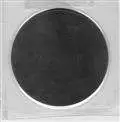
Hafnium carbide has a high elastic coefficient, good electrical and thermal conductivity, a small thermal expansion coefficient and good impact resistance. It is very suitable for the field of rocket nozzle materials and is also an important cermet material.
Characteristics of Hafnium carbide powder
1.Hafnium carbide (HfC) has the highest melting point among known single compounds. The volume resistivity is 1.95× 10⁻⁴ Ω cm (2900℃), and the thermal expansion coefficient is 6.73×10⁻⁶/℃. Usually, hafnium dioxide (HfO2) and carbon are synthesized into powder in an inert or reducing atmosphere, and the reaction temperature is 1900 ~ 2300℃. High-density ceramic desserts are prepared by hot pressing sintering or hot isostatic pressing.
2.Hafnium carbide can form a solid solution with many compounds (such as ZrC, TaC, etc.). For example, the composite carbide of HfC-4TaC has two phases in microstructure: one phase is hafnium carbide-tantalum carbide eutectic; The other phase is acicular free graphite phase with a shape ratio of 50: 1. This "near eutectic" hafnium carbide (HfC) product has good thermal stability and high melting point, and can be used as throat material of rocket nozzle.
3.Hafnium carbide has a density of 12.7 and a melting point of 3890℃.
Applications of Hafnium carbide powder
1.Hafnium carbide is a ceramic material with high-temperature resistance and oxidation resistance and has the advantages of good electric conductivity and small thermal expansion. Hafnium carbide is suitable for manufacturing important components such as rocket nozzle and wing fronts and is mainly used in aerospace, industrial ceramics and other fields.
2. Hafnium carbide has high hardness, can be used as an additive of cemented carbide, can form solid solutions with many compounds (such as ZrC, TaC, etc.), and has been widely used in cutting tools and dies.
3. Hafnium carbide has good solid-phase stability and chemical corrosion resistance, so it has great potential to be used in high-temperature environments. In addition, the field emission performance of carbon nanotube cathode can be improved by vapour deposition of HfC film.
Price of Hafnium carbide powder
Hafnium carbide powder particle size and purity will affect the product's price, and the purchase volume can also affect the cost of Hafnium carbide powder. A large amount of large amount will be lower. The price of Hafnium carbide powder can be found on our company's official website.
Synthesis Methods of Hafnium Carbide (HfC)
Hafnium carbide is an ultra-high-temperature ceramic (UHTC) known for its exceptional melting point and hardness, with various advanced methods developed for its synthesis.
Hafnium carbide powder supplier
Luoyang Tongrun Nano Technology Co. Ltd. (TRUNNANO) Luoyang City, Henan Province, China, is a reliable and high-quality global chemical material supplier and manufacturer. It has more than 12 years of experience providing ultra-high quality chemicals and nanotechnology materials, including Hafnium carbide powder, nitride powder, sulfide powder, and 3D printing powder. If you are looking for high-quality and cost-effective Hafnium carbide powder, you are welcome to contact us or inquire any time.
Characteristics of Hafnium carbide powder
1.Hafnium carbide (HfC) has the highest melting point among known single compounds. The volume resistivity is 1.95× 10⁻⁴ Ω cm (2900℃), and the thermal expansion coefficient is 6.73×10⁻⁶/℃. Usually, hafnium dioxide (HfO2) and carbon are synthesized into powder in an inert or reducing atmosphere, and the reaction temperature is 1900 ~ 2300℃. High-density ceramic desserts are prepared by hot pressing sintering or hot isostatic pressing.
2.Hafnium carbide can form a solid solution with many compounds (such as ZrC, TaC, etc.). For example, the composite carbide of HfC-4TaC has two phases in microstructure: one phase is hafnium carbide-tantalum carbide eutectic; The other phase is acicular free graphite phase with a shape ratio of 50: 1. This "near eutectic" hafnium carbide (HfC) product has good thermal stability and high melting point, and can be used as throat material of rocket nozzle.
3.Hafnium carbide has a density of 12.7 and a melting point of 3890℃.
Applications of Hafnium carbide powder
1.Hafnium carbide is a ceramic material with high-temperature resistance and oxidation resistance and has the advantages of good electric conductivity and small thermal expansion. Hafnium carbide is suitable for manufacturing important components such as rocket nozzle and wing fronts and is mainly used in aerospace, industrial ceramics and other fields.
2. Hafnium carbide has high hardness, can be used as an additive of cemented carbide, can form solid solutions with many compounds (such as ZrC, TaC, etc.), and has been widely used in cutting tools and dies.
3. Hafnium carbide has good solid-phase stability and chemical corrosion resistance, so it has great potential to be used in high-temperature environments. In addition, the field emission performance of carbon nanotube cathode can be improved by vapour deposition of HfC film.
Price of Hafnium carbide powder
Hafnium carbide powder particle size and purity will affect the product's price, and the purchase volume can also affect the cost of Hafnium carbide powder. A large amount of large amount will be lower. The price of Hafnium carbide powder can be found on our company's official website.
Synthesis Methods of Hafnium Carbide (HfC)
Hafnium carbide is an ultra-high-temperature ceramic (UHTC) known for its exceptional melting point and hardness, with various advanced methods developed for its synthesis.
- Traditional Carbothermal Reduction: This conventional method involves heating a mixture of hafnium oxide (HfO₂) and carbon at high temperatures (typically between 1900°C and 2300°C) in an inert or reducing atmosphere to produce HfC powder . The process can lead to relatively large micrometer-scale particles .
- Sol-Gel and Rapid Heat Treatment: This approach uses a sol-gel process to create a highly homogeneous precursor mixture of HfO₂ and carbon. The precursor is then subjected to rapid high-temperature heat treatment (e.g., at 1700°C for a short duration of several minutes) to form ultrafine HfC powder with a uniform particle size of around 500 nm and low oxygen content .
- Chemical Vapour Deposition (CVD): The CVD process typically uses gaseous precursors, such as HfCl₄ and methane, which react on a heated substrate to deposit HfC coatings or microcrystal chains. This method allows for the creation of complex crystalline structures, such as single-crystal HfC cores with carbon-rich shells .
- Liquid Polymer Precursor Pyrolysis: This method involves using a liquid polymer precursor containing hafnium. Through catalyst-assisted pyrolysis at high temperatures (e.g., 1450-1600°C), the precursor is converted into HfC nanostructures, such as nanowires, directly on substrates like carbon fibers. This technique allows for molecular-level mixing, facilitating the production of high-purity, single-crystalline nanowires with controlled morphology .
- Selective Laser Reaction Pyrolysis (SLRP): A novel one-step method that uses a CO₂ infrared laser to achieve localized heating up to 2000°C within seconds, converting a liquid polymer precursor directly into HfC. This technique combines crosslinking and pyrolysis into a single step, significantly reducing processing time and energy consumption, and is applicable for additive manufacturing, such as depositing HfC coatings on composites .
Hafnium carbide powder supplier
Luoyang Tongrun Nano Technology Co. Ltd. (TRUNNANO) Luoyang City, Henan Province, China, is a reliable and high-quality global chemical material supplier and manufacturer. It has more than 12 years of experience providing ultra-high quality chemicals and nanotechnology materials, including Hafnium carbide powder, nitride powder, sulfide powder, and 3D printing powder. If you are looking for high-quality and cost-effective Hafnium carbide powder, you are welcome to contact us or inquire any time.
Leave a Reply
Your email address will not be published.Required fields are marked. *