
By lql | 12 February 2023 | 0 Comments
What is the application of colloidal gold solution?
What is Colloidal gold?
Colloidal gold, also known as the gold solution, refers to the gold sol whose dispersed phase particle diameter is between L and l—150nm, which belongs to a heterogeneous system, and its color is orange to purple. Colloidal gold can be used as a marker in immunohistochemistry, and colloidal gold labeling has developed into an important immunolabeling technology in recent 10 years. Colloidal gold immunoassay has been developed in many fields, such as drug detection and biomedicine, and has been paid more and more attention in related research fields.
Colloidal gold, also known as the gold solution, refers to the gold sol whose dispersed phase particle diameter is between L and l—150nm, which belongs to a heterogeneous system, and its color is orange to purple. Colloidal gold can be used as a marker in immunohistochemistry, and colloidal gold labeling has developed into an important immunolabeling technology in recent 10 years. Colloidal gold immunoassay has been developed in many fields, such as drug detection and biomedicine, and has been paid more and more attention in related research fields.
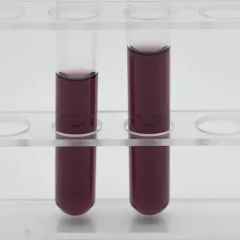
Tiny gold particles are stably, uniformly and in a single dispersed state suspended in the liquid, becoming the colloidal gold solution. Colloidal gold thus has many characteristics of colloid, especially its sensitivity to the electrolyte. The electrolyte can destroy the eternal hydration layer of colloidal gold particles, thus breaking the stable state of colloid and making the dispersed single gold particles condense into large particles and precipitate from the liquid. Some macromolecules, such as proteins, can protect colloidal gold and strengthen its stability.
Uses of Colloidal gold
1. The application of colloidal gold at the level of the electron microscope. Colloidal gold is the earliest, fastest-growing, and most widely used in applied electron microscopy. Its biggest advantage is that double or multiple labeling can be carried out by applying particles of different sizes or combining enzyme labels. Colloidal gold with a diameter of 3 ~ 15 nm can be used as a marker at the electron microscope level. Colloidal gold with a diameter of 3 ~ 15nm is mostly used to detect single antigen particles, while colloidal gold with a diameter of 15 nm is mostly used to detect a large number of infected cells.
Colloidal gold is used in the study of electron microscope level, which mainly includes:
1) observation of cell surface antigen in cell suspension or monolayer culture.
2) Detection of intracellular antigens in monolayer culture.
3) Detection of tissue antigen. The application of gold labeling at the electron microscope level mainly includes: staining before embedding, staining after embedding, immunonegative staining, double labeling technique, and in situ hybridization technique. Experiments show that this method has the advantages of less sample consumption, fast detection speed, obvious contrast, simple operation, high sensitivity, and specificity, and can be used for both antigen detection and antibody detection, so it can be applied to scientific research and diagnosis at the same time.
2. Application of colloidal gold at the level of a light microscope. Colloidal gold can also be used as a marker at the level of a light microscope to replace traditional fluorescein, enzyme, and so on. All kinds of cell smears and sections can be applied. Mainly used for: 1) Detection of membrane surface antigen of the cell suspension or cultured monolayer cells with monoclonal antibody or antiserum.
2) Detection of intracellular antigens of cultured monolayer cells,
3) Detection of antigens in tissues or sub-thin sections. Colloidal gold used in the study of light microscope level can make up for the inevitable shortcomings of other markers, such as high background and internal enzyme activity interference.
3. Application of colloidal gold in flow cytometry. It is one of the important technologies in immunology research to analyze cell surface antigens by flow cytometry with fluorescein-labeled antibodies. However, because the spectra of different fluoresceins overlap with each other, it is difficult to distinguish different markers, so it is necessary to find a non-fluorescein marker for flow cytometry. In this way, several marks can be made at the same time. The marker must be able to change the scattering angle, and colloidal gold can obviously change the scattering angle of a red laser, so it can be used as one of the markers of flow cytometry.
4. Agglutination test: The monodisperse immune gold sol is a clear and transparent solution, and its color changes with the size of the sol particles. When it reacts specifically with the corresponding antigen or antibody, it will coagulate, and the sol particles will increase extremely, and the light scattering will change accordingly, and the particles will also settle, and the color of the solution will fade or even become colorless. This principle can be applied to the immune reaction qualitatively or quantitatively.
5. immunoblotting: Immunoblotting is a relatively new immunochemical technique. Protein was separated by polyacrylamide gel electrophoresis, and the obtained bands were transferred to a nitrocellulose membrane and then quantified by enzyme immunoassay (or immunofluorescence, RIA). Immunocolloidal gold can also be used for the quantification of this method. After the transferred nitrocellulose membrane was incubated with a specific antibody, it was incubated with colloidal gold sensitized by staphylococcal protein A, and the excess colloidal gold was thoroughly washed away. According to the color of colloidal gold particles on the membrane, the specific antigen in the sample could be detected.
Price of Colloidal gold
Colloidal gold particle size and purity will affect the product's price, and the purchase volume can also affect the cost of Colloidal gold. A large amount of large amount will be lower. The price of Colloidal gold can be found on our company's official website.
Colloidal gold supplier
Luoyang Tongrun Nano Technology Co. Ltd. (TRUNNANO) Luoyang City, Henan Province, China, is a reliable and high-quality global chemical material supplier and manufacturer. It has more than 12 years of experience providing ultra-high quality chemicals and nanotechnology materials, including Colloidal gold, nitride powder, Colloidal gold, sulfide powder, and 3D printing powder. If you are looking for high-quality and cost-effective Colloidal gold, you are welcome to contact us or inquire any time.
Uses of Colloidal gold
1. The application of colloidal gold at the level of the electron microscope. Colloidal gold is the earliest, fastest-growing, and most widely used in applied electron microscopy. Its biggest advantage is that double or multiple labeling can be carried out by applying particles of different sizes or combining enzyme labels. Colloidal gold with a diameter of 3 ~ 15 nm can be used as a marker at the electron microscope level. Colloidal gold with a diameter of 3 ~ 15nm is mostly used to detect single antigen particles, while colloidal gold with a diameter of 15 nm is mostly used to detect a large number of infected cells.
Colloidal gold is used in the study of electron microscope level, which mainly includes:
1) observation of cell surface antigen in cell suspension or monolayer culture.
2) Detection of intracellular antigens in monolayer culture.
3) Detection of tissue antigen. The application of gold labeling at the electron microscope level mainly includes: staining before embedding, staining after embedding, immunonegative staining, double labeling technique, and in situ hybridization technique. Experiments show that this method has the advantages of less sample consumption, fast detection speed, obvious contrast, simple operation, high sensitivity, and specificity, and can be used for both antigen detection and antibody detection, so it can be applied to scientific research and diagnosis at the same time.
2. Application of colloidal gold at the level of a light microscope. Colloidal gold can also be used as a marker at the level of a light microscope to replace traditional fluorescein, enzyme, and so on. All kinds of cell smears and sections can be applied. Mainly used for: 1) Detection of membrane surface antigen of the cell suspension or cultured monolayer cells with monoclonal antibody or antiserum.
2) Detection of intracellular antigens of cultured monolayer cells,
3) Detection of antigens in tissues or sub-thin sections. Colloidal gold used in the study of light microscope level can make up for the inevitable shortcomings of other markers, such as high background and internal enzyme activity interference.
3. Application of colloidal gold in flow cytometry. It is one of the important technologies in immunology research to analyze cell surface antigens by flow cytometry with fluorescein-labeled antibodies. However, because the spectra of different fluoresceins overlap with each other, it is difficult to distinguish different markers, so it is necessary to find a non-fluorescein marker for flow cytometry. In this way, several marks can be made at the same time. The marker must be able to change the scattering angle, and colloidal gold can obviously change the scattering angle of a red laser, so it can be used as one of the markers of flow cytometry.
4. Agglutination test: The monodisperse immune gold sol is a clear and transparent solution, and its color changes with the size of the sol particles. When it reacts specifically with the corresponding antigen or antibody, it will coagulate, and the sol particles will increase extremely, and the light scattering will change accordingly, and the particles will also settle, and the color of the solution will fade or even become colorless. This principle can be applied to the immune reaction qualitatively or quantitatively.
5. immunoblotting: Immunoblotting is a relatively new immunochemical technique. Protein was separated by polyacrylamide gel electrophoresis, and the obtained bands were transferred to a nitrocellulose membrane and then quantified by enzyme immunoassay (or immunofluorescence, RIA). Immunocolloidal gold can also be used for the quantification of this method. After the transferred nitrocellulose membrane was incubated with a specific antibody, it was incubated with colloidal gold sensitized by staphylococcal protein A, and the excess colloidal gold was thoroughly washed away. According to the color of colloidal gold particles on the membrane, the specific antigen in the sample could be detected.
Price of Colloidal gold
Colloidal gold particle size and purity will affect the product's price, and the purchase volume can also affect the cost of Colloidal gold. A large amount of large amount will be lower. The price of Colloidal gold can be found on our company's official website.
Colloidal gold supplier
Luoyang Tongrun Nano Technology Co. Ltd. (TRUNNANO) Luoyang City, Henan Province, China, is a reliable and high-quality global chemical material supplier and manufacturer. It has more than 12 years of experience providing ultra-high quality chemicals and nanotechnology materials, including Colloidal gold, nitride powder, Colloidal gold, sulfide powder, and 3D printing powder. If you are looking for high-quality and cost-effective Colloidal gold, you are welcome to contact us or inquire any time.
Leave a Reply
Your email address will not be published.Required fields are marked. *