
By lql | 09 February 2023 | 0 Comments
What is chrome oxide?
What is Chromic oxide?
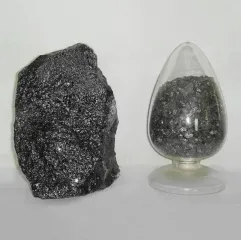
Chromium dioxide is an oxide of chromium, which is a black solid at normal temperature and pressure. The molecular formula is CrO2 and the molecular weight is 83.9949, which is mainly used for manufacturing chromium dioxide magnetic powder.
Chromium dioxide is an oxide of chromium, which is a black solid at normal temperature and pressure. The molecular formula is CrO2 and the molecular weight is 83.9949, which is mainly used for manufacturing chromium dioxide magnetic powder.
Use of Chromic oxide
Melt-blown grade chrome oxide can be used as a melt-blown coating, which can be directly sprayed onto metal, ceramic, and other surfaces with the help of high-temperature plasma gas, giving the latter extremely high wear resistance, corrosion resistance, and high-temperature resistance;
According to needs, chrome oxide green and aluminum oxide or zirconium oxide can be fused together to obtain a refractory material with excellent performance.
Production method of Chromic oxide
Reduction method: 99.5% potassium dichromate and 98% sulfur are mixed according to the mass ratio of 7:1 and then roasted to produce chromium oxide and potassium sulfate. After the reaction, the furnace charge is wet-ground, then put into a washing tank with a stirrer to be washed with hot water, and the chromium oxide is filtered out by a filter press to obtain a paste-like filter cake with a water content of 30%-35%. The filter cake is dried at 300℃, cooled, and crushed to obtain the finished product of chromium oxide green. The washing liquid contains a large number of soluble salts such as potassium sulfate, chromium sulfate, and hexavalent chromium. Hydrogen sulfide can be introduced to reduce hexavalent chromium to generate chromium hydroxide precipitate, which can be separated by filtration. Hydrochloric acid was added to the filtrate, and the solution was concentrated and crystallized to produce a potassium chloride by-product. Sulfur dioxide and sulfur trioxide released during roasting are absorbed by dilute ammonia water, and ammonium sulfate can be produced as by-products.
Thermal decomposition method: 99. 5% chromic anhydride was calcined at about 1400℃ for 1 ~ 1.5h to generate chromic oxide. Cooling and grinding with a high-speed pulverizer to obtain a finished product of chromium oxide green.
Price of Chromic oxide powder
Chromic oxide powder particle size and purity will affect the product's price, and the purchase volume can also affect the cost of Chromic oxide powder. A large amount of large amount will be lower. The price of Chromic oxide powder can be found on our company's official website.
Chromic oxide powder supplier
Luoyang Tongrun Nano Technology Co. Ltd. (TRUNNANO) Luoyang City, Henan Province, China, is a reliable and high-quality global chemical material supplier and manufacturer. It has more than 12 years of experience providing ultra-high quality chemicals and nanotechnology materials, including Chromic oxide powder, nitride powder, Chromic oxide powder, sulfide powder. If you are looking for high-quality and cost-effective Chromic oxide powder, you are welcome to contact us or inquire any time.
Melt-blown grade chrome oxide can be used as a melt-blown coating, which can be directly sprayed onto metal, ceramic, and other surfaces with the help of high-temperature plasma gas, giving the latter extremely high wear resistance, corrosion resistance, and high-temperature resistance;
According to needs, chrome oxide green and aluminum oxide or zirconium oxide can be fused together to obtain a refractory material with excellent performance.
Production method of Chromic oxide
Reduction method: 99.5% potassium dichromate and 98% sulfur are mixed according to the mass ratio of 7:1 and then roasted to produce chromium oxide and potassium sulfate. After the reaction, the furnace charge is wet-ground, then put into a washing tank with a stirrer to be washed with hot water, and the chromium oxide is filtered out by a filter press to obtain a paste-like filter cake with a water content of 30%-35%. The filter cake is dried at 300℃, cooled, and crushed to obtain the finished product of chromium oxide green. The washing liquid contains a large number of soluble salts such as potassium sulfate, chromium sulfate, and hexavalent chromium. Hydrogen sulfide can be introduced to reduce hexavalent chromium to generate chromium hydroxide precipitate, which can be separated by filtration. Hydrochloric acid was added to the filtrate, and the solution was concentrated and crystallized to produce a potassium chloride by-product. Sulfur dioxide and sulfur trioxide released during roasting are absorbed by dilute ammonia water, and ammonium sulfate can be produced as by-products.
Thermal decomposition method: 99. 5% chromic anhydride was calcined at about 1400℃ for 1 ~ 1.5h to generate chromic oxide. Cooling and grinding with a high-speed pulverizer to obtain a finished product of chromium oxide green.
Price of Chromic oxide powder
Chromic oxide powder particle size and purity will affect the product's price, and the purchase volume can also affect the cost of Chromic oxide powder. A large amount of large amount will be lower. The price of Chromic oxide powder can be found on our company's official website.
Chromic oxide powder supplier
Luoyang Tongrun Nano Technology Co. Ltd. (TRUNNANO) Luoyang City, Henan Province, China, is a reliable and high-quality global chemical material supplier and manufacturer. It has more than 12 years of experience providing ultra-high quality chemicals and nanotechnology materials, including Chromic oxide powder, nitride powder, Chromic oxide powder, sulfide powder. If you are looking for high-quality and cost-effective Chromic oxide powder, you are welcome to contact us or inquire any time.
Leave a Reply
Your email address will not be published.Required fields are marked. *