
By TRUNNANO | 11 June 2021 | 0 Comments
Synthesis processes of titanium carbide-based ceramics, each of which has its advantages and disadva
Titanium carbide ceramics are typical transition metal carbides. Its bonding is composed of ionic bonds, covalent bonds and metallic bonds mixed in the same crystal structure, so TiC has many unique properties. The structure of the crystal determines the basic characteristics of TiC, such as high hardness, high melting point, wear resistance and electrical conductivity.
Titanium carbide ceramics, as a typical transition metal carbide, are brittle and cannot be directly used as engineering components, so they are usually used as a reinforcement phase in composite materials, and more often used as coatings, which have been applied and paid attention to in the field of materials, such as the emergence of Titanium carbide-based ceramics.
There are many kinds of synthesis processes of titanium carbide-based ceramics, each of which has its advantages and disadvantages. In actual production, the suitable process can be selected according to different application requirements and price factors.
The following is a brief introduction: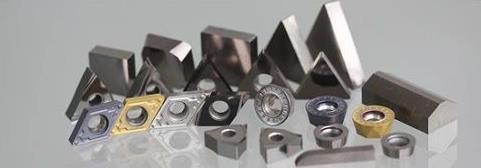 1. Chemical Vapor Deposition (CVD)
The method is a technology of deposition of solid thin film coating on the surface of the substrate by space vapor phase chemical reaction. Because the whole reaction, this method is based on thermodynamics, the chemical vapor deposition film has good adhesion and coatingability, the dense film layer, and the sheet bonding strength is high, can meet the realization is not limited to twitching such as tin, TiCN, TiBN and other single and multi-layer composite coatings.
The disadvantage of this method is that the processing temperature is higher (generally 900~1200℃). High temperature softens the steel base. After processing, vacuum quenching is needed again. The process is more complex, the workpiece is easy to deform, resulting in the bending strength of the matrix material. Reduce; In addition, harmful waste gas and liquid will be generated during the preparation process, which is easy to cause industrial pollution, which is contradictory to the green industry advocated by the country today, and also restricts the comprehensive promotion and use of this law.
2. Physical Vapor Deposition (PVD)
The method uses physical processes such as thermal evaporation, sputtering, glow discharge and arc discharge to deposit the required coating on the surface of the substrate. Including evaporation coating, sputtering coating and ion coating technology. The latter two are commonly used PVD techniques for preparing ceramic coatings.
PVD films usually have residual compressive stress and are prone to crack and fall off due to their brittleness. In addition, it belongs to the linear processing, adhesion and coating performance is poor. The workpiece needs to rotate or swing in the process, which increases the design difficulty and difficulty of the vacuum chamber. Invalid coating and other problems.
3. Liquid deposition
The method is a wet chemical film forming method. The basic principle is that the hydrolytic equilibrium motion of metal compounds is driven by the ligand replacement between ions in the solution so that metal oxides or hydroxides are deposited on the substrate to form a thin film coating. Because the method can deposit thin films at low temperature/room temperature, no heat treatment or expensive processing equipment is required during the preparation process, and the operation is simple.
The disadvantage of this method is that, because it is essentially a reaction in an aqueous solution, the concentration of the solution is inconsistent with the reaction in the deposition process, there are many factors that affect the liquid phase reaction, and the industrial stability is not high.
4. The thermal spraying
This method is to heat a certain linear or powdery material to a molten or semi-molten state through a heat source such as flame, arc or plasma, and accelerate the formation of high-speed liquid droplets, the droplets are sprayed onto the substrate, forming a coating on the substrate. Surface properties of reinforced or recycled materials that protect and recover part size reductions caused by wear, corrosion, or machining tolerances. The method includes plasma spraying, arc spraying and flame spraying technologies.
5. In situ synthesis
In situ synthesis method is to generate the second phase in the material or the reinforcing phase in the composite during the process of material formation, that is, it does not exist before the material preparation, but is generated in place during the process of material preparation. The in-situ synthesis of two-phase reinforced particles has no pollution at the interface and uniform distribution of the second phase, which avoids the problems encountered in the traditional powder metallurgy and smelting process. With the development of in-situ composite technology, its application scope has been extended to metal and ceramic-based materials.
6. Other synthetic methods
In addition to the above preparation process, there are also in situ synthesis, melting casting, powder metallurgy, mechanical alloying, thermal spraying, self-propagating high-temperature synthesis, high-density energy beam coating, sol-gel method, liquid electric spark surface enhancement and other dielectric discharge synthesis methods. In actual industrial applications, the selection of preparation methods for carbon-based ceramic composites can be determined according to their own conditions and needs.
TRUNNANO (aka. Luoyang Tongrun Nano Technology Co. Ltd.) is a trusted global chemical material supplier & manufacturer with over 12 years’ experience in providing super high-quality chemicals and Nanomaterials. The Titanium Carbide TiC Powder produced by our company has high purity, fine particle size. Please contact us if necessary.
Titanium carbide ceramics, as a typical transition metal carbide, are brittle and cannot be directly used as engineering components, so they are usually used as a reinforcement phase in composite materials, and more often used as coatings, which have been applied and paid attention to in the field of materials, such as the emergence of Titanium carbide-based ceramics.
There are many kinds of synthesis processes of titanium carbide-based ceramics, each of which has its advantages and disadvantages. In actual production, the suitable process can be selected according to different application requirements and price factors.
The following is a brief introduction:
The method is a technology of deposition of solid thin film coating on the surface of the substrate by space vapor phase chemical reaction. Because the whole reaction, this method is based on thermodynamics, the chemical vapor deposition film has good adhesion and coatingability, the dense film layer, and the sheet bonding strength is high, can meet the realization is not limited to twitching such as tin, TiCN, TiBN and other single and multi-layer composite coatings.
The disadvantage of this method is that the processing temperature is higher (generally 900~1200℃). High temperature softens the steel base. After processing, vacuum quenching is needed again. The process is more complex, the workpiece is easy to deform, resulting in the bending strength of the matrix material. Reduce; In addition, harmful waste gas and liquid will be generated during the preparation process, which is easy to cause industrial pollution, which is contradictory to the green industry advocated by the country today, and also restricts the comprehensive promotion and use of this law.
2. Physical Vapor Deposition (PVD)
The method uses physical processes such as thermal evaporation, sputtering, glow discharge and arc discharge to deposit the required coating on the surface of the substrate. Including evaporation coating, sputtering coating and ion coating technology. The latter two are commonly used PVD techniques for preparing ceramic coatings.
PVD films usually have residual compressive stress and are prone to crack and fall off due to their brittleness. In addition, it belongs to the linear processing, adhesion and coating performance is poor. The workpiece needs to rotate or swing in the process, which increases the design difficulty and difficulty of the vacuum chamber. Invalid coating and other problems.
3. Liquid deposition
The method is a wet chemical film forming method. The basic principle is that the hydrolytic equilibrium motion of metal compounds is driven by the ligand replacement between ions in the solution so that metal oxides or hydroxides are deposited on the substrate to form a thin film coating. Because the method can deposit thin films at low temperature/room temperature, no heat treatment or expensive processing equipment is required during the preparation process, and the operation is simple.
The disadvantage of this method is that, because it is essentially a reaction in an aqueous solution, the concentration of the solution is inconsistent with the reaction in the deposition process, there are many factors that affect the liquid phase reaction, and the industrial stability is not high.
4. The thermal spraying
This method is to heat a certain linear or powdery material to a molten or semi-molten state through a heat source such as flame, arc or plasma, and accelerate the formation of high-speed liquid droplets, the droplets are sprayed onto the substrate, forming a coating on the substrate. Surface properties of reinforced or recycled materials that protect and recover part size reductions caused by wear, corrosion, or machining tolerances. The method includes plasma spraying, arc spraying and flame spraying technologies.
5. In situ synthesis
In situ synthesis method is to generate the second phase in the material or the reinforcing phase in the composite during the process of material formation, that is, it does not exist before the material preparation, but is generated in place during the process of material preparation. The in-situ synthesis of two-phase reinforced particles has no pollution at the interface and uniform distribution of the second phase, which avoids the problems encountered in the traditional powder metallurgy and smelting process. With the development of in-situ composite technology, its application scope has been extended to metal and ceramic-based materials.
6. Other synthetic methods
In addition to the above preparation process, there are also in situ synthesis, melting casting, powder metallurgy, mechanical alloying, thermal spraying, self-propagating high-temperature synthesis, high-density energy beam coating, sol-gel method, liquid electric spark surface enhancement and other dielectric discharge synthesis methods. In actual industrial applications, the selection of preparation methods for carbon-based ceramic composites can be determined according to their own conditions and needs.
TRUNNANO (aka. Luoyang Tongrun Nano Technology Co. Ltd.) is a trusted global chemical material supplier & manufacturer with over 12 years’ experience in providing super high-quality chemicals and Nanomaterials. The Titanium Carbide TiC Powder produced by our company has high purity, fine particle size. Please contact us if necessary.
Leave a Reply
Your email address will not be published.Required fields are marked. *