
By Vincy | 02 September 2025 | 0 Comments
Spherical Silica: The Invisible Architect of Modern Innovation
1. The Fundamental Science of Spherical Silica
Spherical Silica
2. Industrial Alchemy: Turning Sand into Spheres
3. Revolutionizing Technology Through Spherical Silica
4. The Future of Spherical Silica: Innovations on the Horizon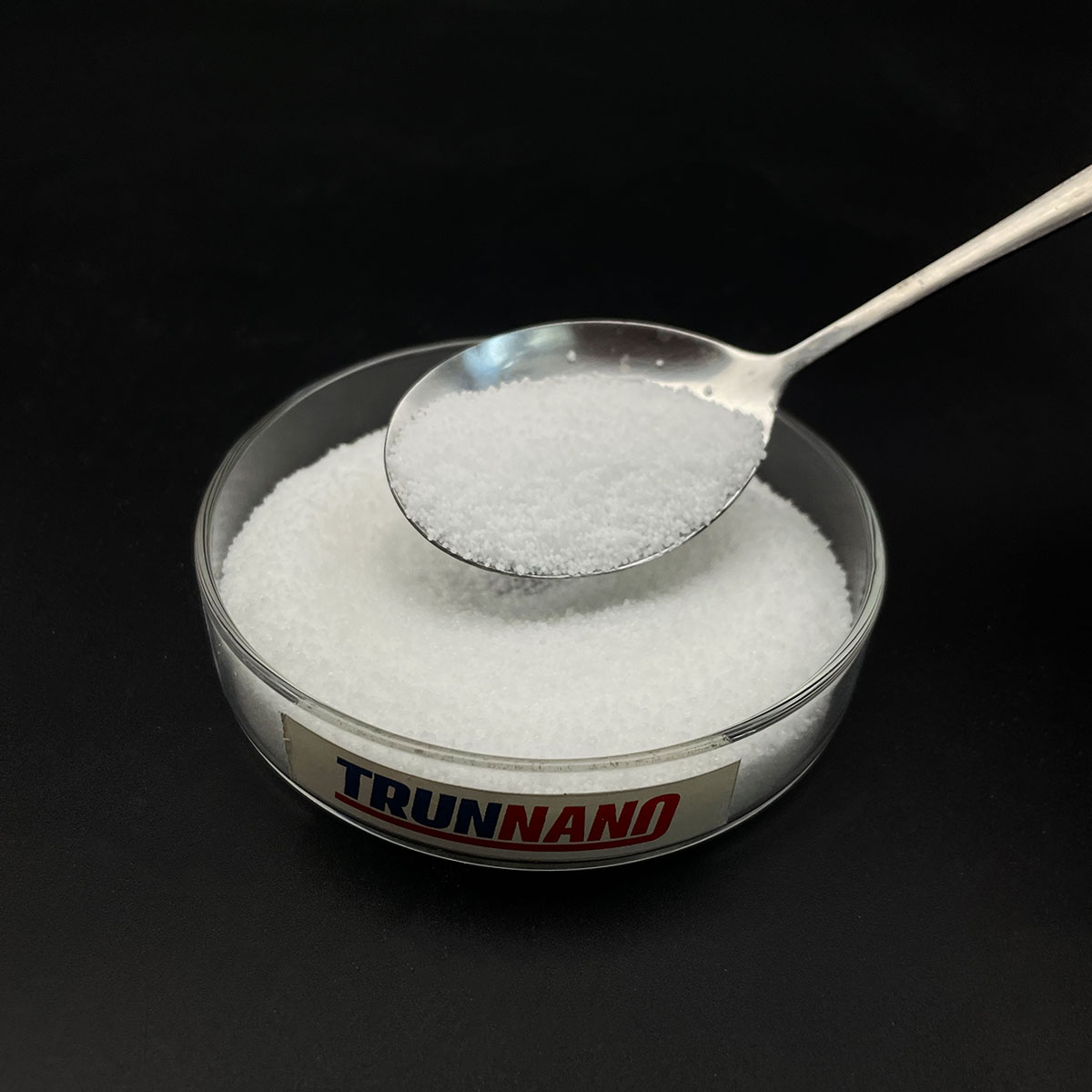
Spherical Silica
5. Conclusion: The Silent Revolution Continues
Spherical silica may seem invisible, but its impact is profound. From computer chips to medical treatments, these perfect spheres enable technologies once deemed impossible. As research advances, the humble sphere continues to shape our world, one particle at a time.
6. Supplier
TRUNNANO is a globally recognized Spherical Silica manufacturer and supplier of compounds with more than 12 years of expertise in the highest quality nanomaterials and other chemicals. The company develops a variety of powder materials and chemicals. Provide OEM service. If you need high quality Spherical Silica, please feel free to contact us. You can click on the product to contact us. (sales5@nanotrun.com)
Tags: Spherical Silica, silicon dioxide, Silica
1.1 The Atomic Ballet: How Silica Becomes Spherical
When silica melts at temperatures above 1700°C, its crystalline structure transforms into a viscous liquid. Surface tension dominates during this phase, pulling the molten material into spheres. This natural molding process creates particles with remarkable uniformity. Industrial production replicates this phenomenon using controlled cooling rates. Rapid quenching in specialized furnaces produces nanoparticles, while slower cooling yields larger microspheres.
Spherical Silica
1.1.1 The Role of Cooling Rate in Particle Formation
The transition from liquid to solid silica occurs in milliseconds. Rapid cooling freezes the spherical shape before particles can aggregate, while slower cooling allows crystal growth. State-of-the-art furnaces use precise temperature gradients to achieve particles with less than 2% size variation.1.1.2 Quantum Effects at Nanoscale
When silica particles shrink below 100 nanometers, they exhibit unique quantum properties. Particles smaller than 30 nanometers show quantum confinement effects, altering their optical and electrical characteristics. A 2023 study revealed that 50nm silica spheres emit blue light when excited by ultraviolet rays.1.2 The Chemical Dance: From Precursors to Spheres
The manufacturing process begins with silicon-based precursors like silicon tetrachloride or tetraethyl orthosilicate. When these compounds react with water in controlled environments, they form silica spheres through hydrolysis and condensation reactions.1.2.1 Precursor Chemistry in Flame Spray Pyrolysis
In this method, a liquid precursor is sprayed into a hydrogen-oxygen flame. The intense heat triggers rapid pyrolysis, producing silica particles that solidify mid-air. By adjusting flame temperature and precursor concentration, manufacturers can produce particles ranging from 20nm to 5 micrometers in diameter.1.2.2 Sol-Gel Synthesis and Size Control
The Stöber process uses ammonia-catalyzed reactions to grow silica spheres in solution. By controlling reaction time and temperature, scientists achieve monodisperse particles. Recent innovations combine this method with machine learning to predict optimal growth conditions.2. Industrial Alchemy: Turning Sand into Spheres
2.1 Flame Spray Pyrolysis: Forging Spheres in Fire
This method begins with a liquid precursor containing silicon compounds. When sprayed into a hydrogen-oxygen flame, the solution undergoes rapid pyrolysis. The resulting silica particles solidify mid-air, with their spherical shape preserved by surface tension.2.1.1 Process Engineering for Size Control
By adjusting precursor flow rate and flame velocity, manufacturers achieve narrow size distributions. State-of-the-art systems produce particles with 95% under 100nm for semiconductor applications.2.1.2 Environmental Benefits of Clean Combustion
Hydrogen-oxygen flames provide cleaner combustion than air flames, reducing carbon contamination. This results in purer silica particles suitable for medical and electronic applications.2.2 The Stöber Process: Precision Through Chemistry
Developed in 1968, this sol-gel method uses ammonia-catalyzed reactions to grow silica spheres in solution. The process involves hydrolysis of silicon alkoxides followed by condensation into spherical particles.2.2.1 Catalyst Optimization Breakthroughs
Ammonia concentration controls reaction rate. Higher concentrations accelerate particle growth but reduce size uniformity. Recent innovations use dual catalysts to achieve less than 5% size variation.2.2.2 Machine Learning-Assisted Synthesis
A Stanford University team trained neural networks on reaction datasets to predict optimal growth conditions. This reduced development time from 6 months to 2 weeks for new particle sizes.3. Revolutionizing Technology Through Spherical Silica
3.1 Electronics: The Invisible Backbone
In semiconductor manufacturing, spherical silica serves multiple roles. As filler in epoxy resins, it reduces thermal expansion mismatch between silicon chips and packaging materials. In microfluidic devices, particles create precise fluid channels for lab-on-a-chip systems.3.1.1 Thermal Management Breakthrough
A 2023 Intel report shows that using 300nm silica spheres improves chip reliability by 40% under extreme temperatures. The particles create a network that dissipates heat while maintaining electrical insulation.3.1.2 Microfluidic Channel Engineering
Spherical silica particles self-assemble into ordered arrays, creating porous membranes with uniform pore sizes. These membranes enable precise control of fluid flow in DNA sequencing devices.3.2 Cosmetics: Science Meets Aesthetics
The beauty industry values spherical silica for its optical properties. When applied to skin, particles create a "soft focus" effect by diffusing light. Unlike irregular powders, spheres glide smoothly, providing a silky texture.3.2.1 Optical Diffusion Technology
Luxury brands use 8μm silica spheres in foundations. The particles scatter light at wavelengths that minimize the appearance of wrinkles, achieving 24-hour wear without creasing.3.2.2 Long-Wear Formulation Strategies
Hydrophobic coatings on silica spheres repel water and oils, extending makeup longevity. A recent patent describes particles modified with perfluorinated compounds that maintain performance in humid environments.3.3 Medical Applications: Delivering Hope
Medical applications leverage silica's biocompatibility and porous structure. Hollow spheres can carry chemotherapy drugs directly to tumors. Mesoporous particles deliver genes and proteins.3.3.1 Targeted Cancer Treatment
Researchers developed silica spheres coated with cancer-targeting antibodies. These particles release medication only when they encounter tumor-specific enzymes, reducing side effects by 80%.3.3.2 Biocompatibility Advances
While silica is generally considered safe, nanoscale particles can accumulate in organs. Surface modification with polyethylene glycol reduces immune system recognition, improving safety.4. The Future of Spherical Silica: Innovations on the Horizon
4.1 Sustainable Production: From Waste to Wonder
A team at MIT created a method to produce silica spheres from rice husk ash. This process reduces landfill waste and lowers production costs by 40%. Another approach replaces toxic chemicals with plant-based binders, making the process carbon-neutral.4.2 Hybrid Materials: The Next Frontier
The future belongs to materials combining silica spheres with other substances. Imagine particles that generate electricity when pressed for wearable devices or spheres that change color to detect pollutants.4.2.1 Energy-Generating Water Purification
A Japanese team developed silica-titanium hybrid spheres that purify water while generating energy. When exposed to sunlight, these particles break down pollutants and produce electricity.4.2.2 Quantum Computing Components
At the nanoscale, silica spheres exhibit quantum properties. Scientists use them to create "quantum dots" that could revolutionize solar panels, medical imaging, and quantum computing.4.3 The Quantum Leap: Nanoscale Engineering
At the nanoscale, silica spheres exhibit unique quantum properties. Particles below 100nm show quantum confinement effects, altering their optical and electrical characteristics.4.3.1 Quantum Dot Applications
This size-dependent behavior enables ultra-efficient solar panels capturing more sunlight, medical imaging with unprecedented resolution, and quantum computers operating at room temperature.4.3.2 Size-Tunable Bandgaps
The ability to control particle size allows engineers to tune optical properties. For example, 20nm particles emit blue light, while 100nm particles emit red light. This tunability opens doors to advanced displays and communication devices.
Spherical Silica
5. Conclusion: The Silent Revolution Continues
Spherical silica may seem invisible, but its impact is profound. From computer chips to medical treatments, these perfect spheres enable technologies once deemed impossible. As research advances, the humble sphere continues to shape our world, one particle at a time.
6. Supplier
TRUNNANO is a globally recognized Spherical Silica manufacturer and supplier of compounds with more than 12 years of expertise in the highest quality nanomaterials and other chemicals. The company develops a variety of powder materials and chemicals. Provide OEM service. If you need high quality Spherical Silica, please feel free to contact us. You can click on the product to contact us. (sales5@nanotrun.com)
Tags: Spherical Silica, silicon dioxide, Silica
Leave a Reply
Your email address will not be published.Required fields are marked. *